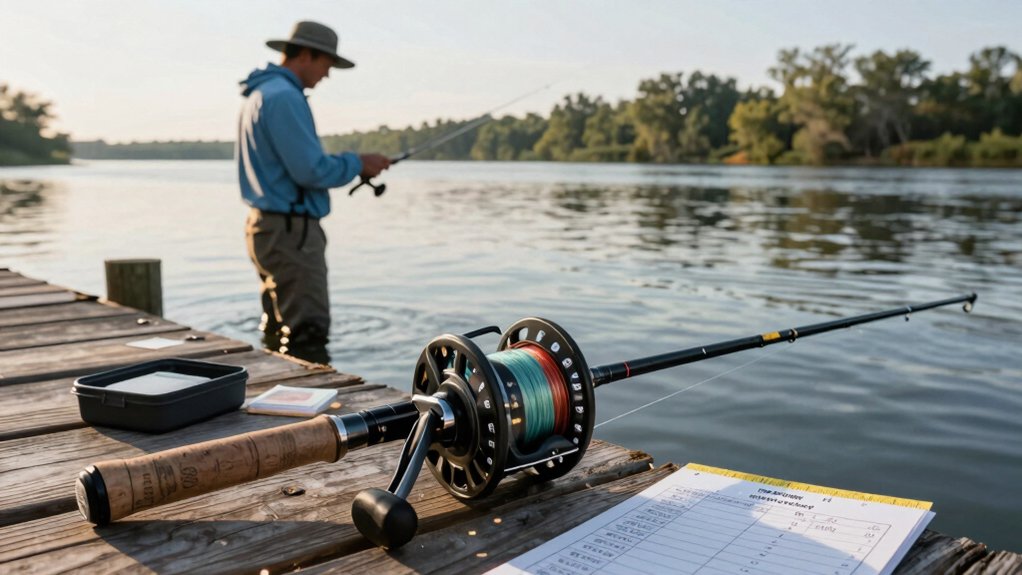

You might think line capacity is just a number on the box, but it’s actually the key to smooth casts and stopping hard-running fish. I’ve seen too many anglers fill their reels to the brim, only to have line slip off under pressure.
Proper capacity affects your drag, casting distance, and how much backup you’ve got when a trophy fish makes a deep run. Get this wrong, and you’re leaving success to chance, here’s how to get it right.
What does reel line capacity actually mean?
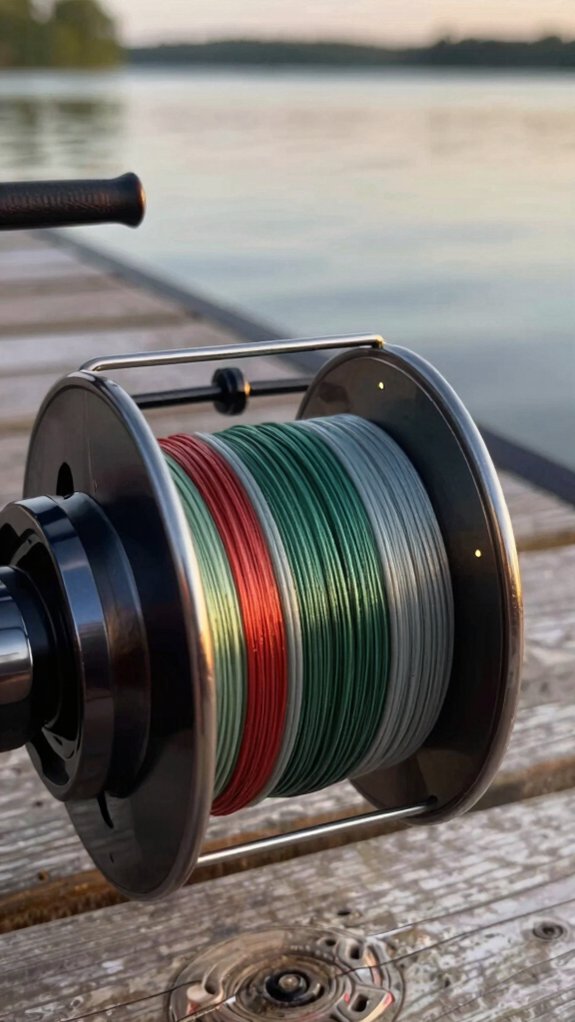
When you’re prepping your reel for a day on the water, that line capacity label, like “8 lb / 180 yd”, is your go‑to guide for how much line the spool can safely hold.
What Line Capacity Really Means
On a spinning reel, Line Capacity tells you how much test line fits on the spool, usually in yards for a given pound‑test. That “8 (180)”? It means 180 yards of 8 lb monofilament.
But here’s the catch: braid’s thinner, so you can fit more. That’s why manufacturers list different capacities for mono and braid.
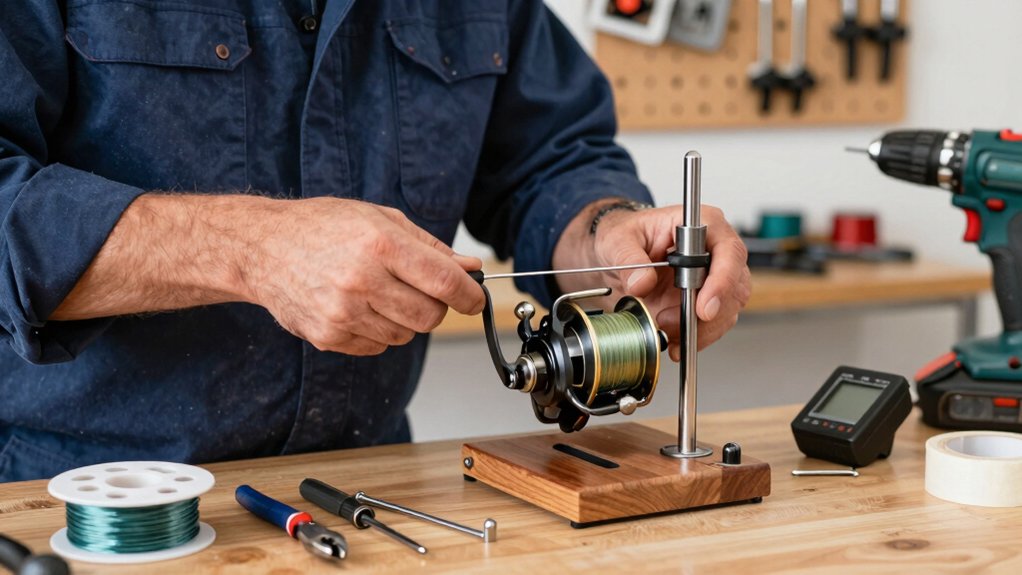
Always check the fill level, stop about 1/8″ below the spool lip. Overfilling causes tangles; underfilling hurts casting.
Use backing when switching to thicker line to properly fill the spool. It keeps performance sharp and prevents slippage.
Why line capacity matters for anglers
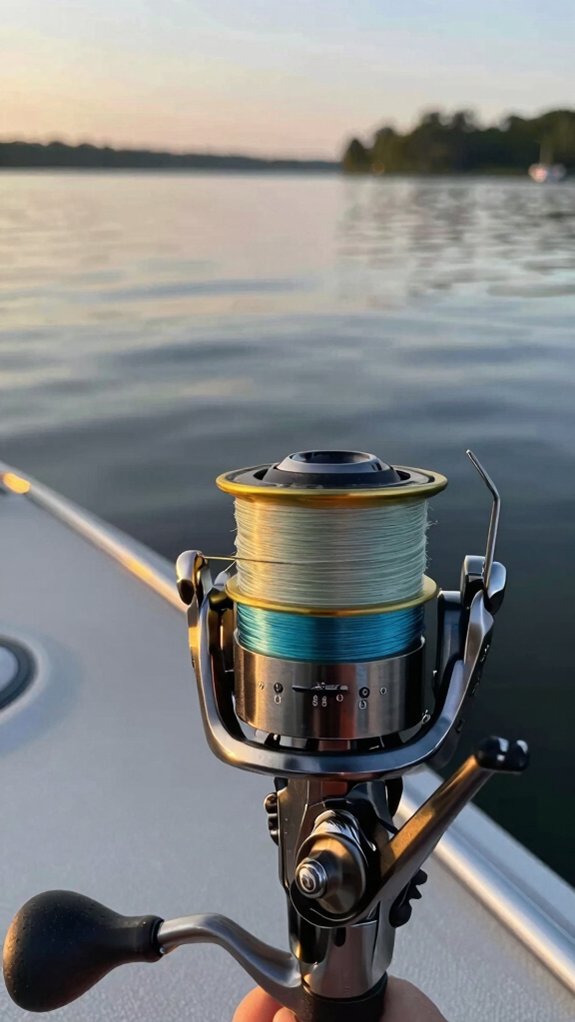
Honestly, I always check line capacity before spooling up, because running out of line mid-fight with a big fish is a heartbreak no angler should face. Here’s why line capacity matters:
- Species & depth matter, Offshore tuna need more line than inshore bass, so match spinning reels to your target.
- Braid vs mono, Braid’s thinner diameter means more yardage; my reel holds 200 yd of 30‑lb braid but only 160 yd of 12‑lb mono.
- Spool fill affects performance, Fill to 1/8″ below the rim for best casting distance and drag consistency.
- Use backing wisely, It fine‑tunes spool fill, especially with braid, and preserves your line capacity labels for future reference.
Getting line capacity right means smarter setups, fewer surprises, and more fish in the boat.
How to read reel line capacity labels
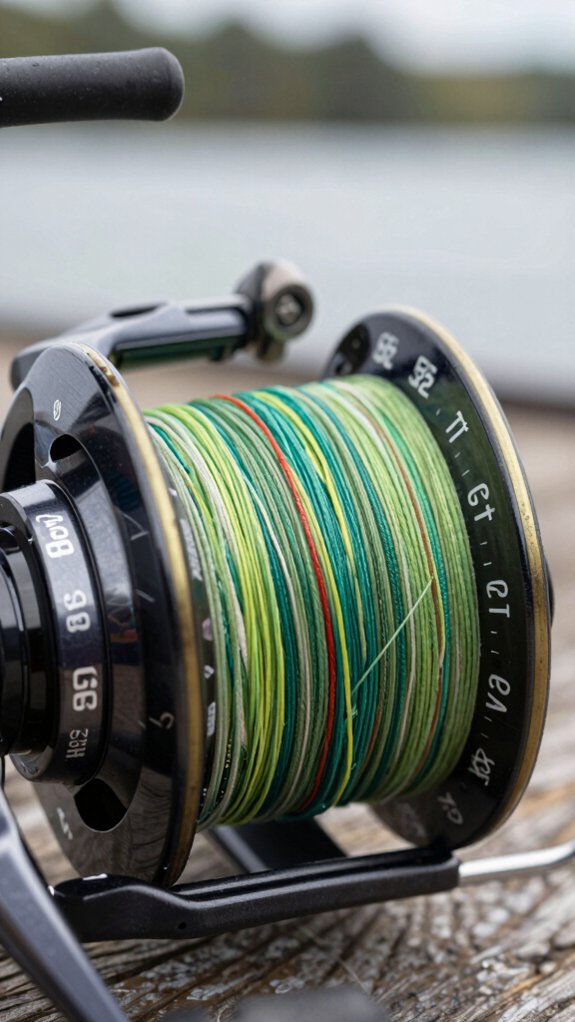
When you’re sizing up your reel’s line capacity, start by reading the spool markings, they usually show both pound test and yardage, like “8 lb / 180 yd.”
You’ll often see metric numbers too, such as “4 kg / 165 m,” which is the same line rating in different units, and sometimes a second line spec for braid, like “20 lb / 260 yd,” because thinner braid fits more on the same spool.
Just remember, those numbers are based on average line diameters, so swapping line types means you should compare actual thicknesses to avoid underfilling or overfilling.
spool markings
Here’s how to read them:
- lb/yd test (like “8 lb / 180 yd”) shows how much line diameter the spool holds at that strength.
- Multiple lines? That’s because heavier line diameter reduces total yardage, more pounds, less length.
- Braid vs mono: Thinner braid gives higher yardage at the same test, so you’ll see both listed.
- Always leave about 1/8″ of spool fill below the rim, use backing if needed to hit that sweet spot.
Those numbers? Just guidelines, actual line capacity varies by brand.
pound test
You’ll see “pound test” on your reel’s spool label because it tells you exactly how strong a line the reel is designed to handle and how much will fit.
Understanding Pound Test & Line Capacity
That number, like “8 lb”, is the pound test, indicating line strength. The yardage beside it (e.g., 180 yd) shows how many yards of that monofilament line the spool holds.
Keep in mind:
- Thinner lines like braid let you fit more, sometimes double the yards.
- Same spool, different diameter = different capacity.
- Always leave about 1/8″ of space below the spool rim.
Labels are guides, actual line capacity varies by brand and material. I always check my line’s specs first.
Matching pound test to your target fish and gear keeps your setup balanced and strong when the big one bites.
metric numbers
One quick glance at your reel’s spool might reveal numbers like “0.20 mm / 420 m,” and that’s your line capacity in metric, telling you the spool holds 420 meters of 0.20 millimeter-diameter line.
Comprehending this helps match your line diameter to the spool capacity for better casting and fewer tangles.
Here’s how to use metric numbers like a pro:
- Check the braid mm – Many modern lines list diameter in millimeters, making it easy to match to your reel’s metric spec.
- Use metric conversion – Remember: 1 yard ≈ 0.9144 meters, so 180 yd ≈ 165 m for quick comparisons.
- Note meters per spool – This tells you total length capacity for precise line planning.
- Respect fill level – Even if you hit the meter mark, stop 3–4 mm below the spool lip to avoid slippage.
Trust the numbers, but always prioritize proper fill level for peak performance.
braid ratings
When you’re sizing up your reel for a new line, you’ve got to read between the lines, literally.
Braid Ratings: What They Really Mean
You’ll often see braid capacity listed like “30 lb / 240 yd.” Here’s the key: braid has a smaller diameter than mono, so you can fit more yards on the same spool.
That’s why braid ratings show higher yardage—even at higher pound‑tests.
Don’t skip the conversion, if your reel lists metric (like 0.20 mm), match it to braid strength using a reliable chart.
And remember, capacity labels are guides. Real‑world diameter varies by brand, so use backing to top off the spool.
Fill to about 1/8” below the lip. This ensures smooth casting and proper drag.
Get this right, and your setup runs like clockwork: no slippage, no tangles.
Reel sizes and typical line capacities
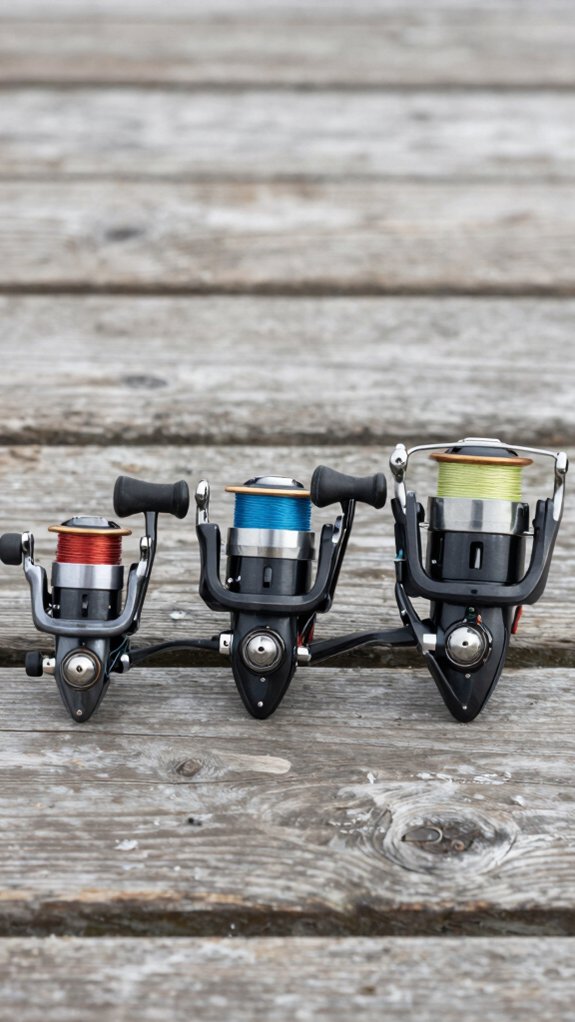
When you’re picking a reel, matching the size to your target fish makes all the difference, lightweight reels (like 1000–2500) handle panfish and trout with 100–200 yards of 4–8 lb mono, giving you smooth, responsive casts.
Multipurpose reels (2500–3500) are my go-to for bass or walleye, holding 200+ yards of 6–12 lb mono or 150+ yards of 10–20 lb braid, perfect for everyday freshwater action.
And when you’re after bigger predators, stepping up to 4000–6000+ size reels means you can spool 250+ yards of 15–30 lb mono or heavy braid, so you’ve got the power and line to win those hard‑fighting fish.
lightweight reels
Spool size and line capacity go hand in hand when you’re picking the right lightweight reel for finesse fishing. As someone who’s spent years matching spinning reels to the catch, I’ll help you nail it.
For a lightweight reel, here’s what really matters:
- Line capacity: A 1000-size holds ~100–140 yards of 2–6 lb mono, perfect for trout and panfish.
- Mono vs braid: Braid packs tighter, so you’ll get nearly double the yardage (e.g., 200+ yds of 10 lb braid on a 2500 reel).
- Spool fill: Fill just below the lip, underfilling reduces casting distance; overfilling causes tangles.
- Matching line test: Pair your target species with the right strength, light lines need light reels.
Get this right, and your casts will be smooth, your retrieves confident, and the odds of landing that next keeper? Much better.
multipurpose reels
Step into the world of all-around angling, and you’ll quickly see why multipurpose reels are the backbone of most tackle boxes.
Spinning Reel Size & Line Capacity
A 2500–3500 spinning reel strikes the perfect balance, ideal for bass, walleye, or pike. It typically holds 6–12 lb mono (150–300 yd) or 10–20 lb braid, giving you plenty of line and solid drag for most freshwater fights.
Why Multipurpose Fishing Reels Win
You don’t need a specialty reel for every trip. This size handles everything from crankbaits to soft plastics. According to a 2023 ANGLR survey, 68% of weekend anglers prefer this range for its versatility.
Whether you’re new or seasoned, matching the reel size to your line and target species keeps your setup balanced, and your drag smooth when a big one runs.
bigger predator reels
- Reel size rating matters: 5000+ spinning or 300+ baitcasting models handle heavy loads.
- Expect line capacity (yds) like 300–500+ for high‑test line, think 30–65 lb mono or 40–130 lb braid.
- Braid vs mono: braid’s thinner diameter lets you spool up to double the yardage.
- Saltwater reels often use corrosion-resistant materials and max out on capacity.
I always check the spool specs, but I test real-world fill, braid stretches further than mono.
Match your reel size to your rod and target.
Get this right, and you’ll land more giants with confidence.
Does braid change reel line capacity?
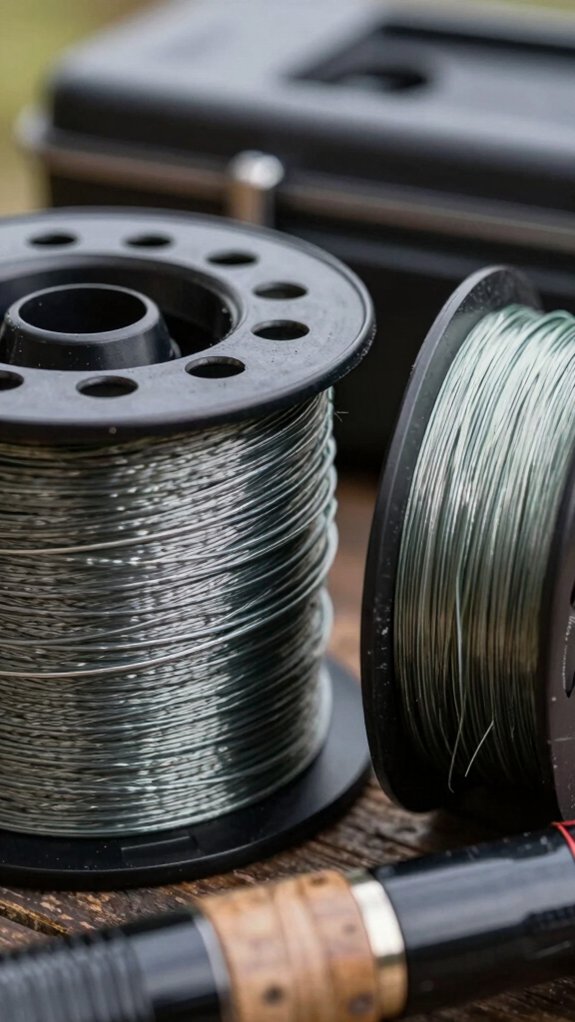
Braid vs. Mono: It’s All About Line Diameter
Braid’s thinner profile means more yardage fits on the same spool, your 8 lb braid might take up the same space as 12 lb mono. That’s why spool capacity jumps: a reel holding 180 yd of mono could fit 300+ yd of braid.
Manufacturers list separate specs (like 12 lb/200 yd mono vs. 30 lb/300 yd braid) because of this. To max out performance, check line diameter and use mono backing to raise fill level.
Pro Tip: Fill just below the spool lip. Too much or too little affects casting and drag. Get it right, and you’ll fish smarter, cast farther, and land more fish.
Mistakes to avoid with reel line capacity
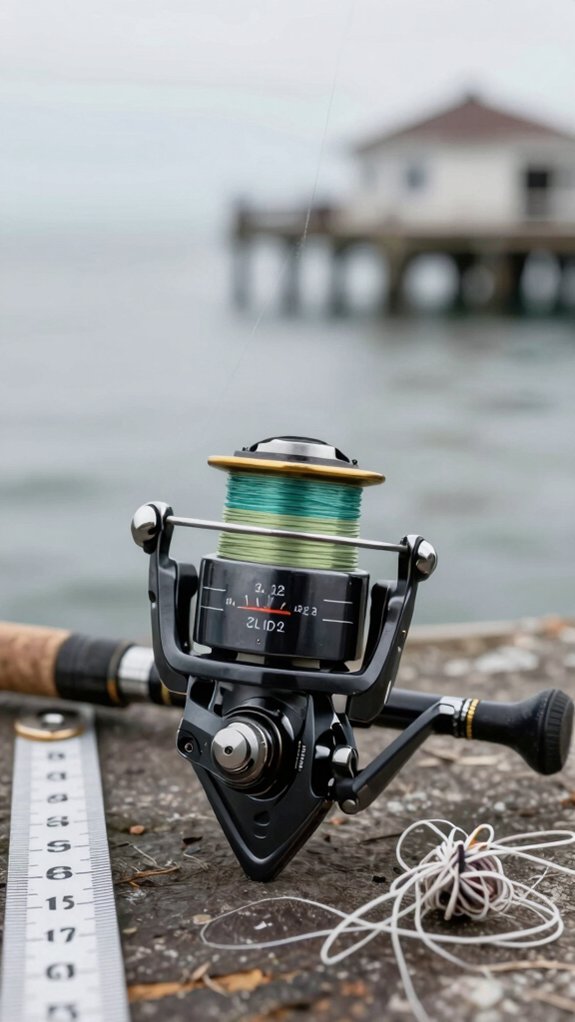
While you might be tempted to max out your spool right to the brim, overfilling is one of the quickest ways to sabotage your cast, I’ve seen more than a few anglers learn this the hard way.
Here’s how to avoid common line capacity mistakes:
- Don’t overfill the spool, keep line about 1/8″ below the lip. Overfilling causes wind knots and poor drag, even if your spool can hold without spilling.
- Ignore printed capacity numbers, use a line-measuring tool instead. Brands vary, and specs don’t always match real‑world braid vs mono performance.
- Respect your rod rating, using heavier test line to fit more reduces usable yardage and stresses your rod.
- Balance braid vs mono, new casters should stick with mono. Thin braid worsens bird’s nests. Add backing when deep or long casts demand more line.
Frequently Asked Questions
What Does Line Capacity Mean on a Fishing Reel?
It means how much line my reel can hold, like 200 yards of 10-pound test. I check the specs, but I know actual capacity varies by brand and how I spool it, filling it right matters for casting and drag.
What Does the 1000 to 7000 on Reels Mean?
The 1000 to 7000 number on reels tells you the size, bigger numbers mean larger spools, more line capacity, and stronger drag. I pick smaller ones for light rods and panfish, and go big for saltwater or heavy-duty fishing.
What Is the 80/20 Rule in Fishing?
I’ve tested the 80/20 rule, and it’s true, filling 80% with backing keeps my main line just under the spool lip. It reduces backlash, stabilizes drag, and honestly, makes casting smoother. I don’t always stick to it, but it works.
What Does 3000 or 4000 Mean on a Fishing Reel?
When I say a reel is 3000 or 4000, I mean it’s medium to large on the size scale, bigger numbers mean more line capacity, stronger drag, and a heavier build. I always check specs, since brands vary.
In Conclusion
Bottom line: line capacity tells you how much line your reel can comfortably hold, think of it as your safety net when a fish makes a surprise run. Skimp on it, and you’re flirting with disaster. Overfill it, and you’re begging for tangles.
I always leave that little 1/8″ breathing room, trust me, your drag will thank you. Match the line type, use backing wisely, and you’ll be reeling in hard‑fighting fish without sweating the small stuff.