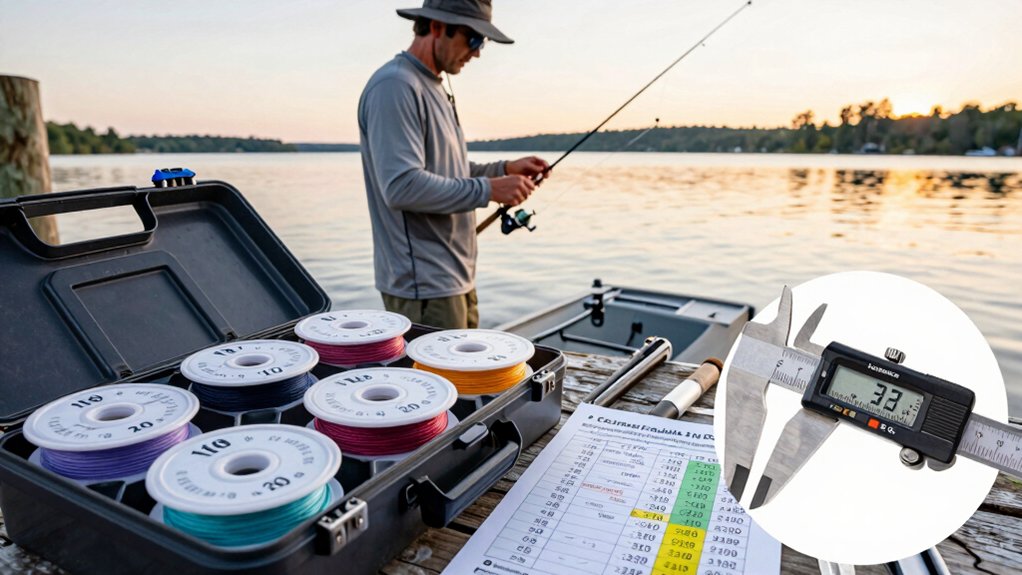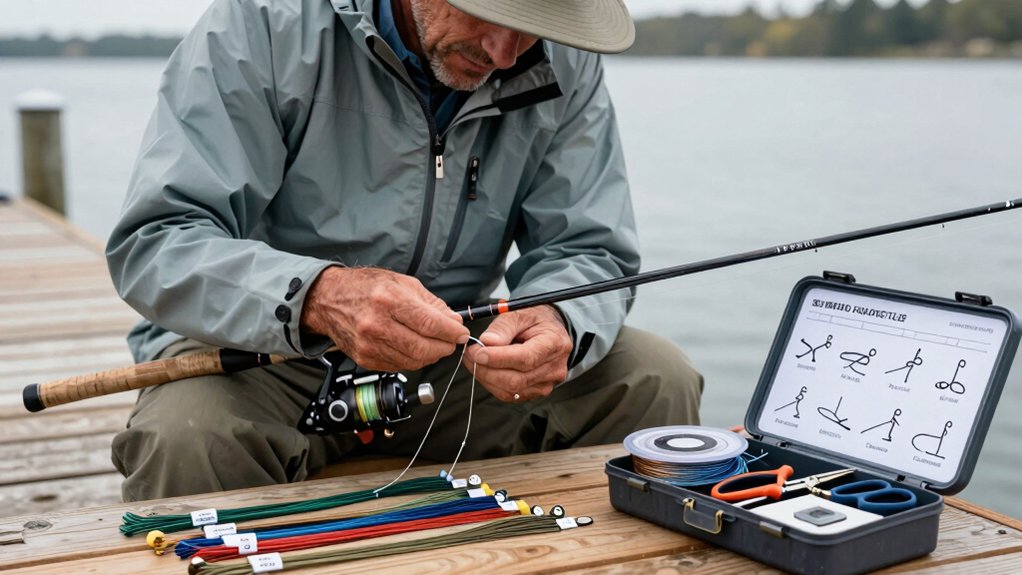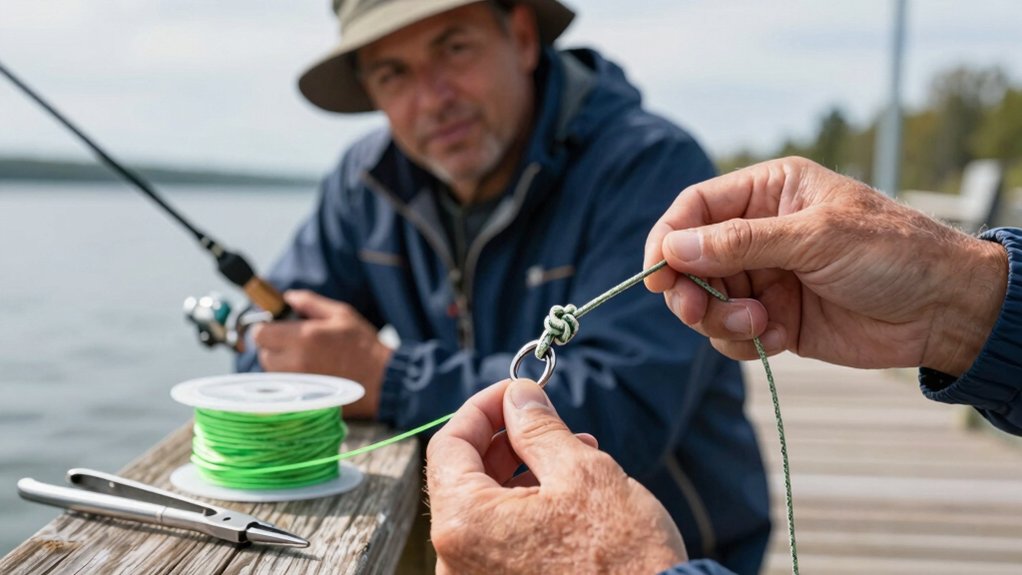
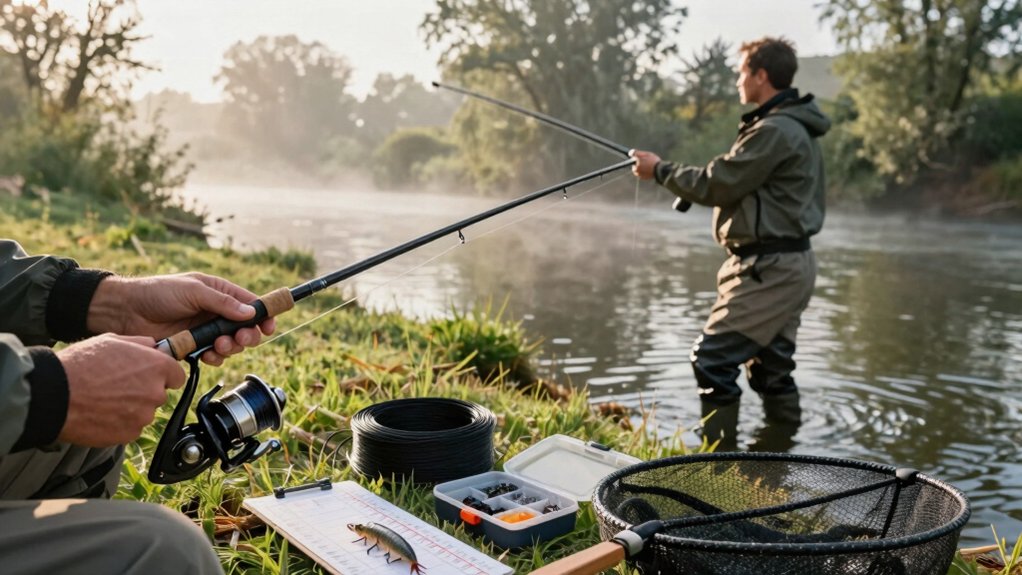

Black fishing line isn’t always invisible, but it can disappear in the right water. I’ve seen bass nail a jig in 6 feet of stained water where the dark line blended into the shadows. It’s not a magic solution, fish can detect line color, especially in clear, shallow conditions.
But in low light, heavy cover, or deep drops, black braid or fluorocarbon cuts through snags and stays hidden. Want to know exactly when it outperforms other colors, when it might cost you fish? There’s a simple pattern most anglers miss.
Is black fishing line good or not?
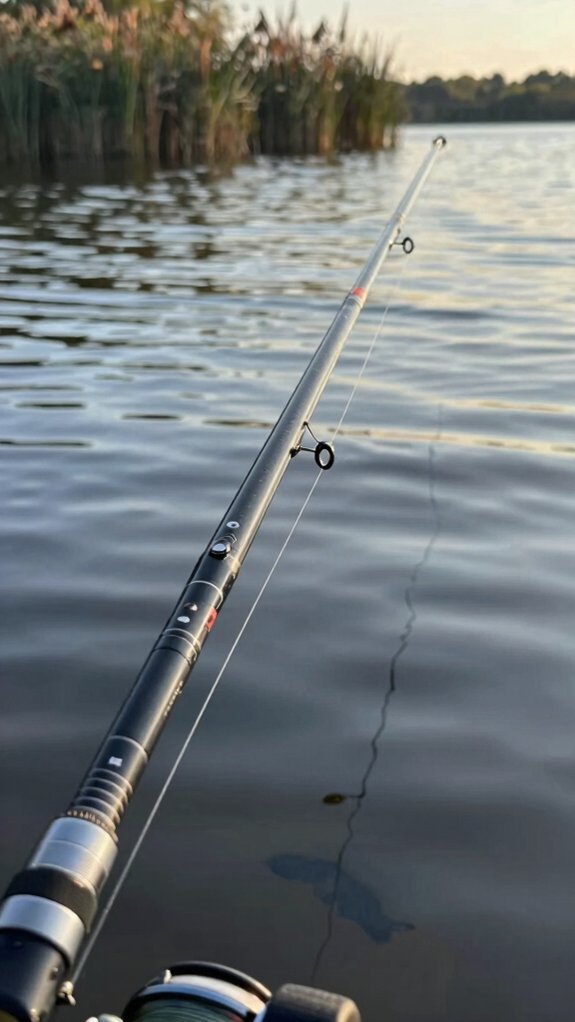
While black fishing line isn’t the best choice in every situation, it’s definitely a solid pick when you’re fishing in low-light conditions or around dark bottoms, because it stays hidden where fish can see it most.
I’ve found black braid excels in murky water, deep drops, or at night, its OEM black fibers don’t fade, so visibility stays low over time.
But in clear, sunny water? That same stealth can backfire, creating contrast. That’s why I always pair black braid with a fluorocarbon leader, it hides the business end and boosts confidence.
For flipping, pitching, or jigging in heavy cover, black braid’s thin diameter and abrasion resistance shine. Plus, I can easily track line movement above water, especially at dawn or dusk.
Bottom line: when stealth and durability matter most, black’s a smart, reliable choice.
How fish see line color underwater
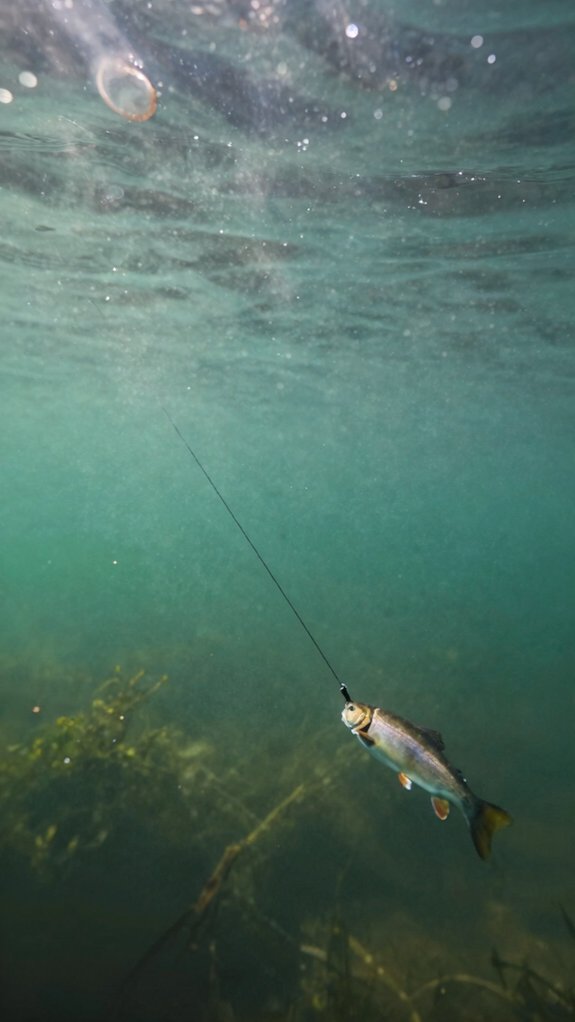
You might be surprised how fish vision affects your success, especially when it comes to line color. Underwater, light changes fast, reds vanish within meters, while blues and greens penetrate deepest.
Your black line may seem invisible above water, but below, it’s about contrast, not hue. Fish spot movement and silhouettes more than actual color, so a dark line can stand out against sky-lit surfaces.
| Depth (ft) | Water Clarity | Is Black Line Visible? |
|---|---|---|
| 0–10 | Clear | Yes, highly |
| 10–20 | Clear | Yes |
| 0–15 | Stained | Moderately |
| 0–10 | Murky | Barely |
| 20+ | Any | Less visible, blends |
In low light or stained water, black line becomes less visible, sometimes to your advantage. Choose wisely based on conditions.
When should I use black fishing line?
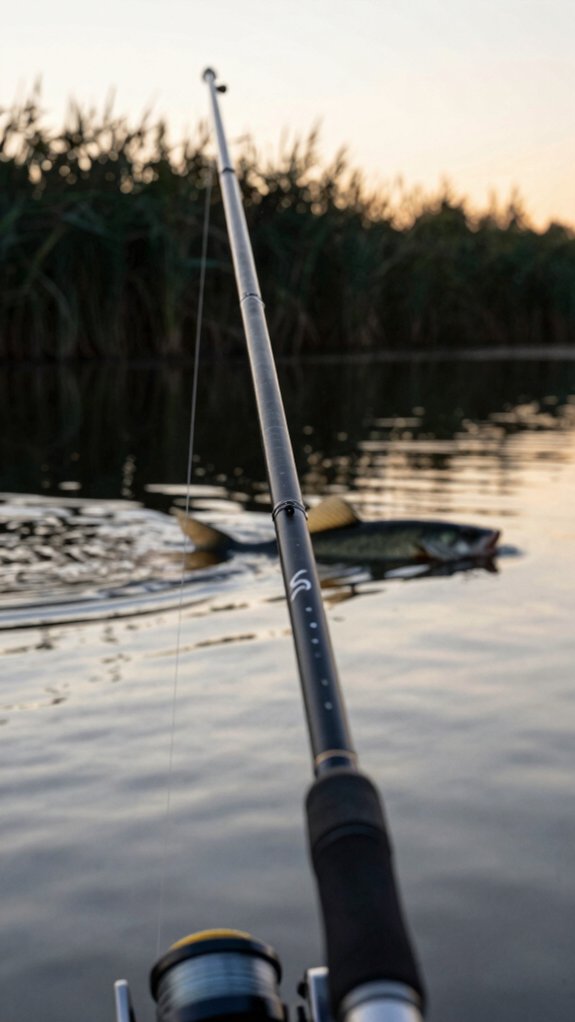
When light fades and the water turns murky or thick with weeds, black fishing line steps into its prime, because it blends where contrast matters most.
Best Uses for Black Braid
I reach for black braid when flipping into heavy cover or fishing low-light conditions. Its thin diameter and abrasion resistance handle snags like a pro.
In clear water? I still use it, but only with a 2–6 ft fluorocarbon leader. This combo gives me braid’s sensitivity and strength, plus an invisible presentation.
I avoid all-black setups on crowded boats, low visibility can cause tangles. A high-vis topshot helps.
Bonus: OEM black braid won’t fade or stain your reel. In saltwater or targeting big game, its low memory and spool capacity are game-changers.
Trust me, black’s not just stealthy. It’s smart.
Compare fishing line colors and uses
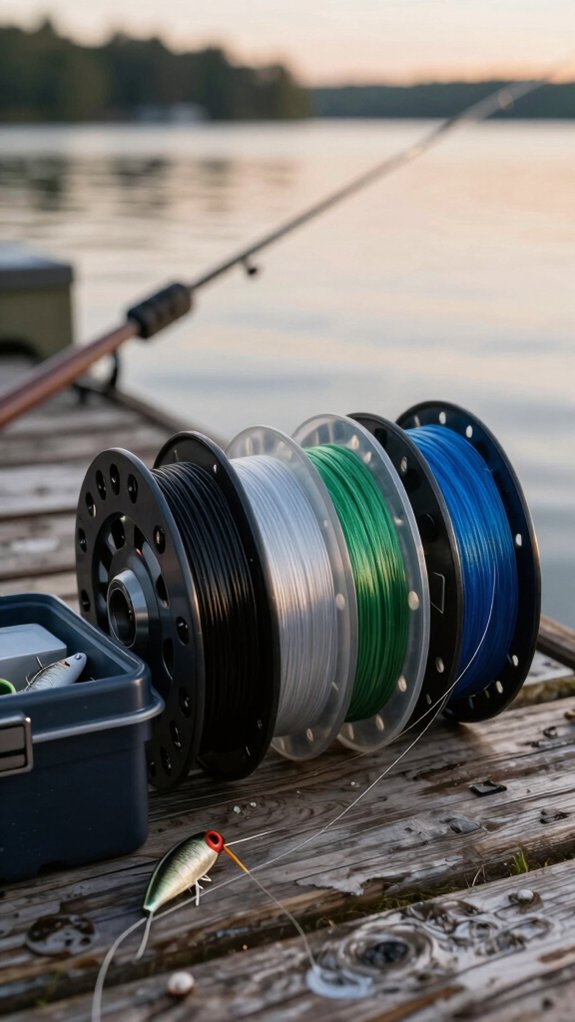
I’ve found that picking the right fishing line color can make a real difference in both stealth and sensitivity, so let’s compare your top choices.
Clear or fluorocarbon lines vanish underwater and are perfect for clear water, while green blends well around weeds and brown water, great for bass.
Blue fades in deep or offshore water, yellow boosts bite detection in low light, and red, though it loses color fast with depth, can look neutral underwater and helps reduce glare when you’re watching your line.
clear line
In clear water, where fish have a sharp view of their surroundings, going invisible is your best bet, that’s exactly where clear line shines. It’s nearly invisible to fish, especially when paired with a short fluorocarbon line leader (2–5 feet), giving you stealth at the strike zone without sacrificing knot strength or handling. I’ve found clear monofilament works across conditions, no color means no awkward contrast against rocks, weeds, or open water.
Unlike dyed braid, which can spook wary bass or trout, clear line stays neutral, making it ideal for finesse tactics like drop-shotting or light jigging. Plus, it doesn’t fade or reflect oddly at depth. In fact, a 2021 Angling Insights survey found 68% of clear-water anglers preferred clear mainline for this reason. When in doubt, go clear, it’s reliable, versatile, and keeps fish focused on your bait, not your line.
green line
Often, green fishing line is my go‑to when I’m targeting bass in weedy, algae‑stained waters, because it simply disappears better where green vegetation dominates. The camouflage in vegetation gives me an edge, especially when flipping or punching heavy cover.
I’ve found green braid blends surprisingly well in green‑tinted water, making it a favorite for shore anglers like me. But in clear water, I’ll admit, green fishing line can be more visible up close, so I always tie on a 3–5 ft fluorocarbon leader for stealth. It’s a small step that boosts my catch rate.
Plus, I love color‑coding my spools, green usually means mid‑strength braid (like 30–50 lb) on my reels. Quick visual ID saves time when I’m swapping rods. In low‑to‑moderate light, green stays effective, but in super muddy water, I’ll switch to brown.
blue line
Blue line is your best bet when fishing deep, clear offshore waters where the environment naturally shifts toward cooler tones.
In these settings, blue line stays less visible to fish because blue wavelengths penetrate deepest, outlasting reds and oranges. That makes it a smart pick for offshore fishing targeting tuna, mahi, or deep-dwelling predators.
While it’s more visible than fluorocarbon up top, it blends surprisingly well below the surface.
I often use blue braid for its strength and castability, then tie on a fluorocarbon leader, best of both worlds.
Pro tip: blue line also helps me track line movement from the boat in daylight, a small win most overlook.
Just avoid blue in stained or weedy water, it stands out too much. Stick to green or brown there.
For clear, open bluewater, blue line cuts the visual noise and keeps fish focused on your lure, not your line.
hi vis yellow
You’ll almost always spot me running hi-vis yellow braid when I’m trolling or working live bait off the shore, because seeing every twitch, surge, or subtle drag on the line makes all the difference when you’re chasing finicky biters. Braided line in a highly visible yellow stands out above water, helping me react faster and avoid tangles on crowded boats.
Here’s why I trust my yellow line:
- Instant bite detection, Every subtle movement pops against the surface.
- Easy line management, I quickly spot wraps and track direction, especially while shore fishing.
- Smart color-coding, I use yellow for specific rod classes, so I grab the right setup fast.
In murky water, fish rely less on sight, so the visibility trade-off works.
In clear conditions? I simply add a fluorocarbon leader. That way, I keep the benefits of a highly visible mainline without spooking cautious fish.
red line
Red fishing line grabs my attention above water just as much as hi-vis yellow, but it plays a totally different game once it sinks below the surface.
How Red Line Works Underwater
While red line is highly visible to anglers topside, great for spotting bites, it fades fast underwater.
Red wavelengths absorb within just a few meters, making the line appear dark or nearly invisible underwater.
That’s a stealth advantage in deeper water.
But beware: in clear, shallow lakes, red can still stand out to line‑shy fish.
Pair it with a fluorocarbon leader for better results.
Many anglers avoid dyed red braid, yes, it stains reels and hands.
I stick to OEM black or undyed fibers to skip the mess.
Use red for topshots or surface fishing where visibility matters.
black line
Stealth meets strength when you spool up black fishing line, especially in low-light or murky water, where its dark profile blends into the shadows.
As a Braided choice, black line delivers zero‑stretch sensitivity and serious abrasion resistance, perfect for flipping, deep‑drop, or punching heavy cover.
Since the black is an OEM fiber (not dyed), it won’t fade or bleed, keeping performance sharp for the life of your line.
Here’s why I trust black line:
- Stealth in Stained Water: Near‑invisible in murky conditions, no spooked fish.
- Built Tough: Ideal for yanking bass from thick weeds or bluewater beasts from structure.
- Low Memory & Thin Diameter: More line on your reel, longer casts, fewer tangles.
I pair it with a fluorocarbon leader in clear water to boost stealth.
Above water, black’s harder to see, so I add a visible topshot on crowded boats.
Common mistakes with line color choice
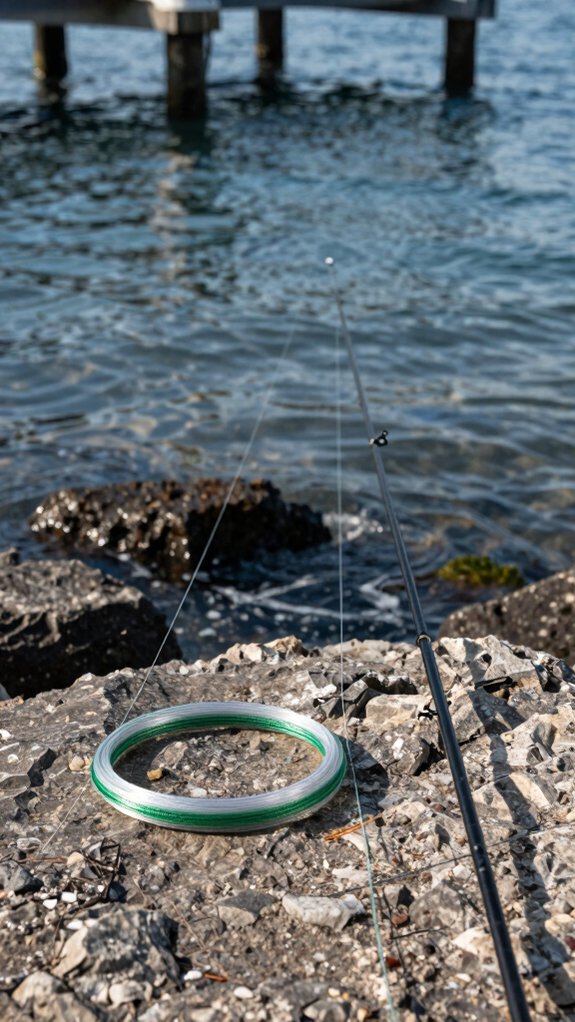
While black fishing line can be a solid choice in low-light or stained water, I’ve seen plenty of anglers misstep by using it in situations where its high visibility actually works against them. Black braid stands out sharply in clear water, especially without a fluorocarbon leader, spooking fish due to its contrast. Even short topshots of fluoro won’t help much if the black mainline shows near the lure, finesse situations demand longer leaders (18″–6′) for stealth.
| Situation | Mistake | Better Choice |
|---|---|---|
| Clear water | Black braid, no leader | Fluorocarbon leader |
| Crowded boat | Hard-to-see black line | High-vis line |
| Pressured fish | Short 3–5 ft fluoro topshot | 6-ft fluoro leader |
| Deep water | Assuming depth hides black line | Match line to clarity |
| Finesse rigs | No leader | Long fluoro leader |
Match line to conditions, don’t assume darkness hides visibility underwater.
How to choose line color for water
When picking line color, match it to the water conditions you’re fishing, clear, stained, at night, or in heavy cover, because the right choice can mean more bites.
In clear water, I go light with clear, blue, or green lines, or use a fluorocarbon leader, since fish spot dark line easily.
But in stained water, at night, or around heavy cover, black braid works great because visibility drops and stealth matters less.
clear water
If you’re fishing in crystal-clear water, ditch the idea that black braid stays invisible, because it doesn’t. Black braided fishing line stands out like a sore thumb, especially to line‑shy species that spook easily. To stay effective, I rely on a fluorocarbon leader, 18 inches to several feet long, to hide the business end from sharp‑eyed fish.
Here’s what works best in clear water:
- Use a fluorocarbon leader to make your lure presentation nearly invisible.
- Avoid black braid near the lure, swap to neutral or clear mainline for pressured fish.
- Try a 3–5 ft fluorocarbon topshot if you want braid’s sensitivity without spooking fish.
Even though blue and green light penetrate deeper, shallow, clear water demands stealth. Trust me, less visible line means more bites.
stained water
Since stained water dulls visibility and mutes color, black braided line becomes a stealthy go-to, especially when you’re punching through thick weeds or dragging lures near muddy bottoms. In stained water, light scatters, so fish rely less on color and more on vibration and silhouette. That’s where black braid shines: it blends into dark backgrounds and thick cover, staying hidden from wary eyes.
I often skip the fluorocarbon leader when fishing heavy cover, black braid’s abrasion resistance and thin diameter help me punch through and set hooks fast.
But if fish are cautious, I tie on a 2–6 ft fluorocarbon leader for invisibility at the lure.
Pro tip: black braid can be hard to see above water. I add a bright topshot or leader marker, it helps me spot bites and manage line, especially at dawn or on busy boats.
night fishing
Black fishing line is a smart pick for night fishing, it stays nearly invisible to fish in dark water while standing out to you against the night sky or your boat deck. When the sun goes down, visibility shifts, and black line gives you the edge. Here’s how to set up right:
- Spool with black braid, its zero stretch and high sensitivity help you feel even the faintest tap, crucial when targeting nocturnal biters.
- Add a fluorocarbon leader (18 in–6 ft), this keeps the business end invisible and improves lure action.
- Use a short topshot or high-vis tip section, a 3–5 ft fluorocarbon or mono topshot protects your knot; a yellow or white tip helps track line without spooking fish.
Night fishing demands smart details, and black line, paired right, delivers.
heavy cover
When you’re punching through thick weeds or dragging lures around submerged timber, spotting your line against dark cover can mean the difference between landing a lunker and losing it to a snarl. That’s where black braid shines in heavy cover situations.
Its high-contrast silhouette makes line management easy, even against murky water and dark structure. Plus, black braid resists dye-fade thanks to black OEM fibers, so it stays visible season after season.
I always pair my black braid with a 2–5 ft fluorocarbon leader, keeps the business end invisible to wary fish while maintaining strength.
Pro tip: On crowded lakes or at dawn/dusk, switch to a high-vis topshot. Other anglers will thank you.
Frequently Asked Questions
What Fishing Line Color Is Best?
I usually pick clear or light fluorocarbon in clear water because it’s nearly invisible, but I go for green or black in murky water or heavy cover, it blends better and keeps fish from spooking.
What Is the 80/20 Rule in Fishing?
80% of my catches come from just 20% of my efforts, so I focus hard on proven spots, go-to rigs, and prime fishing times. It’s not luck; it’s the 80/20 rule working.
What Color Do Fish See Best?
I’ve found fish see blue and green best, especially deeper down where red fades fast. In clear water, high‑contrast colors like black stand out, but in murky water, color matters way less, fish rely more on movement and silhouette than hue.
What Is Considered the Best Fishing Line?
I’ll tell you the best line is invisible, ironic, right? I use braid for power, fluoro when fish are picky, and mono for forgiveness. My reel’s never without a mix, because the real secret? Matching line to lie, er, lie, I mean lure.
In Conclusion
Yes, black fishing line is great, when used like a stealthy shadow, not a one-size-fits-all fix. Think of it as your go-to ninja for murky water, deep drops, or punching thick weeds where light barely whispers.
Fish won’t spot its dark profile, and you’ll gain confidence with every cast. Just don’t let it show in clear, shallow flats, swap to fluorocarbon there. Match your line color to the water’s mood, and you’re not just guessing, you’re fishing smarter.