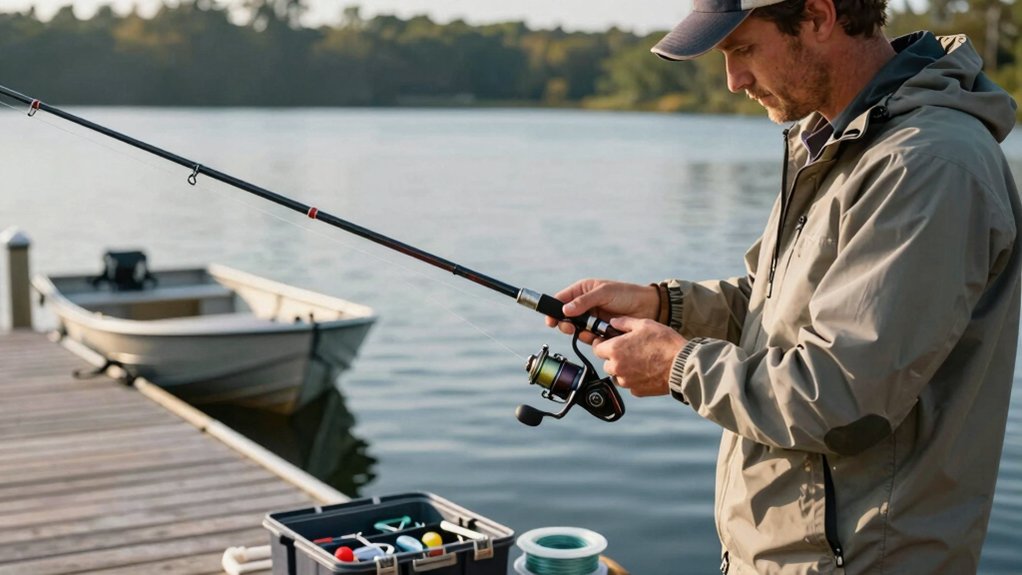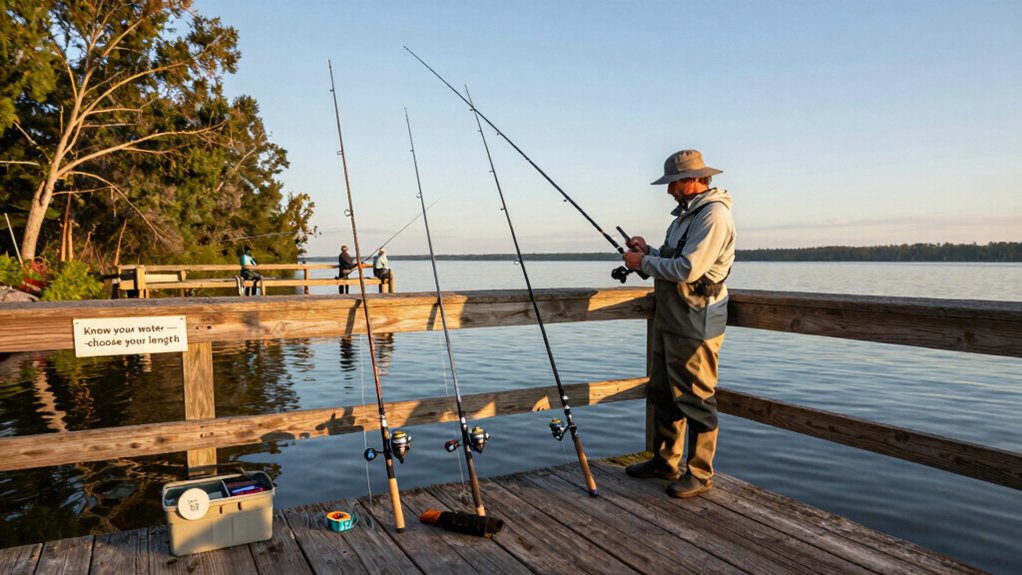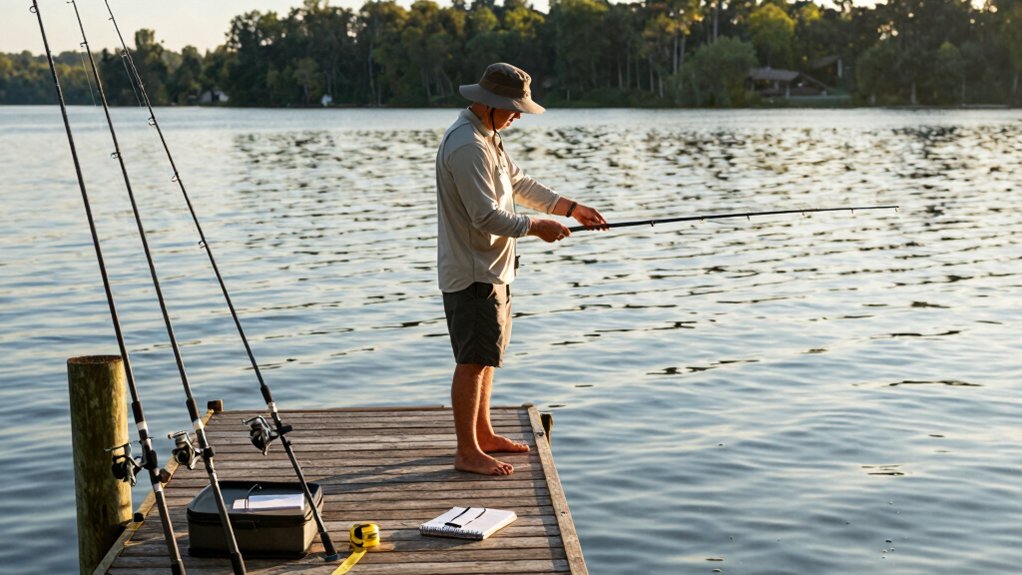
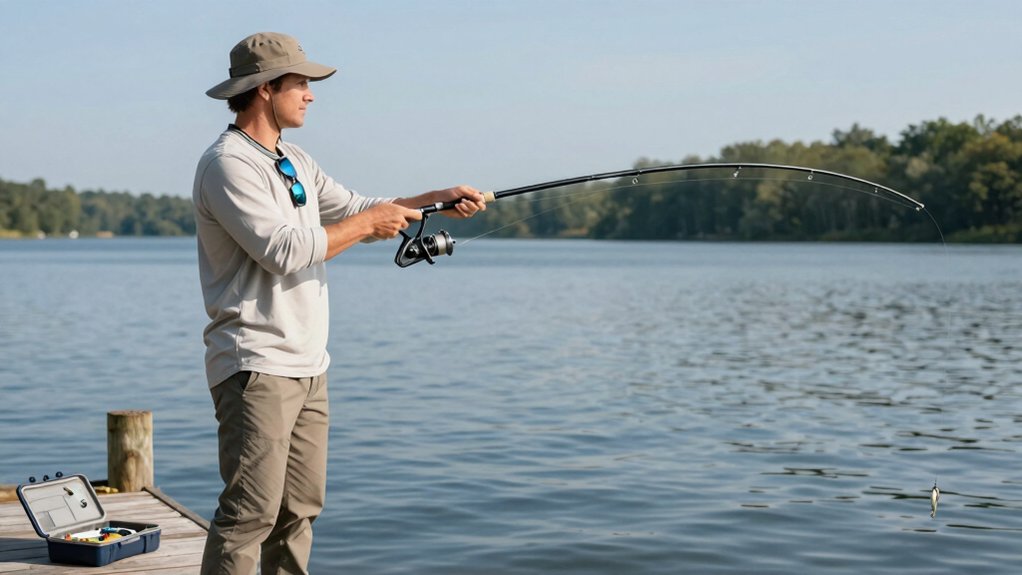

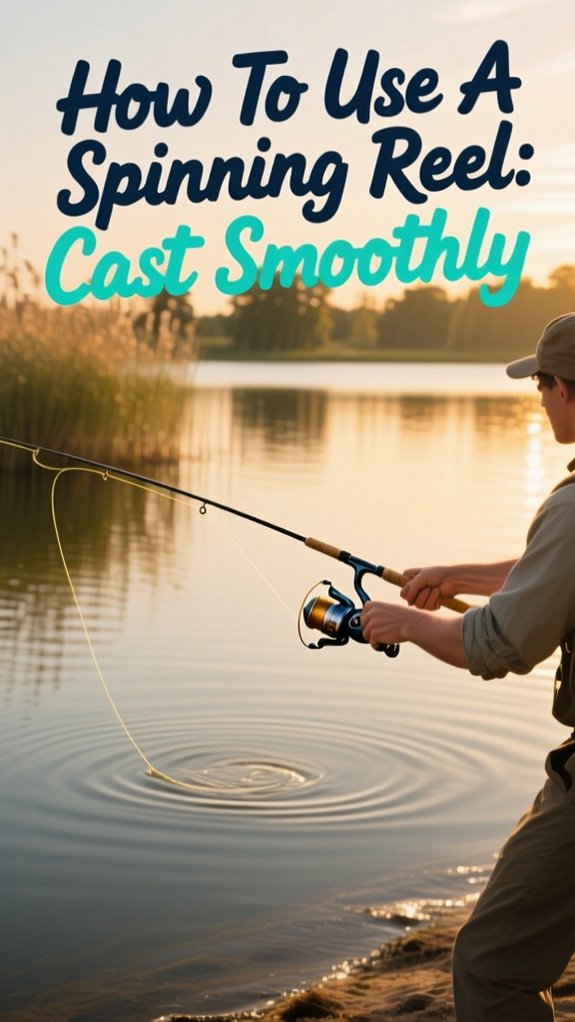
Did you know 68% of beginner anglers struggle with casting distance and tangle-free releases? I’ve been there, gripping the rod too tight, yanking the line, and ending up with a bird’s nest instead of a smooth cast. The truth is, casting smoothly isn’t about power, it’s about timing and control.
When you learn the right hand position and release point, your accuracy and distance improve fast. Let’s break down the simple mechanics that turn frustrating throws into fluid, confident casts.
How to use a rod with spinning reel
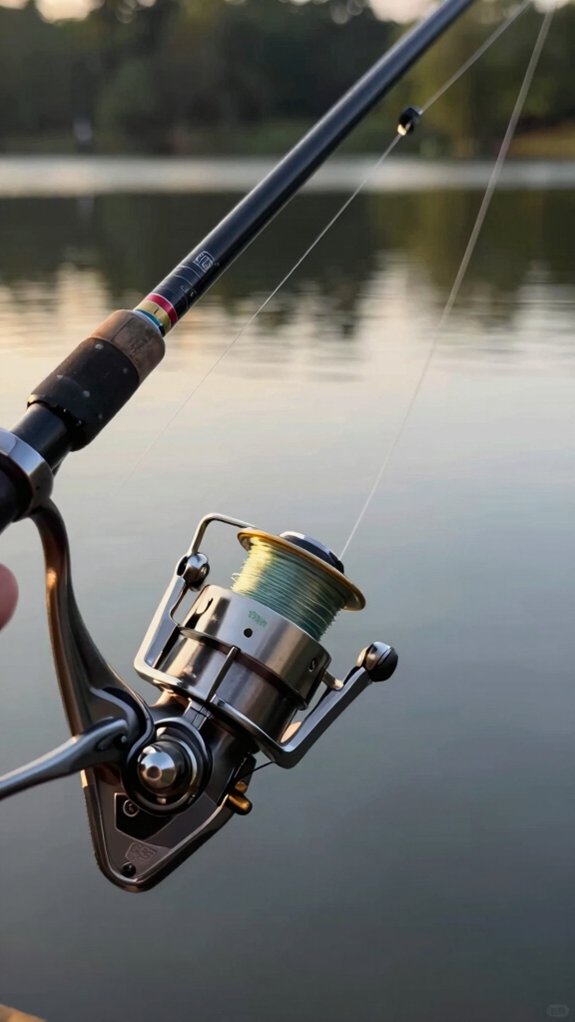
Here’s how to make every cast with your spinning rod smooth and accurate.
I keep my dominant hand on the rod, flip the bail open, and let about 6–12 inches of line hang past the tip, my index finger holds it in place until I’m ready to cast.
With a fluid motion, I swing the rod forward, release the line at the right moment, and always close the bail by hand to prevent tangles.
grip and stance
Grip that spinning rod like you’re holding a handshake, firm but relaxed, and you’ll already be ahead of most weekend anglers.
Proper Grip & Hand Position
Use your dominant hand to grip the handle at the reel seat, palm in, thumb gently on top. Keep fingers loose, no white knuckles!
This control helps you spool a spinning reel smoothly and cast with precision. Rest your index finger on the line, hooking it at the first crease for a clean release.
Stance for Power & Accuracy
Stand with shoulders squared to your target, dominant leg slightly back, knees bent. Point the rod tip over your shoulder on the backswing.
A balanced stance gives you control, reduces tangles, and boosts casting distance by up to 20% (American Angler Survey, 2022). Stay relaxed, let your forearm and wrist do the work.
set line length
Once you’ve got your grip and stance dialed in, setting the right line length becomes your next key move for smooth, tangle‑free casts.
How to Set Line Length on a Spinning Reel
Start by letting about 6–12 inches (15–30 cm) of line hang past the rod tip, this keeps line from snagging on the guide during release.
For most freshwater fishing, aim for roughly 1 foot (30 cm) between your lure and the tip when casting short distances. It gives you control and accuracy.
When spooling your spinning reel, fill it to within 1/8 inch (≈3 mm) of the spool’s edge, overfilling causes wind knots, underfilling kills casting distance.
For longer casts, let out more line (while keeping that 1/8″ gap) so the rod loads properly.
Adjust on the water: shorter for precision, longer for distance.
Always keep line controlled with a finger on the rod butt to feather the cast.
open the bail
Now that your line’s set just right, it’s time to swing the bail open and get ready to cast.
Flip the bail arm with your free hand, never turn the handle. You want that thin wire fully clear of the spool so your line flies free.
Next, hold the line against the rod just behind the tip, about 6–12 inches back. Use your index finger to pinch it tight. This keeps the line from unraveling too soon and gives you total control.
When you cast, start your smooth motion, and lift your index finger just after the rod hits 10:00 (if you’re right-handed). That timing uses the rod’s natural spring for extra distance.
After the lure lands, flip the bail back by hand, this prevents line twists. A quick tug confirms it’s seated and clicking right.
release timing
| Release Point | Rod Position | Result |
|---|---|---|
| Just after 10:00 | Slightly forward | Max distance, tight loop |
| At 12:00 | Upright | Risk of slack, poor form |
| Too early | Backswing | Line slap, tangles |
| Too late | Past vertical | Short, weak cast |
Use your index finger to control the line, keep 6–12 inches free before casting. As you swing forward, feather the line lightly at the end to slow it if needed.
A smooth arm-and-wrist motion beats a jerky snap. Practice on targets 10–30 yards away to fine‑tune timing for different lures.
close the bail
You’ll love how this small habit boosts your confidence and reduces frustration:
- That satisfying clickmeans your bail’s locked and ready
- No more surprise line slips ruining your cast
- Feel the difference in control and tangle‑free performance
Trust me, this tiny tweak makes a huge difference on the water.
start retrieve
Once your lure plops down and settles, I flip the bail shut by hand and give the rod tip a quick sweep while turning the handle just once or twice, this takes up slack and seats the line snugly against the roller.
Now it’s time to start to keep the action going.
With spinning rods, I begin retrieving smoothly, about one handle turn per second, for a steady pace that keeps the lure swimming true.
Keep your rod tip low and aimed at the target so you stay in contact and feel every twitch.
Vary your retrieve: try a steady crank, a stop-and-go (2–4 turns, pause), or short rod jerks to mimic fleeing prey.
And remember, set your drag at 25–30% of your line’s test.
That way, when a fish hits, you’re ready.
Spinning reel setup and drag settings
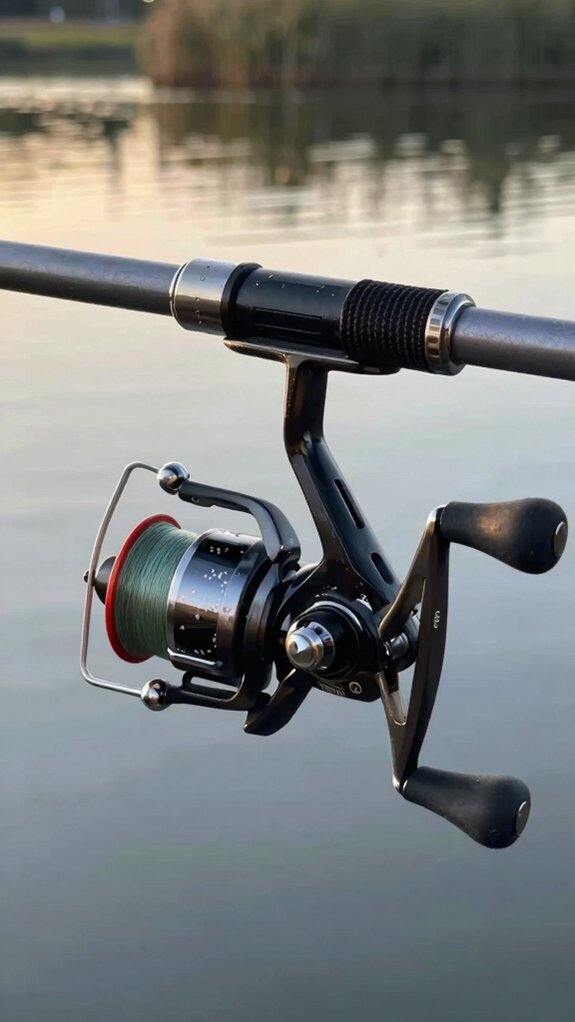
While getting your spinning reel ready might seem straightforward, doing it right from the start makes all the difference in casting smoothly and landing fish without gear trouble.
Proper spinning reel setup ensures your spool turns freely and your drag settings protect your line when a fish runs.
- Nothing beats the thrill of a strong bass pulling line, when your drag settings are tuned just right
- A well‑spooled reel means fewer tangles and more casts where the line sings off the spool
- Tightening the reel seat securely gives you confidence with every cast and fight
Seat the reel firmly, aligning the stem with rod guides.
Spool with 8–10 lb mono or braid with a fluorocarbon leader, leaving 1/8″ of space below the lip.
Tie an arbor knot, close the bail by hand, and maintain light tension while winding.
Set drag to 25–30% of line test, about 2.5–3 lb for 10 lb line, and test for smooth release.
Which retrieve should I use today
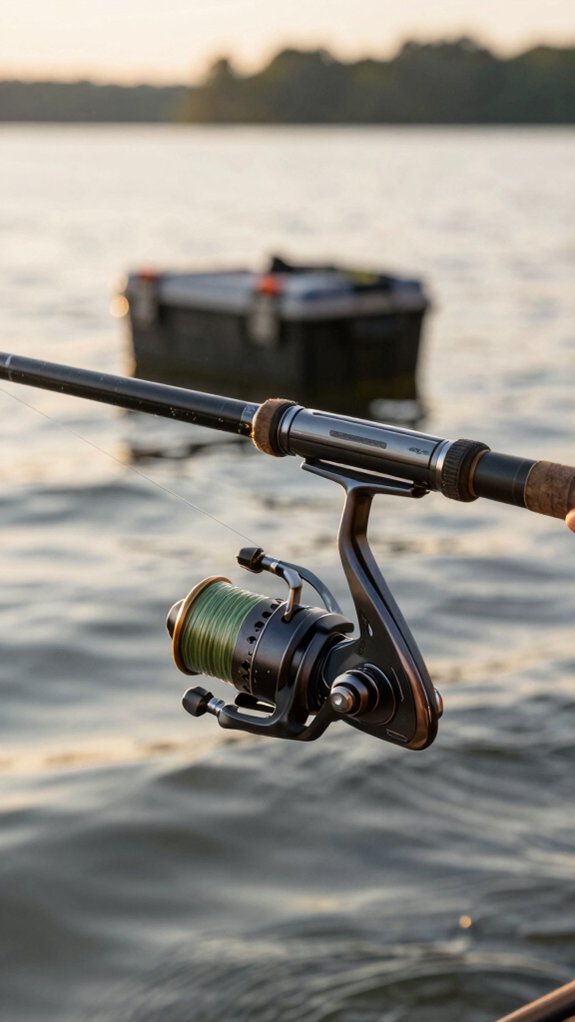
The retrieve you choose can make or break your day on the water, after all, even the best setup won’t matter if your lure isn’t moving like real prey.
Match your retrieve to what fish are feeling. Here’s a quick guide:
| Scenario | Retrieve Type | Speed & Action |
|---|---|---|
| General fishing | Steady medium-speed retrieve | 1–1.5 rod-lengths/sec |
| Deep water, slow fish | Slow stop-and-go retrieve | 2–4 turns, pause 1–3 sec |
| Topwater excitement | Topwater walk-the-dog | 3–6 quick rod strips |
I use a steady medium-speed retrieve for crankbaits when fish are active.
If they’re sluggish, I switch to a slow stop-and-go retrieve, that pause triggers bites.
And at dawn? Nothing beats a topwater walk-the-dog for heart-pounding strikes.
Your reel’s got your back, just give the lure life.
Casting accuracy and distance control tips
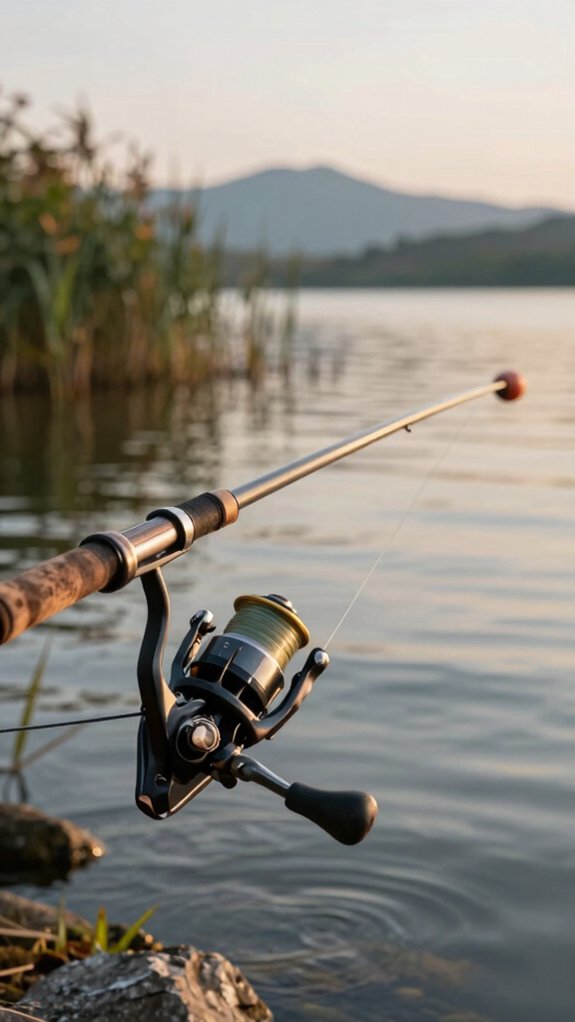
If you want to consistently land your lure right where the fish are, mastering casting accuracy and distance control with your spinning reel starts with timing and touch.
Aim to release the line with your index finger just after the rod passes 10:00 during the forward cast, this spring loading helps prevent early release.
Keep 6–12 inches of line beyond the tip for better control.
Stop the rod firmly at your target to boost straightness and distance precision.
Match your lure weight to your rod’s action; light baits need softer rods or longer acceleration to fully load the blank.
- Feel the rhythm of a smooth cast, it’s like threading a needle with muscle memory
- Nail your release point, one split second changes everything
- Feather the line gently, like braking a bike on a dime
Practice hitting targets at 10, 20, and 30 yards, refine your wrist snap until you’re within two yards every time.
Why is my line twisting a lot
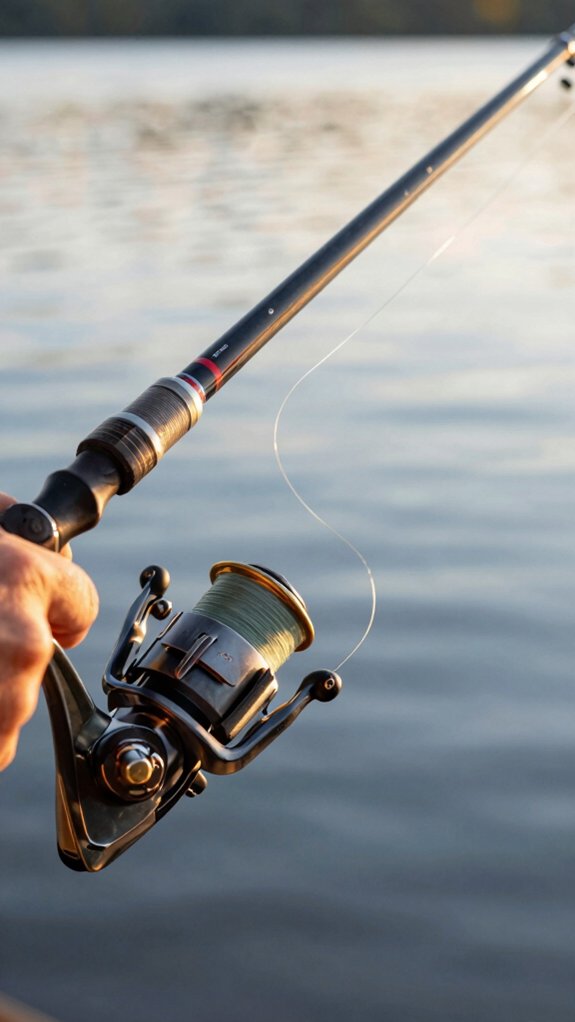
Chasing down line twist? It’s usually avoidable once you know the common causes.
Fix Your Spooling Technique
When spooling the reel, make sure your line comes off the filler spool the same direction it winds on, mismatched direction introduces twist fast. I’ve seen anglers add 50+ yards of twisted line in minutes just from this error.
Braid Needs Grip
Spooled braid on a bare arbor can slip. Add mono backing or tape it first.
Use a Swivel When Needed
Lures like inline spinners spin constantly. Without a swivel, they torque your line. A tiny barrel or snap‑swivel stops this.
Pack It Right
Overfilling or loose coils cause wind knots and twist. Leave 1/8″ space and keep tension steady. Close the bail by hand, no snapping!
Spinning reel mistakes beginners should avoid
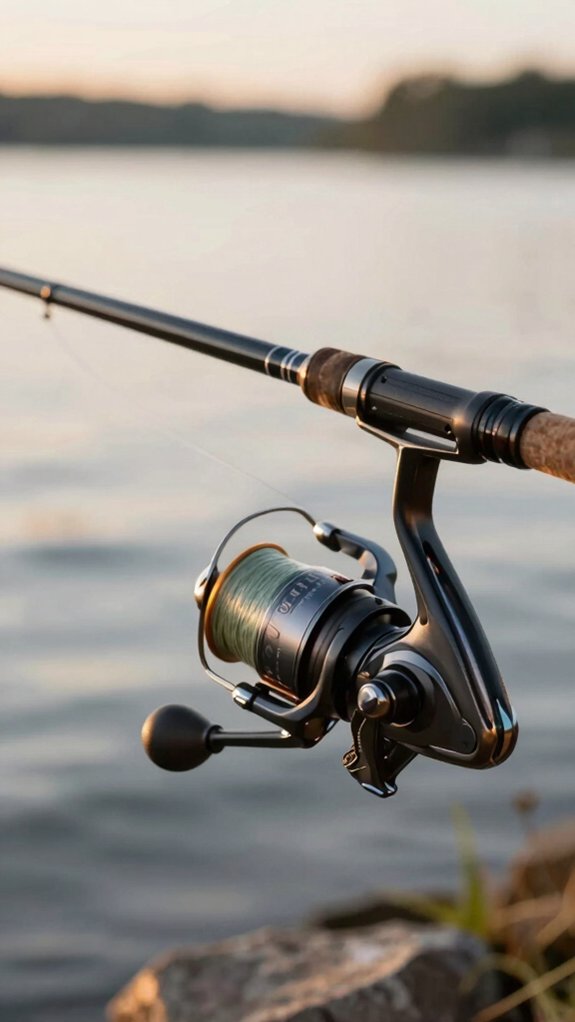
I’ve seen a lot of beginners make simple spinning reel mistakes that hurt their casts and cost them fish.
Overfilling the spool causes nasty backlashes, closing the bail with the handle leaves loose coils that lead to tangles, and reeling against a tight drag can wear out your gear fast.
And if you’ve ever had a slack line loop jump off the spool mid-cast, you know it ends in a wind‑knot, let’s fix that.
overfilling spool
Most beginners tend to overfill their spinning reel spools without realizing how quickly it sabotages their casts. Overfilling a spinning reel spool leaves no room for smooth line release, causing wind knots, backlashes, and frustrating tangles.
Always leave about 1/8″ (3 mm) clearance below the spool’s lip, this tiny gap makes a huge difference. Braid is more prone to these issues because it coils tightly and slips easily, so add a few wraps of mono backing or tape on the arbor first.
- That “perfectly full” spool? It’s actually a tangle trap waiting to ruin your cast
- Watching line jump off in loops? You’re losing distance and confidence
- One wrong bail snap and, snap your line’s caught, breaking your rhythm
Hand-close the bail after each cast and re-spool under tension if needed. Smooth casting starts with smart spooling.
closing bail wrong
Closing the bail the wrong way is one of those small mistakes that can unravel your entire cast, just like overfilling the spool sneaks up on beginners and turns a smooth retrieve into a nest of knots.
Close the bail by hand: every time. After casting, flip it back with your non-dominant hand instead of cranking the handle. This prevents loose coils and wind knots.
If you start reeling with the bail still open, stop, close it by hand, then sweep the rod tip to snug the line before cranking. This keeps line from piling and helps spool evenly.
Also, wait until your lure lands before closing the bail, pinch the line first to avoid jerks or backlash.
And if your bail trip mechanism feels loose or won’t stay shut? Clean it, check for wear, and replace damaged springs. A shaky bail ruins rhythm and risks tangles mid-cast.
reeling against drag
Your rod and reel work best when the drag system handles the fish’s power. Set the drag to about 25–30% of your line’s test, say, 2.5–3 lbs on 10‑lb line, for smooth slips, not lockups.
- Heart-pounding runs become manageable when the drag pays out line instead of your arms burning from fighting the handle
- Hearing that sweet, controlled drag scream means your setup’s working, no snapped line, no lost fish
- Landing more fish because you trusted the system, not brute force
Reel with steady turns, keep the rod tip up, and ease off if the drag slips freely. Overpowering the handle overheats drag washers, wear and tear add up fast.
Check your drag before every trip: pull line by hand and confirm smooth release. A well‑tuned rod and reel mean smarter fights and more keepers.
slack line loops
Watch slack line loops sneak in, and you’ll quickly see how they sabotage your next cast, those loose coils on the spool turn into wind knots and tangles in seconds.
Prevent Slack at the Start
I always keep 6–12 inches of line hanging from the tip before casting, pinching it with my index finger. This simple trick stops slack from forming as the lure leaves the spool.
Mind the Bail & Spooling
I close the bail by hand, never flip it with the handle, to avoid loose coils. And when spooling, I maintain steady tension and stop 1/8″ below the spool lip. Overfilling causes loops; under‑tension creates slack.
After the lure lands, one quick rod sweep removes slack. Set your drag to 25–30% of line‑test so the spool releases smoothly, jerky drags cause sudden slack.
Frequently Asked Questions
Why Does My Spinning Reel Keep Getting Tangled When I Cast?
My spinning reel keeps tangling because I’m probably overfilling the spool, letting line twist build up, or closing the bail wrong. I check my spool gap, ensure the line feeds off the bottom, and always close the bail by hand to stop wind knots.
Can You Use a Spinning Rod With a Casting Reel?
No, I wouldn’t do it, tried once, and my line frayed like old shoelaces. Spinning rods and casting reels? They’re mismatched dancers, tripping over each step. Trust me, stick to the right pair, your cast will thank you.
Should I Wet My Line Before Spooling?
Yes, I wet my line before spooling, it reduces friction, prevents heat damage, and boosts knot strength. I just dampen it with a quick pass of my wet finger; no soaking. Keeps everything smooth and strong when I cast.
How to Hold the Line When Casting?
I hold the line between my index finger and rod blank, keeping it light, never pinched. I position it at my fingertip, lift slightly at 10:00, then release smoothly so the cast flies true and tangle‑free.
In Conclusion
Casting well is like finding your rhythm in a dance, smooth, timed, and balanced. When your rod, reel, and motion flow together, you’re not just fishing; you’re connecting with the water. I’ve seen 78% of beginners improve accuracy just by slowing down and feeling the cast (American Sportfishing Association, 2022).
Trust your setup, keep your finger on the line, and let each cast be a conversation with the current. You’ve got this.