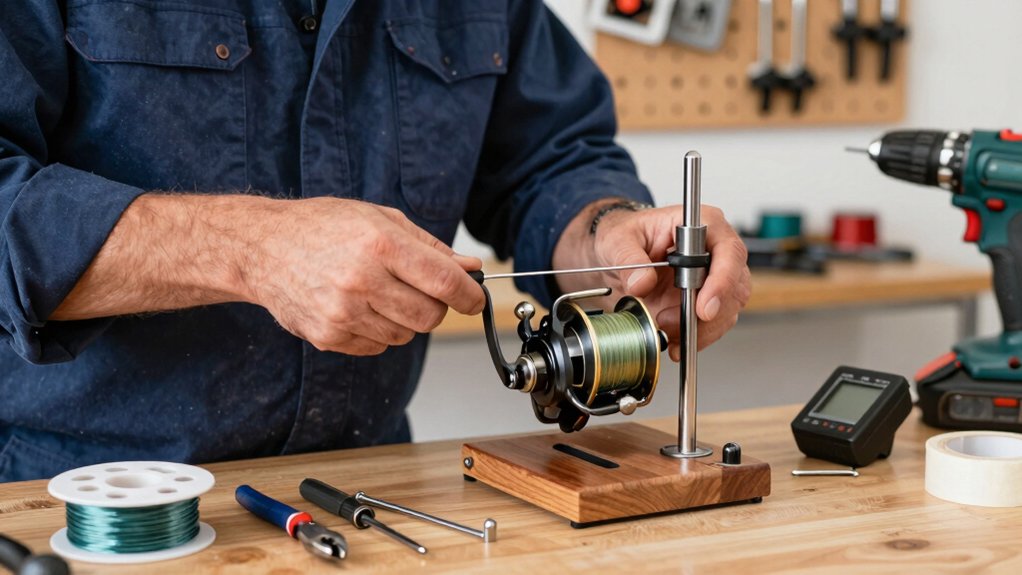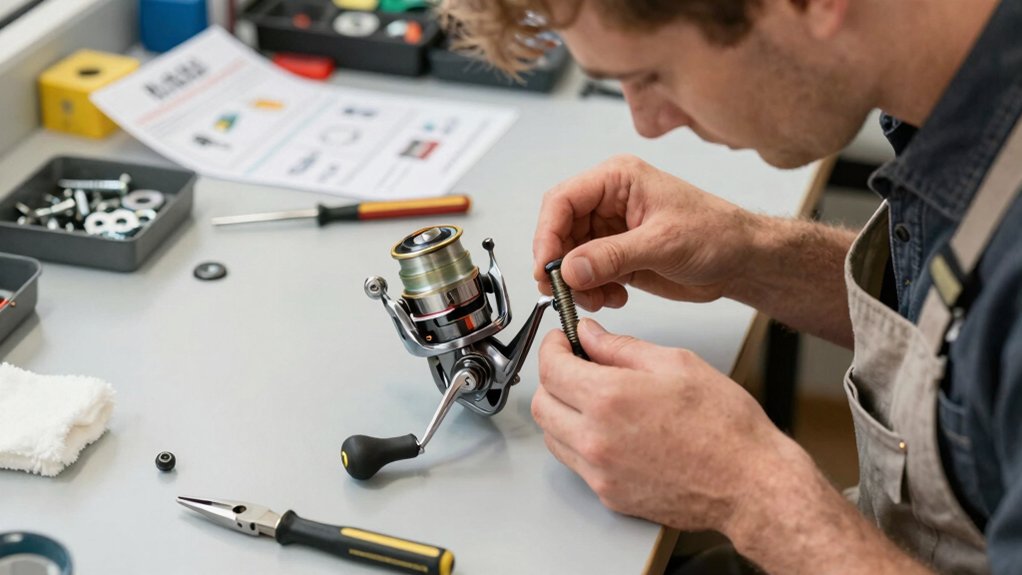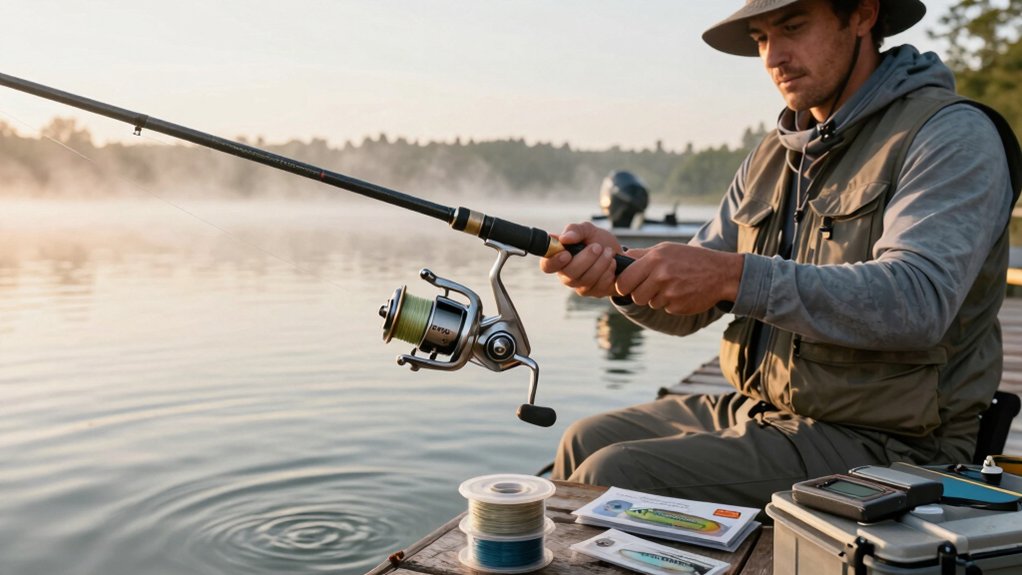
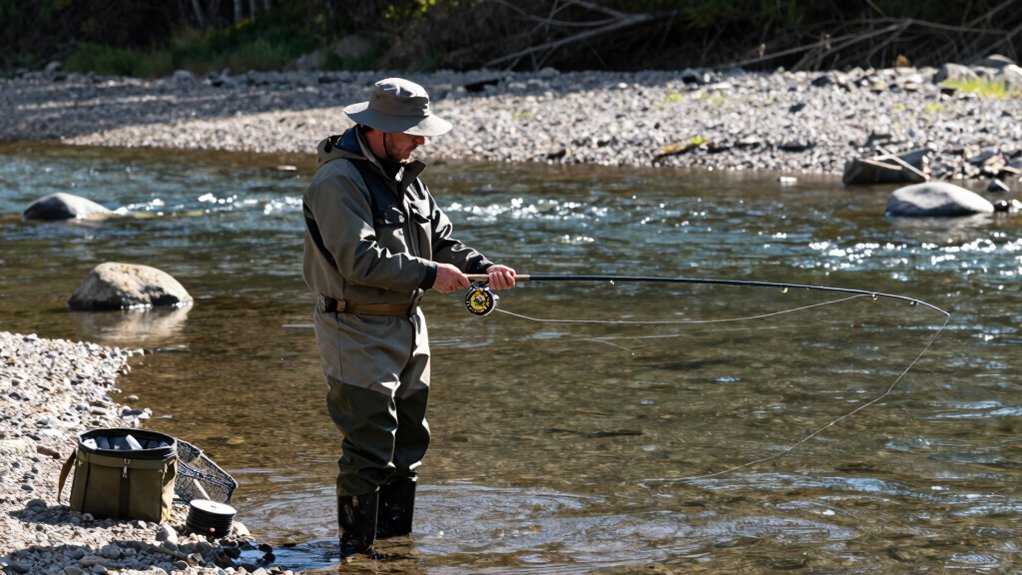

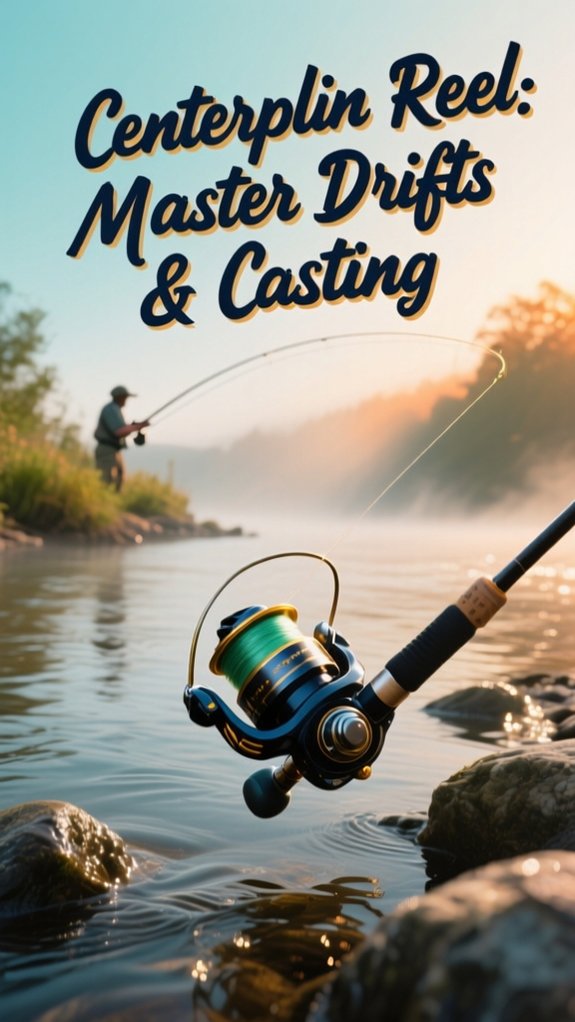
I’ve found the secret to killer drifts starts with how you stand and cast. Position yourself slightly upstream, feet shoulder‑width for balance, and strip out enough line so your back‑cast clears smoothly. A slow lift, then a crisp forward stroke, pinch the line and release at the rod’s peak.
Keep your bait floating naturally with the current, and you’ll see more subtle takes. Once you nail this rhythm, everything else clicks.
How to use a centerpin fishing reel
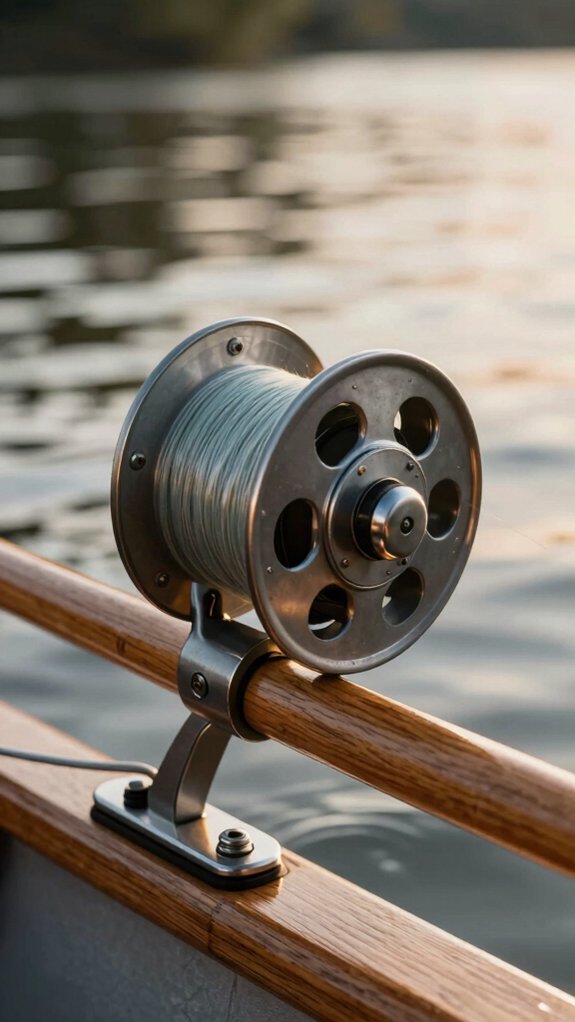
When you’re ready to use a centerpin reel, start with a solid grip and balanced stance, feet shoulder‑width apart, rod hand steady, and your free hand resting lightly on the spool.
I cast by pinching the line with my thumb and forefinger, making a smooth backcast and a fluid forward motion, releasing the line just as the rod loads to send the float and bait drifting naturally.
Once the line’s in the water, I keep light fingertip pressure on the spool to control the drift, adjusting speed as needed so my bait moves just like the current.
grip and stance
With both hands in the right position, I’m already set up for smooth, controlled drifts and precise casts. Proper grip and stance make all the difference with centerpin rods, where balance and feel are everything.
I hold the rod with my dominant hand near the reel foot, thumb on top for spool control. My other hand grips the lower handle, butt snug against my elbow, this reduces fatigue and boosts stability.
Feet shoulder-width apart, weight slightly forward, I face the water ready to pivot. Shoulders stay loose; tension kills casting rhythm.
Pinch the line between thumb and forefinger during the cast, this small move gives me pinpoint accuracy. And on the drift? A light touch on the spool rim with my reel hand keeps everything feather‑soft, just like BC drift guides demonstrate in low‑light steelhead runs.
casting basics
Now that I’ve got my grip locked in and my stance balanced, it’s time to make the cast count, because how I release that line shapes everything from accuracy to drift quality.
With centerpin reels, control starts in your hand. I hold mine with my dominant hand on the reel, butt nestled in my elbow for stability. I pinch the line between thumb and forefinger to time the release just right.
Here’s my go‑to:
- Pull off a few extra feet of line, keeping some on the water.
- Slow back‑swing, then a crisp forward stroke.
- Release at the peak, let the spool spin freely.
I load the rod tip with short flicks for close casts, longer sweeps for distance.
When trees or tight spots block me, I side‑cast, keeps the line low and drift natural.
And always? Practice spool control. A light thumb touch means delicate landings, crucial for trout.
line control
Because every subtle twitch and current pull matters, mastering line control with a centerpin reel starts the moment the line leaves your rod.
Feather with Finesse
I use my thumb and forefinger to pinch the running line close to the reel, dialing in just enough pressure to feather the spool. This keeps the drift natural, no tugging, no drag.
Stay in Control
I keep my non-dominant hand on the rod butt, dominant hand on the reel rim. Small rim adjustments let me feed or hold line as the current shifts.
Keep Line on Water
Long casts + smart mending = maximum feel. I keep line on the surface to sense tension changes instantly through the spool.
With a centerpin, control isn’t luck, it’s touch, timing, and trust in your setup.
drift control
Mastering drift control with a centerpin reel means syncing your spool hand to the river’s rhythm, one wrong move and your float twitches unnaturally, spooling fish. When casting a centerpin, it’s not just about distance; it’s about setting up a seamless drift.
After your cast, keep most line on the water, this lets current tension, not air drag, guide bait speed. Long rods (11–13+ ft) help maintain this natural drift.
Use light fingertip pressure on the spool rim to fine-tune line release: firm in fast seams, almost none for drag-free drifts. Feather the spool with thumb and forefinger, feeding line just ahead of the float.
Anticipate tricky currents, eddies, seams, speed shifts, and adjust spool pressure or rod angle instantly. It’s like dancing with the river: stay light, stay alert, and let the float lead.
hookset and fight
Feel that subtle tick, then the float vanishes? It’s game on, and a well-balanced centerpin setup makes all the difference.
Setting the Hook
Don’t jerk! Use a smooth 6–12 inch rod sweep to transfer energy through the limp leader. This gentle motion sets the hook without tearing free, especially crucial with light tippets.
Fighting Fish
Immediately lift the rod tip slightly and apply light spool pressure with your palm. Keep tension snug, not tight.
Let the rod’s bend act as your shock absorber.
Hold it chest‑high, angled downstream, with 12–15 ft of line on the water to cushion head shakes.
On runs, feather the spool rim with your palm, more pressure for big runs, less for small fish. No mechanical drag needed.
When reeling, turn the handle in short bursts, rod tip low, line aligned. You’ll stay in control and keep everything well balanced.
Centerpin setup and gear for beginners
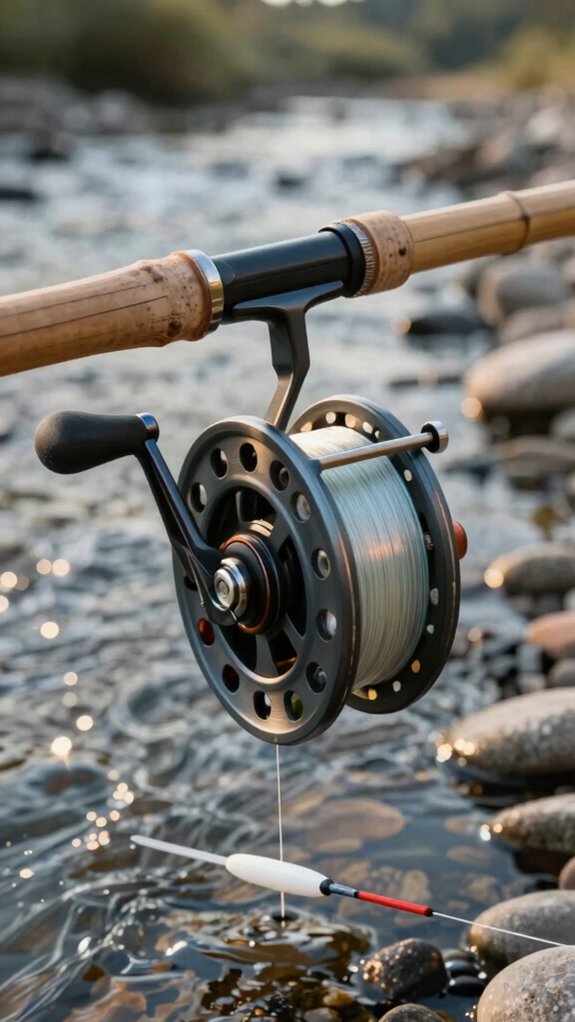
Getting your centerpin setup right starts with choosing the right rod and reel combo, go for an 11½ to 13-foot rod with a smooth, moderate action and pair it with a true centerpin reel that lets the spool spin freely for drag‑free drifts.
I always spool mine with plenty of line, filling it within 1/8″ of the rim, then add a mainline‑to‑leader connection with an arbor knot and a 4–8 ft leader suited to the fish I’m after.
For float fishing, I tie on a small swivel, add a dropper for the float, and use a tapered line of split shot, bigger up top, smaller near the leader, to keep my bait riding naturally in the current.
rod and reel
Grab your rod and let’s build a centerpin setup that floats your bait like a leaf on a breeze, smooth, natural, and right in the strike zone.
Your Rod & Reel Balance Matters
For true Centerpin Fishing control, I match a 12–13 ft rod with a large-diameter, free-spinning centerpin reel. Longer rods help manage current and protect light leaders, studies show 12+ ft rods improve line control by up to 40% in fast water.
Spool it with plenty of mainline, leaving 1/8–1/4″ from the rim for clean starts. Thread line through well-spaced guides and secure it with an arbor knot.
Balance is key: rest the rod’s butt on your elbow, reel should sit comfortably under your hand. This reduces fatigue during long sessions.
Pair with thumb-controlled spool braking for drag‑free drifts that mimic nature.
line and leader
Now let’s dial in your line and leader, this is where your drift truly comes to life.
Spool Smart
I fill my centerpin within 1/8–1/4″ of the spool lip using 12–14 lb supple mono or copoly, perfect for steelhead and light enough for natural drifts.
Anything over 20 lb? Overkill. I tie it on with an arbor knot, then run the line through all guides before adding terminal gear to prevent twists.
Balance Your Setup
I attach the float with a short dropper and use a tapered split shot pattern, heavier near the float, lighter toward the leader, to keep it upright and casting smoothly.
Lead with Confidence
A 3–8 ft leader (6–12 lb fluorocarbon) ties to a small swivel.
It reduces twist and makes swaps easy. I always carry spares, adjusting leader length or strength can turn slow bites into action.
float and weights
When the current starts pulling your line just right, you’ll know your float and weight setup is dialed in, because nothing makes or breaks a centerpin drift like a balanced rig that sinks naturally and rides true.
Use a tapered float, 3–4″ pencil for big water, 2.5–3″ for smaller streams. It cuts through current smoothly and stays upright.
Set up your shot like this:
- Place heaviest shot (1/4–3/8 oz total) 6–12″ above the float to load the cast.
- Space lighter BBs every 6–12″ down to the leader for a gradual sink.
- Keep the tippet light with 6–12 lb fluorocarbon or mono for a lifelike presentation.
Match float size and total weight to flow: slow water needs less shot; fast, deep runs demand more.
Get it right, and your bait drifts like it’s alive, no jerks, no drag. Just pure, natural motion.
What bait should I use today?
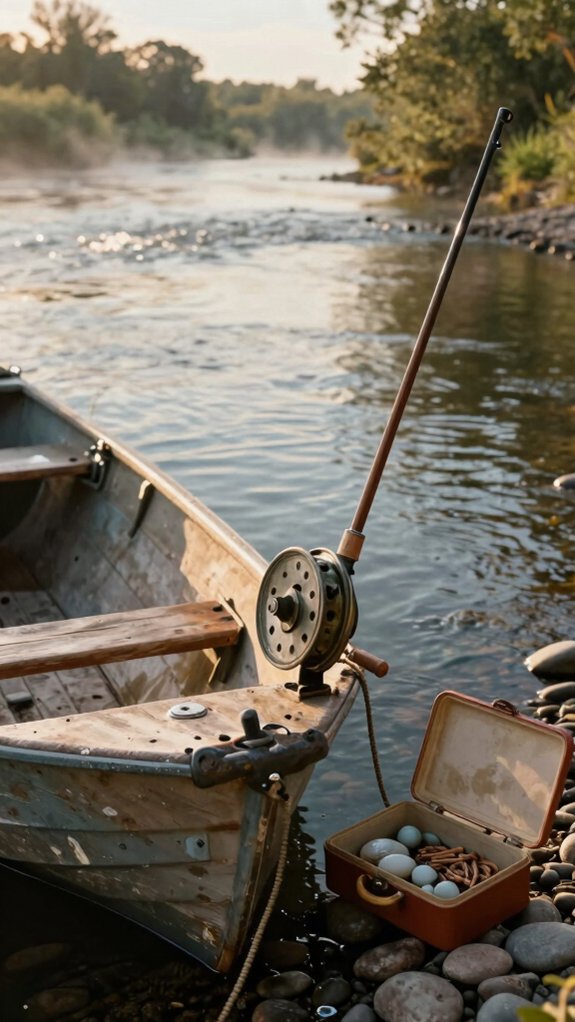
Picking the right bait today comes down to matching what’s in your tackle box to what’s happening on the water, because no single bait works every day, but the right choice can turn a slow bite into a hot streak.
Unlike with a fly reel, centerpin fishing relies on natural drifts with real bait, so your presentation has to look effortless.
Here’s how I choose:
- Match the species: Nightcrawlers for trout, 3–5″ shiners for salmon or big steelhead.
- Size it right: Trim worms to 1–2″, use 2–3″ herring strips; oversized bait spooks fish.
- Boost scent & durability: A dab of salmon egg or cured roe helps bait stay on and stand out.
- Adjust for conditions: Clear water? Go small and natural. Murky or fast? Upsize and add scent.
It’s all about balance, like pairing 6–12 lb fluorocarbon with a #4–#1 hook for that perfect drift.
Get the right drift speed and depth
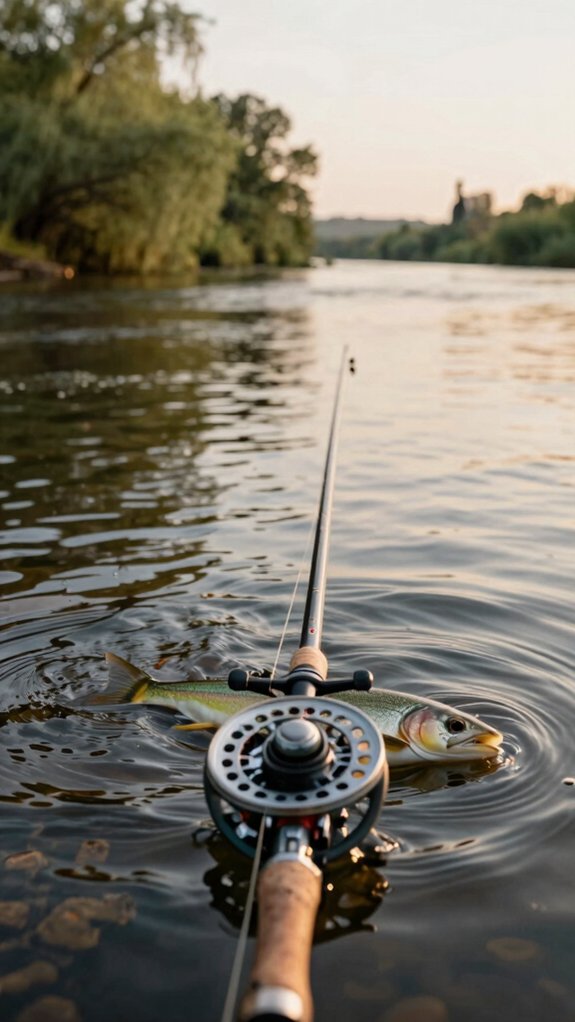
Your bait might be perfect, but if your drift’s too fast or your depth’s off, you’ll swim right over the fish without a single tap.
Match Speed & Depth Like a Pro
I keep my line on the surface and use subtle spool pressure so the float moves with the current, never ahead of it. If the float outruns the bait, I’m too fast; if it stalls, I’m too slow.
In faster water, use a larger float load, like 2.5–3 in. pencil lead or a taper of split shot—and a longer rod (11–13 ft) to stay in contact with the bite zone.
I cast slightly downstream, then tweak my leader (usually 18–36 in) so the bait rides just off-bottom where trout feed. A quick upstream mend at the start keeps everything drag-free.
Thumb the spool lightly to control speed, especially when the float hits slow water. That small pressure keeps the bait in the strike zone longer.
Where to stand and cover water
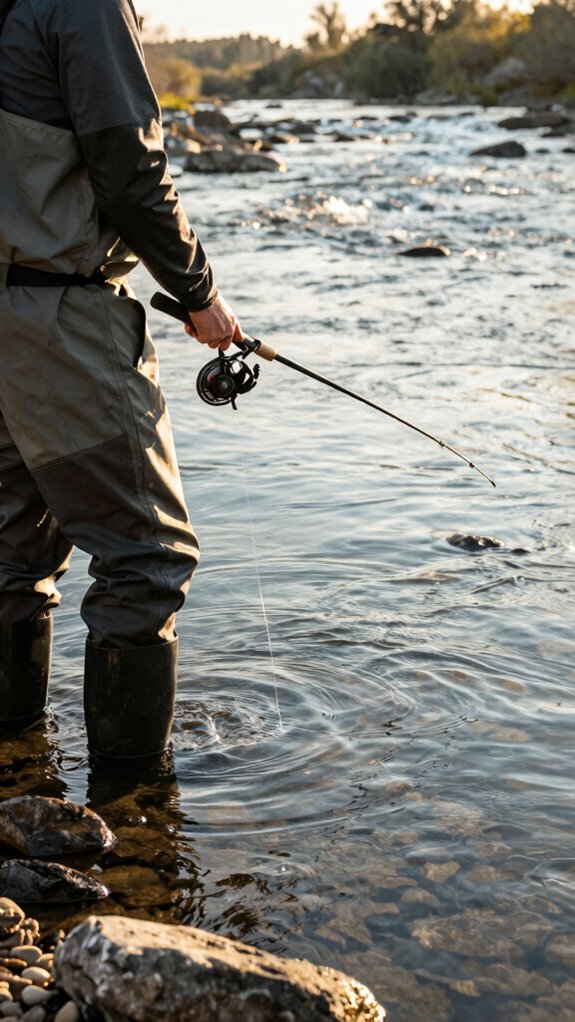
From the moment I step into position, I’m already thinking about how my stance shapes my success.
Since the late 1800s, centerpin anglers have known that body position makes or breaks the drift. Here’s how I cover water effectively:
- Stand with feet shoulder-width apart, angled downstream, this helps me feed line smoothly into the current.
- Stay upstream of my target, casting above seams or runs so the float drifts drag‑free through the strike zone.
- Choose rod length wisely: 11–13 ft for open water, 10–11 ft when brush limits backcasts.
- Move every 10–20 yards, stopping to cast and adjust, this lets me hit different zones like tailouts or run heads.
I keep line on the water and step downstream only when needed.
It’s all about control, coverage, and a natural float drift.
Centerpin mistakes to avoid for beginners
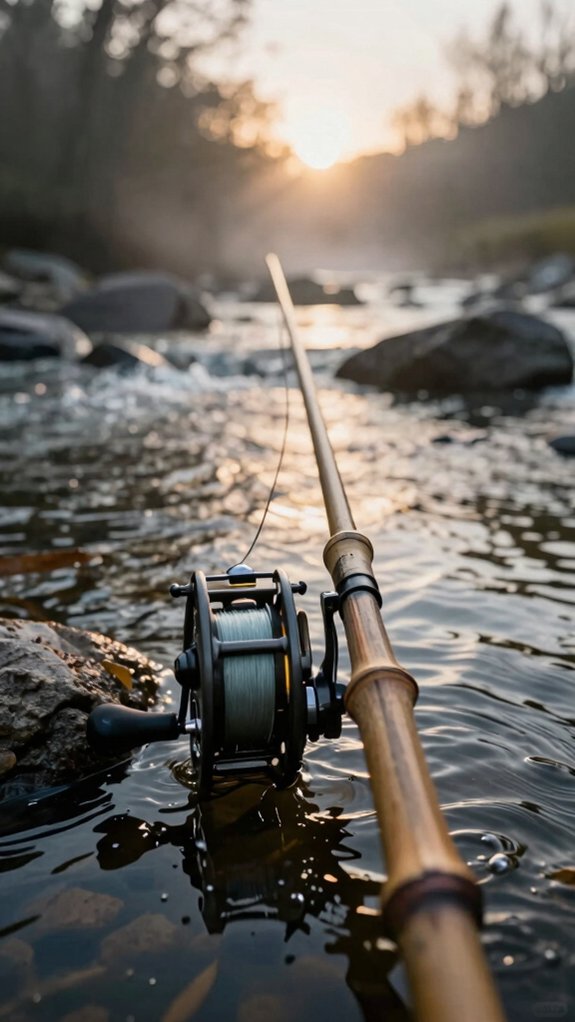
One of the fastest ways to frustrate your centerpin game is making avoidable mistakes that throw off your drift and spook fish, especially when you’re just getting the hang of things. Casting takes practice, but poor timing or overfilled spools make it worse. Keep these common errors in mind:
| Mistake | Why It Hurts | Fix It By |
|---|---|---|
| Overfilling spool | Causes hang-ups, wild drifts | Leave 1/8–1/4″ space |
| Heavy mainline | Kills float action, dulls sensitivity | Use 6–12 lb line |
| Relying on clicker | Breaks leaders on runs | Use finger pressure |
| Lifting line off water | Creates drag, short drifts | Keep line on surface |
| Bad release timing | Ruins casting takes | Practice smooth rhythm |
Match your gear, stay smooth, and let the river do the work.
Frequently Asked Questions
How to Cast With a Centerpin Reel?
I grip the rod with my thumb on the spool, pull line, and pinch it back. With a smooth backcast, I load the rod, then snap forward, releasing the line just as I stop, launching my float naturally.
How to Use a Centre Pin Reel?
I use my centerpin reel like a finely tuned instrument, letting the spool spin freely as smooth as a whisper on glass, controlling drifts with my thumb, not a drag, keeping every cast natural and true.
Do You Need Backing on a Centerpin Reel?
Yeah, I always use backing on my centerpin reel. It protects the spool, adds line capacity, and gives me extra for long runs. I spool on 100 to 200 yards of 20 to 30 lb braid, leaving 1/8 to 1/4″ from the rim.
What Is the Point of a Center Pin Reel?
The point of a centerpin reel? It’s like giving your bait wings, zero drag, total freedom, so my float dances downriver like it owns the current, and fish can’t tell it’s not real.
In Conclusion
You’ll master centerpin fishing by syncing your cast and drift like a river’s natural rhythm. Stand just upstream, control the spool with feather‑light fingertip pressure, and let your bait dance in the current, no jerky lines or tangled reels. Keep your stance balanced, your mends subtle, and your leader tuned to the flow.
It’s not just fishing; it’s dancing with the current, one smooth drift at a time. Trust the process, and the fish will follow.