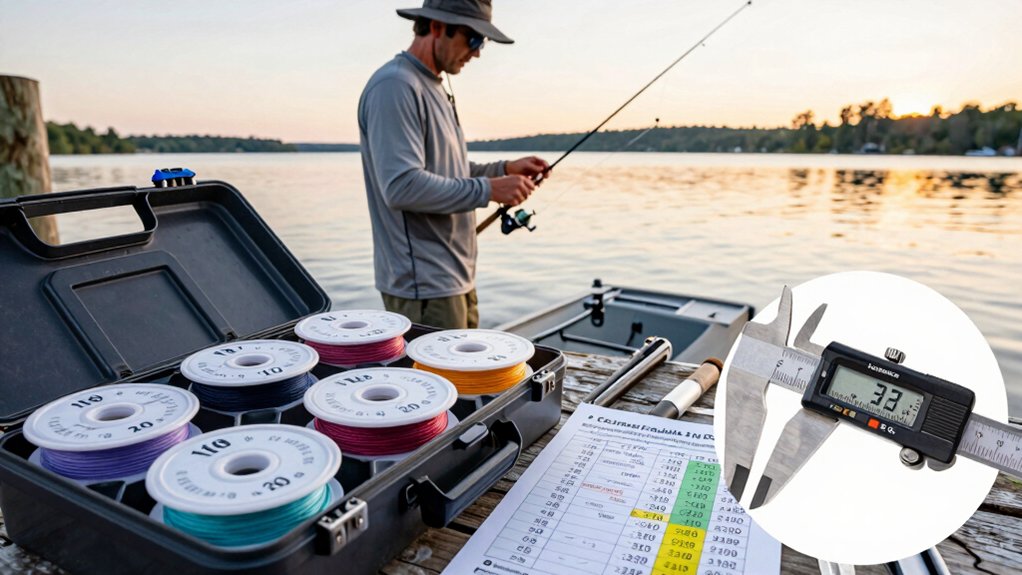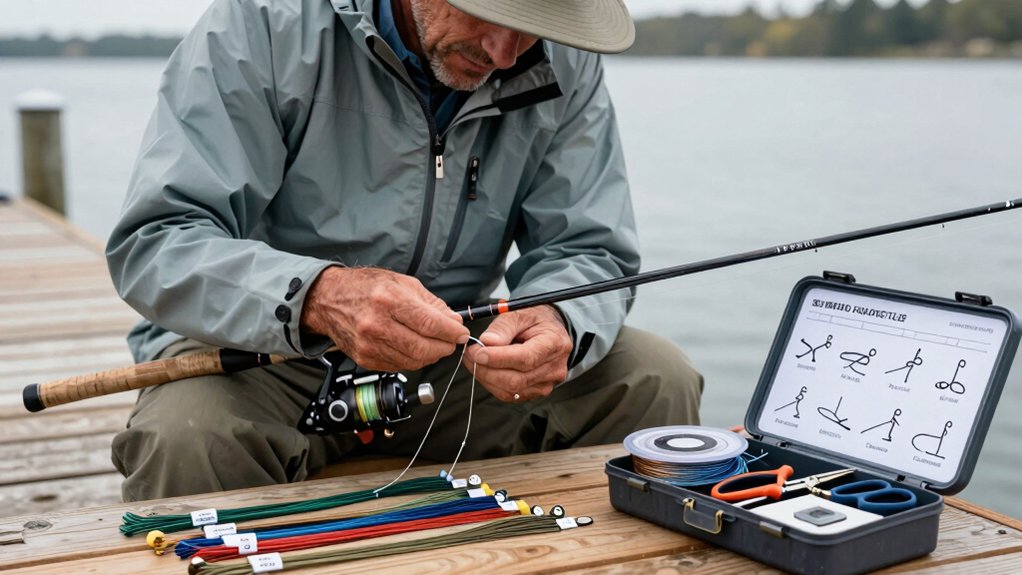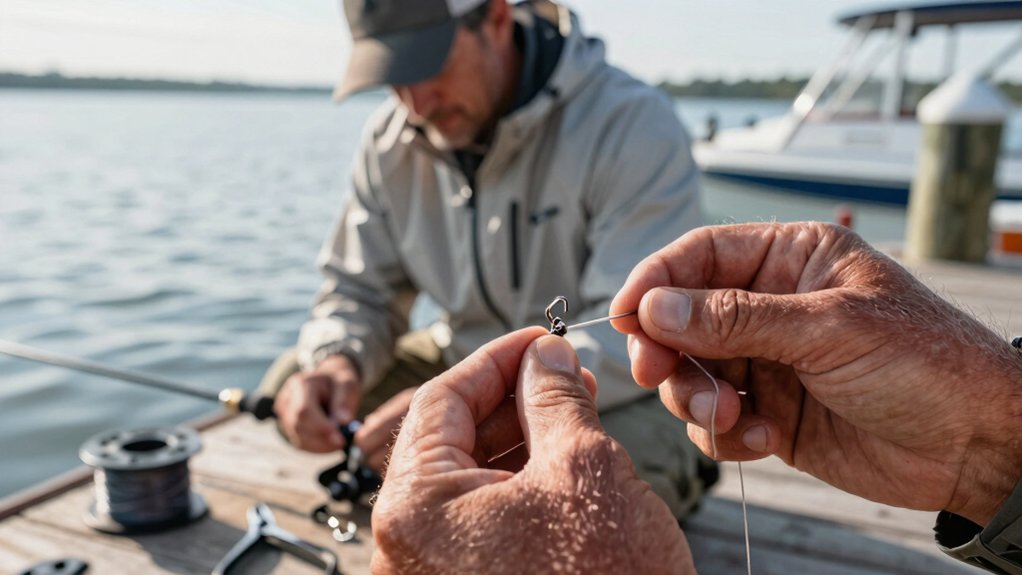
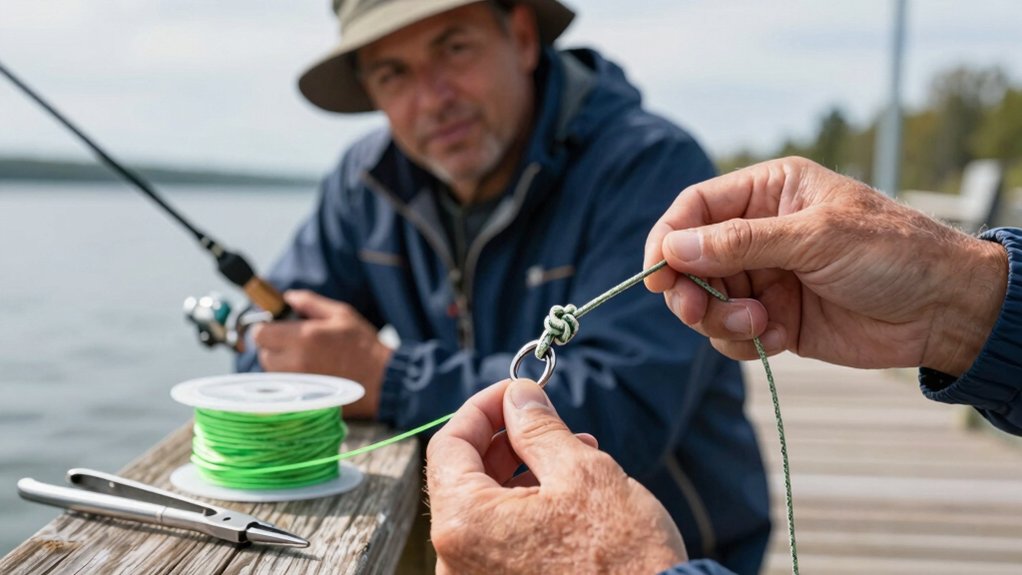

Strong knots make or break your catch when battling big fish on 50‑lb line. I’ve seen too many anglers lose trophy fish, not from poor technique, but from a failed knot. Getting it right starts with matching the knot to your line type and setup.
Whether you’re using braid, mono, or connecting a leader, one wrong wrap can cost you. Let’s break down exactly which knots hold under pressure and how to tie them so you’re ready when the next hard pull comes.
How to tie 50 lb fishing line
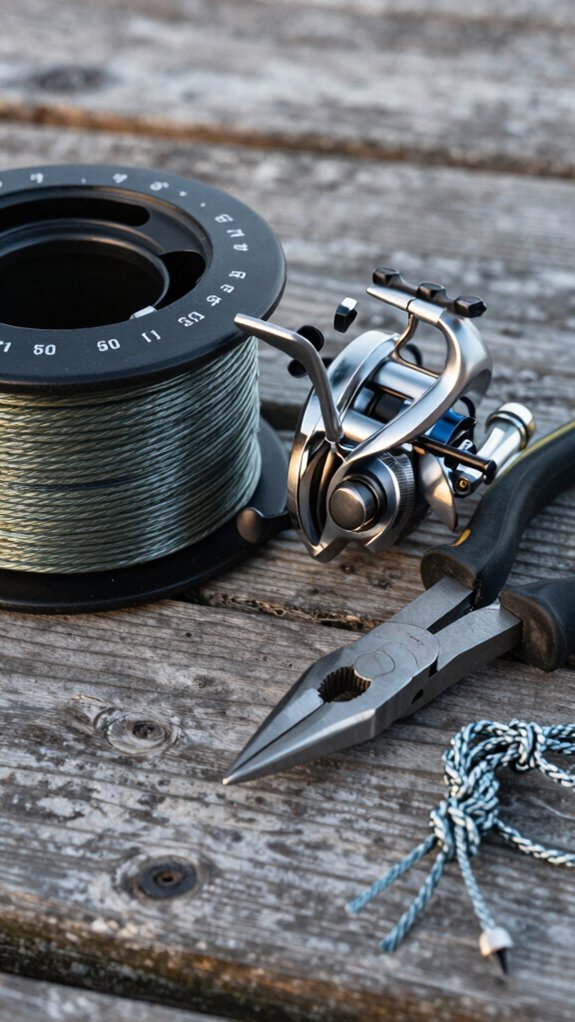
When tying 50‑lb fishing line, I always pick a strong, proven knot like the San Diego Jam or Palomar because they hold up under heavy loads.
I make slightly larger loops to give myself room to adjust, and never skip wetting the line, dipping it in water or saliva cuts friction and helps me tighten it slowly without frying the fibers.
Once snug, I give it a solid tug to test it, knowing a well‑seated knot keeps close to 95 % of the line’s strength when done right.
choose the knot
Tie it right the first time, and you’ll sleep better knowing your 50‑lb line won’t let go when a monster bites.
Pick the right knot for your line type
For 50‑lb mono or fluorocarbon, I trust the Uni Knot, it stays strong, especially when lines get heavy and the Trilene knot starts to “knuckle.”
With braid or doubled‑line setups, the Palomar knot is my go‑to: it’s simple and holds near 100% strength when moistened and cinched slow.
Joining braid to a heavy leader? Use a Double Uni (8–10 wraps on braid helps), or try an Albright for a sleeker fit.
Always wet the knot, keep wraps neat, and trim tags to 3–5 mm.
For peace of mind, add a drop of CA glue, pro anglers do it, and test under load.
Your gear’s only as strong as your weakest knot.
make larger loops
Starting with a bit of extra line gives me the room I need to form strong, reliable loops, even under the strain of 50-pound test. Using a doubled line helps me tie loop knots like the Palomar or Non‑Slip Loop with ease, leaving 6–12 inches of tag end so I can dress the knot smoothly and preserve strength.
- Form larger loops by doubling the line and leaving enough tag end for control
- Make 4–6 neat wraps in the loop shank, wet the line, and cinch slowly for up to 95% strength retention
- Trim the tag to ¼–½ inch and add a drop of super glue on slick braid to prevent slippage
I always test my loop knots under load first, pulling against a post, so I know they’ll hold shape and slide cleanly through guides when fighting a big fish. It’s a small step that makes a huge difference.
wet line first
Don’t let a dry knot cost you the fish of a lifetime, moistening your line before tightening is one of the fastest ways to lock in strength and prevent weak points with 50‑lb fishing line.
Wet the Knot, Save the Strength
I always wet the knot with saliva or water before cinching down. Friction heat from tightening a dry knot can weaken 50‑lb mono by up to 20%. A quick moistening preserves up to 95% of your line’s rated strength.
It takes two seconds: tie your knot, spit or drip water on it, then pull tight slowly. You’ll feel the difference: smoother seating, less stress on the fiber.
Whether you’re using 50‑lb mono, braid, or fluorocarbon, this tiny step makes a real‑world difference when a trophy fights hard. Skip it, and you’re gambling with your gear.
tighten slowly
- Use slow, steady pressure, never yank
- Switch back and forth between ends for balanced tension
- Finish with pliers or a hemostat for control, not brute force
After cinching, check that the coils lie flat and neat. Trim the tag to 3–4 mm and consider a dab of super‑glue for high‑stress setups.
Slow and steady wins the fight, every time.
test the knot
Always test your knot, skipping this step is how even the strongest 50‑lb line fails when you’re reeling in a hard‑pulling trophy.
How to Test Right
After tightening, pull the line steadily with both hands to about 80–90% of the line strength (40–45 lb). Watch for slippage or deformation. Wet the knot first, then give it several sharp tugs, those shock loads expose hidden flaws a steady pull might miss.
Check visually: neat, even wraps mean success; kinks or buried strands mean cut and retie.
If possible, tie the other end to a fixed point and pull the standing line through your rod guides. This checks if the knot slides smoothly, critical during casts or fish runs.
After passing tests, trim the tag to 3–5 mm. Add a tiny drop of super glue only if needed (like with a Palomar), then retest. A properly tested knot keeps your hard‑earned catch on the line.
Best knots for heavy 50 lb line
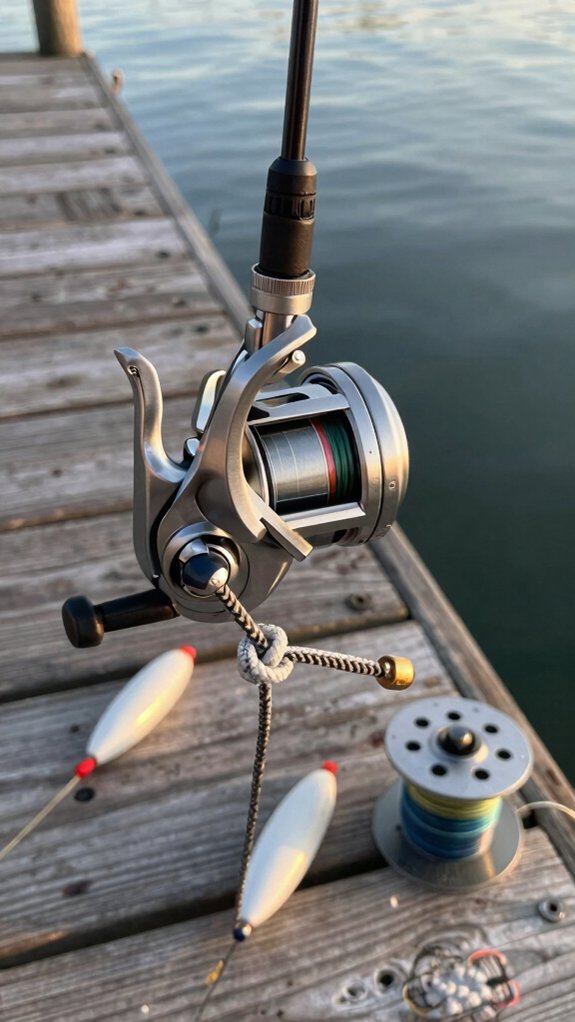
When you’re using 50-lb line, picking the right knot isn’t just smart, it’s essential for landing big fish without a snap-off.
I rely on the Palomar for braid-to-hook ties since it’s simple and keeps nearly all your line strength, and for joining lines, the Double Uni and Albright are my go-tos because they handle heavy loads without slipping.
For monofilament or fluorocarbon, I stick with the Trilene knot (a cousin of the Improved Clinch) and sometimes the Snell, depending on the hook style and species I’m after.
Palomar knot
Tie a Palomar knot right, and you’ll keep nearly all the strength of your 50‑pound line, making it my go‑to choice for heavy‑duty fishing. This Palomar knot is strong and easy, perfect for both braid and monofilament. I use it all the time because it’s reliable and quick once you get the hang of it.
- Double 6–8 inches of line, pass the loop through the hook, tie a loose overhand, then slide the loop over the hook and pull tight
- Wet the knot before cinching down, especially with slick 50‑lb braid, to reduce friction and prevent weak spots
- Trim the tag end to 1–2 mm and add a tiny drop of CA glue if you’re targeting toothy fish or fishing in heavy cover
For braid‑to‑leader connections, I switch to a Uni or Albright, but for direct terminal ties? The Palomar’s unbeatable.
Double uni-knot
Here’s how I tie this:
- Tie a uni knot with each tag end around the opposite standing line.
- On the braid side, I do 8–10 wraps (not 4–6) to prevent slippage.
- Moisten the knot, then pull slowly to seat both knots before tightening them toward each other.
- Trim tags to 2–3 mm so they won’t snag guides.
I check for neat, even coils, no gaps or lumps.
For extra security, a tiny drop of Crazy Glue helps.
I always test with a steady pull before casting.
Albright knot
The Albright knot is my go‑to when I need a sleek, reliable connection between my 50‑lb braid and a heavy fluorocarbon leader, especially when casting long distances or targeting hard‑pulling fish like tuna or tarpon.
It’s compact, slides smoothly through guides, and handles the diameter jump between lines like a pro. Here’s how I get it right every time:
- Form a small loop in the leader, thread the braid through, and wrap the tag end 10–12 times back along the loop, fewer for stiff, heavy braid.
- Always moisten the knot before tightening to prevent friction burns; cinch slowly and evenly.
- Trim the tag close, but not so short it unravels, neat, snug wraps are key for strength.
I’ve tested this knot under load, and it holds up when it counts. For 50‑lb setups, the Albright knot delivers confidence every cast.
Trilene knot
When you’re wrestling a 50-pound-class grouper off the reef or battling a hard-charging king mackerel, the last thing you want is a knot failure stealing your shot.
Trilene Knot for 50-lb Monofilament
I trust the Trilene Knot for 50-lb monofilament because it’s strong and compact, perfect when leader length matters.
But here’s the trick: keep it simple with just 3–4 wraps (3 is often better above 30 lb) so the knot won’t “knuckle up” and weaken.
Always wet the line before tightening, this cuts friction and protects strength. Pull it slow and steady.
After tying, trim the tag end to 3–4 mm. Test each knot with a firm, slow pull near its limit. If it bulges or wraps misalign, re-tie.
For joining lines, I skip the Trilene, use a back-to-back Uni instead.
Snell knot
You’re not leaving hook-up success to chance when you’re targeting big reef predators or open-water brutes, tying a solid snell knot gives you the confidence that your 50‑lb line is fully engaged along the entire shank of the hook, not just dangling from the eye.
For heavy 50‑lb mono or braid, the snell knot is a game-changer. Wrap it right, and you’ll transfer force straight to the point, maximizing strength and minimizing stress at the eye.
- Use a 6–8 in tag end and make 5–7 tight wraps around the shank and doubled line
- Wet the line before tightening, then cinch slowly, finish with pliers for a rock‑solid seat
- Trim the tag to 1/8–1/4 in so it won’t fray but still shows clean, snug coils
I’ve relied on the snell knot for years with 50‑lb mono, it’s my go‑to for live bait rigs and tough‑chew species.
Non-slip loop
Lock in a solid connection that won’t blow out under pressure, and you’ll give every hard-charging predator a real fight, starting with the non-slip loop knot, a stealth powerhouse for 50-lb mono or braid when tied right.
Why the Non-Slip Loop Shines
This knot creates a free-swinging loop that boosts lure action, ideal for big-game jigs or soft plastics. On 50-lb line, it maintains over 90% strength if tied neatly.
- Moisten the line, form a loop, and wrap the tag end 5–6 times around the double line.
- For slick braid, increase wraps to 7–8 and lock it down slowly with pliers.
- Trim the tag to 3–5 mm, just like with a San Diego Jam, to avoid snags.
Pair it with a heavy-duty snap or swivel, and consider a drop of CA glue on the knot’s base in saltwater. It’s not as compact as the San Diego Jam, but its action‑enhancing loop makes it a secret weapon.
Which knot for 50 lb braid vs mono?
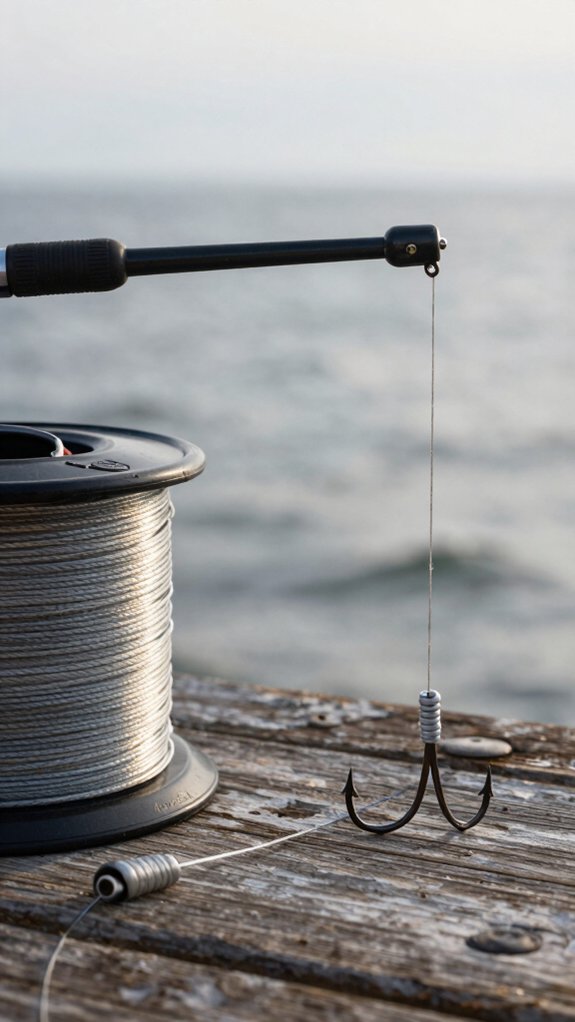
Choose the right knot for your 50‑lb braid or mono, and you’ll land more fish without worrying about your line slipping or failing at the worst moment.
For braid straight to lure, I trust the Palomar knot, it’s simple and holds up to 98% of line strength when doubled and wet before tightening. When joining braid to mono or fluorocarbon leader, the Double Uni is my go‑to: 6–8 wraps on the braid side (8–10 for slick lines), 4–6 on the leader.
- Smooth knot profile means fewer snags and better casting
- Always moisten the knot before cinching to prevent friction burns
- Trim tag ends to 2–3 mm, just enough to stay secure, not so long they tangle
This combo keeps my setup strong, balanced, and ready for hard‑pulling predators.
How to connect 50 lb line to leader
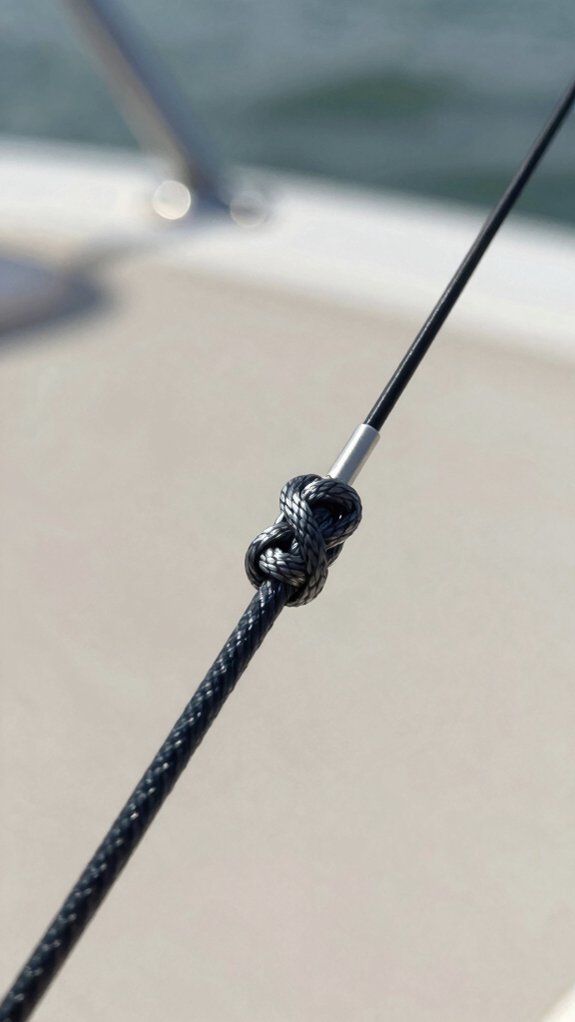
When you’re running 50-pound braid and need to attach a leader, whether it’s 40- to 60-pound mono or a heavier fluorocarbon, tying the right knot makes all the difference in strength, casting ease, and confidence when a big fish makes its move.
For balanced strength, I use the Double Uni knot, 6–8 wraps on the braid side, 4–6 on the leader. Snug both knots slowly, then pull them together.
It’s simple and proven, with tests showing up to 90% strength retention when tied right.
But if your leader’s much heavier or thicker, go with the Albright. Make 7–10 tight wraps around the doubled leader for a sleek, tangle-free connection that slips through guides smoothly.
Always wet the line before cinching, inspect wraps, and consider a drop of glue on the tag end. Pair it with a heavy-duty swivel rated above 50 lb, your cast and confidence will thank you.
Common mistakes when tying heavy line
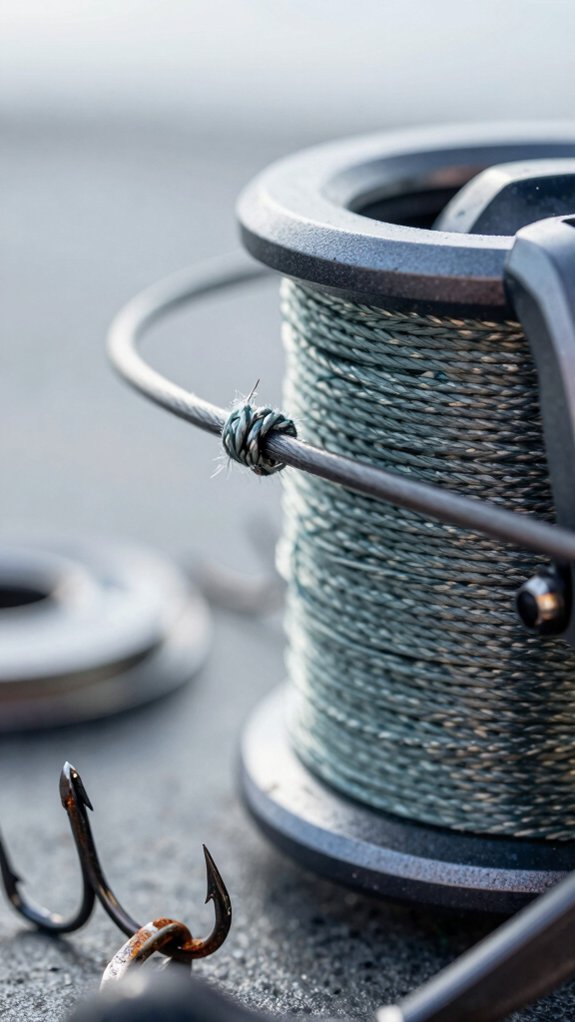
While it might seem like more wraps or tighter pulls make a knot stronger, I’ve seen plenty of blown knots from anglers overdoing it on 50‑pound line, especially with thick heavy mono or stiff fluorocarbon.
- Skip wetting the knot? Friction heat can weaken mono or fluorocarbon by up to 50%, always wet the knot with water or saliva before tightening.
- Over‑wrap your uni knot? Stick to 4–5 wraps, not 6–7, to avoid bulky knots that slip under pressure.
- Rush the cinch? Jerky pulls crush fibers, tighten slowly and finish with pliers for a secure seat.
Trim the tag end to about 3–6 mm; too short risks slippage, too long snags.
And never pair 50‑lb line with light hooks or swivels, match your terminal tackle to your line’s strength. Test every knot. A well‑tied knot on heavy mono should break away from the knot, not at it.
When to crimp instead of knots
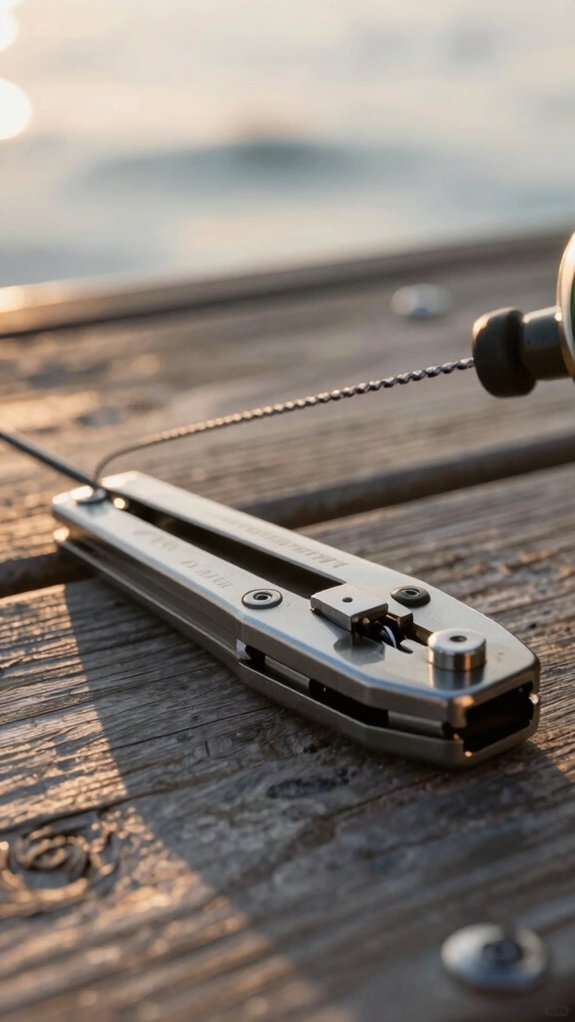
If you’re battling big game on 50-lb line, you’ll often get a stronger, more reliable connection by crimping instead of tying a knot, especially when attaching heavy leaders to swivels or hooks.
Crimping with the right crimp sleeve gives you a low-profile, near-100% strength connection, something most knots can’t match. I always use medium-to-large corrosion-resistant sleeves (anodized aluminum or nickel-plated copper) rated for 50-lb line.
A proper crimp means:
- Using a calibrated crimping tool for a full, even squeeze
- Running both standing and tag lines fully through the sleeve (leave 1–2 inches)
- Testing with a strong pull to check for slippage
In saltwater, I add marine epoxy to prevent corrosion. And never crimp braid directly, use a lined sleeve or splice to mono first. Trust me, your setup will hold up better under shock loads.
Frequently Asked Questions
What Is the Best Knot for 50 Lb Fluorocarbon?
I recommend the Uni knot for 50-lb fluorocarbon, it’s strong, clean, and won’t knuckle under pressure. I always wet it, cinch slow, and trim the tag short so it slides through guides smoothly.
How to Tie a Heavy Duty Fishing Line?
One in three big-game anglers lose fish due to poor knots, I tie 50‑lb line with a Palomar for mono or braid, double it, wet it, and cinch slow. For leaders, I use a Double Uni or Albright, always testing under load first.
What Is the Best Knot for Large Fishing Line?
For large fishing line, I use the San Diego Jam or Uni knot, they’re strong and reliable. I keep wraps to 3–5, wet the knot, and cinch slow. With braid, I double it and try the Palomar.
Why Do Palomar Knots Fail?
Palomar knots fail when I don’t dress them right, especially on stiff 50‑lb line. Twists, dry cinching, short tags, or rough gear stress weak spots, I always check alignment, moisten, and trim carefully to keep it strong.
In Conclusion
Tying 50‑lb line right means stronger fights and fewer break‑offs. Last season, I lost three big red snapper until I switched to a double uni knot with a dab of CA glue, no more slipped connections. Match your knot to the line: Palomar for braid, Snell for hooks, Albright for leaders.
Wet it, cinch slow, trim tags, and test. One small tweak? Big difference. Trust your knot, it’s the weakest link.