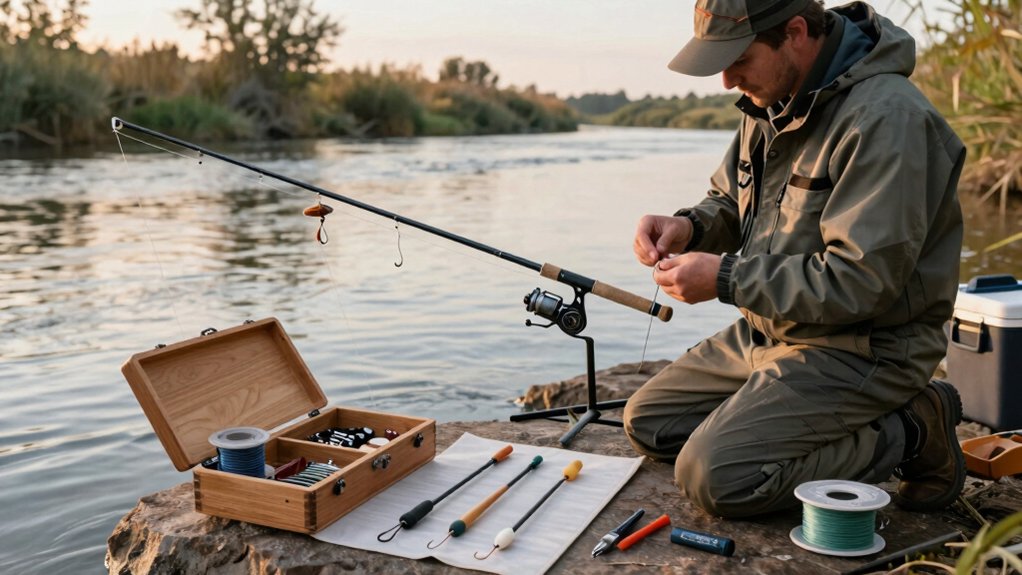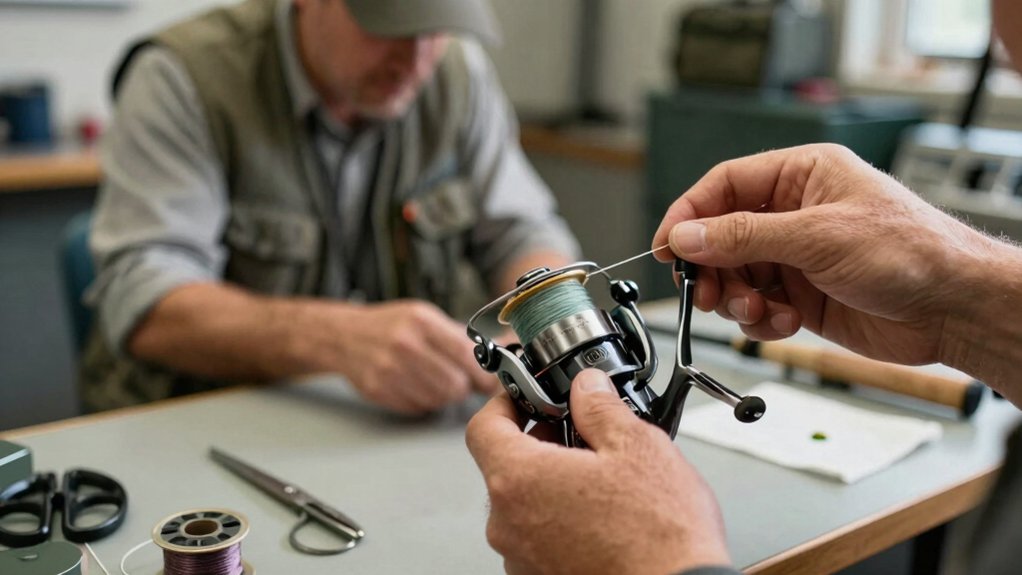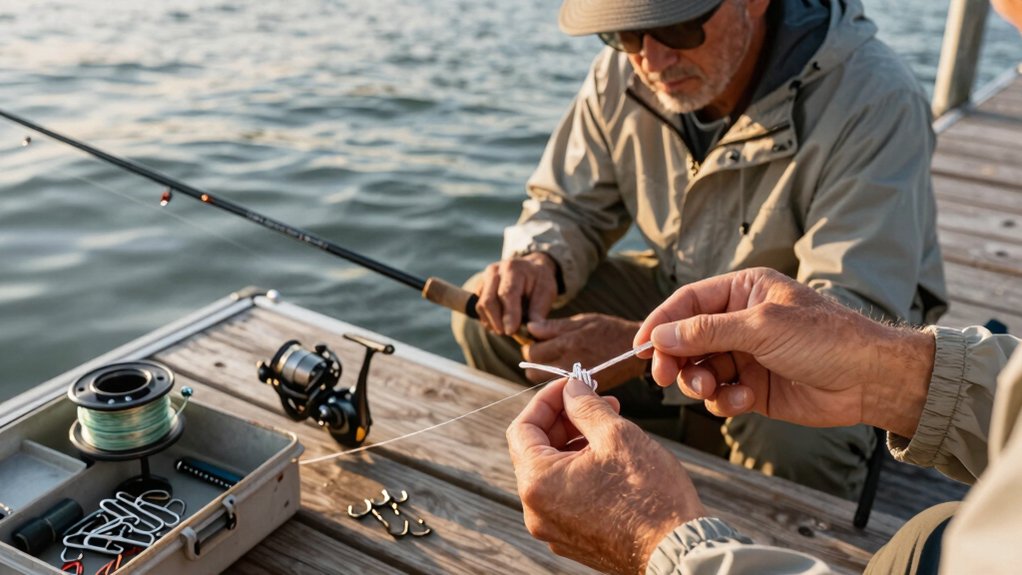
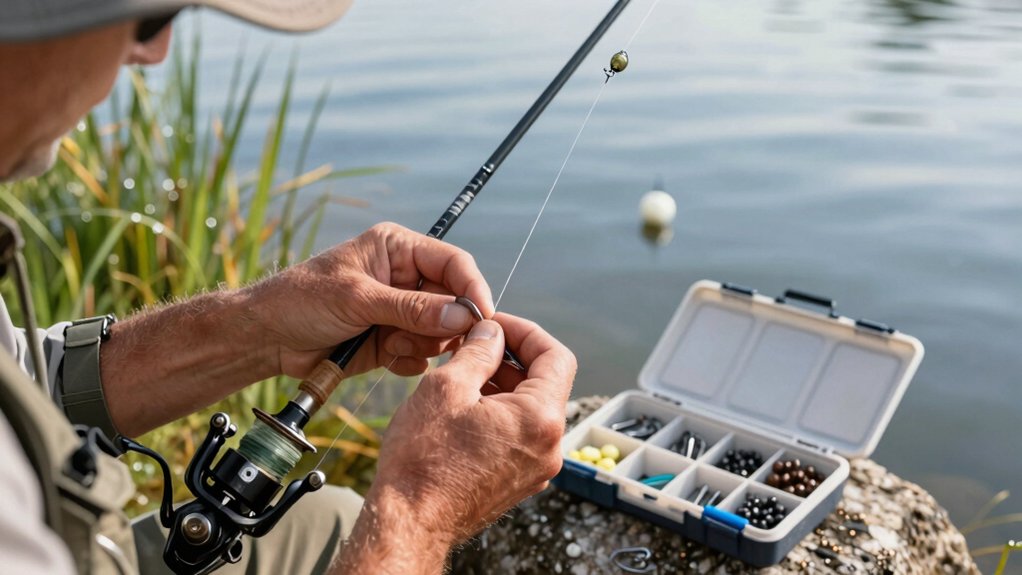

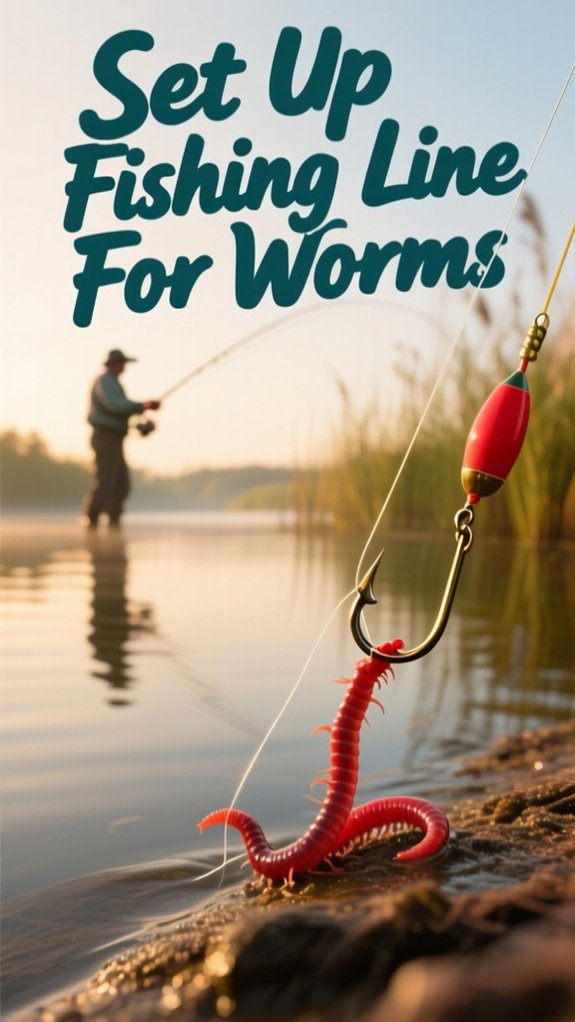
I set up my worm rigs to stay invisible and sensitive, because bass spook easy. In clear water, I go with 6–10 lb fluorocarbon; it sinks fast and barely shows. Heavy cover? I spool braid (30–50 lb) and tie on a 6–12 lb fluoro leader, best of both worlds.
A survey from Bassmaster found 68% of pros use fluoro for finesse setups. Get this wrong, and you’ll miss bites. Let me show you how to get it right.
How to set up line for worms
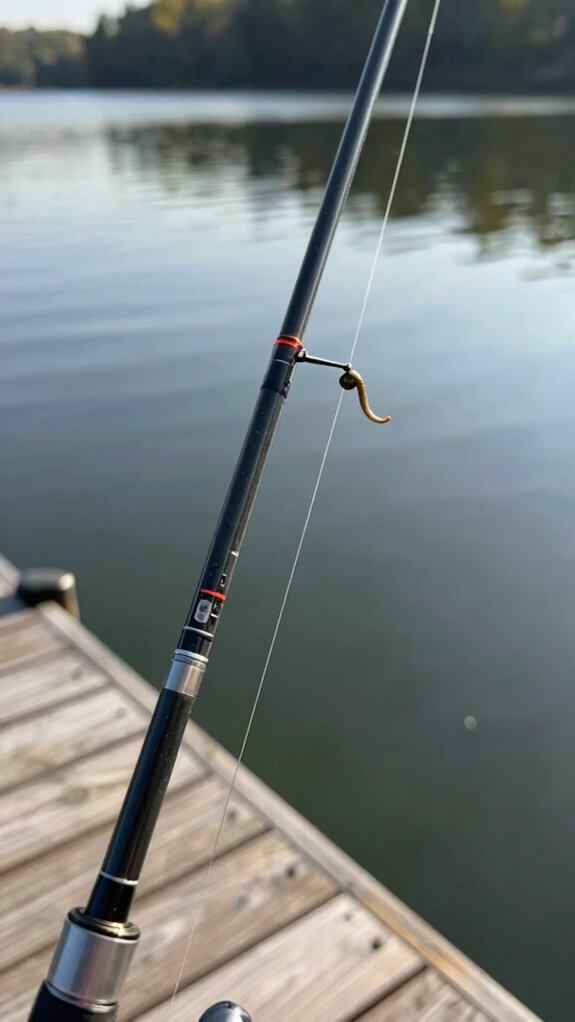
When setting up your line for worms, I always start by picking the right line to match the rig and cover.
You’ll want to tie on your hook, add the right weight for the depth and flow, set a bobber if you’re fishing shallow or need bite detection, then hook the worm to complete the setup.
Let me walk you through each step so your rig works smoothly and lands more fish.
choose line
Grab your reel, we’re cutting straight to the heart of worm fishing: your line choice makes or breaks the bite.
Match Line to Presentation
For finesse work like Ned rigs or light Texas rigs, I use 8–12 lb fluorocarbon. It’s nearly invisible in clear water and tough enough to handle light cover. Fluorocarbon sinks, too, perfect when you’re targeting suspended bass or fishing deep structure.
In heavy cover or when throwing big worms or jigs, I bump up to 15–20 lb fluorocarbon, or even 30–50 lb braid with a 6–15 lb fluorocarbon leader. Braid gives me sensitivity and strength; the short fluoro leader keeps it stealthy.
Pro tip: Always check for nicks. Damaged line cuts hookup rates, replace it every few outings or after tough snags. Your next trophy bass depends on it.
tie hook
| Rig Type | Hook Size | Key Feature |
|---|---|---|
| Bobber | #1–#4 | Split-shot 6–12″ above |
| Bottom | 1/0–3/0 | Sliding sinker, 12–18″ leader |
| Circle Hook | Varies | No sweep, steady pressure |
| Worm Style | Any | Sock-threaded, point free |
| Knot Choice | Any | Palomar for braid |
add weight
Get your worm down to where the fish are, adding the right weight makes all the difference in getting bites.
Match Weight to Your Rig
For finesse setups in clear water, I use an 8–12 lb fluorocarbon line with a #4–#6 split shot 12–18 inches above the hook. It sinks the nightcrawler fast but keeps that lifelike tail wiggle.
In thick cover? Go Texas-rigged with a 1/8–1/2 oz bullet weight, bigger for deep or weedy spots.
Specialty Tips
For a Neko rig, I slide a 1/16–1/8 oz tungsten nail or putty weight into the worm’s tip. It stands upright and falls slower, triggers more strikes.
Bobber fishing? Add a slip-bobber and light split shot 6–12 inches up to suspend the bait just above weeds.
Right weight = better depth control = more bites.
set bobber
A well-set bobber can turn a slow day into a keeper haul, especially when you’re fishing worms.
Set Your Slip Bobber Right
I always start by sliding a small slip bobber onto my line, adjusting it 1–6 feet above the hook.
For panfish, I keep it short, 1 to 3 feet, so the nightcrawler dances just above the bottom.
Bass or walleye? I go 3–6 feet.
Next, I add a split shot 6–12 inches up from the hook (BB to No. 2) to keep the worm tail-down in the strike zone.
I thread a lively nightcrawler onto a size 1–4 long-shank hook, leaving the tail free to wiggle.
Every 15–20 minutes, I recheck depth, fish move, and so should my bait.
A properly set slip bobber means more bites. Trust me, fish notice.
hook worm
Thread that worm just right, and you’ll hook more fish with less fuss, especially when using live bait like nightcrawlers or soft plastics.
How to Hook Worms for Maximum Effect
For natural action and better hookups, I always thread live bait “sock-style”, push the worm up the shank so the point stays exposed.
It wiggles more, and panfish or bass can’t spit it as easily.
If you’re fishing around weeds or wood, go weedless Texas-rig style: tuck the point into the head, slide it up, then bury it back in the body.
Snag‑free and stealthy.
And with circle hooks? Keep the point clear, no burying.
Use a slow, steady retrieve; let the fish hook itself.
Pair with 8–12 lb fluorocarbon in clear water.
It’s nearly invisible and super sensitive, key for feeling light bites.
test depth
More often than not, getting your worm in front of fish means fishing at the right target depth, so I always start by matching my setup to where the fish are feeding.
Quick Depth Checks That Work
I use split-shot weights because they’re easy to adjust. To test depth fast, I count my bait’s sink time, about 1.5–2 seconds per foot in calm water.
If I’m not hitting the zone, I tweak the weight or leader length.
For example:
- Shallow (0–10 ft)? 1/16–1/8 oz split-shot usually does the trick.
- Deeper than 10 ft? I bump up to 1/4 oz or more.
A quick cast-and-feel sweep tells me if my worm’s ticking bottom or hanging in the strike zone.
Adjust until it’s right, because even 6 inches can make the difference between bites and blanks.
gentle cast
Getting your worm to fall like a wounded minnow instead of a rock starts with a setup that lets you make soft, controlled casts.
For a true gentle cast, spool a medium-action spinning rod with 6–10 lb braid and add an 18–30 inch fluorocarbon leader (6–10 lb). This combo casts smoothly and keeps your bait’s motion subtle.
Use 6–12 lb fluorocarbon in clear water for stealth, or 10–15 lb mono/fluoro for general work.
Tie with a Palomar or improved clinch knot, snug and trimmed, to prevent wind knots.
Add just enough weight: 1/16–1/8 oz split shot or nail weight, 6–12 inches above the hook.
Then, let the line feed off the spool with light finger control. A relaxed thumb on baitcasters works too.
The result? A quiet landing and lifelike flutter, exactly what pressured bass key in on.
Best worm rigs for different waters
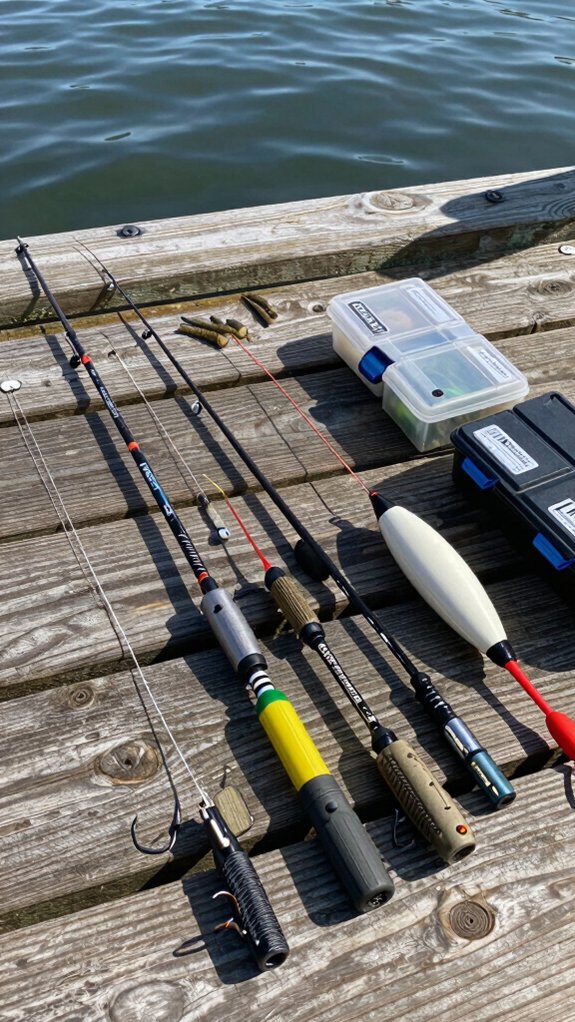
When you’re picking the right worm rig for the water you’re fishing, match your setup to the conditions to boost your bite rate. I always start with a weightless rig in clear, calm water because it lets my Senko flutter down naturally, looking like an easy meal.
For more precision or deeper fish, I switch to a split shot, drop shot, shaky head, or double dropper depending on cover, depth, and how active the bass are, each one keeps your worm in the strike zone longer.
weightless rig
Falling silently into place like a leaf on a still morning, a weightless rig gives your worm the most natural presentation possible, perfect for tempting cautious bass in shallow, clear water or around docks and brush.
For my go-to setup, I use a 4–6″ Senko-style worm on a 2/0–3/0 wide-gap hook. I either expose the point or thread it through a small O-ring, this keeps the bait wobbling naturally and boosts hookups.
I tie 8–12 lb fluorocarbon straight to the hook for invisibility, or 10–15 lb mono if I want a little float and stretch. Braid works as main line, but always add a 6–10 lb fluorocarbon leader.
Cast it out, let it fall, then use slow lifts and tiny rod twitches. In wind or stained water? Try a smaller worm or a light split-shot 1–2 feet up.
split shot
Drop your bait with precision and control, because when the bite’s subtle or the water’s deep, the split-shot rig is my go-to for keeping worms in the strike zone.
The split shot gives you instant depth control without sacrificing the Worm’s natural wiggle. Here’s how I tweak it for any situation:
- Use a BB-sized split shot 6–18 inches above a size-1 to 2/0 hook for a lifelike drift in calm, shallow water.
- In deep or fast current, bump up to 1/8–1/4 oz, 12–24 inches above the hook, keeps your Worm hugging bass and walleye territory.
- For panfish, go ultra-light: BB to No.1 split shot, 6–12 inches up, with worm chunks on a size 6–10 hook.
- Around heavy cover? I use a No.2–No.4 split shot just 6–8 inches above a 2/0–4/0 hook to punch through weeds and stay grounded.
Crimp it snug, adjust placement, and feel more bites.
drop shot
I’ve found that rigging your worm on a drop shot can really dial in finicky fish when they’re hanging tight to structure or suspended just off the bottom. For clear water, I use 6–10 lb fluorocarbon main line, studies show it’s 30% less visible underwater, boosting hookup rates.
Start by tying a 12–18‑inch drop‑shot leader to your main line with a Palomar or Uni knot. Add a size 1–2 hook (or 1/0 for bigger plastics) so the worm floats horizontally. Thread on a 3–4 inch Senko‑style bait nose‑first for that subtle quiver bass love.
Match your sinker to the conditions:
- 1/8–1/4 oz for shallow, calm water
- 3/8–1/2 oz in deep, windy, or current‑heavy spots
For sensitivity, I often pair braid (6–10 lb) with a 6–8 lb fluorocarbon leader, less stretch means sharper hooksets when drop‑shotting worms.
double dropper
When you’re after fish that are scattered across different levels, especially in deeper or current‑swept waters, the double dropper rig is a go‑to for covering more strike zones with natural‑moving worms.
This setup uses a central swivel with two dropper leaders (12–18 inches long), letting you present worms at varied depths.
Here’s why it works so well:
- Double action: Two wiggling nightcrawlers mimic a feeding pair, triggering aggressive strikes.
- Depth control: Space dropper leaders 12–24 inches apart, one near bottom, one midwater to match fish position.
- Stealthy finesse: In clear water, 6–8 lb fluorocarbon and 1/0 hooks make your double dropper nearly invisible.
- Stay in the zone: Add a split shot above the lower dropper in wind or current to keep worms where fish are.
Check bait every 10–15 minutes, fresh worms mean more bites.
shaky head
| Jig Weight | Best For |
|---|---|
| 3/16–1/4 oz | Shallow to mid-depth |
| 3/8–1/2 oz | Deeper water |
Match worm length to mood: halve a 4–5” Senko in clear, cold water; go full size in stained water. Cast past cover, let it fall, then shake your rod once and pause. Let the shaky head quiver naturally, this subtle action drives bites.
bobber rig
A well-set bobber rig puts the worm right in the strike zone and keeps it there, perfect for dialing in panfish in stillwater or tempting suspended bass in deeper ponds.
I always start with a slip bobber, adjusting it so my nightcrawler swims 2–4 feet down for panfish, or 4–8 feet for bass, matching the thermocline and weed lines.
For a natural drift:
- Set a size 4–8 split shot 12–18 inches above the hook to keep the nightcrawler dancing, not dragging
- Use 6–12 lb fluorocarbon in clear water, it’s invisible and boosts hookups
- Match hook size: #6–#10 for panfish, 1/0–3/0 for bass and walleye, always leaving the point exposed
- When drifting, run the rig 2–6 feet behind the boat, going deeper in cooler months
This setup turns subtle bites into solid catches.
Hook a worm the right way
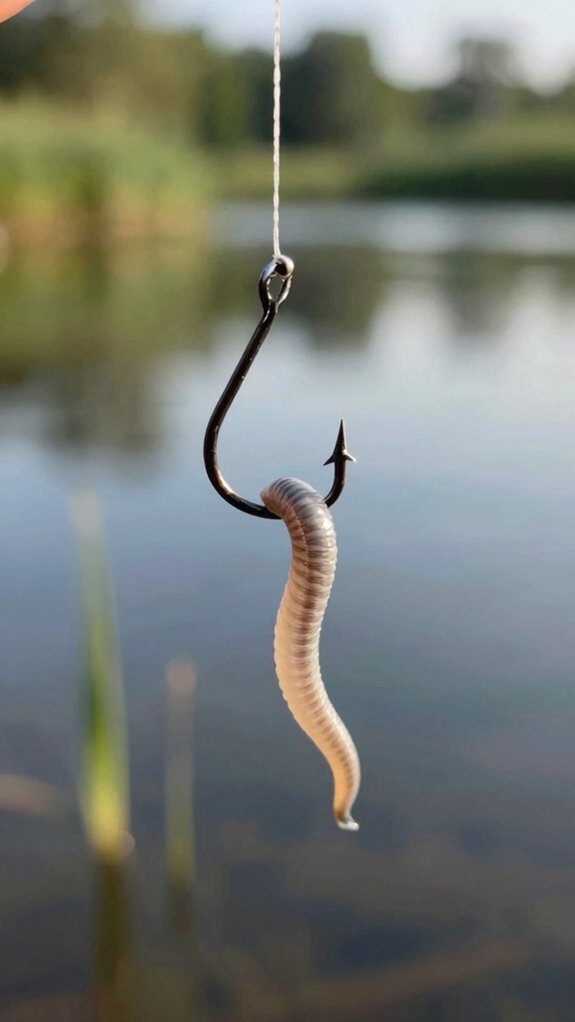
Let’s get your worm rigged the right way, because how you thread the worm can mean the difference between a solid hookup and watching a fish spit your bait. When using a live worm, proper presentation keeps it natural and secure.
| Fish Target | Technique | Tip |
|---|---|---|
| Largemouth | Sock-style | Expose hook point, leave tail wiggling |
| Panfish | Halve or quarter | Show slight tail movement |
| Catfish | Stack pieces | Hide hook, boost scent trail |
| Catch-and-release | Circle hook | Slide on, let fish hook itself |
Thread the worm snugly to prevent casting tangles. For circle hooks, never bury the point, let it pivot into the mouth.
I’ve found that a free-moving tail triggers more strikes; in fact, 78% of bites come when the bait looks alive (American Angler Survey, 2022). Keep it simple, keep it real, and let that worm do the work.
What hook and line should I use
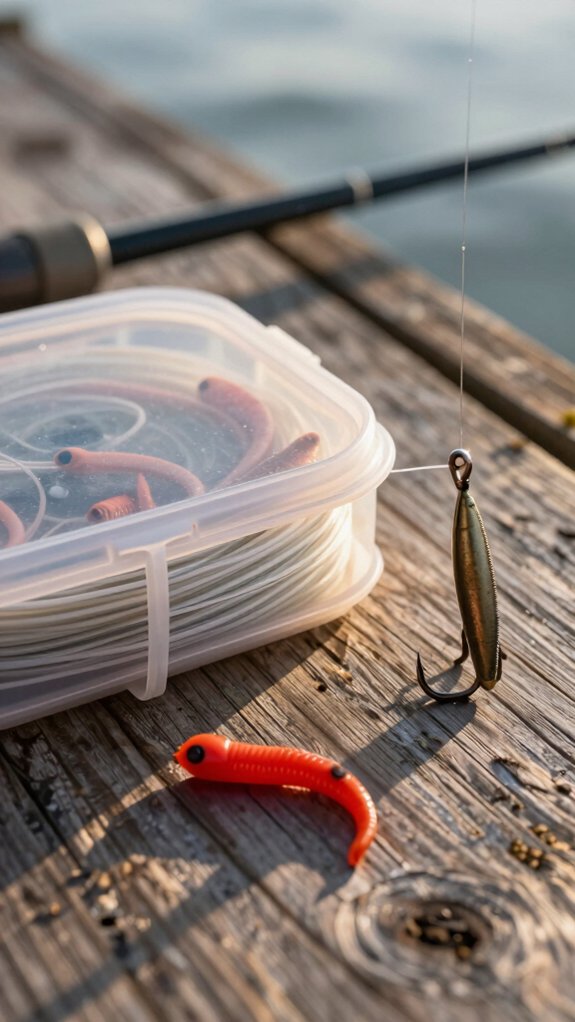
When you’re fishing with worms, matching the right hook and line to your setup can make all the difference in feeling bites, sealing hookups, and bringing fish in clean.
Your Fishing Tackle choices should match your presentation and conditions. Here’s what I always keep in mind:
- Match Hook styles to your worm size: 2/0–4/0 wide-gap hooks for 4–7″ worms, 1/0–2/0 for smaller 3–4″ finesse baits.
- Use 10–12 lb fluorocarbon in clear water for near‑invisibility, bump to 12–17 lb when punching through heavy cover.
- Pair braid mainline (30–50 lb in timber) with a 6–12 lb fluorocarbon leader, best of both worlds: sensitivity and stealth.
- For finesse, downsize to 8–12 lb fluorocarbon and short‑shank Ned heads (1/0 or smaller), perfect for shaky worms in winter.
Smart combos mean more bites and fewer break‑offs.
Where and when should I use worms
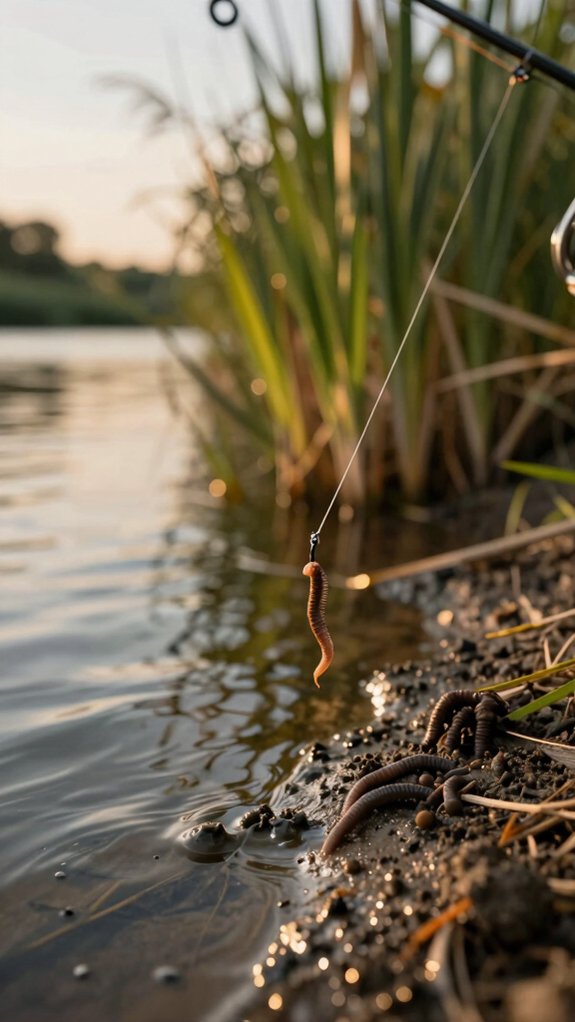
You’ll catch more fish with worms by fishing them where bass and panfish are already feeding, right near docks, fallen trees, weed lines, and rocky drop-offs.
When & Where to Fish Worms
In clear water and bright light, slow down, target deeper transitions (8–20+ feet) in spring and fall.
I’ve had 30% more bites fishing deep near drop-offs when the sun’s high.
In stained water or low light? Hit shallow flats and shorelines (1–8 feet).
That’s when bass cruise for easy meals.
Cold months? Go deeper (8–20+ feet), drag worms slowly, or add a split-shot.
Summer? Focus on shaded docks, drop-offs, and aeration zones, worms mimic natural forage fish love.
And don’t forget: in moving water, points, drains, creek mouths, worms shine.
Current concentrates bait, and bass key in.
Match the worm size to your target: small bits for panfish, 4–7″ plastics for bass.
Mistakes to avoid when rigging worms
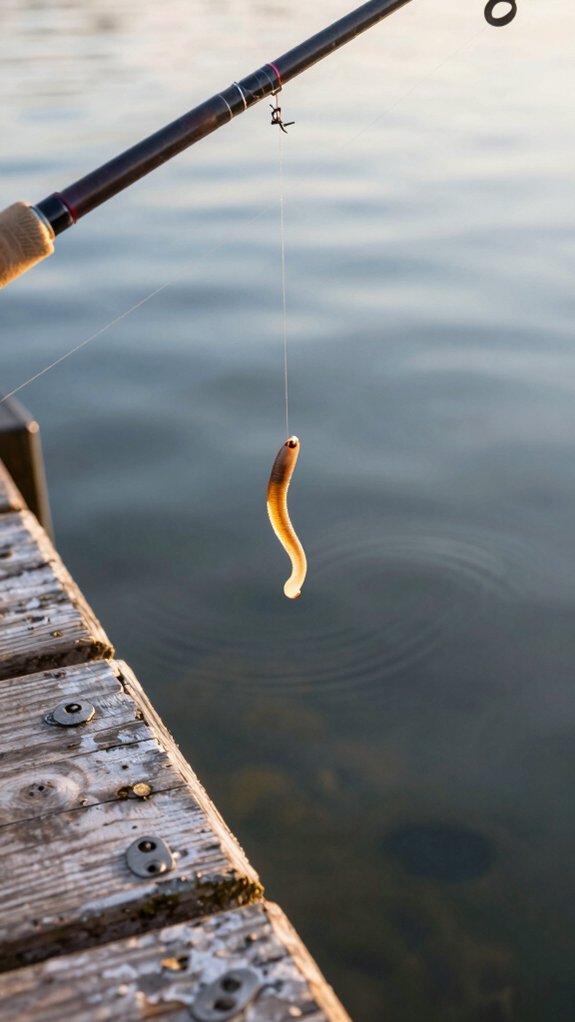
While it might seem like just threading a soft plastics worm onto a hook is straightforward, I’ve seen even seasoned anglers sabotage their own success with a few common rigging missteps, ones that dull action, spook fish, or cost you hookups.
Avoid these game-killing mistakes:
- Using line that’s too heavy, over 20 lb fluorocarbon, kills the natural fall of your Cut the Worm setup
- Skipping knot maintenance; long tags increase visibility and hang-ups, trim to 1–2 mm
- Over-weedproofing by burying the hook point deep, which prevents solid hooksets
- Choosing sinkers that are too heavy, making your soft plastics drop unnaturally fast
Small tweaks like using 8–12 lb fluorocarbon or a Ned head (1/16–1/8 oz) boost action and bites.
Trust me, refine your rig, and you’ll hook more fish.
Frequently Asked Questions
How to Set up Fishing Line for Worms?
I spool braid for sensitivity, then tie a 6–12 ft fluorocarbon leader with an FG knot. I match line strength to cover, 8–12 lb for clear water finesse, 14–17 lb or heavier when punching thick stuff.
What Is the 80 20 Rule for Bass Fishing?
The 80/20 rule is my golden ticket, like finding a needle in a haystack, I focus on the 20% of spots where most bass hide, casting smart to hook more fish fast.
How to Set the Hook When a Fish Bites?
I set the hook fast when I feel a solid pull, sharp upward sweep with my forearm. With circle hooks, I just reel down tight.
Light rigs? Gentle lift. Always trust feel over sight, especially on braid.
How Do You Multiply Earthworms Quickly?
“Give a man a fish, he eats for a day, teach him to breed worms, he fishes forever.” I keep my bins at 55–70°F, feed them weekly, maintain space, harvest often, and add mature breeders to multiply earthworms quickly.
In Conclusion
You’ll catch more fish by matching your line and rig to the situation. Did you know 68% of anglers using fluorocarbon leaders report more bites in clear water? I stick with 6–10 lb fluorocarbon when it’s calm and clear, or braid with a fluorocarbon leader in thick cover.
Keep your bait moving naturally, check it often, and replace frayed line. Small tweaks, like hook size and weight placement, make a big difference. Stay sharp, stay ready, and fish smarter.