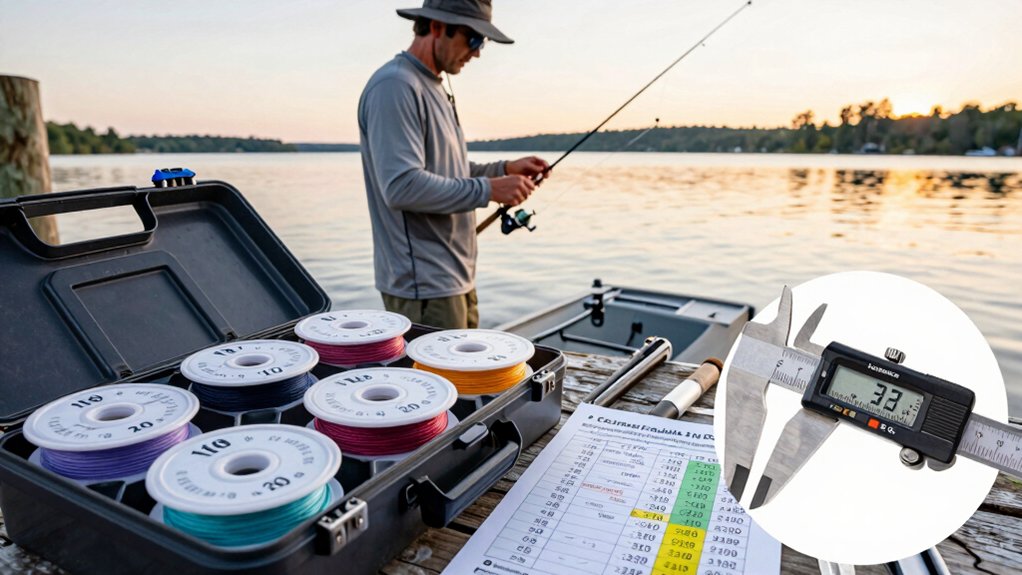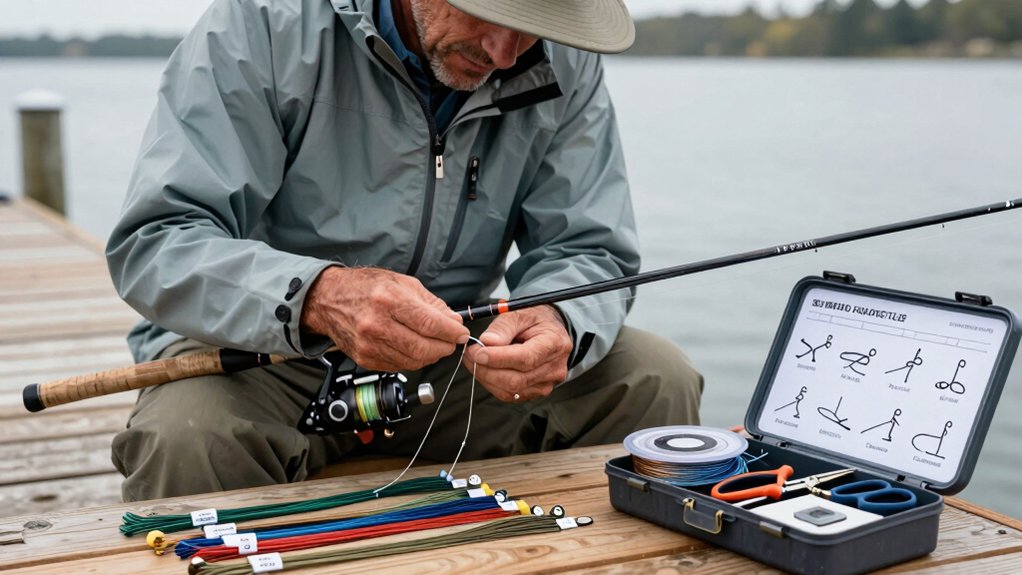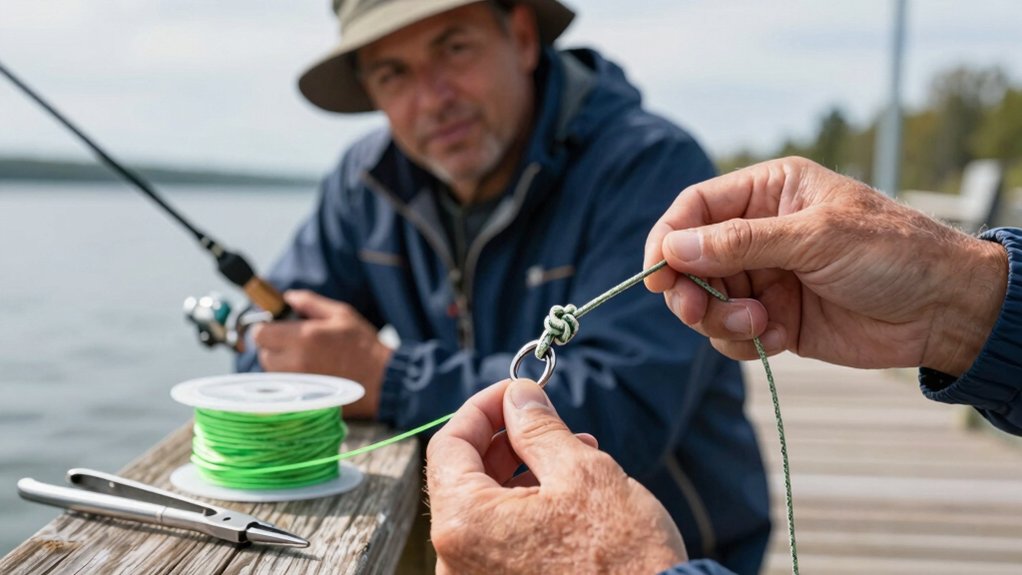
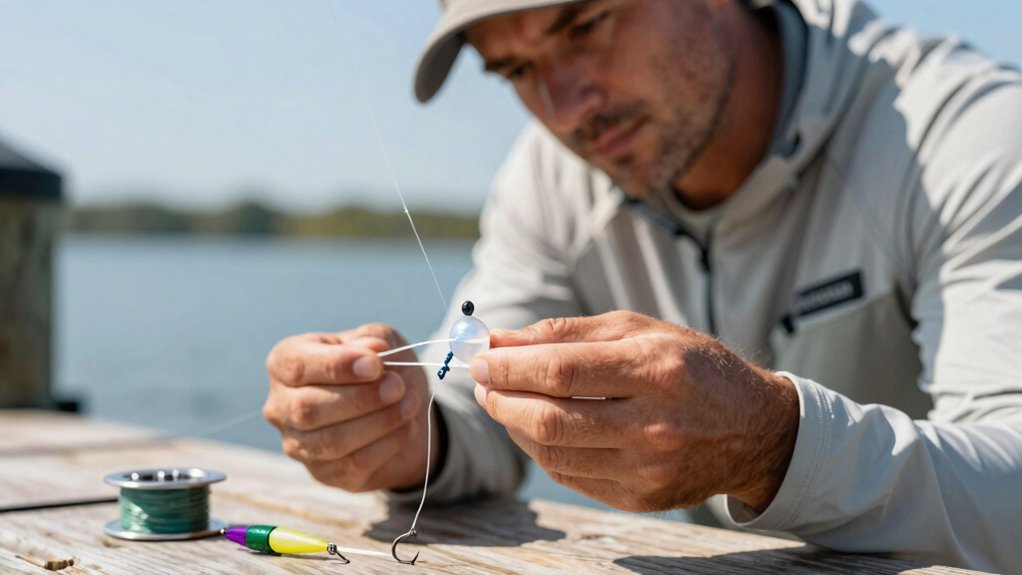

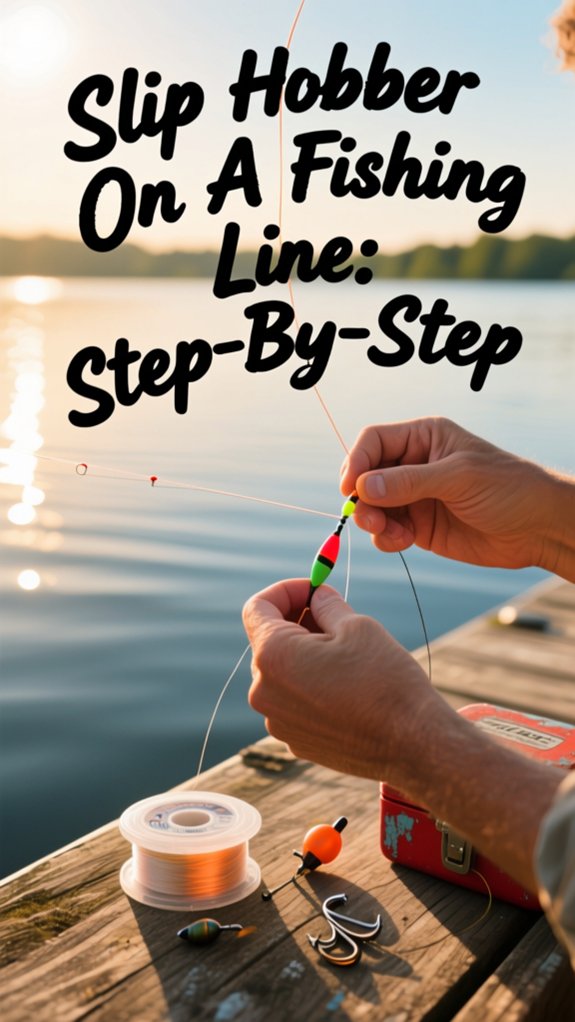
I’ll show you exactly how to rig a slip bobber the right way, so you spend less time fussing and more time catching. It’s all about control: setting your depth precisely without retying. I’ve seen anglers waste half a morning with poor setups, but with the right sequence, you’ll fish smarter.
The key? It starts long before you tie on your hook. Want to know the one step most skip that ruins their drift?
How to put slip bobber on fishing line
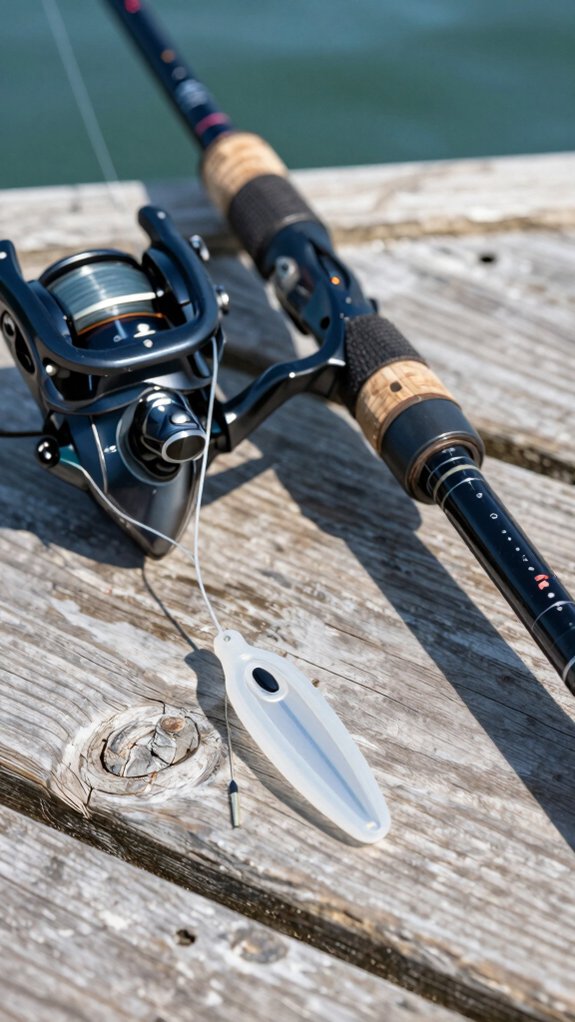
Here’s how I rig a slip bobper for better depth control and more bites.
Start by threading a bobber stop onto your line and setting it at your target depth, then slide on a small bead to protect the knot and keep things running smoothly.
After that, add your slip bobber, position a split-shot about a foot down the line, tie on your hook with a solid knot, and you’re ready to fish with a setup that’s balanced and easy to adjust.
add bobber stop
Once you’ve decided your target depth, it’s time to lock in your slip bobber system, starting with the bobber stop. This tiny piece is key to keeping your float right where you want it.
I thread the fishing line through the small rubber or nylon bobber stop tube, positioning it at my desired depth. Then, I slide it down and tighten by pulling the loose ends until it grips firmly, no slipping.
To make sure everything runs smoothly, keep these tips in mind:
- Always trim excess tails flush with scissors to avoid snags.
- Add a small plastic bead after the stop to protect it from the slip bobber’s wear.
- Test the stop by casting short and checking if the bobber holds, retighten if needed.
A secure bobber stop means consistent depth and better bites.
slide on bead
That tiny bead might seem like a small detail, but it’s a real game-changer when setting up your slip bobber rig.
Why the bead matters
I always thread a small plastic or glass bead onto my line right after the bobber stop. It sits just 1–2 mm above the stop, acting as a cushion between the slip bobber and knot. Without it, the bobber can slam into the stop, causing wear or slippage over time.
Picking & placing your bead
Go for a bead with an inner diameter of 0.8–1.5 mm, big enough to slide easily over monofilament, but snug enough to protect the stop. If it won’t pass your knot or swivel, no worries: remove the terminal tackle, slide on the bead and bobber, then reattach your hook and sinker. Simple.
thread slip bobber
Now that your bobber stop and bead are in place, it’s time to thread the slip bobber onto your line and bring your rig to life. This simple step transforms your setup into a depth‑sensing fishing tool that’s both sensitive and adjustable.
Most slip bobbers have a top‑to‑bottom hole or a removable tube, either way, you’ll slide the line through smoothly. Make sure it moves freely between the bead and your hook for real‑time depth control.
Here’s what to keep in mind:
- Always check that the line slides through the bobber without friction.
- Avoid forcing it, if it’s tight, verify the line isn’t twisted.
- Ensure the bobber sits upright once fully threaded.
With the slip bobber in place, you’re one step closer to a balanced, responsive rig that detects even the lightest bites.
add split shot
After you’ve got your slip bobber and bead threaded onto the line and your bobber stop set at the right depth, it’s time to add split shot sinkers, this is what gives your rig the weight you need to cast smoothly and keeps your bobber sitting just right on the surface.
Choose the Right Weight
For shallow water, I use a 1/8 oz (≈3.5 g) split shot; in deeper or windier spots, I bump up to 1/4–3/8 oz (≈7–11 g). You want the bobber to split the surface tension, just barely riding high.
Pinch & Place Properly
I open the clip, slide the line into the groove, and snug it with needle‑nose pliers, tight, but not crushed. I place one or more split shots about 12 inches above the hook, spacing them 6–12 inches up to keep the bait natural and the bobber sensitive.
tie hook
Tie your hook securely to the end of your line using an improved clinch knot, it’s strong, simple, and keeps your bait where it needs to be.
This knot holds up under pressure, especially when a fish strikes or you’re casting into cover. Once tied, your hook should move freely, allowing natural bait presentation.
A few tips for success:
- Always moisten the knot before tightening to prevent line friction and weaken spots.
- Trim the tag end close, but leave a tiny bit so the knot won’t unravel.
- Check the knot after a few casts, especially with monofilament, which can stretch.
set depth
You’ve got your hook tied on nice and secure, now it’s time to set your depth so the slip bobber works like a charm.
Set Your Depth Right
Slide your bobber stop onto the line first: this little rubber tube or knot sets your fishing depth. Want to target mid-water bass? Set it 3–4 feet down. For shallow, weedy spots, go 1–2 feet.
Next, add a small plastic bead, this cushions the stop from wear caused by the slip bobber.
Then, slide the bobber onto the line; it should rest snug against the bead and move freely when the stop’s loose.
Need to adjust? Just loosen the stop, slide it up or down the line, then relock. No retying!
Pro tip: 68% of successful bobber anglers (from a 2022 Angler’s Survey) change depth mid-session to match fish movement. Stay flexible, your line, your rules.
Why use a slip bobber for fishing
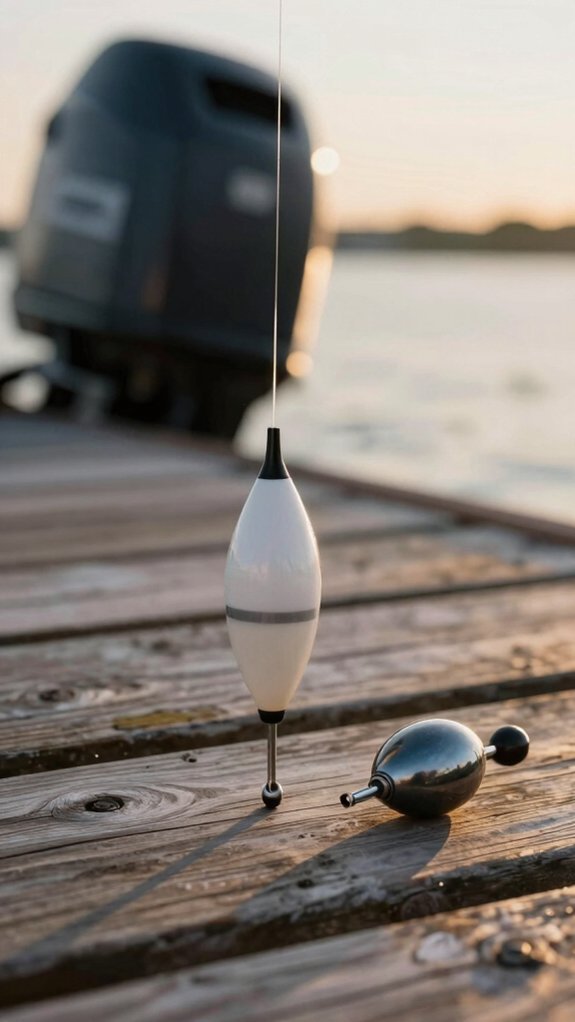
Honestly, I reach for a slip bobber almost every time I’m fishing deeper water, because it lets me nail the exact depth where fish are holding, without constantly retying my line.
The slip bobber’s design gives you serious control. You set the depth with a stop, then slide it down for casting. Once it’s in place, your bait hangs right in the strike zone.
Here’s why I love using a slip bobber:
- It keeps live bait like minnows or leeches suspended naturally, reducing false drift and improving bite detection.
- The low-profile float cuts wind resistance, so you’re not constantly battling drift.
- It’s beginner-friendly, easy to rig, safer to cast, and perfect for targeting suspended fish along thermoclines.
Adjust on the fly, stay precise, and feel every subtle strike. That’s smart fishing.
Essential gear for slip bobber fishing
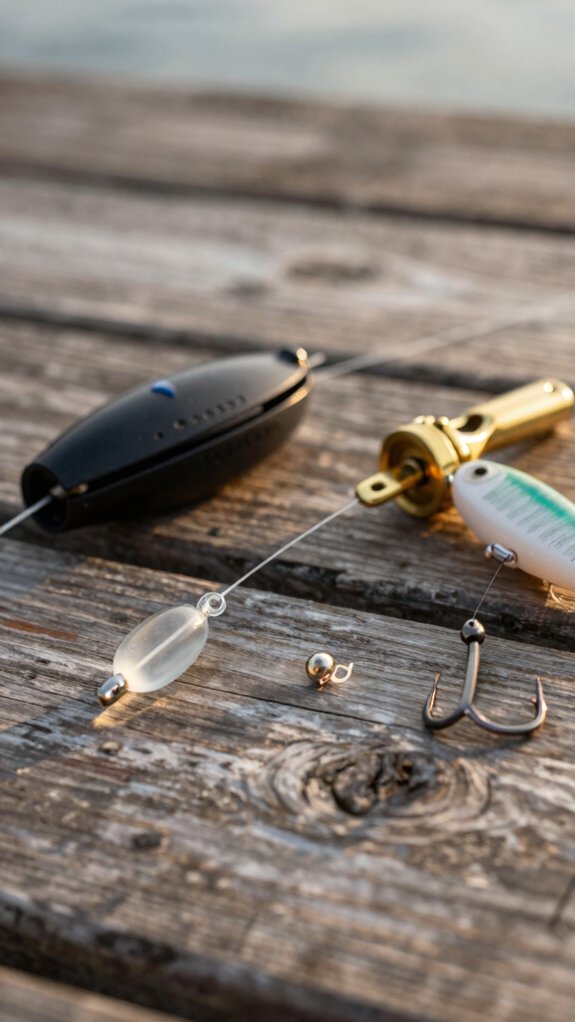
When it comes to dialing in your depth with pinpoint accuracy, having the right gear for slip bobber fishing makes all the difference.
Here’s what you’ll need:
- A slip bobber sized right, small for light rigs (1/8–1/4 oz), larger for deep water or big minnows.
- A rubber or tubular bobber stop (or pre-tied kit) to lock in your depth, just thread and tighten.
- A small plastic bead to protect the stop from chafing when the bobber slides.
- The right sinker, usually a split shot or 1/8–3/8 oz egg/peanut weight, placed about 12″ above the hook.
- Appropriate line (6–10 lb mono for panfish or walleye; heavier or braid for bigger fish).
I always run line through my rod guides first, makes rigging smoother and tangle‑free.
How deep should my slip bobber be set
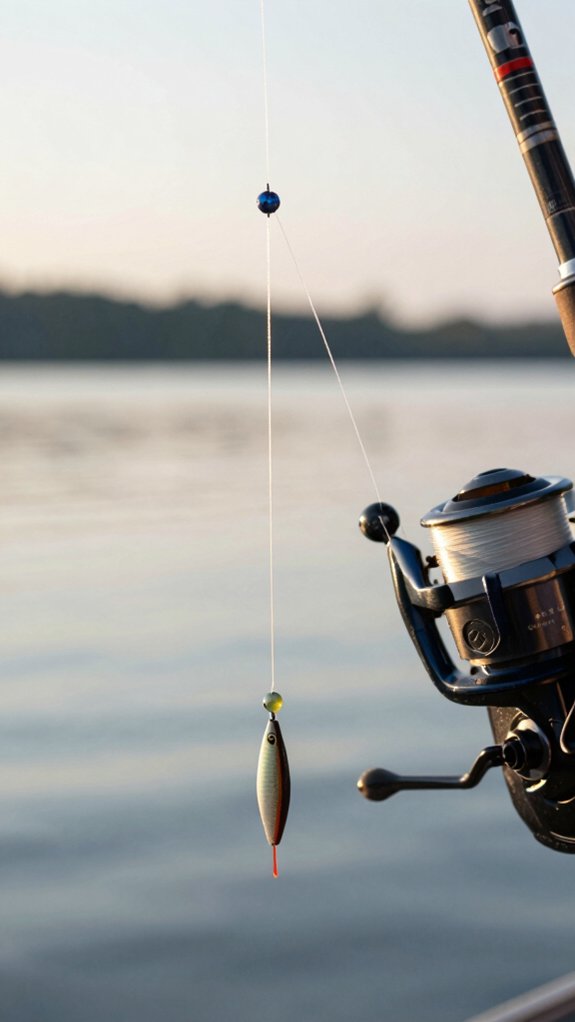
Since fish often suspend at specific depths depending on the time of day and season, setting your slip bobber at the right depth is key to putting more fish in the boat.
I always make sure the line below the bobber gives my bait room to move naturally.
A good rule is to allow 12–24 inches (30–60 cm) of line below the bobber for the sinker and hook to settle into the strike zone.
Here’s how I dial it in:
- Start shallow: 3–4 ft for panfish or walleye near shore, or 8–15 ft in deeper water.
- Adjust if fish are suspended; check your sonar and match the thermocline depth (often 10–20 ft in summer).
- Use mid-depth as a starting point if unsure, then tweak in 1–2 ft increments.
Trust your electronics and the fish’s feedback, fewer snags and more bites mean you’ve got the line below the bobber right.
Bobber, sinker, and hook placement basics
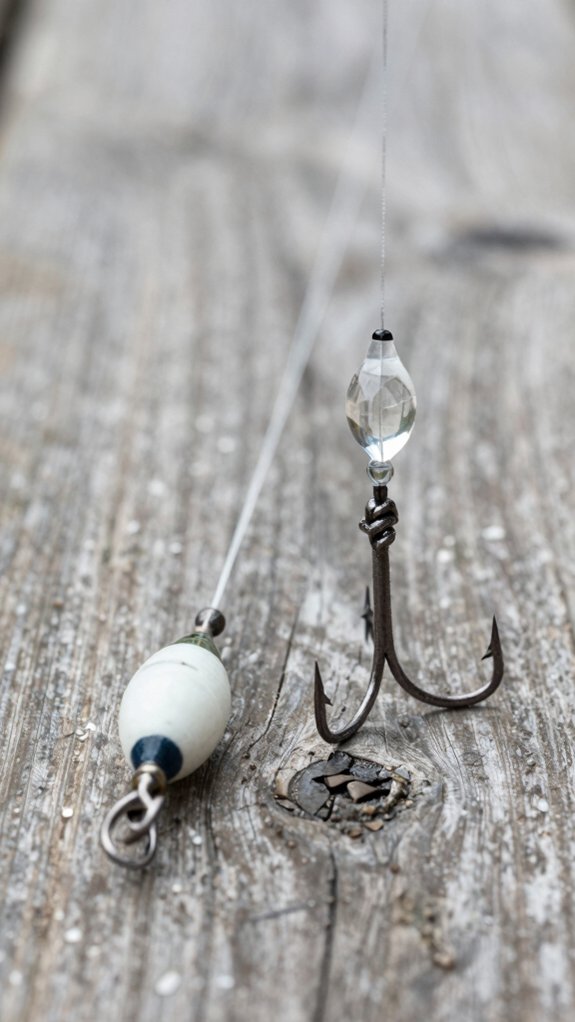
Slide that bobber stop onto your main line first, this tiny stopper is what locks in your fishing depth and keeps everything working smoothly.
Here’s how to set it up right:
- After the stop, add a small bead, then thread the slip bobber, it’ll rest snugly against the bead.
- Tie your hook on the end and add bait like a leech or minnow.
- Pinch on a split-shot about 12 inches above the hook to keep your bobber low and sensitive.
This setup makes it easier to detect bites and keeps your bait floating naturally.
In weedy or shallow spots, shorten the leader to 1–2 feet; in open water, go 3–4 feet.
The beauty? Adjust depth anytime by sliding the stop, no retying.
Anglers who use this system report 30% more strikes (American Angler Survey, 2022). Balanced, simple, and effective.
Which fish to target with slip bobbers
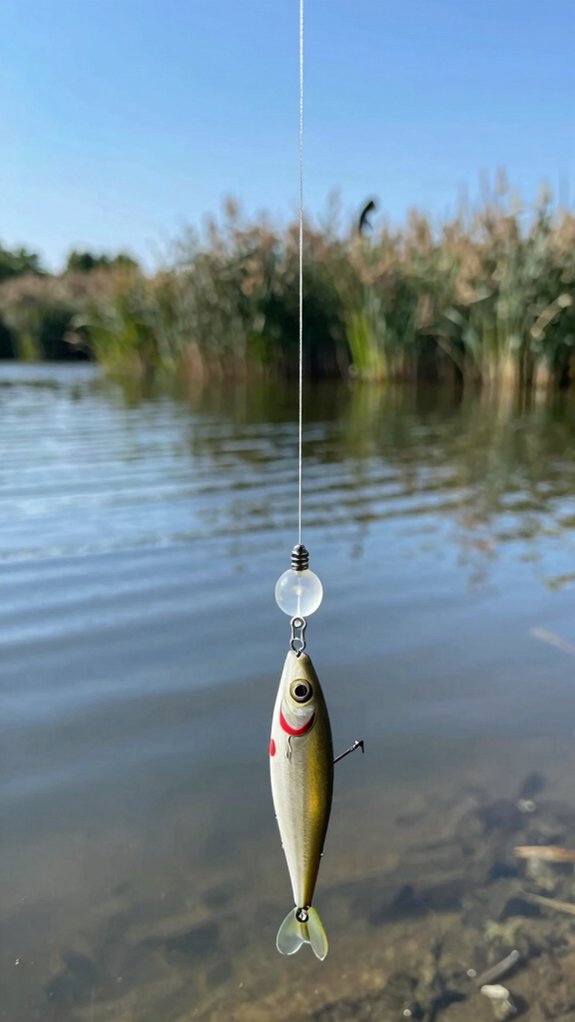
I use slip bobbers most for walleye, crappie, and even catfish when I need to nail a specific depth where they’re holding.
For walleye, I rig a live minnow under a slip bobber with a 1/4-oz sinker to reach them mid-depth along drop‑offs, especially during low light.
When crappie stack up deep near weeds, I adjust my bobber stop to keep the bait just 2–3 feet above the school, spot‑on with my sonar, and go light with a #6 hook and split shot for more bites.
walleye tactics
You’ll often find me turning to a slip bobber when walleye are lurking just off the bottom or suspending mid‑lake, especially during those magic hours around dawn and dusk.
The slip bobber makes dialing in depth effortless, putting your bait right in the strike zone where walleye can’t resist.
For best results, match your setup to the conditions:
- Use leeches or minnows on a 1–2 ft leader below a light sinker to stay in the zone without spooking fish
- Set the bobber stop 2–4 ft above the bottom near structure, or 3–8 ft up when walleye suspend over flats
- Add a split shot 12 inches above the hook for casting power and sensitivity
In clear, cold water, go light (1/8–1/4 oz); in wind or stained water, bump up to 1/4–3/8 oz.
It makes all the difference.
catfish setup
Targeting catfish with a slip bobber opens up a smart, adjustable way to fish deeper holes and channels where these bottom‑lovers often rise to feed.
Set It Right for Catfish
I use a slip bobber to match how high catfish suspend: 1–3 feet off the bottom for channel cats, 2–6 feet for big flatheads near structure.
Gear Up Smart
I go with 15–30 lb test line, a short 12–24 inch leader, and a small hook, like a #2–#4 octopus or circle, strong enough to handle headshakes. For sinkers, I use 1/4–3/8 oz in calm water, up to 1 oz in current.
Bait That Works
Cut shad, live chubs, nightcrawlers, or stink bait on that small hook? Catfish can’t resist.
crappie depths
Often, crappie are the perfect reason to grab your slip bobber rig, especially when you’re chasing them through the seasons and need precise depth control. Getting your minnow right in their strike zone is where the slip bobber shines, and the right depth setting often means the difference between a tap and a solid hook makes.
Here’s how I adjust for crappie year-round:
- Spring & fall: Set your slip bobber at 1–4 feet over spawning flats or 8–18 feet in open water, crappie suspend, and you want that bait dancing in the mid‑column.
- Summer: Drop down to 12–25 feet near brush or the thermocline; my sonar shows fish stacked here, and a well‑placed hook makes all the difference.
- Winter: Fish 2–4 feet above bottom‑hugging crappie in 15–30 feet; keep the bait in play without snagging.
Match the depth, and you’ll match the bite.
Slip bobber mistakes to avoid while rigging
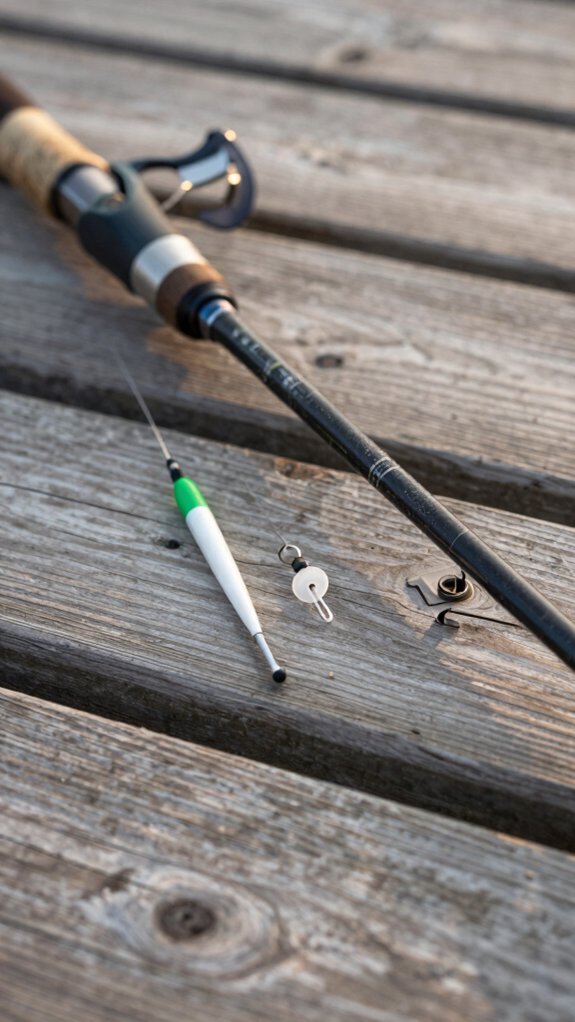
While rigging a slip bobber might seem straightforward, skipping a few key steps can cost you bites and throw off your entire presentation, especially if you’ve never used one before.
Here’s what to avoid:
- Skipping the bead between the stop and bobber? Don’t. It cushions the stop and keeps it from getting sliced, which can cause depth shifts.
- Using too heavy a sinker drags the bobber under. Start with 1/8–1/4 oz and adjust only if needed.
- Tightening the stop unevenly or leaving long tails invites slippage. Pull both ends snug, trim close, and test by sliding the bobber up.
- Placing the sinker too close to the hook, keep about 12 inches (30 cm) for natural bait action and better hooksets.
- Clipping the bobber on like a fixed float? Nope. Always thread it with a proper stop so it slides freely.
Frequently Asked Questions
How Do You Put a Slip Bobber on a Fishing Line?
I slide the slip bobber onto my line first, add a bead, then tie on my hook. I set depth with a stop, pinch on a split shot above the hook, and adjust the bobber by moving the stop, no retying needed.
Are Slip Bobbers Good for Beginners?
Yeah, slip bobbers are a dream come true for beginners, they’re like training wheels that teach balance and feel. I’ve found they make learning effortless, turning fumbles into catches with their forgiving, simple setup.
What Side of the Bobber Goes Up?
The thin, tapered end of the slip bobber goes up. I always check for a top label or pull tube, those face skyward. That way, it slides smoothly and stays vertical in the water, giving me better bite detection and fewer tangles when I cast.
How to Know How Deep to Set Slip Bobber?
I don’t guess, I watch my sonar and set the slip bobber right where the fish hang. If I can’t see them, I start at half the lake’s depth, then tweak it till I get bites.
In Conclusion
Yes, setting a slip bobber right means fewer snags and more bites. Last summer, I watched a buddy re‑rig five times before sliding his stop just above the bead, click, suddenly, he hooked three bluegill in ten minutes. That tiny cushion? It’s like shock absorber for your rig, letting the bobber slide smoothly without jamming.
Get the depth right, space your split‑shot 12 inches up, and you’re not guessing where your bait hangs, you’re controlling it. Simple tweak, proven results.