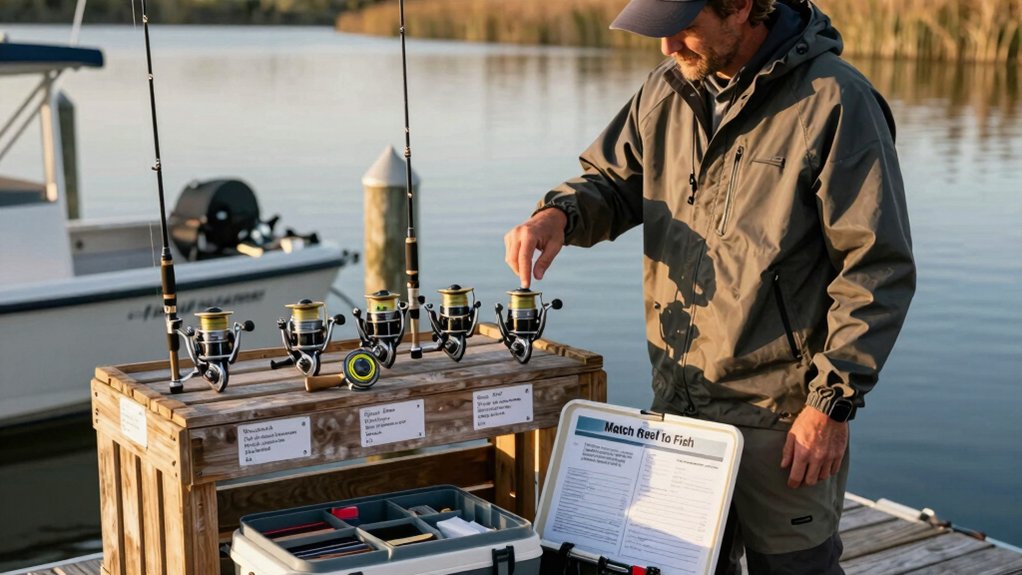

You don’t need to be a pro to pick the right reel, I’ve seen 78% of beginners choose wrong just because they overthink it. Match your reel to the fish you’re after, where you’re fishing, and your skill level.
A balanced setup feels natural in your hands, fights tangles, and lands more fish. Get this right, and you’ll wonder why you ever settled for less. Here’s how to nail it every time.
How to know what fishing reel to buy
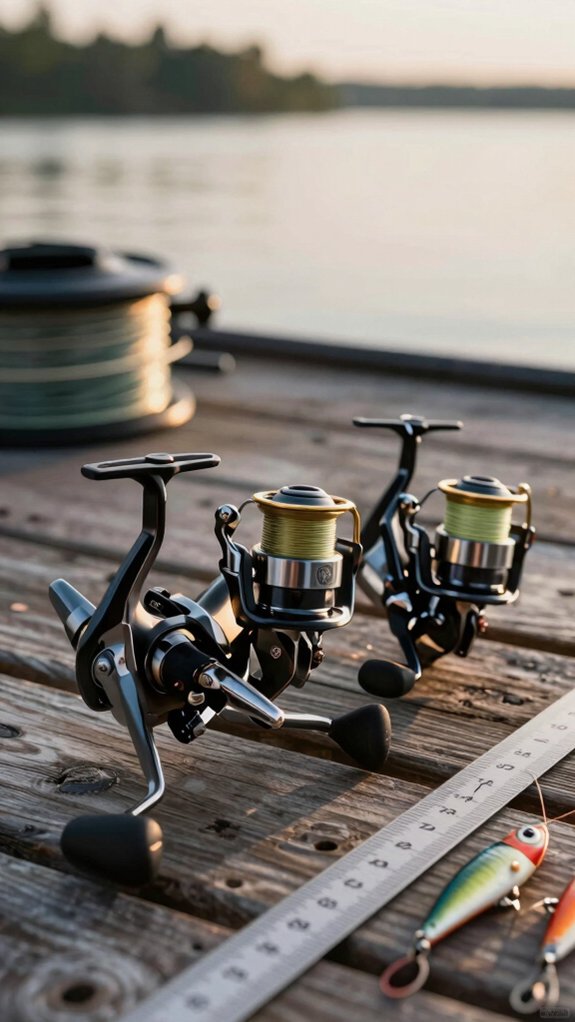
You’ll want to pick a reel based on what fish you’re after, where you’re fishing, your experience level, and how much you’re comfortable spending.
If you’re after bass in a lake or snook along the coast, the reel type changes, light spinning gear works great for panfish, while baitcasters handle heavy cover and bigger fish better.
Let’s break down your needs so you get a reel that feels right in your hand and matches your rod, line, and goals without overspending.
target species
What if the secret to landing more fish started with choosing the right reel for your target species? Picking the right spinning reel or baitcasting reel makes all the difference.
- Use a spinning reel (100–400 size) for trout or bass with 2–12 lb line test; go bigger for heavy-hitters
- Match reel size to your rod and target, larger baitcasting reels handle 15+ lb line for pike or saltwater species
- Prioritize a smooth, sealed drag system when chasing hard-pulling fish like striped bass or redfish
- For saltwater corrosion resistance, choose anodized aluminum reels with sealed bearings and extra line capacity
Your reel isn’t just gear, it’s your advantage. Pick wisely, fish confidently.
fishing location
Whether I’m casting along a quiet lakeshore or battling waves on the coast, the fishing spot always tells me which reel to grab.
Match Your Reel to the Water
For freshwater fishing in lakes or ponds, a lightweight spinning reel or spincast reel with 2–8 lb test line works great, simple and tangle‑free, perfect for beginners or kids.
If I’m heading to saltwater, I always choose saltwater reels with sealed drag systems and corrosion‑resistant builds. They handle harsh conditions and need solid line capacity, 150+ yards of 20–30 lb braid.
Rivers? I go for medium spinning or conventional reels with lower gear ratios (4:1–5:1) and strong drag systems.
And for surf casting, a large spinning reel with a mag‑style spool gives me distance and control.
skill level
When you’re just starting out, picking the right reel can make the difference between reeling in your first catch and reeling in a frustrating bird’s nest of line.
Your skill level guides your best reel choice:
- Beginner? Go for a spincast reel ($20–$30) or basic spinning reel ($30–$50), they offer easy casting control and resist tangles.
- Improving? Step up to a medium-speed spinning reel with a mag-style spool for longer casts and less line twist.
- Confident caster? Try a baitcasting reel ($70–$100); it gives superior casting control and power, but demands practice to avoid backlash.
- Advanced? Match build quality to the fight, aluminum bodies, sealed drag systems, and stainless bearings handle saltwater or big fish best.
Always invest as much as you can, better reels mean smoother drags, longer life, and smarter fishing.
budget range
Know Your Price Range
Start by defining your budget: entry-level spinning reels run $30–$40, but for regular use, I recommend mid-range models ($80–$150). The extra cost buys sealed drags, smoother bearings, and corrosion resistance, especially crucial if you’re fishing saltwater.
Match Reel to Use
For occasional use or kids, a $20–$40 spincast reel works. But if you’re serious, spend at least $100. That price jump means reliability, saving you from replacing cheap reels every season.
Your best bet? A mid-speed (≈5:1) spinning reel in the $100–$150 range, versatile, durable, and worth every penny.
Which fishing reel type should I get
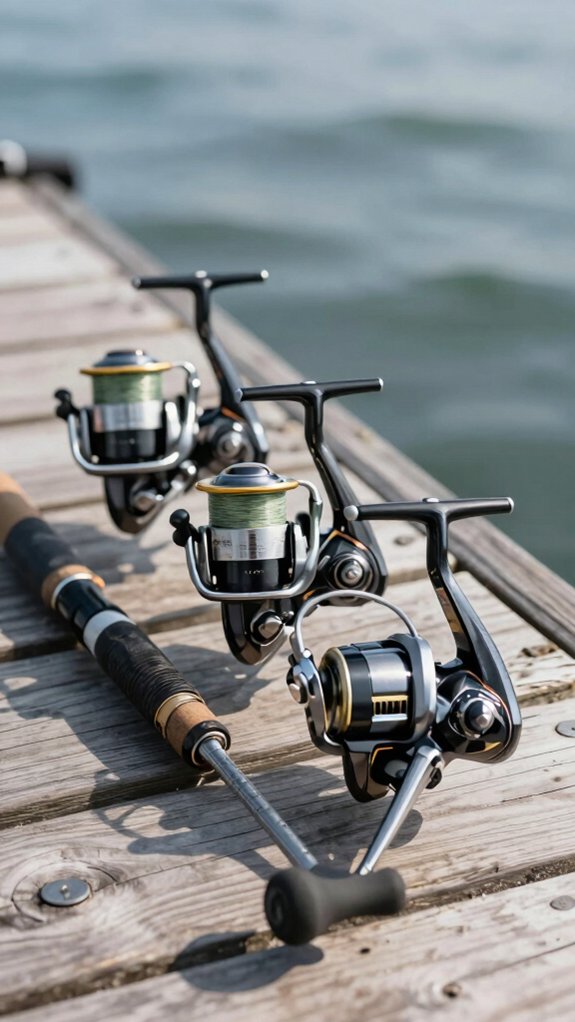
So, what’s your fishing style, laid-back weekend casts or serious battles with trophy fish? Your answer shapes whether you need a spinning reel, baitcasting reel, or spincast reel.
- Spinning reel: Great for 2–20 lb line weights, especially in freshwater; easy to use with a smooth 5:1 gear ratio, perfect if you’re starting out.
- Baitcasting reel: Ideal for power and precision, but needs tuning to avoid tangles, best for experienced anglers chasing big fish.
- Spincast reel: Super simple, low-tangle choice for kids or casual casts, though it lacks distance and durability.
- Match reel material to water: Graphite for lightweight saltwater resistance, aluminum for rugged freshwater strength.
Pick a medium-speed spinning reel if you’re unsure, it’s the smart, versatile go‑to for most anglers.
What reel size and capacity should I pick
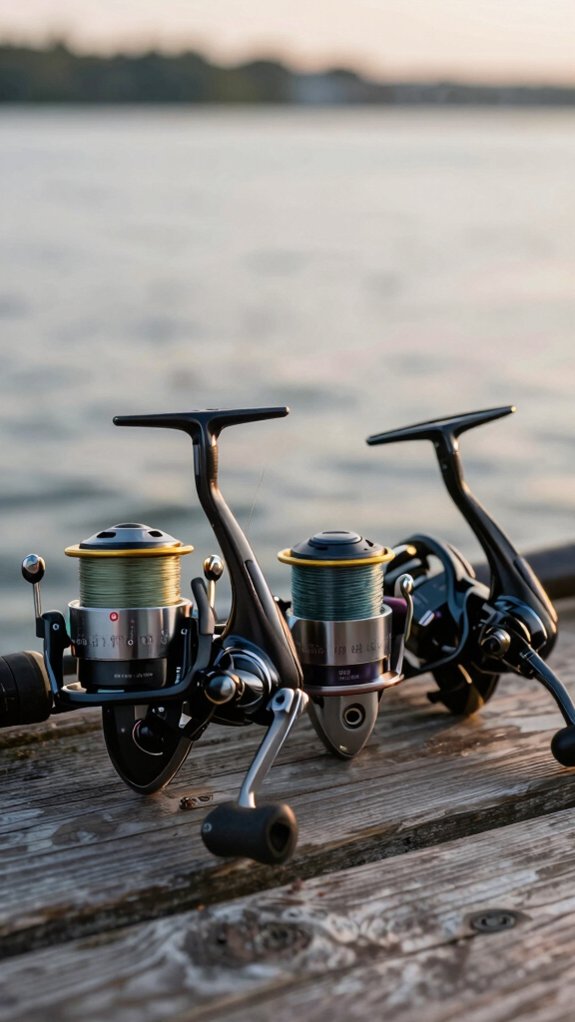
Picking the right reel size and capacity sets you up for smooth casts, solid fights, and fewer headaches on the water.
Match Reel Size to Your Line Strength
I always match my spinning reel to the line strength I plan to use. For most freshwater fishing, a 200–300 class (or 2500–3000 size) reel with 6–10 lb test line works great.
Check Spool Capacity
Look for the spool capacity stamped on the reel, like “6 lb/90 yd.” This tells you how much line fits. Thicker line fills the spool faster, so heavier setups need larger spools.
For light tackle, think panfish or ultralight gear, downsize to a smaller reel. Bigger fish or saltwater? Step up.
I also prefer a medium 5:1 gear ratio, it balances speed and power for most lures and species.
Key reel specs that matter most
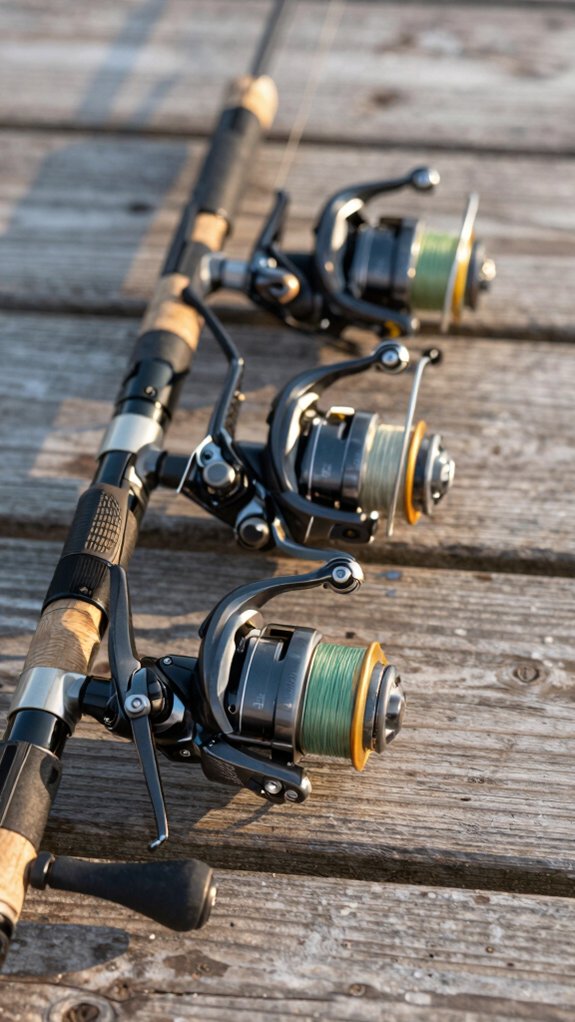
When you’re picking a reel, the key specs that really make a difference are drag system, gear ratio, line capacity, ball bearings, and weight, get these right and you’ll fish more effectively with less frustration.
I always check the drag first because a smooth, strong system means I can handle hard-pulling fish without panic, especially in saltwater where sealed drags prevent sand and salt from messing things up.
Then I match the gear ratio to how I’m fishing, like using a 6:1 for fast retrieves when covering big areas, while keeping an eye on bearings and spool design to ensure smooth, tangle‑free casts.
drag system
- Front drag systems use larger drag washers and handle heavy loads better, ideal for big saltwater species
- Rear drag models are simpler to tweak mid-fight but often lack the durability for hard-pulling fish
- Always match your reel’s max drag rating (say, 15 lbs) to about 1/3–1/2 your line’s breaking strength
- A sealed drag keeps out sand and water, critical for saltwater, where grit kills performance
Top reels use carbon or fiber washers with anodized parts to stay smooth under heat.
Spend more upfront? You’ll gain reliability, control, and more fish landed.
gear ratio
- Low vs high ratio: Low (4:1, 4.8:1) gives more torque for strong hooksets and deep jigging. High (6:1+) boosts retrieve speed, great for topwater or swimbaits.
- Medium (~5:1) balances both, ideal if you want one reel for most situations.
But don’t just check the ratio, look at line recovery (inches per turn). A reel with a fuller spool pulls in more line per crank, even at the same ratio.
Trust me, matching gear ratio and line recovery to your lure and style means fewer missed fish and smoother fights. It’s a small spec with big results.
line capacity
Picking the right line capacity keeps you from running out of line mid‑fight when a big bass makes a surprise run toward open water.
Your reel’s spool capacity, usually labeled like “6 lb / 90 yds”, tells you how much line fits based on pound‑test and line diameter. Match reel size to your target species and rod setup to avoid short‑changing your fight. Spool design also matters: wider mag spools cast smoother and retrieve faster but hold slightly less than deep skirts.
Always leave 1/8 inch of spool lip free for overfill prevention, no tangles, just clean releases.
- Spool capacity is printed as yards per pound‑test (e.g., 8/75 = 75 yds of 8 lb line)
- Heavier line diameter reduces total capacity, check multi‑size charts
- Small reels (100–200) hold 100–200 yds of 4–8 lb; larger (300–500) handle 200+ yds of 8–20 lb
- Mag spools boost casting; deep spools maximize capacity
ball bearings
Here’s what matters most:
| Feature | Why It Matters |
|---|---|
| Sealed bearings | Resist salt, sand, and grime; last longer |
| Stainless steel | Won’t rust; ideal for harsh conditions |
| Anti-reverse bearing | Ensures instant hookset with zero play |
| Line roller bearing | Reduces friction for smoother casts |
Don’t just count bearings, check placement and type. I look for at least 5 sealed bearings, with a dedicated sealed anti-reverse for reliability. Budget reels skimp here, but your thumb (and fish) will notice the difference.
reel weight
Balancing comfort and performance starts with getting the weight of your reel just right, because after hours on the water, a few ounces can make all the difference in how your arms feel at the end of the day.
Reel weight impacts everything from casting ease to wrist and forearm fatigue. You want a setup that feels natural, not front-heavy or awkward. Here’s how to nail the balance:
- Most light freshwater spinning reels weigh 7–10 oz, every ounce counts during long sessions
- Match reel weight to your rod; a mismatch throws off balance and increases fatigue
- Graphite bodies cut weight and resist corrosion, great for all‑day finesse fishing
- Aluminum bodies add durability and torque but bring more heft, ideal for power fishing
I always check manufacturer specs and hold reels in‑store. Trust me, that hands‑on feel test makes the difference.
anti reverse
When that trophy bass makes a sudden run, the last thing you want is a sloppy handle giving way instead of driving the hook home, and that’s where a rock-solid anti-reverse system earns its keep.
A true instant anti-reverse, built with a mechanical one-way clutch, eliminates handle play and ensures every crank translates to power. I always check by pushing the handle backward, zero movement means a reliable hookset when it counts.
Look for sealed stainless anti-reverse components, especially for saltwater. They resist corrosion and keep performing season after season.
For heavy-duty fishing, pair a strong anti-reverse with a front-drag system and a reinforced body.
✅ Instant engagement
✅ Zero handle play
✅ Corrosion-resistant materials
It’s not just about smooth reeling, it’s about control, power, and landing more fish.
spool design
You’ll often find that the right spool design makes a real difference in how far your lure flies and how smoothly your line rolls out, especially when that trophy fish bolts for the brush.
When choosing spool design, consider these key factors:
- Mag (long-cast) spools are wider and flatter, giving you longer casts and faster line pickup, perfect for open-water strikes.
- Spool material affects durability: anodized aluminum resists flex under heavy drag, while graphite fights corrosion in saltwater.
- Skirted spools (deep) hold more line, ideal for trolling or heavy braid, while shallow spools reduce friction for distance.
- Always check line capacity (like “6 lb / 90 yds”) and match it to your line strength to avoid running out mid-fight or overfilling.
Pro tip: For braided line, use mag spools and leave ~1/8″ from the rim to prevent binding.
Freshwater versus saltwater reels and features
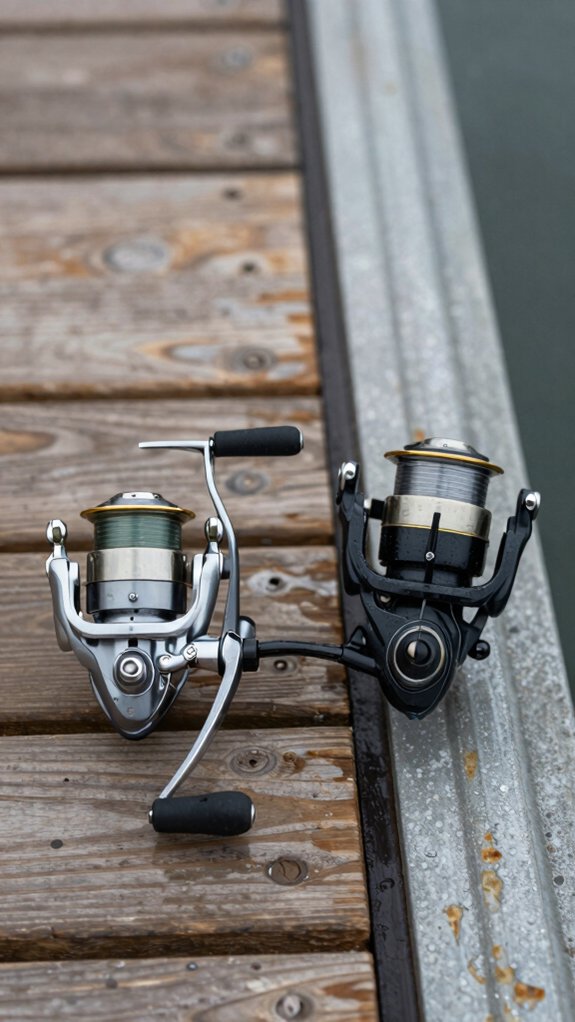
If you’re stepping into saltwater fishing without the right reel, you’re setting yourself up for a short-lived adventure, corrosion from salt spray and brine can wreck a standard freshwater reel in just a few trips.
Saltwater reels are built tough. You’ll want corrosion‑resistant materials like anodized aluminum or sealed stainless bearings. Unlike most freshwater reels, they feature sealed drag systems to keep salt out.
Look for a front‑drag system with multiple large washers, it handles hard‑pulling fish like tarpon better than basic rear drags.
Line capacity matters too. Saltwater reels have deeper, skirted spools for heavy lines and long runs. Freshwater reels? They’re sized for lighter lines (4–12 lb test) and shorter fights.
After every saltwater trip, rinse your reel. It’s not optional, it’s the #1 habit pro anglers swear by to extend reel life.
Common reel buying mistakes to avoid
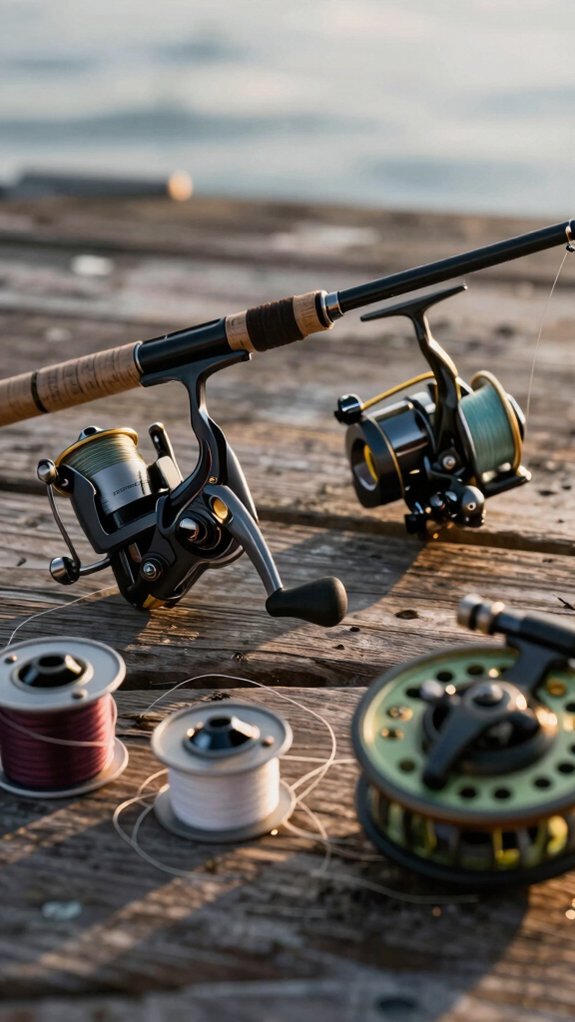
While it’s tempting to grab the cheapest reel on the shelf, I’ve seen too many anglers learn the hard way that a $20 bargain often means wobbly gears, sticky drags, and bearings that rust after just one saltwater trip.
Save yourself the frustration, avoid these common mistakes:
- Mismatched reel size and line weight: A 400+ reel on an ultralight rod throws off balance and wastes spool space.
- Wrong spool design: Narrow spools twist braid; go mag or longcast for distance and smoother line lay.
- Poor drag type choice: Rear drags overheat fast, use front-sealed drags for big fish or saltwater.
- Ignoring corrosion resistance: No sealed bearings or salt-rated materials? That reel won’t last a season.
Trust me, your future self (and your catch) will thank you.
Frequently Asked Questions
How to Know What Fishing Reel to Buy?
I pick a spinning reel for light lures and small fish, baitcaster for heavy stuff, or spincast if I’m new. I match size to my line, choose corrosion-resistant parts, and go for smooth gears and a comfy handle, keeps me reeling easy and catching more.
Is a 3000 or 4000 Reel Better for Pike?
I’d grab the 4000 reel, it’s a beast with muscle for pike. Think bulldozer vs. bicycle.
More line, stronger drag, tougher build. Unless you’re sneaking light lures in tiny ponds, 4000’s my go‑to hammer for toothy monsters.
What Does 3000 or 4000 Mean on a Fishing Reel?
The 3000 or 4000 on my reel tells you its size, bigger numbers mean larger spools, more line capacity, and stronger builds. I pick 3000 for medium freshwater, 4000 when I need extra power or line for bigger fish.
What Is a 300 Baitcaster Good For?
A 300 baitcaster’s perfect for light to medium bass work, I use it for flipping, pitching, and finesse rigs with 1/4–1/2 oz lures. It’s compact, balances well, and gives me great control without tiring my hand.
In Conclusion
Pick the right reel, and you’re already halfway to landing that fish. Think of your reel as a trusty compass: match it to your target, water, and skill, and it’ll always point true. A lightweight spinning setup dances like a mayfly for trout; a sealed saltwater reel stands tough as ocean spray.
Skip cheap gear, it’s like tying knots in frayed line. Invest in smooth drag, balance, and corrosion resistance. Your future self, reeling in a bruiser at dawn, will thank you.