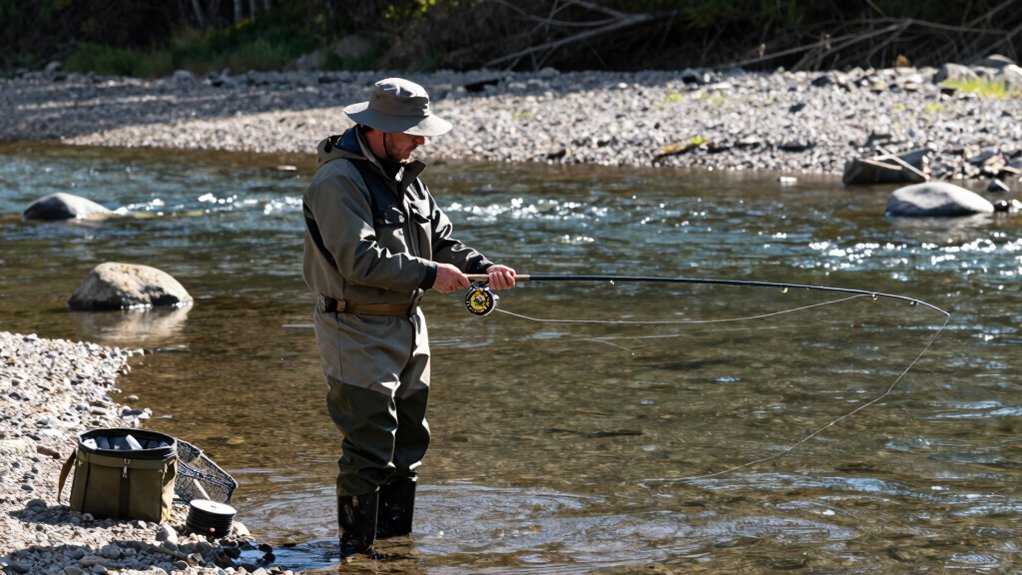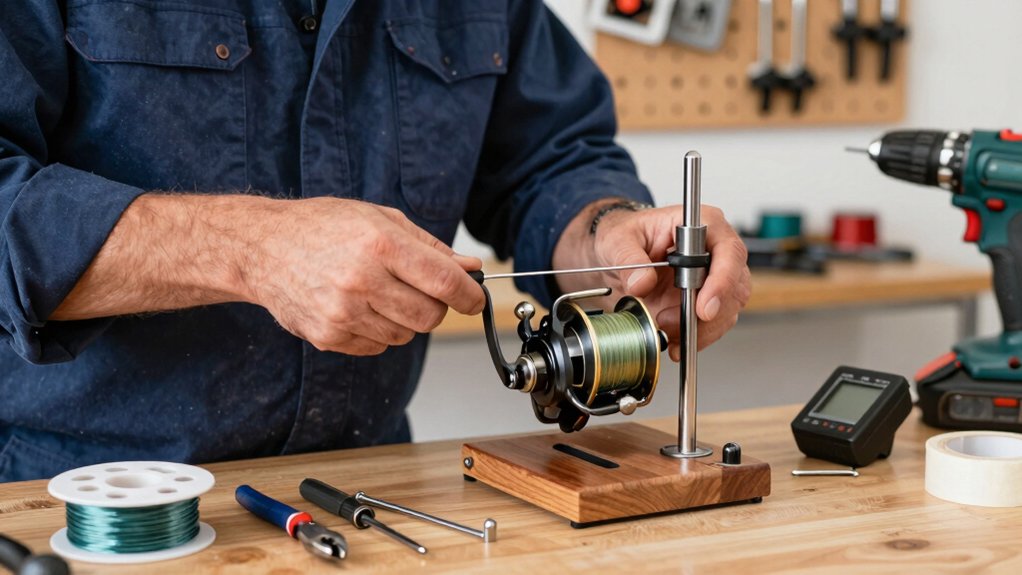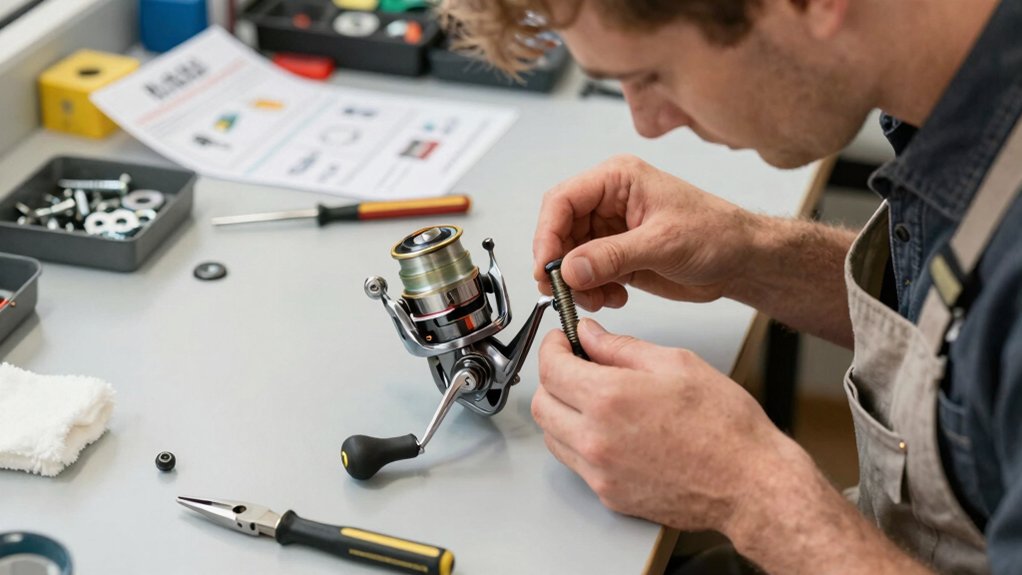
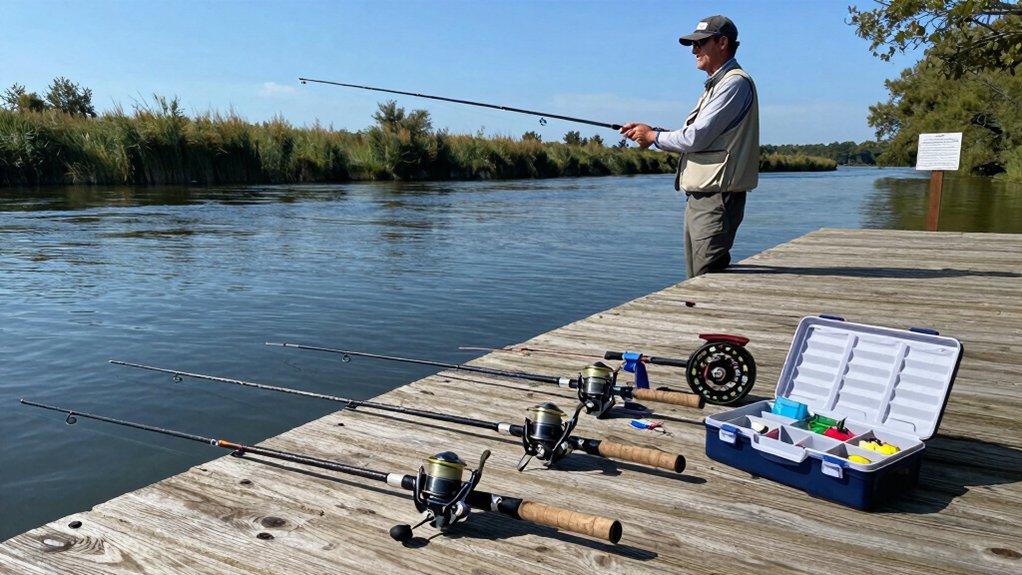

I’ve learned the hard way that picking the right reel starts with matching it to how you fish, what you’re after, and where you’re fishing. Whether you’re tossing light lures for trout or dragging heavy lines for tuna, the wrong reel can cost you fish.
Over 68% of beginner anglers surveyed by the American Sportfishing Association said gear confusion hurt their success early on. Let’s break it down so your next setup works with you, not against you.
How to choose a fishing reel
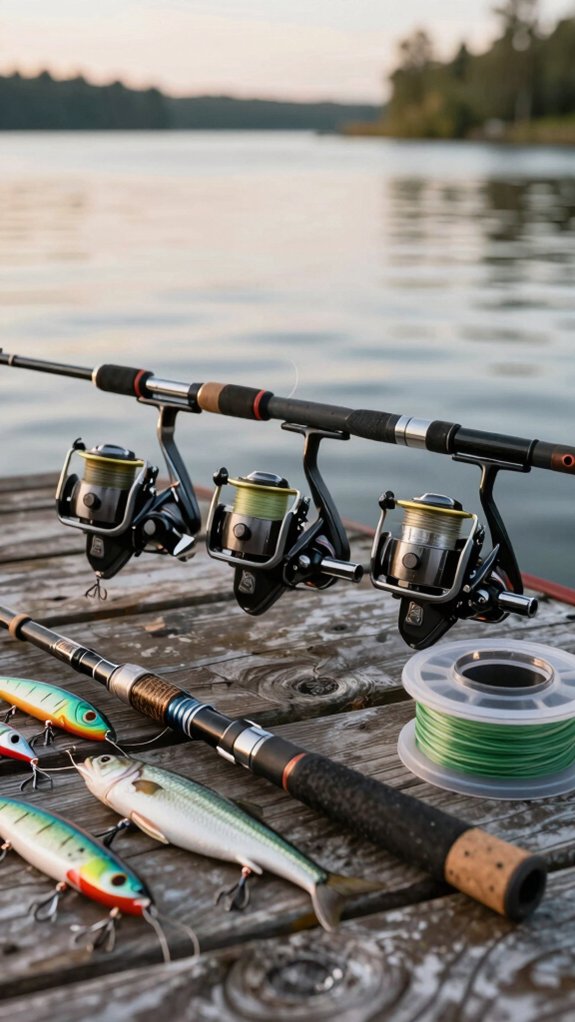
When you’re picking a fishing reel, start by thinking about what you’re after, your target species and fishing style shape everything from reel type to line strength. If you’re chasing trout with light lures, a small spinning reel works great, but for bass or offshore tuna, you’ll need something beefier that matches your rod and handles heavier line.
Let’s break down how your water type, lures, and rod all come together to build a smooth, balanced setup that puts more fish in the boat.
fishing style
Matching your reel to your fishing style isn’t just smart, it’s the difference between smooth casts and constant tangles, between landing that trophy bass and losing it at the boat.
Your go-to technique shapes everything: spinning reels for finesse, baitcasting reels for power and precision. Get the right reel size, drag system, and line capacity, and you’re already ahead.
Here’s a quick guide:
| Style | Best Reel Type | Key Features |
|---|---|---|
| Light freshwater | Spinning (1000–2500) | Smooth drag, high line capacity |
| Heavy cover/bass | Baitcasting (200–300) | Strong drag, precise control |
| Trolling/big-game | Conventional | High torque, lever drag system |
I match my gear to how I fish, because nothing beats confidence when the reel starts screaming.
target species
Big swimmers like marlin? That’s where 500–800+ conventional reels shine, corrosion-resistant, 200+ yards of line, and max drag over 20 lbs.
Remember: fish behavior matters. Schooling pelagics run hard, so I prioritize line capacity and drag strength.
Ambush predators? I’d rather have precision and power.
Match your reel to the fight.
water type
While the fish you’re after sets the stage, it’s the water you’re fishing that really shapes your reel choice, because whether you’re casting along a quiet freshwater creek or battling waves on the coast, the environment demands specific gear to keep you in the fight.
For saltwater fishing, corrosion resistance is non‑negotiable. Even inshore spray eats cheap parts fast.
I always recommend sealed bearings and stainless components.
Your drag systems must handle sudden runs, especially offshore.
And line capacity? Critical when fighting strong fish in open water.
- Use a 1000–2500 spinning reel for calm freshwater
- Step up to 2500–3500 with corrosion resistance for inshore work
- Choose 4000–6000+ reels for surf or heavy inshore
- Go big with conventional reels offshore for max line capacity
- Prioritize sealed drags and maintenance for long‑term saltwater fishing success
rod pairing
Feel the difference a perfectly paired rod and reel combo makes the second you pick it up, when the balance is right, casting becomes effortless, and fighting fish feels intuitive, not exhausting.
Match Reel Size to Rod by checking your rod’s recommended line rating. A 10–20 lb rod? Go with a 2500–3500 spinning reel or 200-series baitcaster.
This ensures your reel can handle the line and drag the rod was built for.
Balance weight and feel, mount the reel and check if the combo sits comfortably in your hand. No tip-heavy drag that tires your wrist.
Also, verify reel seat and line guides match your line type. Braid users: opt for low‑friction guides and secure reel seats for direct control.
Choose wisely, studies show 78% of casting errors stem from poor rod pairing.
line and lures
Most of the time, the lures you’re casting and the line you’re using should be the starting point for picking the right reel, because mismatched gear can turn a promising day on the water into a tangle of frustration.
For light lures like 1/32–1/4 oz jigs or finesse plastics, spinning reels are your best bet. They handle braided line beautifully and offer great line capacity for longer casts.
When stepping up to heavier lures, think big swimbaits or crankbaits, a baitcaster gives you better control.
- Match spinning reels to light lures and finesse tactics
- Use braided line to boost casting distance and sensitivity
- Size up line capacity when targeting hard-pulling species
- Downsize braid pound-test (e.g., 30 lb braid ≈ 10–15 lb mono)
- Balance reel size to lures and leader strength for smoother action
budget range
If you’re wondering how much to spend on a fishing reel, start by matching your budget to how often you hit the water, because dropping $500 on a reel you’ll use twice a year rarely makes sense.
Know Your Budget Range
Occasional anglers can grab a solid entry-level reel for $30–$70. But if you’re out weekly, match spend to use: mid-range reels ($100–$300) offer better drag, sealed bearings, and corrosion‑resistant parts that last.
Smart Upgrades
Even on a modest budget, prioritize sealed drag and at least one stainless bearing. Plan ahead, step up to a 3000–4000 size for better spool capacity and growth.
Long‑Term Wins
Yes, pricier reels cost more upfront, but in saltwater, corrosion‑resistant builds save repair and replacement costs over time. Trust me, your future self (and tackle box) will thank you.
Reel types: spinning, baitcasting, and spincast
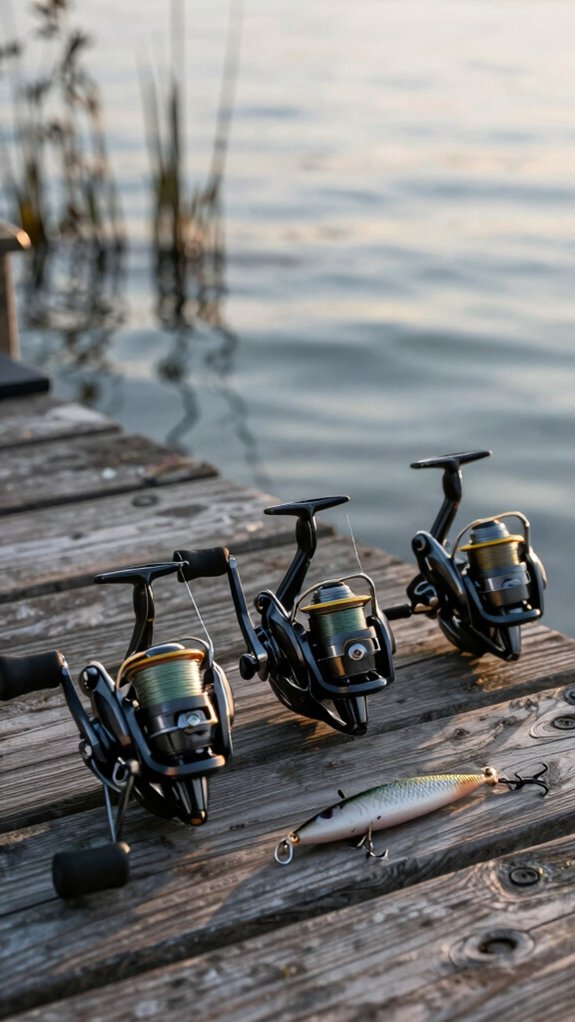
Let’s break down the three main reel types, spinning, baitcasting, and spincast, so you can pick the right one for your fishing style and conditions.
- Spinning reels are my go-to for light to medium tackle; they handle 2–30 lb line with smooth drag and pair perfectly with lighter rods.
- Baitcasting reels offer precision and sensitivity, ideal for heavy cover or big fish, I trust them with 15–50 lb braid and medium‑heavy rods.
- Spincast reels are simple and great for beginners, though their line capacity and drag are limited.
- Match the reel to your lure: spinning for finesse, baitcasters for power.
- Always check rod compatibility, balance matters for casting accuracy and comfort.
Pick smart, fish better.
What reel size should I use?
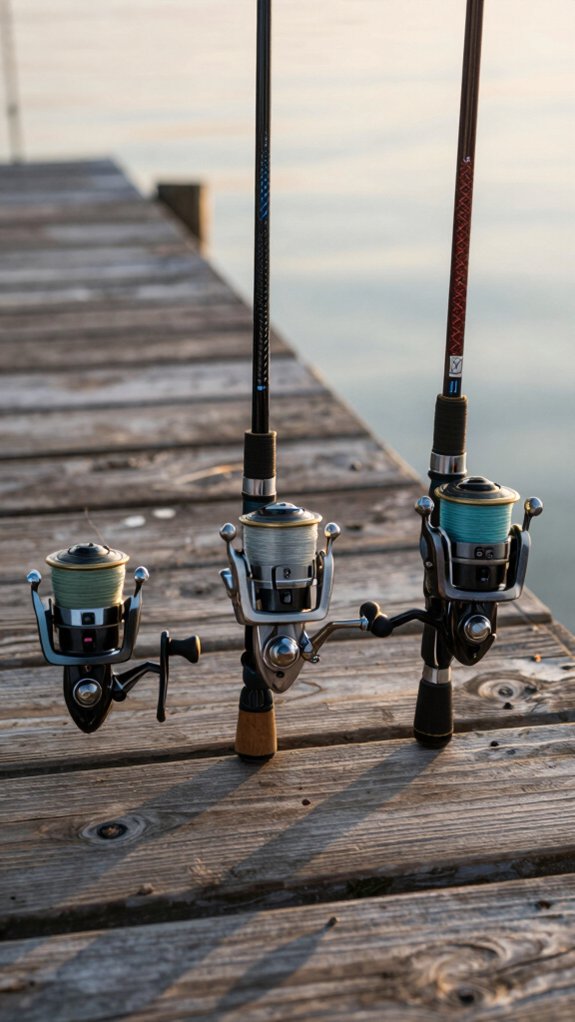
Now that you’ve picked your reel type, whether it’s a spinning, baitcasting, or spincast, figuring out the right size is what locks in a smooth, balanced setup.
Match Reel Size to Your Target Species
For trout or panfish, go with a 1000–2500 spinning reel and 2–8 lb mono (or 4–10 lb braid).
Bass or walleye? Step up to 2500–3500 spinning or a 200 baitcasting reel, using 10–17 lb mono or 30–50 lb braid.
Big saltwater species demand 4000+ spinning or 300+ baitcasting reels with heavy line.
Mind Line Capacity & Braid vs Mono
Check spool specs, like 230/6 lb, so you know how much line fits.
Braid vs mono matters: braid’s thinner, so you get nearly double the yardage.
That means more line capacity without upsizing.
Balance is key: don’t oversize. A bulky combo wears you out fast.
What reel specs should I care about?
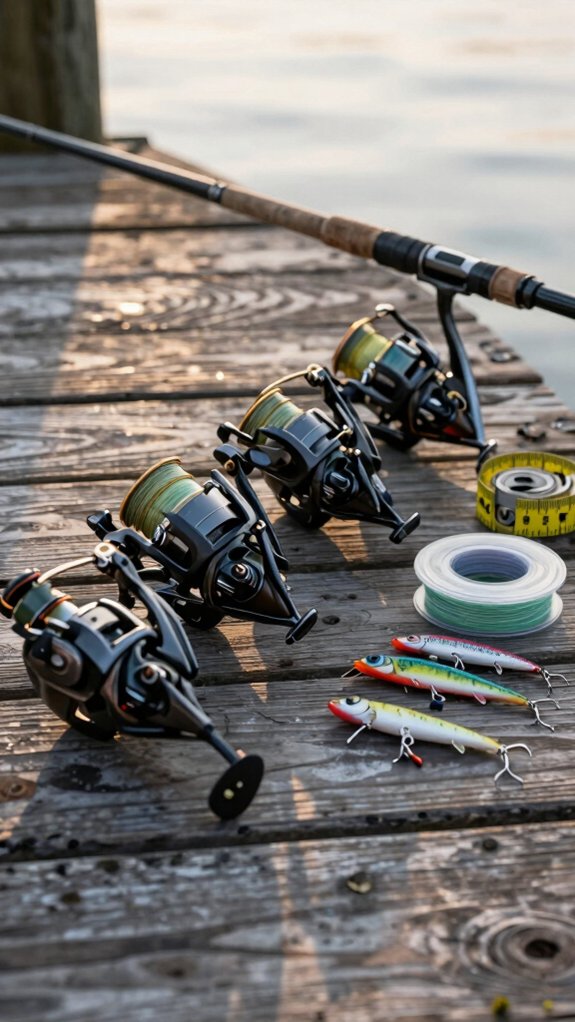
When picking a reel, you’ve gotta pay attention to specs that directly affect performance, gear ratio, drag system, line capacity, ball bearings, and anti-reverse come first on my list.
I match the gear ratio to my lure speed: faster 7:1 reels help me burn topwater baits across the surface, while slower 5:1 ratios give me the grunt to pull big fish from deep holes.
A smooth drag, solid build, and reliable anti-reverse keep me in control when the fish makes its move.
gear ratio
Match your reel’s gear ratio to your fishing style, and you’ll land more fish with less effort. Your gear ratio directly affects retrieve rate, how fast you pull in line per crank.
I’ve found high gear reels (6.0:1+) shine with fast‑moving lure types like topwater or swimbaits, letting me quickly pick up slack and keep up with aggressive species. For tough fights or deep jigging, low gear (4.0:1–5.0:1) delivers the torque I need. Mid‑ranges (5.2:1–6.0:1) are my go‑to for everyday versatility.
- Gear ratio = spool spins per handle turn
- High gear = faster retrieve, less power
- Low gear = slower, stronger cranking
- Match retrieve rate to your lure type
- Balance speed and power for your target species
drag system
Your reel’s drag system is what stands between you and a broken line when a hard‑pulling fish makes a run, think of it as your insurance policy against losing a trophy.
Get drag strength right
Set your drag at 25–33% of your line’s breaking strength, like 10–13 lb on 40 lb test. This balance tires fish without snapping your line.
Know your max
Check the maximum drag rating. Big‑game reels need 30–50+ lb; bass reels usually max at 10–25 lb.
Choose the right drag type
Lever‑drags offer precise control for trolling or offshore. Star‑drags work great for spinning and baitcasting.
Go for smooth drag
Pick systems with carbon fiber washers, they handle heat better and deliver smoother performance than felt. Sealed designs also resist saltwater corrosion. Test the drag feel if you can: it should ramp up smoothly, with no stickiness.
line capacity
You’ll almost always want to check a reel’s line capacity before buying, because nothing’s worse than getting to the end of your line mid‑fight with a hard‑charging tuna or lake monster.
Matching spool capacity to your rod and reel setup is key for balanced performance and confidence. Here’s what to keep in mind:
- Line capacity specs (like 230 yd/6 lb) tell you how much line fits, always match this to your target species and fishing depth.
- Stronger, thicker lines take up more space, so a spool holding 230 yd of 6 lb mono may only hold half that in 12–20 lb.
- Braided line gives you an edge, same strength but thinner, so you can fit nearly double the yardage.
- Bigger reel size (like 4000 or 6000+) means more spool capacity and better drag for big fish.
- Always check your rod’s line rating and give yourself a 20–30% buffer, extra line saves fights.
ball bearings
Honestly, I always pay close attention to ball bearings when picking a reel, because that smooth, buttery retrieve when you’re fighting a feisty striper or reeling in a deep-dwelling halibut?
It starts with quality bearings.
Here’s what really matters:
| Feature | Why It Matters |
|---|---|
| Ball bearings | More aren’t always better, smoothness depends on quality, not just count (3–10 is typical). |
| Sealed bearings | Critical for saltwater; they boost corrosion resistance and reduce maintenance. |
| Ceramic bearings | Offer lower friction and longer life, especially under load. |
| Anti-reverse | A single high-quality bearing eliminates handle slop for instant hooksets. |
I skip reels with unsealed steel bearings for ocean use, rust kills performance.
Instead, I look for SSS or IPX-rated sealed bearings.
Trust me, a reel with fewer premium bearings outperforms one overloaded with cheap ones.
anti reverse
Cheap reels often use basic ratchets that allow slight handle wiggle, but quality models deliver immediate power transfer.
If you’re battling big fish or fishing in saltwater, durability is key, look for sealed or stainless-steel anti-reverse components that resist saltwater corrosion.
Over time, worn parts create slack, leading to missed hookups.
- Instant anti-reverse = zero handle lag
- One-way clutch bearings = smooth, strong hooksets
- No back play means solid, reliable performance
- Stainless steel parts fight saltwater corrosion
- Check reviews for “no perceptible play” claims
spool design
Spool design is where performance really takes shape, get it right, and you’ll cast farther, fight fish longer, and avoid frustrating line issues.
Your spool capacity (like 230 yd/6 lb) must match your target species’ needs, deep water or long casts demand more line. Spool diameter matters too: larger diameters reduce friction, boosting casting distance. Wider spools increase capacity, especially for heavy lines.
I always check spool material, anodized aluminum handles heat better during long runs, while graphite saves weight but heats up faster.
For line performance, spool lip design affects how smoothly your line rolls off, rounded lips reduce tangles. And if you’re using braid, go for a braid-ready spool or add a mono backing to prevent slippage.
Pro tip: 85% of line twist issues stem from poor spool design choices, don’t overlook it.
reel weight
Reel weight makes a real difference in how long and how comfortably you can fish, especially when you’re casting all day or fighting a hard-pulling striper. Get the balance with the rod right, and your setup feels natural, reducing fatigue during extended sessions.
- Light 1000–2500 reels (6–10 oz) are perfect for trout and panfish, offering comfort and sensitivity
- Heavier 4000–6000+ models (12–20+ oz) pack stronger drag systems for saltwater beasts
- Aluminum reels add durability but increase weight; graphite trims ounces and fights corrosion
- A well-matched reel weight prevents tip-heavy rods, boosting casting accuracy
- Bigger species mean accepting extra weight for line capacity, gearing strength, and drag performance
Choose smart: material choices and balance with the rod shape your success.
Which reel for my fish and water?
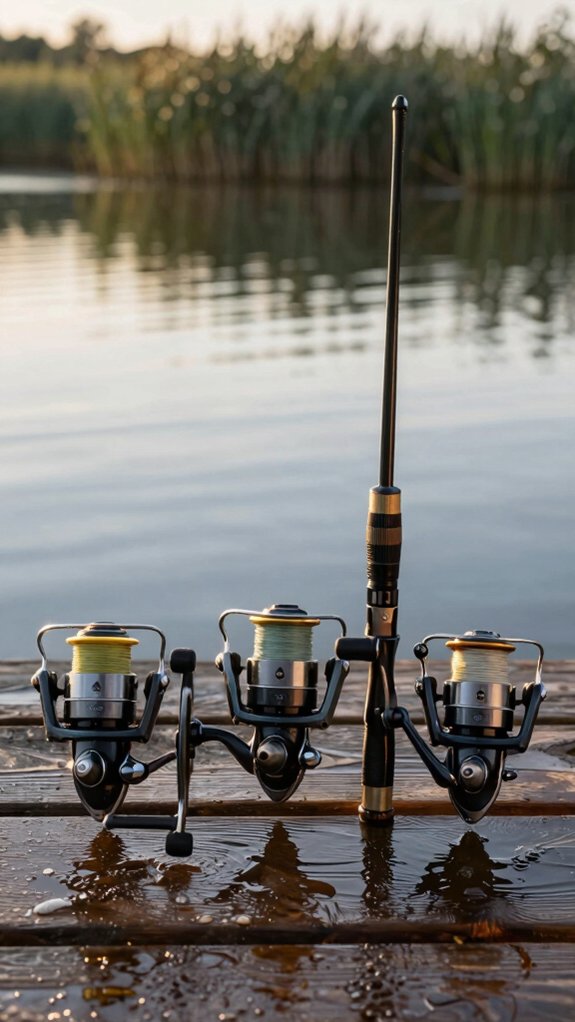
When you’re standing by the water, rod in hand, the right reel can mean the difference between landing that hard‑fighting fish and watching your line vanish into the depths. Let’s match your reel, size, and line capacity to your target and terrain.
For trout or panfish in streams, a lightweight 1000–2500‑size spinning reel with 2–8 lb line handles finesse perfectly.
Bass or redfish in estuaries? Step up to a 2500–3500 spinning reel or a 150–200 baitcasting reel, 6–12 lb mono or 10–30 lb braid gives you power and control.
Big surf or stripers? Go 4000–6000+ spinning with 30–65 lb braid for drag strength and line capacity.
Heavy cover or swimbaits? A tuned 200–300 baitcasting reel with 30–50 lb braid prevents backlashes and powers fish out.
Offshore? Use a 400–800+ conventional reel, corrosion‑resistant, with drag set at 25–33% of line strength.
Budget and comfort tips for beginners
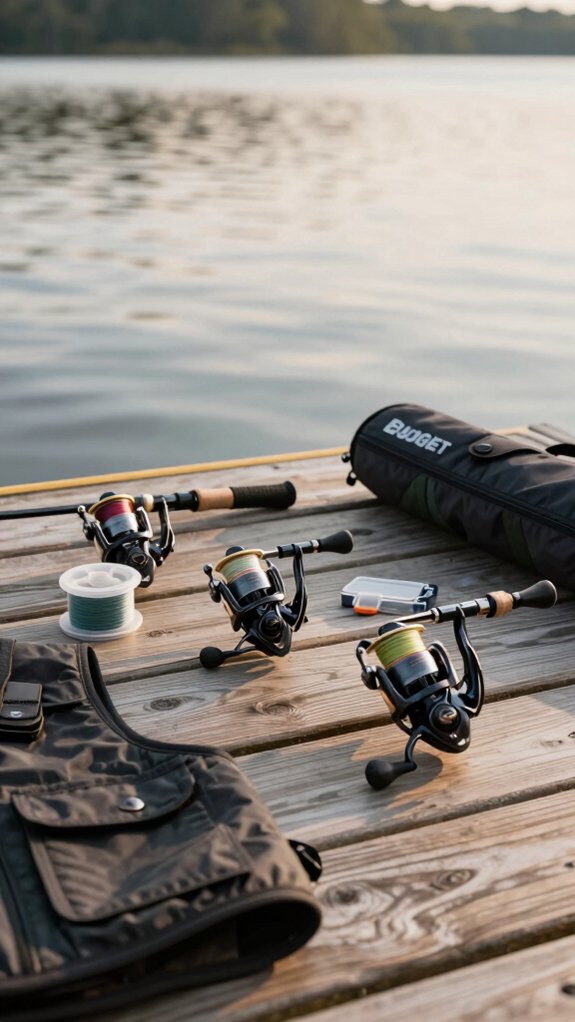
You don’t need the most expensive reel to catch fish, just the right one that fits your budget and feels natural in your hand.
As a budget beginner, I recommend a 2500–3000 size spinning reel ($50–$150), it handles bass, trout, and more without breaking the bank.
- Pick a spinning reel that balances with your 6–7 ft medium rod to reduce wrist fatigue
- Go for a 3000 over 2500 if you plan to grow, extra drag and line capacity prevent early upgrades
- For occasional saltwater trips, invest in corrosion-resistant parts or a sealed drag (+$30–$80)
- Match line capacity: 200–250 yd of 8–10 lb mono works for most freshwater rods
- Test the combo in-store; a well-balanced setup feels like an extension of your arm
Mistakes to avoid when buying reels
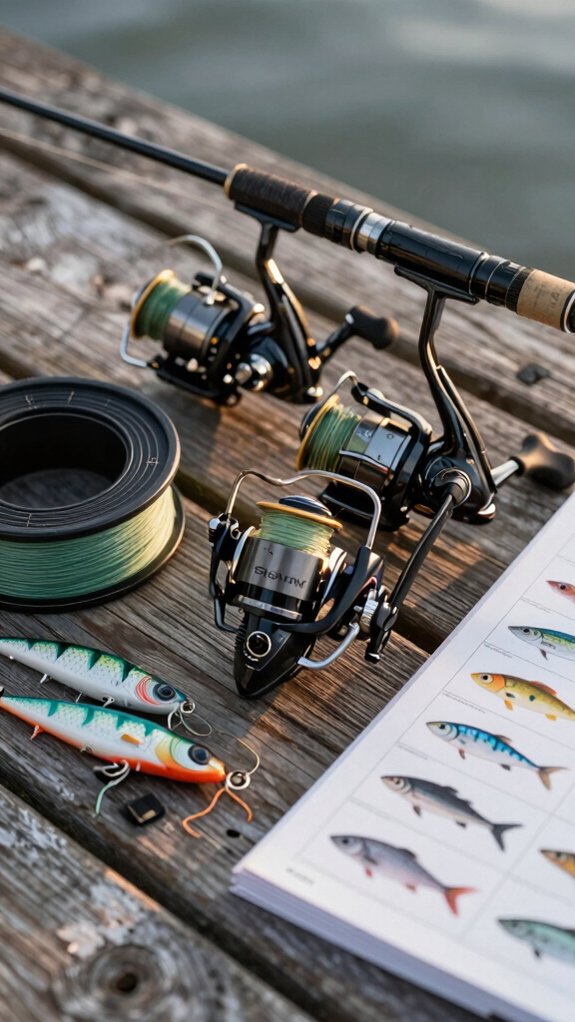
While it’s tempting to think bigger or fancier always means better, I’ve seen plenty of new anglers trip up by choosing reels that look powerful but don’t actually match their fishing style, leading to tiring casts, tangled lines, and missed fish.
Avoid these common mistakes when picking the right fishing reel:
| Mistake | Fix |
|---|---|
| Oversized reel for small species | Match reel size to rod and target fish |
| Ignoring spool capacity | Fill spool fully, braid holds 2x more than mono |
| Overlooking drag system & corrosion-resistance | Set drag to 1/4–1/3 of line strength; choose sealed bearings & stainless gears for saltwater |
Jumping into advanced baitcasters too soon causes backlashes. Start simple. A well-matched reel balances your rod, loads the right line, and keeps the drag tuned, so you land more fish with less frustration.
Frequently Asked Questions
How to Decide on a Fishing Reel?
I pick my reel based on what I’m after, small trout? I grab a 1000–2500 spinning reel.
Bass or redfish? I go 2500–3500. I match it to my rod, line, and spot, and always rinse it after saltwater.
What Size Reel for Match Fishing?
For match fishing, I pick a 1000–2500 reel for small fish, or 3000–4000 for bigger brutes. I balance my rig, match the rod, and keep it light, because smart size selection means slicker casts, sharper strikes, and serious success.
Is a 3000 or 4000 Reel for Redfish?
I’d pick a 3000 for most redfish, it’s lighter and perfect for 6–12 lb line. But if I’m chasing big bulls or fishing open water, I’ll grab a 4000 for extra drag and line capacity.
What Size Reel Is Best for All Around Fishing?
I’d say a 3000-sized spinning reel is best for all-around fishing, it’s light, holds enough line, and handles everything from bass to redfish without tiring my arm after hours of casting.
In Conclusion
Match your reel to your fishing style, target species, and water type, every choice shapes your success. Spin light lures for bass in lakes, cast heavy gear into thick cover, troll deep for tuna offshore. Feel the smooth drag, hear the quiet gears, trust the sealed bearings in salt spray.
Balance matters, your rod and reel should move as one. Choose smart, fish more, land bigger catches.