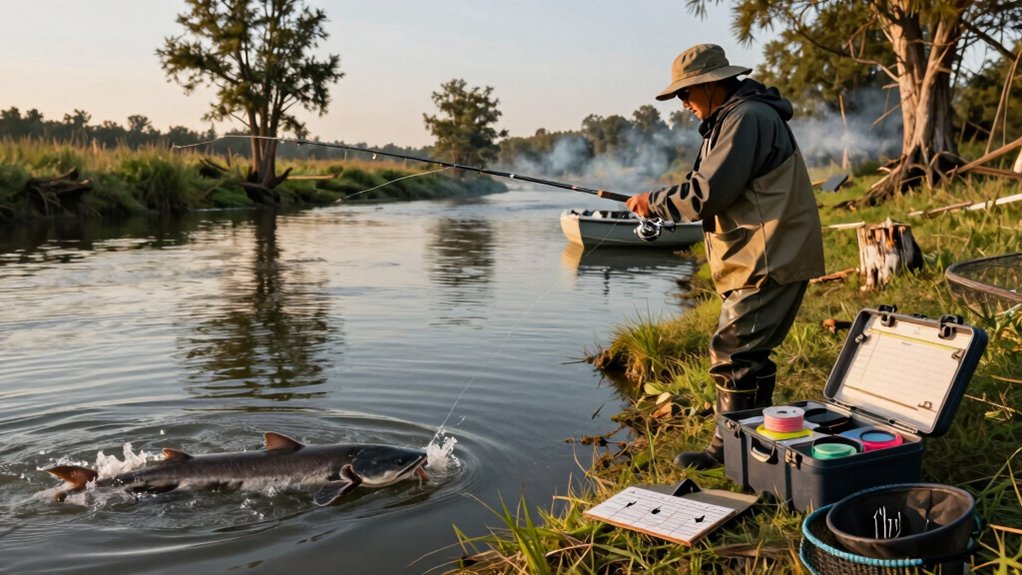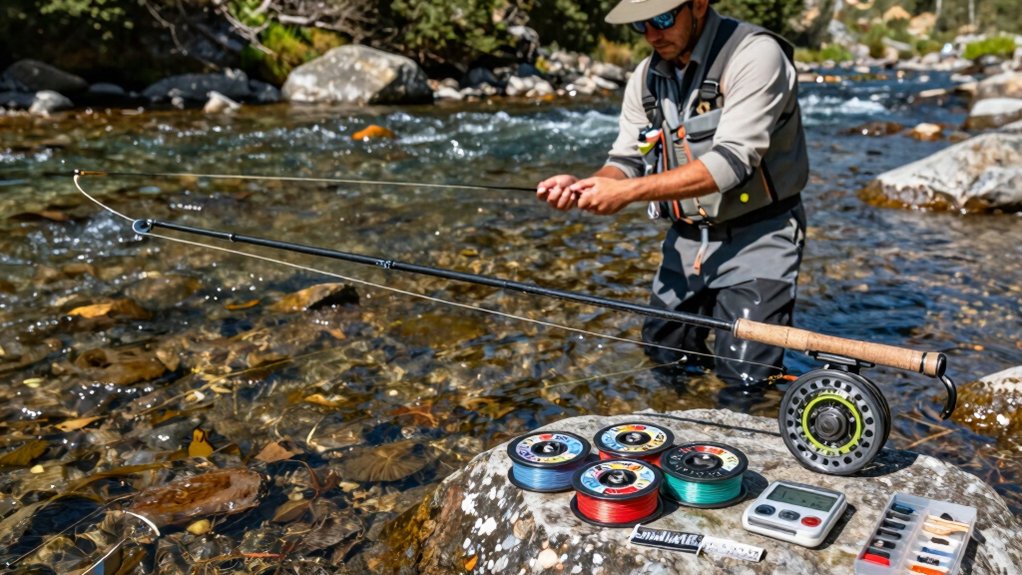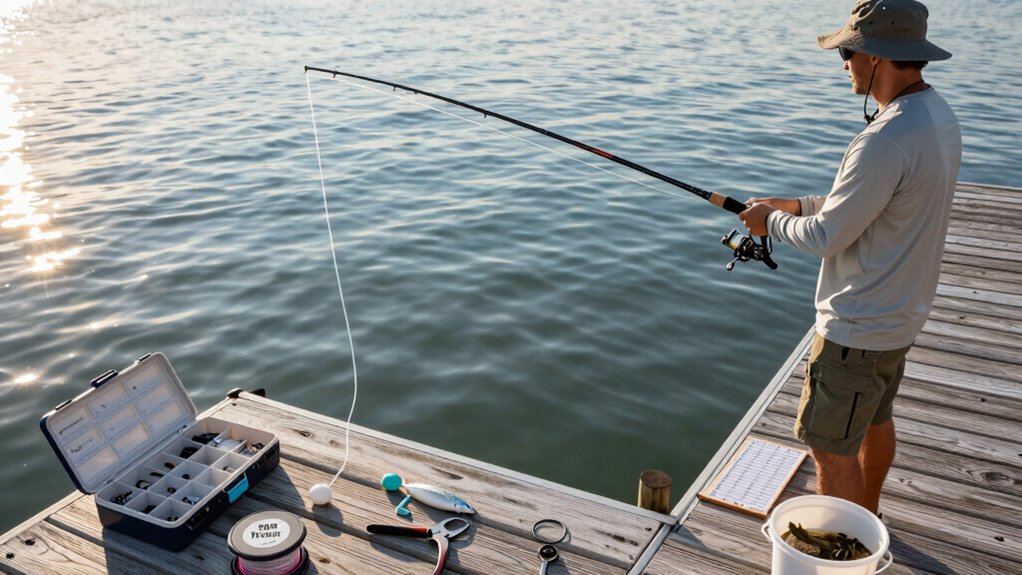

You know that tug when a fish runs hard and your line screams off the reel? That’s when you realize your line’s rating isn’t just a number, it’s your lifeline.
Pound-test ratings for mono and fluorocarbon tell you roughly what your line should handle, but braided lines use PE sizes, which are based on diameter, not strength. And here’s the kicker: a PE 1.0 doesn’t always equal 10 pounds of strength, sometimes it’s 8, sometimes 12. So how do you really know what your line can handle when the pressure’s on?
How is fishing line rated exactly
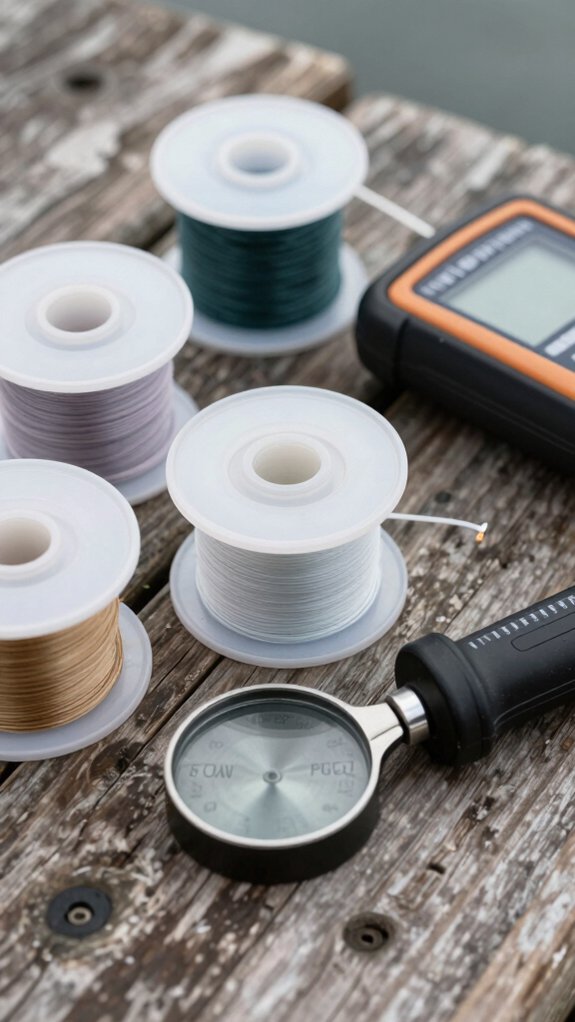
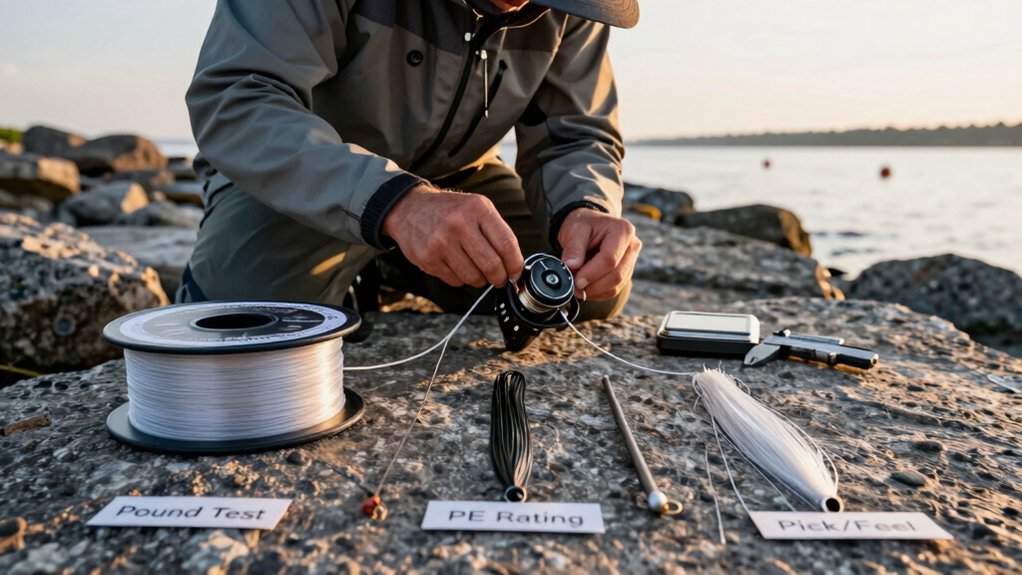
PE rating, on the other hand, is diameter-based, originally from Japan, and tells you the line’s thickness and reel capacity fit.
PE 5? That’s usually around 50 lb test, roughly 10× the PE number.
Use PE for spool fit, but rely on pound test (and brand trust) for real‑world strength.
Pound test and IGFA line class basics
While you’re out there battling a hard-pulling striper or a stubborn redfish, the last thing you want is your line snapping, not from the fish being too strong, but because the “50 lb test” on the spool wasn’t really 50 lbs in real‑world conditions.
Pound test is the manufacturer’s rated strength, but actual performance varies, knots, abrasion, and material stretch (like braid) can drop it by 25% or more.
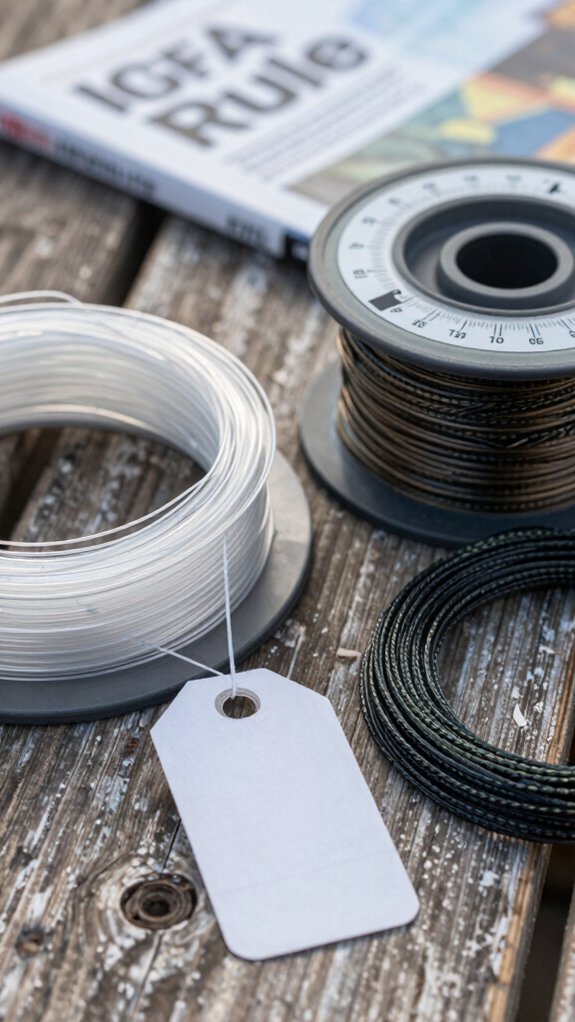
That’s where IGFA line class comes in. For record catches, IGFA sets strict standards: your line must test at or under the class rating (like 12 lb or 20 lb) using certified methods, no inflated claims.
They test new, unknotted line, so real‑world use often falls short.
Bottom line: Don’t just trust the label. Choose reputable brands, tie clean knots, and consider testing your line, especially if you’re chasing a record.
Your setup’s only as strong as its weakest link.
Does PE rating match line strength
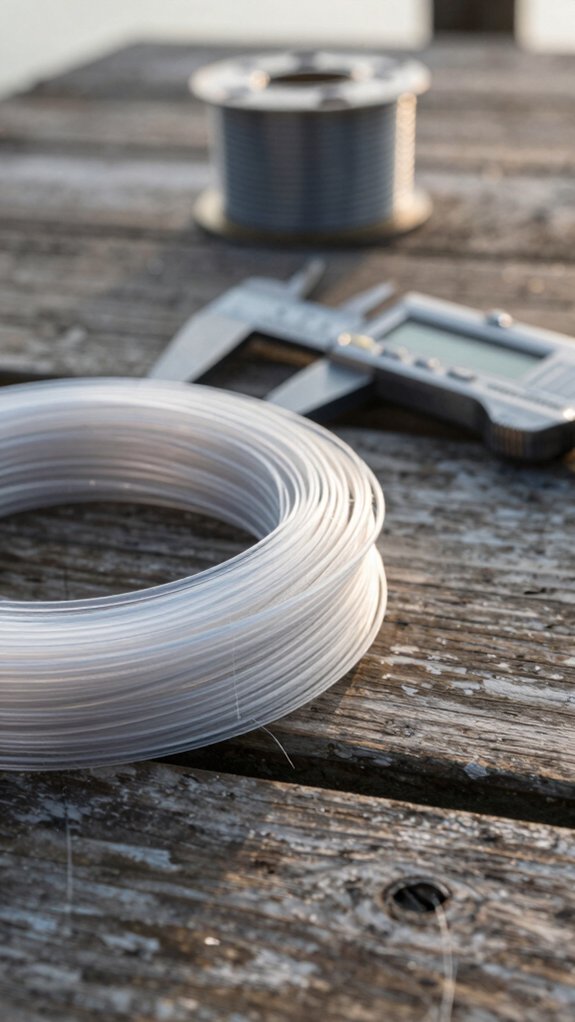
You might think a PE 5 line means you’re getting 50 pounds of strength, but that number isn’t a guarantee, it’s more like a rough starting point.
PE Rating ≠ Exact Line Strength
PE rating is based on diameter, not breaking strain. While many anglers use the “PE × 10” rule (e.g., PE 5 ≈ 50 lb), actual line strength varies by brand and build.
Different fibers, coatings, and strand counts mean two PE 5 lines can differ in strength by 25% or more. Higher‑quality PE often delivers stronger performance per diameter thanks to better materials and construction.
So while PE rating helps compare diameter and spool capacity across brands, always check the advertised pound‑test for real line strength.
Bottom line: PE guides your choice, but trust the labeled break strength when it counts.
Line types and rating differences by material
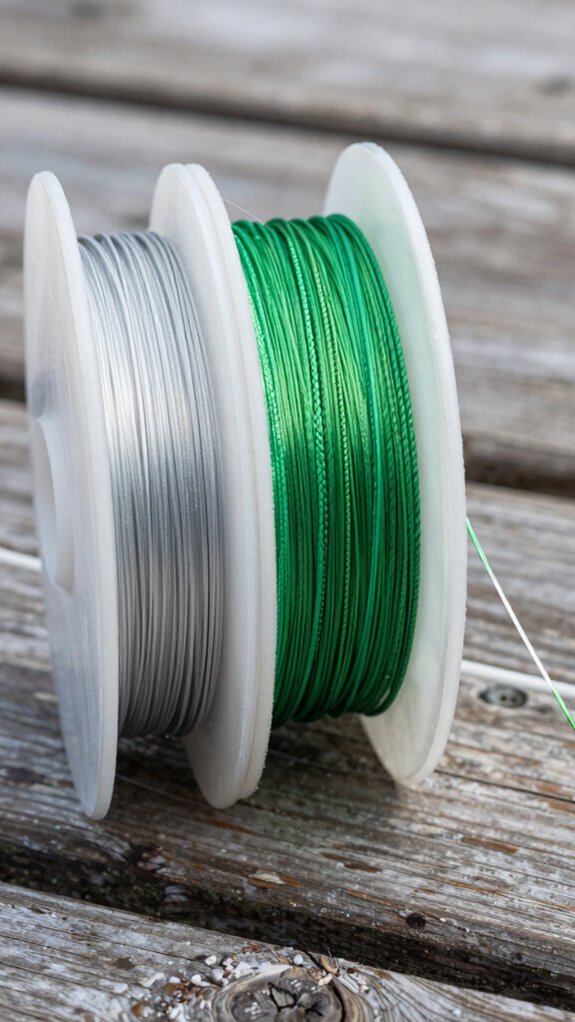
When you’re picking the right line for your reel, it’s key to know that monofilament and fluorocarbon are rated by pound-test and diameter, while braid uses the PE number system based on thickness, not strength.
I always check the actual breaking strain and diameter because a PE 3 from one brand might feel and cast totally different than another, even if they claim the same rating.
Let’s break down how each line type works so you can match the right one to your rod, reel, and fishing style.
monofilament basics
Let’s dive into what makes monofilament a go-to choice for so many anglers. This line is all about balance, offering solid strength and stretch in one affordable package.
Monofilament, or “mono,” is a single nylon strand with a pound-test rating that tells you its breaking strength, like 12 lb test snapping near 12 pounds of force. But here’s the thing: most mono actually tests above its label, thanks to conservative ratings from manufacturers.
It stretches 15–30% before breaking, which helps cushion hard runs and sudden strikes, great for shock absorption.
Just remember: cheaper mono can lose strength faster due to UV exposure, water absorption, and poor knot performance. Premium formulas hold up better.
Match your line’s strength to your target fish and gear specs: because diameter, stretch, and durability matter just as much as the number on the label.
fluorocarbon basics
Fluorocarbon stands out from standard monofilament with its unique blend of stealth, strength, and sink rate, making it a favorite for clear water and structure‑heavy fishing.
Why Fluorocarbon?
Fluorocarbon is made from PVDF, making it denser than nylon mono.
It sinks faster and resists abrasion and UV light better, key when fishing around rocks or toothy critters.
Rating & Real‑World Performance
Unlike braid, fluorocarbon is rated by pound‑test and diameter (mm).
A “20 lb” line should hold close to that, but actual strength varies by brand, some differ by a few pounds.
Always check published diameters if spool capacity or guide clearance matters.
Knots & Setup Tips
It’s stiffer with more memory, which can reduce casting distance slightly.
But it holds knots better than braid, so I often use 20–60 cm fluorocarbon leaders on braided mainlines for that ideal balance of sensitivity and protection.
braid and PE
Braid’s skinny profile and sky‑high strength come down to its PE rating, a system rooted in diameter, not breaking test.
What PE Really Means
PE Line (polyethylene) uses a diameter-based standard from Japan and China. A PE 5 doesn’t guarantee 50 lb test, it’s a minimum thickness guide.
Still, a quick rule: PE number × 10 ≈ ballpark lb test (e.g., PE 3 ≈ 30 lb).
Why Your Braid Might Vary
Not all braided lines are equal. Tests show up to 25% strength differences between brands, even same PE ratings.
Why? Strand count, UHMWPE fiber quality, coatings, and color matter. Premium braid delivers better strength‑to‑diameter and abrasion resistance.
Match PE to your reel capacity and guides, but always check the maker’s stated lb test. For critical situations, trust high‑end braid, it performs when it counts.
How to choose the right line rating
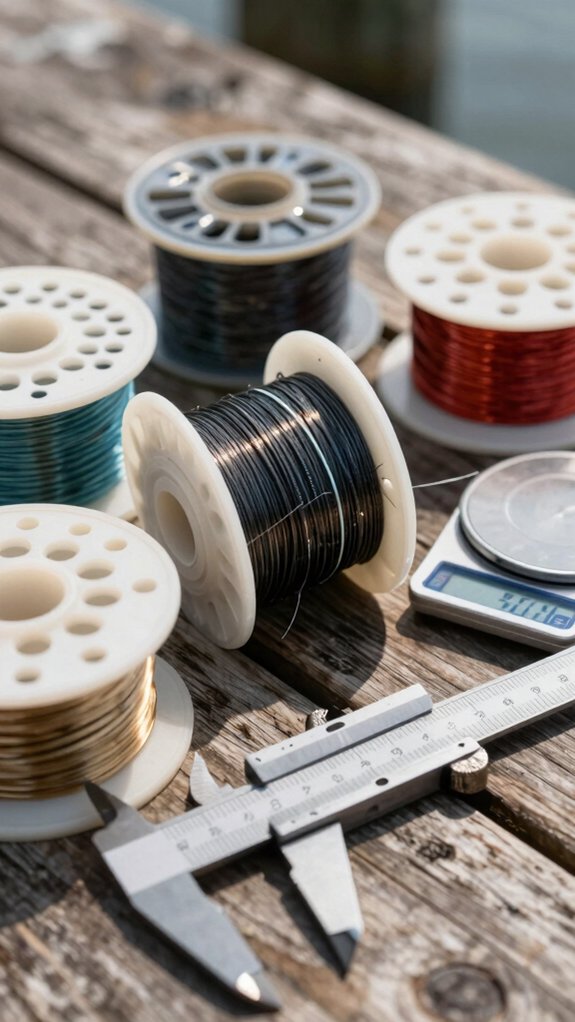
When picking the right line rating, I always start by matching the PE size to my reel’s capacity and rod’s guide rings, because even the strongest line won’t help if it doesn’t fit right.
I then factor in what I’m chasing, since species like red snapper or tuna demand higher breaking strength to handle hard runs and rough structure.
Don’t forget knot strength either, braid can lose up to 20% of its rating at the knot, so I size up slightly to stay safe.
rod reel match
Match your fishing line to your rod and reel specs first, your setup’s performance hinges on this crucial step.
Check Your Reel & Rod Guides
Use the PE rating to match line diameter to your reel’s capacity chart and rod’s line rating. For example, a Saltiga Z20 handles ~0.23 mm (PE2) braid with several hundred yards, ideal for casting and smooth guide passage.
Why PE Matters
PE isn’t just strength, it’s diameter. PE2 usually means ~20 lb test, since breaking strain often runs ~10× the PE number. But brands vary: a PE2 from one maker might be thinner or stronger than another’s.
Pro Tip
Higher‑strand, coated braids cast smoother and fit tighter guides, but don’t overload your reel. When in doubt, size up slightly, especially fishing rocks or heavy cover.
target species
Choosing the right line rating starts with knowing your quarry, because nothing tests your gear like the fight you’re chasing.
Match Breaking Strength to the Species
For largemouth bass or small tuna, I go with 20–30 lb braid (PE 2–3, ~0.20–0.26 mm), enough breaking strength without sacrificing castability.
But for big pelagics or grouper? I bump up to 50–80 lb braid (PE 5–8, ≈0.37–0.48 mm) to handle their power and surges.
Fine‑Tune Line Diameters for Performance
Thinner lines like high-quality PE let me spool more and cast farther, key when targeting skittish fish.
I always check advertised pound‑test, since strength varies by brand, and add a 20–50% leader boost for shock loads.
Abrasion‑prone zones? I pick coated, high‑strand braid, keeps me in the game when jacks or reef fish test every inch.
knot strength
Tie your knot wrong, and even the strongest line won’t save you when a trophy fish makes its run. Knot strength is critical, especially with braided PE lines, which can lose 10–30% of their rated strength at the knot.
PE ratings don’t tell the full story; actual break strength varies by brand and knot type. Always match your knot to the line’s tested breaking strain, not just its diameter.
| Knot Type | Strength Retention |
|---|---|
| Palomar | ~95% |
| Double Uni | ~90% |
| Improved Clinch | ~85% (with braid) |
Use proven knots like the Palomar or doubled uni, snug them tight, and trim tag ends short to prevent slippage. Test every knot with a hard pull before casting. For big fish or heavy cover, add a mono or fluoro leader, your knot strength often becomes the weakest link.
line capacity
When you’re sizing up your reel and rigging for battle with a hard-pulling tuna or a reef-stomping grouper, getting the line capacity right makes all the difference between a solid hookup and a heartbreaker.
Your reel’s spool size and rod guides set the limits, match your rated line to them first. I always check the PE rating, which reflects diameter: PE 2 (~0.23 mm) fits medium reels like my Daiwa Saltiga Z20, filling it to ~450 yards with ~20 lb braid.
Remember, the line rating in pounds is just a rough guide, manufacturers often estimate it at 10× the PE number (so PE 5 ≈ 50 lb).
But real strength varies up to 25% due to coatings or strand count. I add a safety margin, especially for abrasion or shock.
For tight setups, I go premium, thinner diameter, higher strength. Always cross-check your target species, reel specs, and rod guides.
Common mistakes when reading line ratings
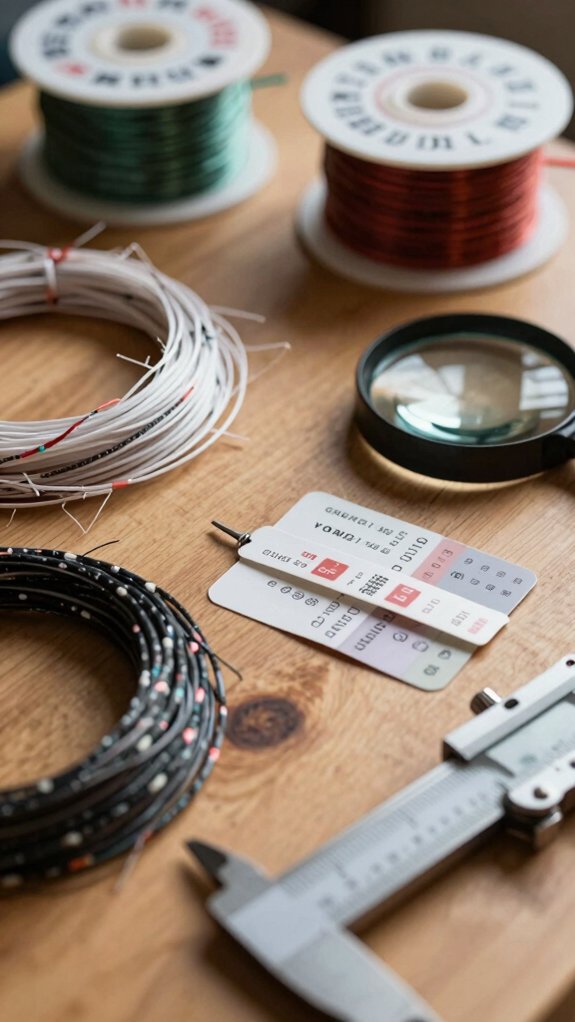
While it’s tempting to trust the numbers printed right on the spool, I’ve learned the hard way that line ratings aren’t always what they seem, especially when you’re reading braid specs.
With fishing line, don’t confuse PE rating with exact strength. PE refers to diameter and a minimum tensile capacity, many brands list breaking strain separately. A quick rule: breaking strength is often around 10× the PE (e.g., PE 5 ≈ 50 lb), but don’t take that as gospel.
Here’s where anglers trip up:
- Same PE, different brands? Up to 25% strength variance due to weave and coating.
- Diameter isn’t always consistent, color and coatings skew mm measures.
- Strand count (4×, 8×, hollow core) affects handling and durability, even if PE matches.
- Always match line diameterto reel capacity and rod guides, not just pound test.
Frequently Asked Questions
What Is the PE Rating of Fishing Line?
The PE rating of my fishing line tells me its diameter, not strength. I use it to match my reel and rod guides, knowing a higher PE means a thicker line, like PE5 is about 0.37mm, even if the actual strength varies by brand.
How Does a Lb Test Fishing Line Determine?
I’ve found that a line’s lb test tells me the force it takes to snap it, on average, braided lines break at about 10× their PE rating, but real‑world tests show up to 25% variation, so I always size up for safety.
What Pe Is a 15LB Braid?
A 15 lb braid is usually around PE 1.5 to PE 2. I pick PE 1.5 for my 15 lb needs because it fits my reel better and gives me the strength I count on without sacrificing sensitivity or casting distance.
What Does PE 1.5 Mean?
PE 1.5 means I’m using a braided line with a specific diameter, not a set strength. It helps me match my reel and guides, and yeah, it usually breaks around 15 to 20 pounds, but that varies by brand and build.
In Conclusion
Choosing the right line rating is about matching strength, diameter, and material to your target and conditions, like picking the perfect key for a lock. Think of pound‑test and PE ratings as whispers from your gear, guiding you toward balance. A 20# braid (PE 2.0) might feel thin, but it’s a coiled spring of power.
Trust the specs, but honor the unseen, knots, wear, surprise toothy guests. Your line’s not just rated, it’s ready.