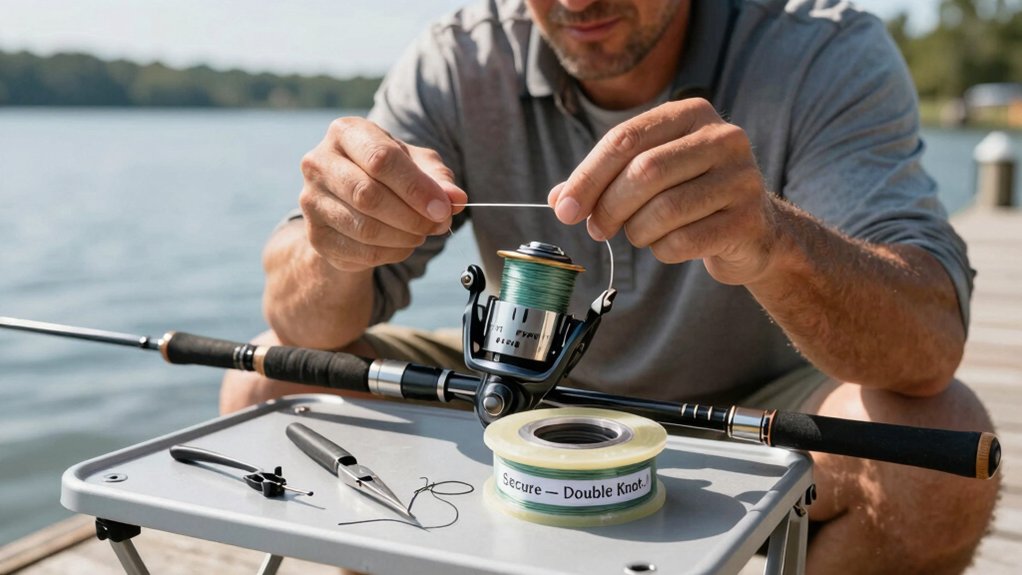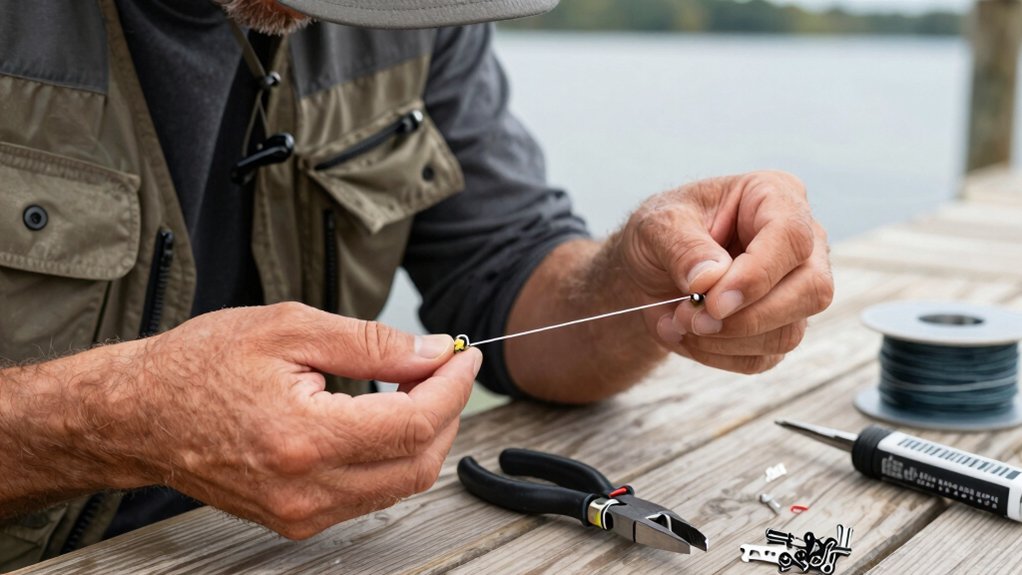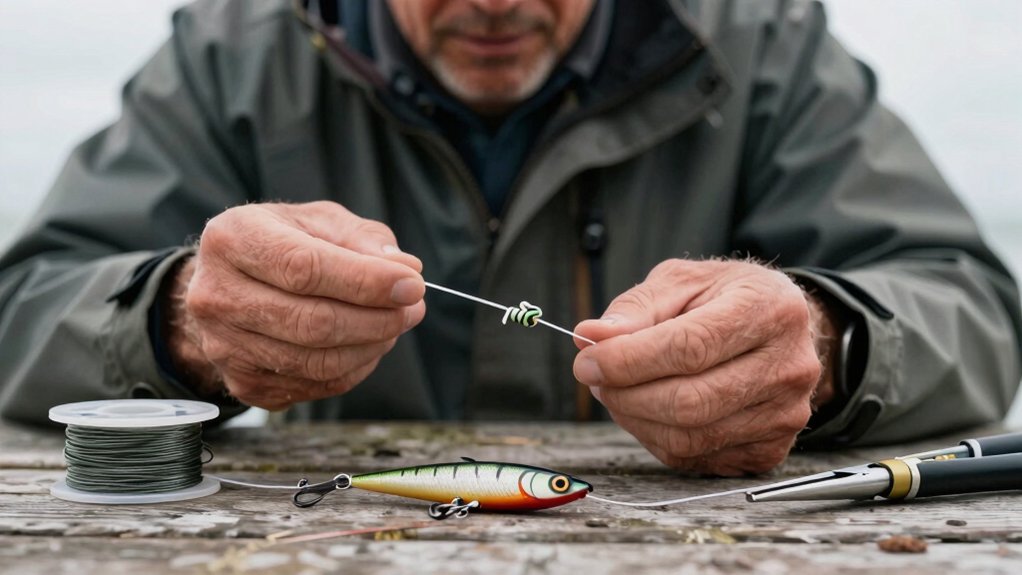
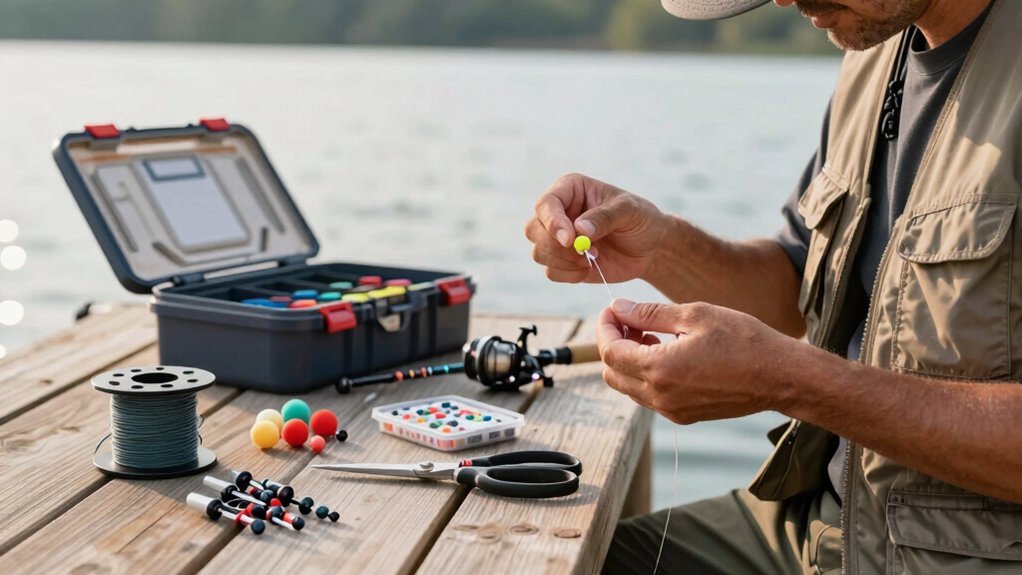

I’ll show you exactly how to put a bobber on a fishing line the right way, so it stays secure and helps you catch more fish. Whether you’re using a clip‑on or slip bobber, proper setup makes all the difference. I’ve rigged thousands of lines and seen what works (and what doesn’t).
Get this right, and you’ll notice bites faster, fish at the perfect depth, and avoid frustrating tangles. Let’s start with the basics so you can set up with confidence.
How to put a bobber on fishing line
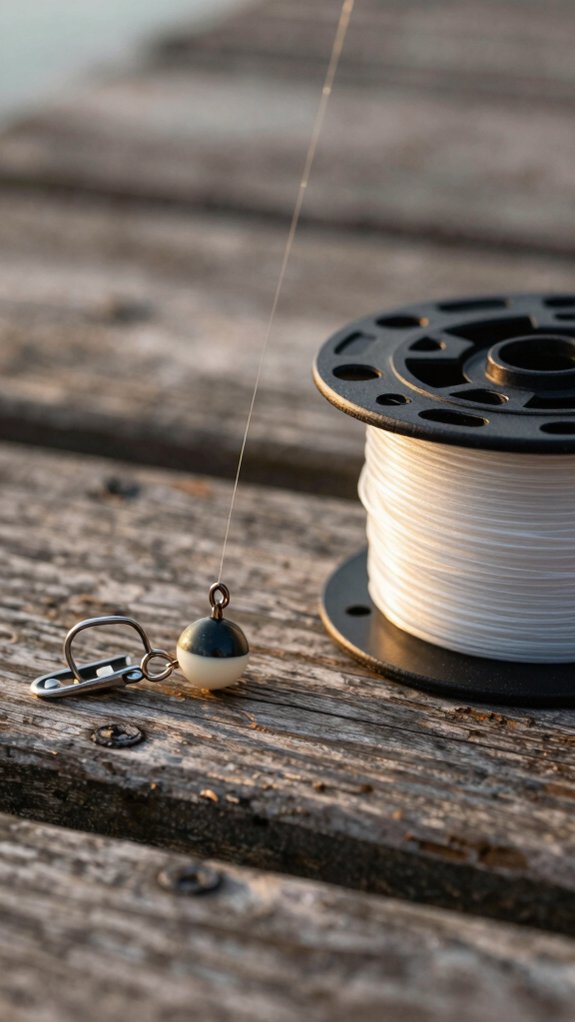
Here’s how to put a bobber on your fishing line the right way, depending on the type you’re using. For fixed bobbers like round push-button or pencil styles, I just thread the line through the guides, leave a few feet loose, and secure it using the built-in clips, wrapping the line a couple times for a snug hold.
If I’m after deeper fish, I go with a slip bobber setup by adding a stop knot first, then sliding on the bobber so it stops at my target depth.
fixed bobber steps
Slide that fishing line through your rod guides first, leave a good few feet loose, then grab your round fixed bobber and press the top button to pop open the bottom hook.
Fixed Bobber Setup Made Simple
Loop your line into the bottom hook, wrap it 1–2 times for extra security if needed. Next, press the rim again to expose the top hook, loop the line through, and release so the bobber clamps tight. This keeps your fixed bobber from sliding during casts.
Position the bobber 3–4 ft above your hook for most fishing, or shorten to 1–2 ft in shallow, weedy water. Need to adjust depth on the water? Just press the button, slide up or down, then reclip.
Pro tip: Use the smallest bobber that floats your rig, better sensitivity, fewer missed bites.
slip bobber steps
When you’re after more control over depth without retying your rig, a slip bobber is your best bet, especially in deeper or weedy waters where fixed bobbers fall short. Here’s how to set one up right:
- Thread bobber from top and slide it onto line, then add a bobber stop or tiny loop to control max depth, this lets the slip bobber slide freely until it hits the stop.
- Attach a split shot sinker about 12 inches below to keep your bait down, then tie hook to line with an improved clinch knot and set your bait naturally.
- Adjust bait depth, 3–4 ft for deep water, 1–2 ft for shallow vs deep water, then slide bobber up to stop before you cast with slip bobber.
This rig gives you precision, sensitivity, and far better results in variable depths.
Which bobber type should I use
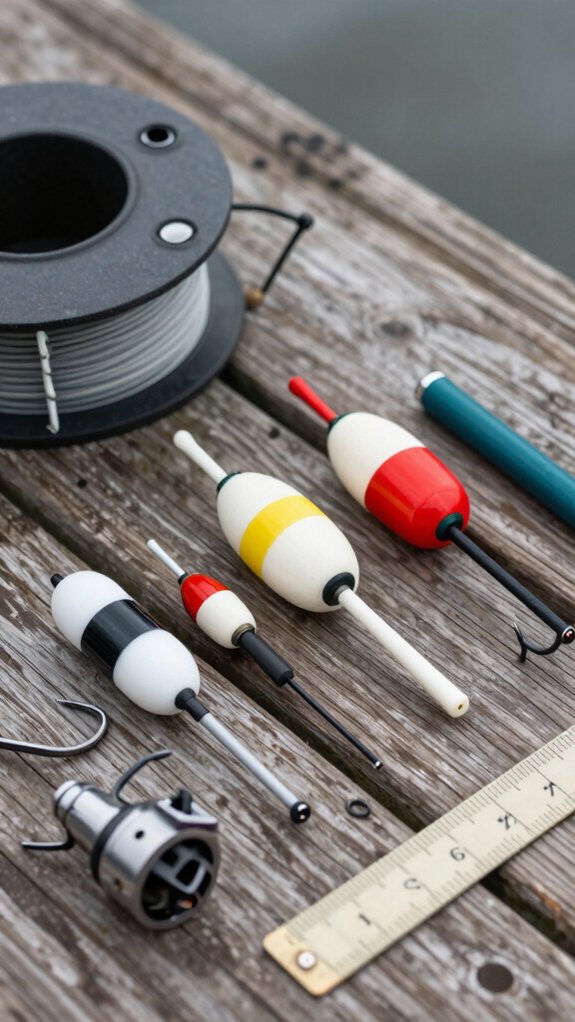
You should pick the right bobber type based on what and where you’re fishing, get this wrong, and you’ll miss bites or spook fish.
For most beginners, a small 1–2 inch round bobber works great in calm, shallow water because it’s easy to see and sensitive enough for panfish and bass.
But if you’re after trout in a clear creek or fishing deep lakes, switching to a pencil, slip, or bubble bobber can make your setup way more effective.
round bobbers
Let’s talk round bobbers, the go‑to float for most freshwater anglers starting out or fishing casual days at the pond.
Here’s how to get it right:
- Attach your round bobber using the push‑button clamp: press the bottom button, loop the line through the hook, wrap once if needed, then lock it with the top button.
- Pick the right size, a 1–1.5 inch bobber works best; use the smallest bobber that floats for max sensitivity, or go larger for heavy bait.
- Set your depth: Position 3–4 ft above the hook for average water, or 1–2 ft in shallow/weedy water. Slide to change depth fast, just unclip, adjust, and relock.
This balance keeps your bait in the strike zone and boosts bite detection.
slip bobber
Dive into deeper water with a slip bobber, it’s the clear choice when you need to fish at precise depths beyond what fixed floats can handle.
For deep water fishing, rigging a slip bobber gives you unmatched control. Start by tying a rubber bobber stop at your target depth, this stop determines where your slip bobber halts on the line.
Next, slide bobber onto line, thread on a bead (to protect the knot), then the bobber, and another bead.
Below, add a sinker weight, I use 1/4–3/8 oz in deep water, lighter in shallows. About 1 foot down, attach hook with your bait.
The right sinker weight keeps your slip bobber visible on surface without tipping.
Best part? Depth adjustment is fast, just move the slip bobber stop and re-fish. No retying!
pencil bobber
A pencil bobber’s slender profile cuts through the water with barely a ripple, perfect when you’re after finicky biters like trout, crappie, or bluegill.
Their sensitivity to light bites makes them a go‑to for clear, calm waters where subtle strikes matter.
Here’s how to attach a bobber like a pro:
- Press the spring cap to expose the metal hook, then loop the line around it 2–3 times.
- Release the cap to lock the line, this wrap line method keeps your pencil bobber secure.
- Set depth setting 3–4 ft above the hook, or shorten to 1–2 ft in weedy spots.
Always check knot and line condition, fraying can cause slips.
Use a small pencil bobber with light bait and thin line to match the slender shape and boost strike detection.
bubble bobber
When you’re fishing clear, shallow waters and want your bait to look as natural as a rising air bubble, a bubble bobber is your best stealth tool.
Why Choose a Bubble Bobber?
Perfect for a stealthy presentation, it’s nearly invisible in clear shallow water, ideal for spooky trout, crappie, perch, and bluegill.
Two Types: Slide or Clip
Some bubble bobbers slide onto the line before tying your hook; others are clip‑on bobbers with adjustable arms.
Set It Right
Attach above the hook, 3–4 ft for depth, 1–2 ft in weedy zones.
Need depth adjustment? Just unclip and reposition.
Balance Matters
Always do a bait and sinker test: pick a size sensitive to bites but strong enough to float your setup.
strike indicators
You’ve got the right bobber type when it matches your fishing style, depth, and target species, so let’s break down which strike indicator works best for your setup.
- For most beginners, slide a round bobber onto your line, it’s easy to use, highly visible, and perfect for panfish with light bait and a small split shot sinker.
- If you’re after cautious crappie or perch, go with a pencil-style bobber; its slim shape detects the faintest nibbles.
- Need precise depth setting in deep water? Use a slip bobber: add a bobber stop to set depth, then position your sinker placement about 1 ft below where you’ll tie the hook.
Always match bobber size to your setup, use the smallest that floats your bait.
And in clear, shallow zones, try a transparent bubble bobber to avoid spooking fish.
Rigging your fishing bobber the right way
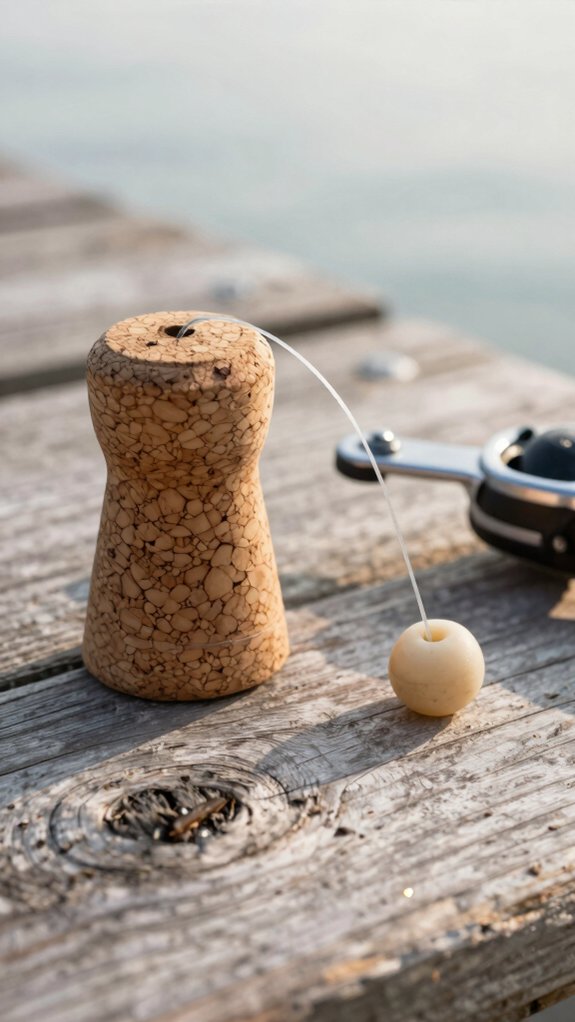
Get your bobber rigged right the first time, and you’ll spend less time fiddling and more time fishing.
| Bobber Type | How to Set It |
|---|---|
| Round push-button | Loop line into top and bottom hooks |
| Slip bobber | Pair with bobber stop at depth |
| Pencil bobber | Wrap line around spring hook |
| Bubble bobber | Slide on before tying hook |
| Fixed bobber | Adjust with split shot above hook |
I always tie my hook with an improved clinch knot first, leaving line free for bobber depth. For shallow or weedy spots, I set it 1–2 ft above the hook.
In deeper water? A slip bobber with a bobber stop is my go-to. It slides down, stops at the right depth, and keeps my bait right where fish are.
Bobber depth and hook placement tips
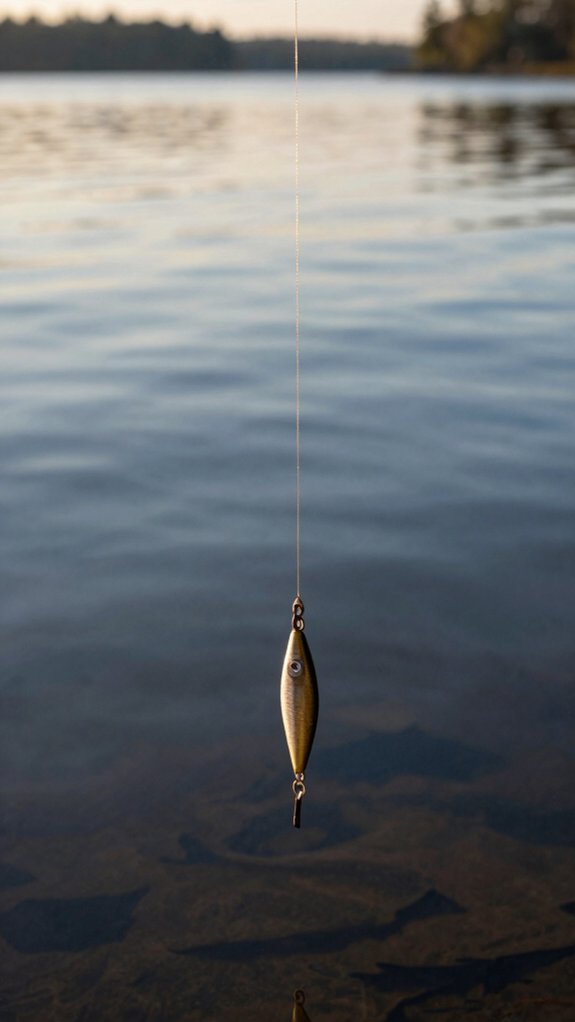
If you want your bait in the strike zone and your bobber responding to even the lightest nibble, getting the depth right is key.
Here’s how I nail bobber depth and hook placement every time:
- Start with 3–4 ft of line depth in most freshwater spots, this keeps the bait in the strike zone. In shallow water, shorten to 1–2 ft to avoid weeds and maintain buoyancy.
- Use a slip bobber with a bobber stop when targeting fish at a specific depth; it lets the rig slide down to your preset line depth, so the hook hangs true below.
- Pinch on a split-shot sinker 3–4 inches above the hook, this stabilizes your presentation and keeps the bobber upright. Always match bobber size to your setup: smaller bobbers boost sensitivity and reflect better buoyancy control.
Get these details right, and you’ll see more bites, and more fish.
Fishing with bobbers: basic techniques that work
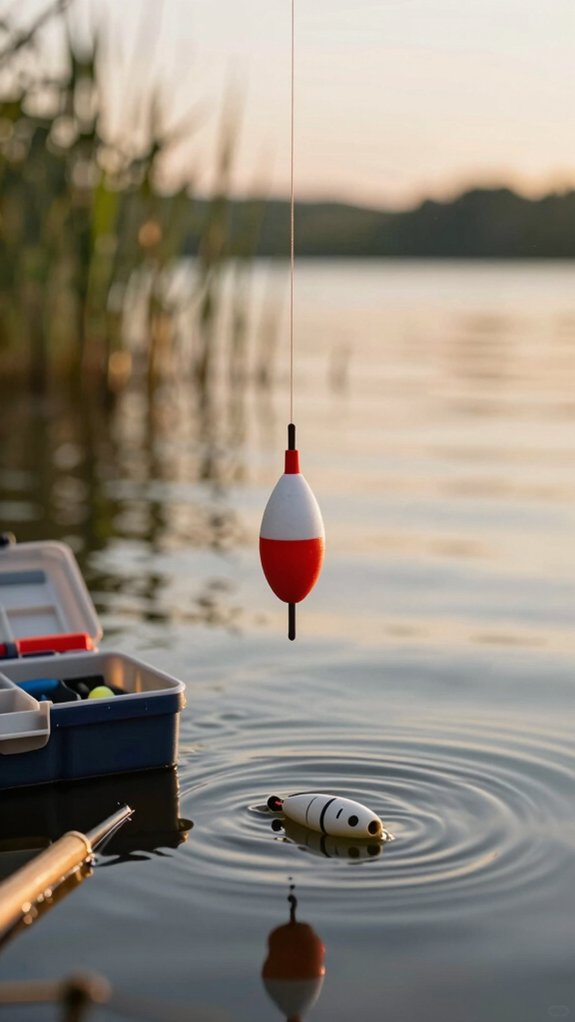
Most of the time, fishing with a bobber comes down to one simple goal: keeping your bait right where the fish are feeding, while spotting every subtle bite.
To attach a bobber to a fishing line effectively, start by choosing the smallest bobber for sensitivity, it’ll float just enough to hold your bobber and sinker weight but still dip at the lightest nibble.
I like to position bobber above hook about 3–4 feet for open water, or just 1–2 feet in shallow water bobber placement with weeds.
For deeper spots, use a slip bobber setup, it lets you adjust bobber depth quickly with a rubber stop.
To secure bobber to line, especially with clip-on round bobbers, press the top button, loop your line through the bottom hook (wrap once or twice), then clip it shut.
This keeps your rig balanced and bite-ready.
Mistakes to avoid with bobber setups
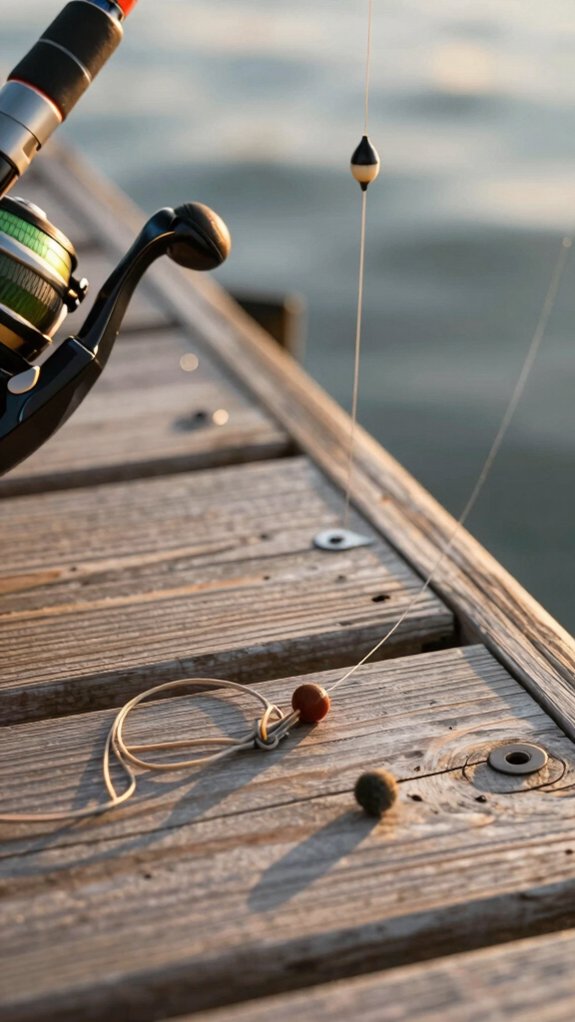
One of the quickest ways to ruin a promising day on the water is by making small but fixable mistakes with your bobber setup, things I’ve seen (and done!) more times than I can count. Avoid these common errors:
- Wrong bobber size or too much sinker: Always choose the smallest effective bobber that floats your rig, oversized ones scare fish. Pair it with minimal weight; place a split shot four fingers above the hook and adjust if the bobber swims sideways.
- Poor depth between bobber and hook: In shallow vs deep water, set 1–2 ft or 3–4 ft accordingly to keep bait in the strike zone.
- Failing to wrap line around hook on a push-button round bobber causes casting slip. Loop the line over the top/bottom hook once or twice before locking.
And never ignore local fishing regulations, some limit multiple hooks or rigs.
When should I use a bobber
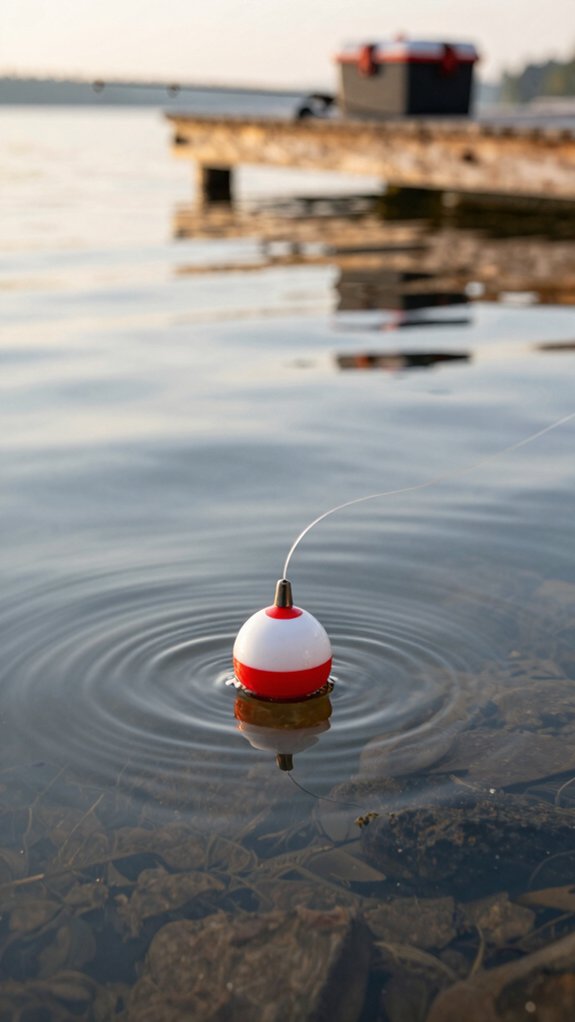
When you’re after fish that hover above the bottom or want instant bite detection, a bobber isn’t just helpful, it’s a game-changer. I attach a bobber to my fishing line when targeting species like trout or bluegill in shallow water, where depth control and sensitivity matter most.
| Scenario | Best Bobber Type | Why |
|---|---|---|
| Shallow, clear water | Bubble bobber | Less visible to fish, reduces spooking |
| Deep or varying depth | Slip bobber | Set depth with stop, precise bait placement |
| Rough water, long cast | Visible bobber | Easy tracking, handles wind and waves |
I choose a small round bobber for light tackle, it boosts sensitivity so I don’t miss subtle bites. Whether I’m float fishing or fine-tuning my setup, matching the bobber to conditions ensures smarter, more effective angling every time.
Frequently Asked Questions
How to Properly Put a Bobber on a Fishing Line?
I thread my line through the rod guides, tie on the hook, then add the bobber, clipping, sliding, or securing it based on type, so it floats my bait at the right depth. I adjust until it’s just right.
Which Bobber Is Best for Beginners?
You might think fancy gear’s needed, but I swear by a simple pencil bobber, it’s sensitive, easy to use, and perfect for spotting panfish bites. It’s my go-to for calm waters and clear strike detection.
What Side of the Bobber Goes Up?
The side with the button or clip goes up, I always face that end toward the sky so I can see bites and adjust my line fast. It’s easier to use and way more reliable when I’m watching for strikes.
Where to Place Bobber on Line?
I place my bobber 3–4 feet above the hook for most fishing, but I shorten it to 1–2 feet in shallow water. If I’m after deep fish, I use a slip bobber and set it at the depth I want.
In Conclusion
You just learned how to put a bobber on a fishing line the right way. Whether you’re using a clip‑on or slip bobber, getting the setup right means fewer headaches and more bites. Remember: depth matters, set it just right so your bait dances in the strike zone.
Keep your rig light and balanced, and don’t let tangled line throw a wrench in your plans. Now that you’ve got the hang of it, every cast puts you one step closer to reeling in your next big catch, you’re well on your way to fishing like a pro.