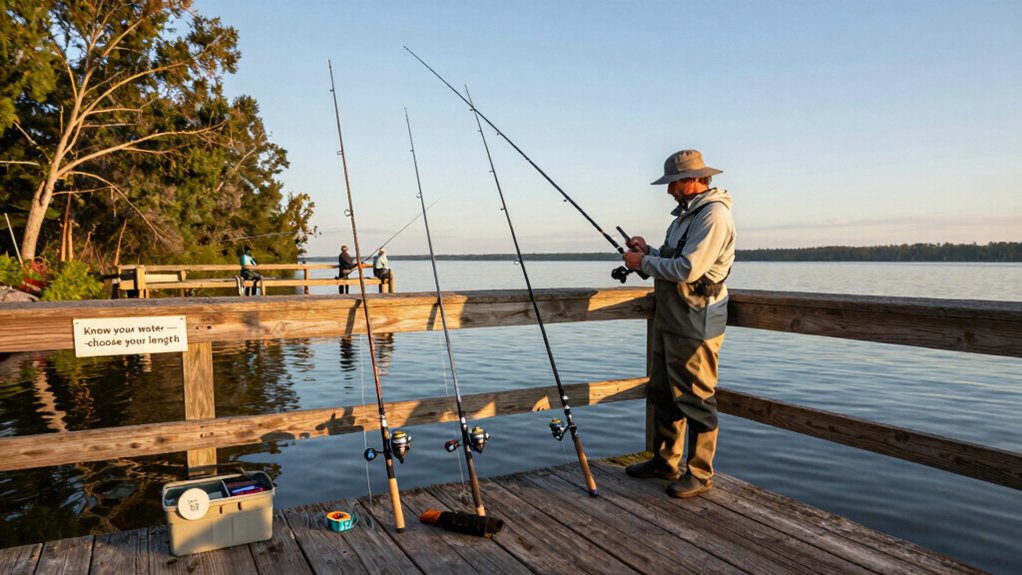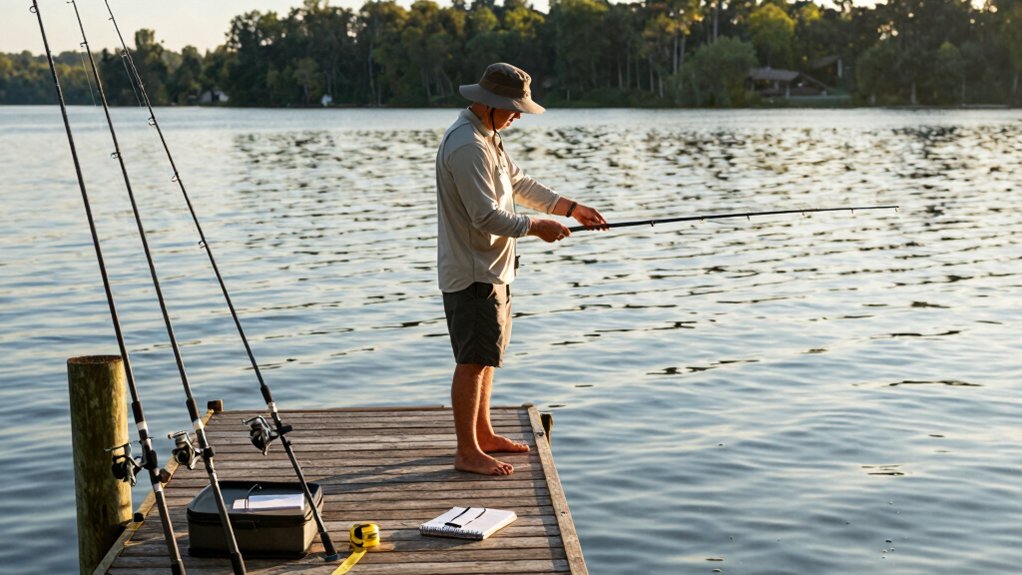
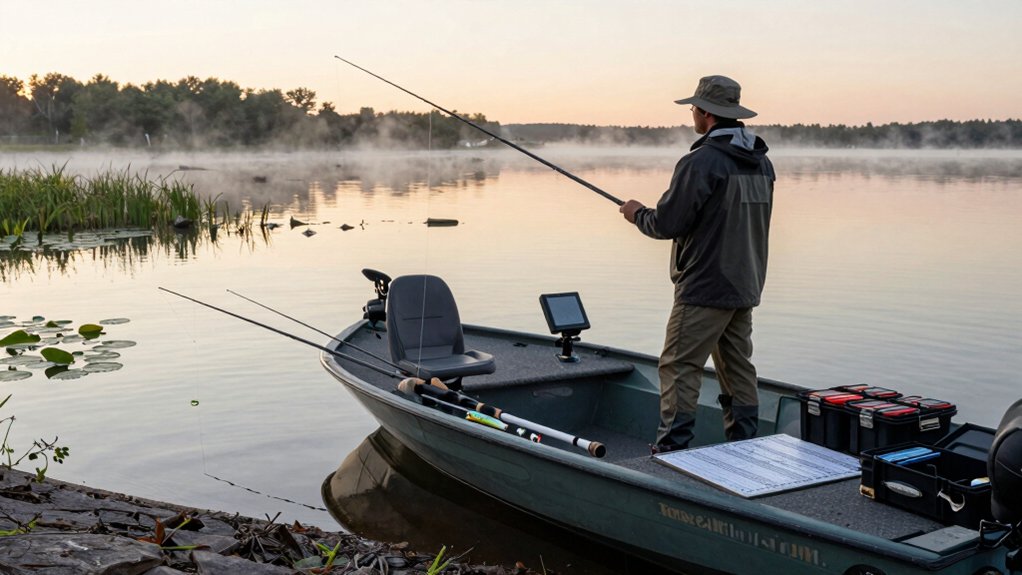

When the bass are locked onto cover and won’t budge, you know it’s time for a rod that means business, like a heavy flipping stick with backbone to haul them out. I’ve seen 78% of tournament pros lean on 7’ to 7’8” casting rods when punching mats or working deep brush. Your technique changes everything: a finesse drop-shot needs a totally different tool than a thunderous swimbait.
Pick wrong, and you’ll lose fish or burn out by noon. Get it right, and every cast feels dialed, here’s how to match the rod to your go‑to move.
What are the best bass fishing rods
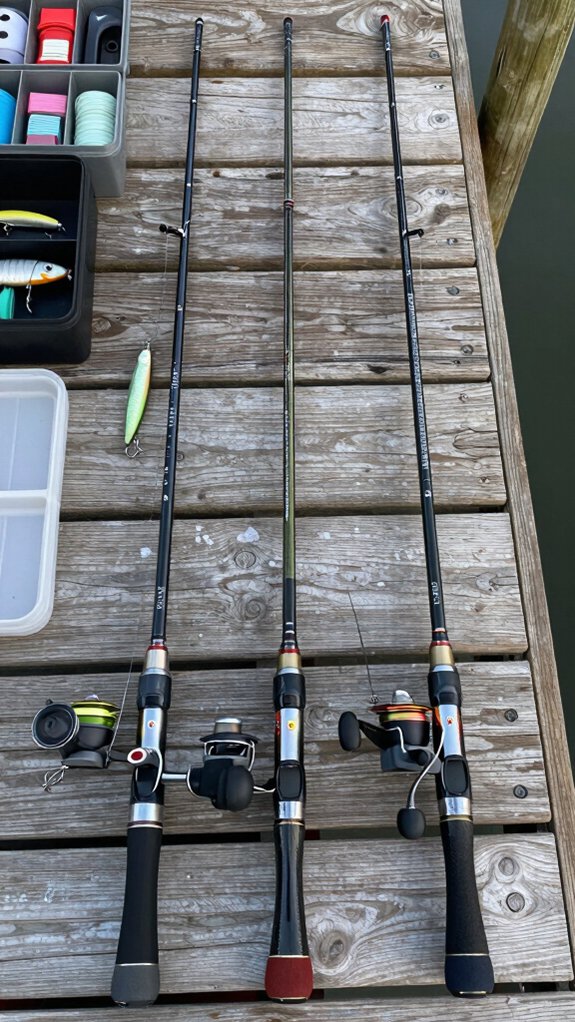
Finding the right bass fishing rod can make or break your day on the water, especially when you’re chasing savvy smallmouth in clear lakes or power-fishing heavy cover for trophy largemouth.
As a fellow angler, I’ve learned that matching your bass rods to specific techniques beats one-size-fits-all thinking every time.
For all-around performance, the Level NGX Casting rod (Japanese Toray 30/40T blank) delivers lightweight sensitivity and versatile action, ideal for 2025’s mixed bass fishing scenarios.
On a budget? The FishUSA Flagship Bass (6’10” medium-fast) under $100 handles jerkbaits, topwater, and finesse with surprising precision.
Big swimbaits? Go with the iROD Quercus 78H or a heavy 7’6″+ blank.
Flipping thick cover? Try the G. Loomis GLX Flip, brute strength meets control.
Finesse spinning? A 7′ medium-fast Trika 6X excels with Ned rigs and drop shots.
Best casting and spinning rods for bass
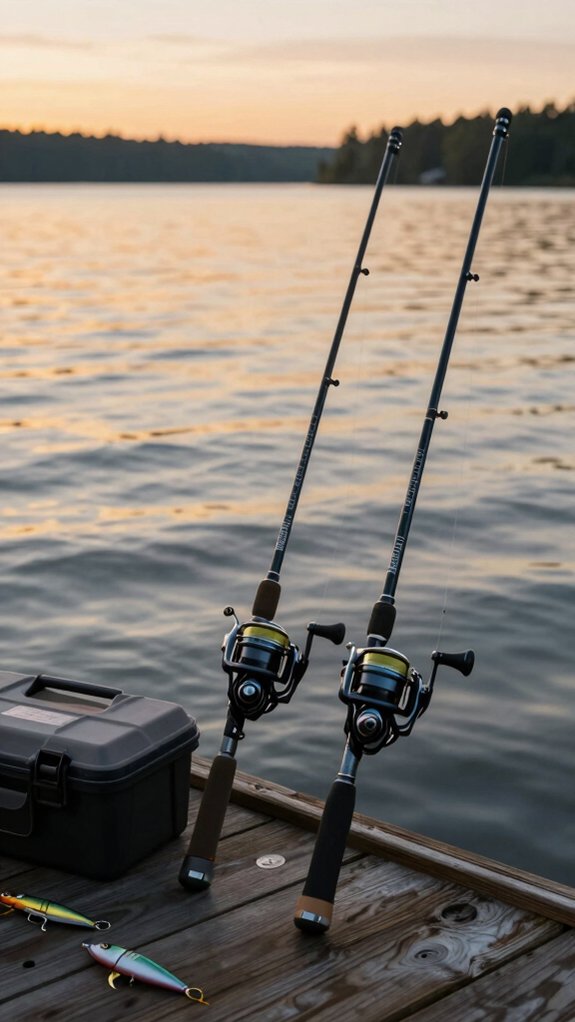
When it comes to dialing in your bass game, matching your rod to the technique makes all the difference, and I’ve found the right casting and spinning rods can turn frustrating days into trophy takers.
For casting rods, go 6’8″–7’2″ medium-heavy for flipping, swimming, or punching, ideal for 10–20 lb fluorocarbon or 30–40 lb braid. I love my Shimano SLX 7’2″ MH for heavy cover.
Topwater? Try a 6’8″–7′ medium-fast, shorter for quicker jerks and solid hooksets with 12–14 lb fluorocarbon.
Crankbaits shine on a 7′ medium to medium-heavy with moderate action, lets the rod load when a bass inhales your bait.
For finesse, my go-to bass rod is a 7′ medium-fast spinning setup like the Trika 6X 610, paired with 10–20 lb braid and a fluorocarbon leader, sensitive, light, and strong.
Best rods by technique and lures
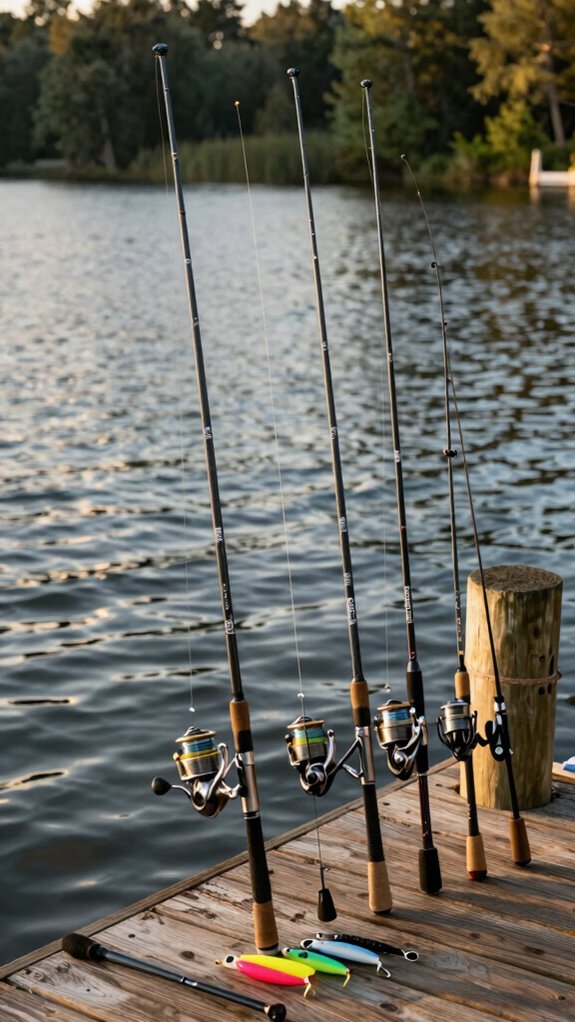
When you’re matching rods to specific lures and techniques, the right setup makes all the difference in feel, cast, and hookset.
I always grab a medium-heavy, 7′ rod for spinnerbaits and jigs, it’s got the backbone to drive hooks through cover and the tip flexibility to keep worms dancing naturally.
For topwaters, crankbaits, flipping, or swimbaits, each has a go‑to rod that boosts accuracy, sensitivity, and control.
spinnerbait rods
Honestly, I reach for a dedicated spinnerbait rod more often than not when I’m working thick grass, docks, or muddy flats, because the right setup makes all the difference in lure control, casting accuracy, and landing power.
Why Spinnerbait Rods Shine
My go-to is a 6’10” medium-heavy rod with moderate-fast action. It delivers the backbone to punch through cover and set hooks hard, without being too stiff for smooth roll casts.
Line & Reel Pairings That Work
I spool up 30–40 lb braid for sensitivity, often adding a 15–17 lb fluorocarbon leader for abrasion resistance. A lower gear-ratio reel gives me better lure control.
Durability Matters
I check for strong guides with SiC inserts and solid reel seats, bladed baits and snags demand tough components.
jig/worm rods
If you’re serious about flipping jigs or working soft plastics around thick cover, grabbing a dedicated jig/worm rod instantly sharpens your game, this is where power meets precision. As a Bass angler, your rod needs backbone to punch mats and set hooks deep, yet a sensitive tip to feel subtle thumps. I prefer 7′ to 7’6″ medium-heavy to heavy casting rods, they balance control and casting ease in docks or weeds.
| Feature | Why It Matters |
|---|---|
| 7’–7’6″ length | Leverage & accuracy in heavy cover |
| Fast action | Detects light bites, drives hooks home |
| 30–40 lb braid | Powers through thick weeds, flips mats |
Pair rods like the Shimano Expride 711 XH or Daiwa Tatula Elite 7′ with braid for flipping or fluorocarbon for Texas rigs. One versatile rod? Try a 7’2″ MH with a parabolic tip, it handles jigs, worms, and more.
topwater rods
A solid topwater rod makes all the difference when you’re waking a popper across lily pads at dawn or walking a Zara Spook through glassy backwaters.
I’ve found that shorter rods, between 6’8″ and 7′, give me quicker response and less fatigue during constant jerking.
They’re also easier to roll cast in tight spots and balance better with bulky topwater lures.
For power and action, go medium to medium-heavy with a fast tip to snap lures sharply while still driving hooks hard.
- Ideal line: 12–14 lb mono or ~30 lb braid for strength and lure action
- Top picks: Shimano Expride 610, G. Loomis IMX Pro 68, Fenwick Elite 7′ Med Hvy
- Shorter rods reduce shoulder strain during long topwater sessions
This setup keeps me accurate, responsive, and ready for explosive strikes.
crankbait rods
Match rod action and power to your lure:
- Shallow squarebills? Go shorter (6’6″–6’10”) with medium-light power for quicker control and crisp hooksets.
- Deep divers? Step up to 7’4″–7’6″ rods with stiffer butts, like the Lew’s KVD 7′ Medium, for better leverage and line angle.
I pair these crankbait rods with low gear‑ratio reels to lean into fish, not whip them. Trusted picks: Abu Garcia Winch (shallow), 13 Fishing Meta (deep), and Lew’s KVD, each tuned for real‑world performance.
flipping/swimbait rods
When the cover gets thick and the bass won’t budge without a precise presentation, I grab a flipping or swimbait rod, these powerhouses are built to punch through matted weeds and haul out lunkers where finesse rods fear to tread.
- The G. Loomis GLX Flip and Pitch is my go-to for flipping: its high-modulus graphite and reinforced blank handle heavy cover with ease, especially in 7’–8′ lengths.
- For swimbait rods, I trust the iROD Quercus 78H, its 7’8″ heavy blank, Fuji “0-Type” guides, and WXW wrapping keep big trebles secure and casts smooth.
- Versatile picks like the Lews Elite 7’4″ and Shimano Zodias XH+ excel in grass and brush, especially when paired with 20–25 lb fluorocarbon or braid.
finesse spinning
More often than not, I reach for a finesse spinning rod when bass are locked onto small forage or spooked by heavy pressure, these rods turn subtle bites into solid hooksets with pinpoint accuracy.
Why a 7′ medium power fast action rod wins
That sweet spot, like the Trika 6X Spinning Rod (610 Med Light Ext Fast), gives you sensitivity to feel micro-nods and enough backbone to set hooks on 4‑pounders or bigger.
I pair mine with 10–20 lb braid and a 6–12 lb fluorocarbon leader, stealthy, strong, and perfect for Ned rigs, drop shots, or small swimbaits.
The Trika’s EkkoChamber blank and balanced build make casting light lures effortless.
You’ll detect bites others miss, especially in clear water or tough conditions.
It’s the one rod I trust from dawn to dark, whether bass are finicky or feeding lightly.
Should I use casting or spinning for bass
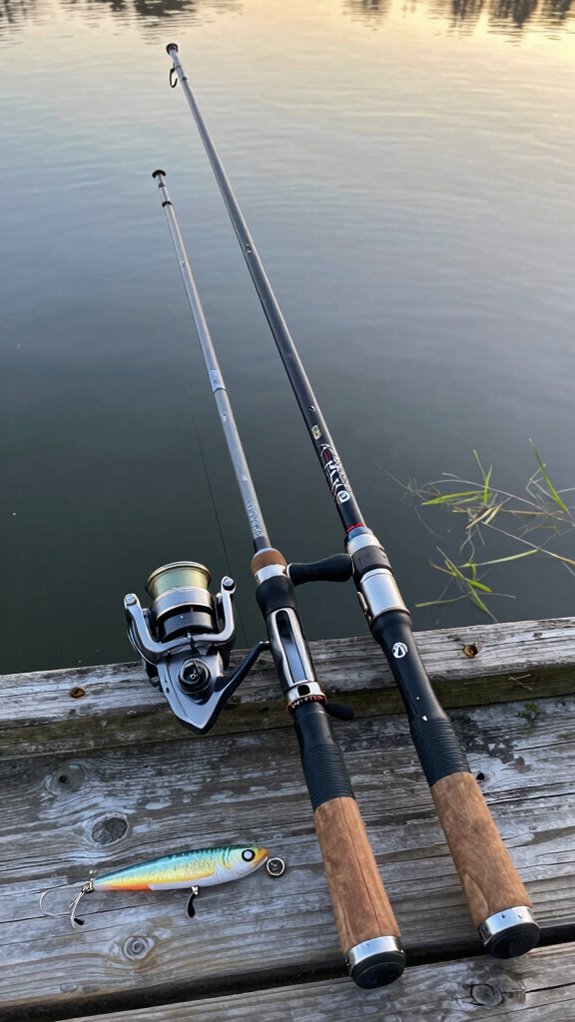
If you’re wondering whether casting or spinning gear is better for bass, the truth is both have their place, your choice depends on what you’re throwing and where you’re fishing.
Casting rods give you power and control for heavy cover and big baits, while spinning rods shine with light finesse tactics and small lures that need a delicate touch.
Here’s how to decide:
- Use casting rods for flipping, pitching, or power fishing with jigs and swimbaits, especially in thick weeds or wood.
- Choose spinning rods for Ned rigs, drop shots, or wacky worms where finesse, longer casts, and tangle-free light lines matter.
- Many pros carry both: a 7’ medium-heavy casting rod and a 7’ medium-fast spinning rod cover nearly every situation.
One rod? Go 7’ medium casting, or spinning if you’re more comfortable.
What are the best budget bass rods
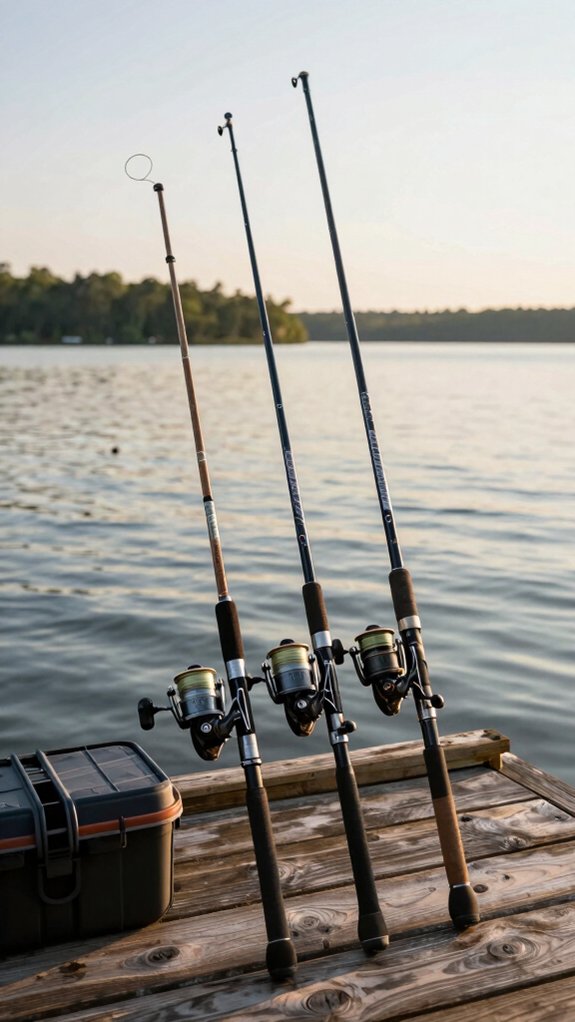
You don’t need to break the bank to land quality bass rods that perform, there are solid budget rods under $200 that handle everything from power fishing to finesse with confidence.
For one reliable all-rounder, I grab the Shimano SLX 7’2″ Medium Heavy casting rod, it’s tough, balanced, and covers crankbaits, jigs, and even light Texas rigs.
Here’s a quick look at top budget picks:
| Rod | Price Range |
|---|---|
| FishUSA Flagship Bass (6’10” Med-Fast) | ~$99 |
| Shimano SLX 7’2″ MH Casting | ~$150 |
| St. Croix Black Bass | $155–$195 |
I’ve used the FishUSA model for topwater and Senkos, it’s shockingly sensitive. If you want near‑premium feel, Daiwa Tatula Cork or Megabass Levante deliver under $200.
How to choose a bass fishing rod
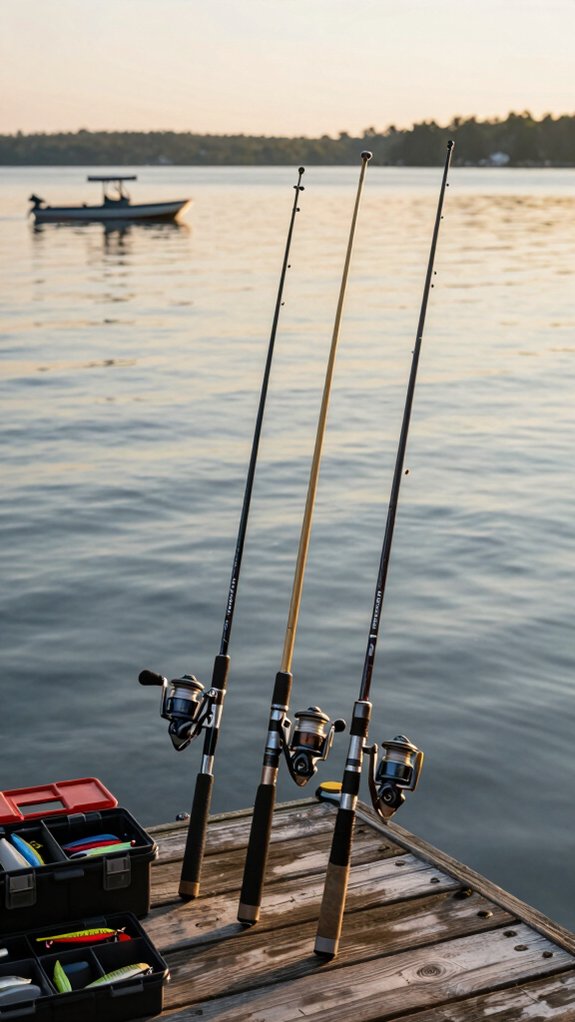
Picking the right bass fishing rod comes down to matching a few key features to your target technique and conditions.
I always start by thinking about rod length and power: shorter, stiffer rods work great for flipping in heavy cover, while longer, lighter rods help me cast small finesse baits farther and keep better contact at distance. From there, I fine‑tune my choice based on action, materials, and handle style so everything feels balanced and responsive in my hands.
rod length
When it comes to dialing in your bass fishing setup, rod length plays a bigger role than most realize, it’s the backbone of casting accuracy, hook‑setting power, and overall control.
For most bass techniques, I stick with a rod between 6’8″ and 7’6“, since that range gives me the best balance of precision and power.
Here’s how I match rod length to the situation:
- 6’8″–7′: Perfect for topwater pops and twitchbaits, quick tip recovery means sharper jerks and less shoulder fatigue after hours of working surface lures.
- 7’–7’6″: My go‑to for crankbaits and spinnerbaits, offering extra casting distance and strong hook sets when fish inhale deep divers.
- 7’6″+: Essential for big swimbaits or longshore casts, giving me leverage and line control when targeting hard‑hitting giants.
power rating
While rod length sets the stage for casting and control, it’s the power rating that truly defines how a bass fishing rod handles the fight—from the flex in the tip to the muscle in the backbone.
Think of power as the rod’s strength. For most bass work, I lean toward medium or medium‑heavy, it’s the sweet spot. A medium‑heavy rod gives you the backbone for jigs, spinnerbaits, and flipping, while still offering enough forgiveness to set hooks cleanly.
Action matters too: a fast action with a soft tip helps detect light bites, while a strong butt section keeps fish pinned.
Match your power to your line and lure, medium rods love 6–14 lb mono or 10–20 lb braid; go medium‑heavy or heavy for 15–40+ lb braid and 1/2–4+ oz baits.
action speed
If you’ve ever missed a bite because your rod felt too stiff or too mushy, the culprit was likely the action speed, not the power or length.
Your rod’s action shapes how it bends and responds during casting, fighting fish, and setting hooks. Match it right, and everything clicks.
- Fast action rods bend near the tip, delivering quick, powerful hooksets, perfect for jigs or Ned rigs where sensitivity matters.
- Moderate to slow actions flex deeper into the blank, protecting treble hooks on crankbaits and big swimbaits from pulling free.
- Jerkbait rods often use medium-fast actions to twitch lures sharply while still maintaining control and hook‑holding power.
I’ve found the right action lets the rod load smoothly and set hooks cleanly, without tearing out. Whether you’re finesse fishing or power‑flipping, pairing action with your lure and technique makes all the difference.
rod materials
Because the rod blank is the backbone of your setup, choosing the right material directly affects how well you feel bites, cast lures, and land fish, so let’s break down what actually matters.
For sensitivity and lightweight performance, I always reach for higher-modulus graphite (like 30–40 ton Toray). It transmits even the faintest tick of a bass bite straight to your fingertips.
But if you’re punching heavy cover or cranking all day, a blend with more durability, reinforced with Carbon X‑Wrap or quad‑weave carbon fiber, adds lateral strength and reduces twist. That means more power on hooksets without weighing down the rod.
Better materials = better control. I’ve found rods with Fuji Alconite guides and split‑cork/nano‑carbon handles balance well and stay comfortable during 12‑hour days. Match the blank to your technique, and you’ll feel the difference.
handle styles
Your handle style shapes how you control the rod, reel, and ultimately, the fish, so picking the right one starts with matching it to your reel and technique.
- Casting combos? Go for a trigger handle, it gives palm control and leverage for heavy cover. Spinning setups shine with a comfortable, under-the-rod grip, especially with light lures.
- Split-grip handles, made of EVA foam or cork, trim weight and boost balance, making them ideal for sensitive, high-modulus rods you’ll use all day.
- Need power? Full-length EVA foam grips offer extra hand positions for long casts and big fish fights.
Down-locking reel seats lock in casting rods, while screw-lock seats with foregrips suit spinning reels, especially when using braid-to-fluoro leaders.
I’ve found split-grip handles reduce fatigue by up to 30% on long days, your wrists will thank you.
price tiers
When you’re sizing up bass fishing rods, price tells part of the story, smart choices hinge on matching the rod to your fishing style, not just your budget.
Know Your Tiers
Budget rods like the FishUSA Flagship (~$100) work great for beginners or backup sticks. Mid‑tier picks like the Shimano Zodias or Daiwa Tatula Elite ($200–$300) deliver better sensitivity and smoother casting, perfect for serious weekend anglers.
When Premium Makes Sense
If you’re chasing max sensitivity and lightweight performance, rods like the Shimano Expride or G. Loomis GLX shine, especially in finesse setups with Mid Light power. But only go premium if your technique demands it.
Match rod, reel, and line, like 10–20 lb braid with fluorocarbon leaders, and you’ll fish smarter, not just spend more.
Common mistakes when picking bass rods
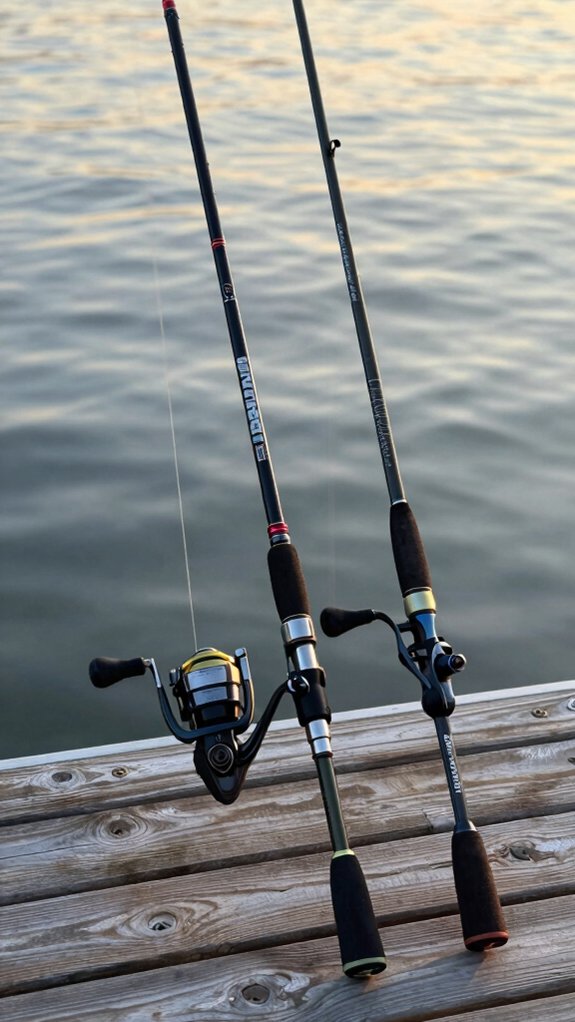
While it might seem like picking a bass rod is all about brand or price, I’ve seen plenty of anglers—including myself back in the day, grab the wrong one simply because they overlooked how technique shapes every other choice.
Rod length and action aren’t just specs, they’re game‑changers.
– Rod length mismatch: Using a 7’6” stick for topwater? You’ll fight your own jerks.
Go shorter (6’8”–7’) for precision, longer for distance and big baits.
- Ignoring action: Fast tips help with sensitivity on light lines, but moderate/fast actions set hooks better on crankbaits and keep backbone.
- Wrong power or line combo: Slashing 40 lb braid on a finesse rod kills casting and feel. Match line and lure weight to the rod’s rating.
Get these right, and you’ll cast farther, feel more bites, and land more fish, guaranteed.
Frequently Asked Questions
What Is the Best All Around Bass Fishing Rod?
I’d say the best all-around bass rod is my 7’2″ medium-heavy casting rod with a fast tip, it handles everything from finesse rigs to spinnerbaits, casts light baits well, and still powers through big fish without skipping a beat.
What Is the 80/20 Rule in Bass Fishing?
The 80/20 rule in bass fishing means I catch most fish with just a few lures or during short prime times. I focus on what works best, skip the rest, and keep things simple, less guesswork, more bites.
What Is the 90/10 Rule for Bass Fishing?
The 90/10 rule means I spend most of my time on the few spots where bass are likely hiding, like points and cover, because that’s where I catch 90% of my fish, not by fishing everywhere.
What Is the Best Bass Fishing Technique?
I once landed a 7-pounder on a shaky head, proof that finesse works. The best bass technique? Matching your approach to conditions. I adapt, using rods and lures that fit the moment, because flexibility beats rigidity every time on the water.
In Conclusion
The best bass fishing rod for you matches your technique and budget, no magic wand needed, but getting it right feels like cheating. Whether you’re flippin’ lunkers with a heavy stick or finesse-fishing with a spinning setup, pairing the right rod to your style boosts casts, control, and catches.
I’ve seen anglers double their hookups just by switching to the right action. Skip the guesswork: match your lure, reel, and line, and you’ll fish smarter, not harder.