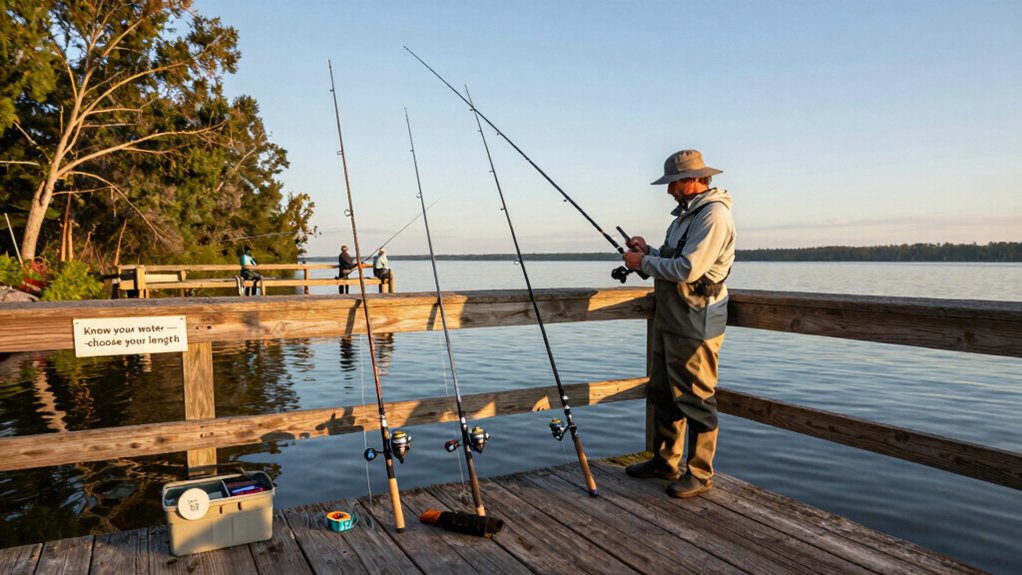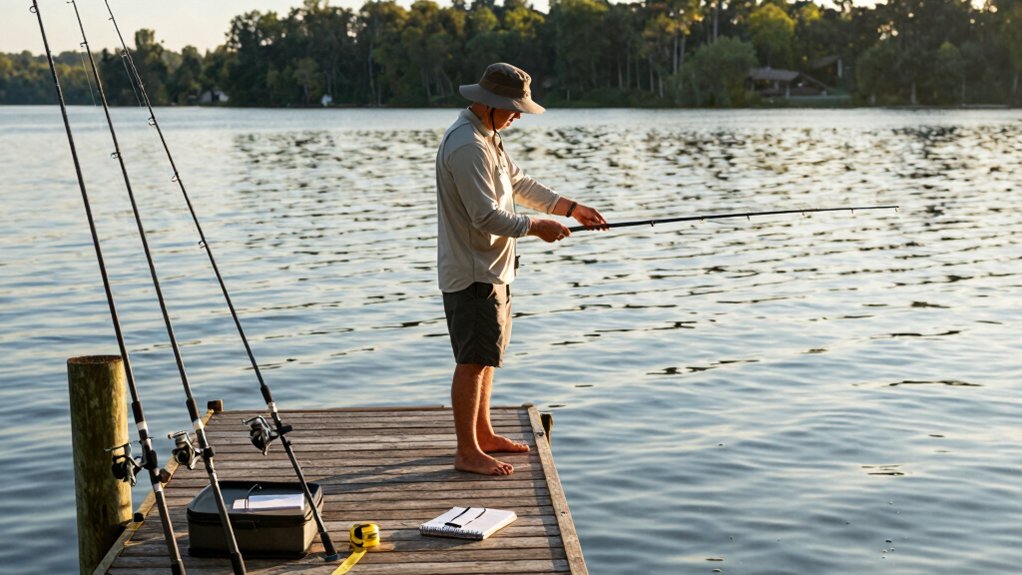

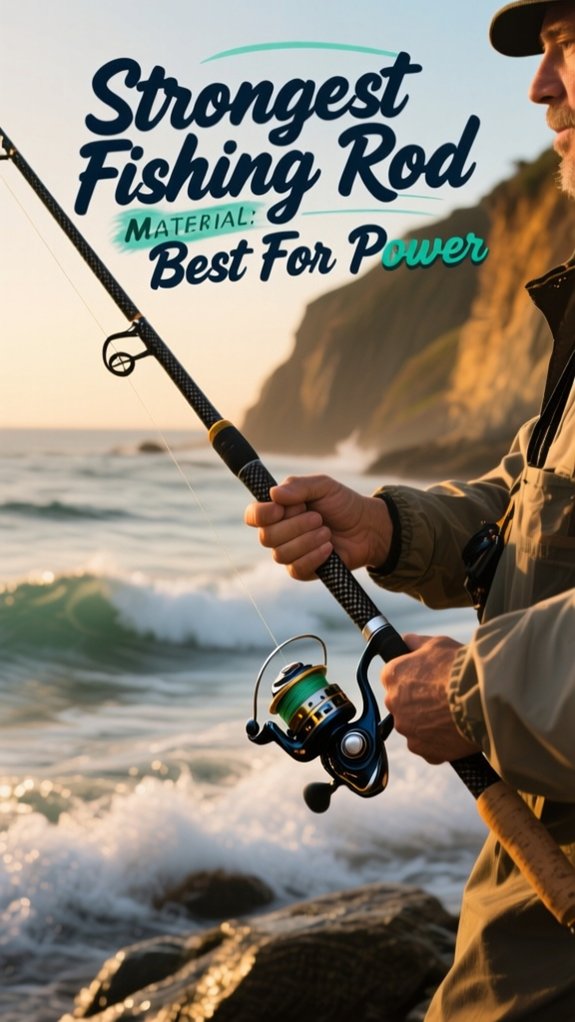
You might not realize it, but the strongest fishing rod material isn’t always the one that survives the longest in rough conditions. High-modulus carbon fiber delivers unmatched power for its weight, think lightning‑fast hooksets and iron‑fisted control on big tuna or tarpon.
It’s stiffer and lighter than fiberglass or standard composites, giving you a serious edge when brute strength matters. But here’s the catch: that raw power comes with a trade‑off most anglers don’t see coming.
What is the strongest rod material today?
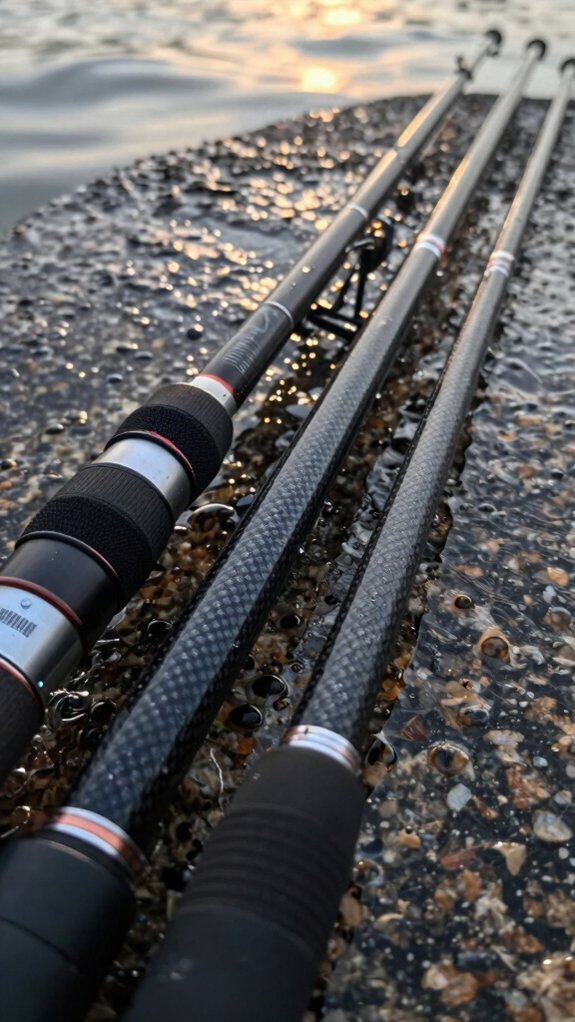
When it comes to raw power and performance, carbon fiber, often labeled as high-modulus graphite on rod specs, is hands-down the strongest fishing rod material available today.
You’ll see this in saltwater-grade blanks and tournament rods where every ounce matters. Why?
Because carbon fiber delivers the best strength-to-weight ratio of any common rod material. That means lighter rods that still pack serious lifting power, perfect for driving hooks into big fish.
Compared to standard graphite rods, high-modulus graphite is stiffer and more sensitive. While it lacks the fiberglass toughness that resists snapping, modern composite rods and hybrid blanks blend carbon with fiberglass to balance strength and durability.
Carbon, fiberglass, and composite strength compared
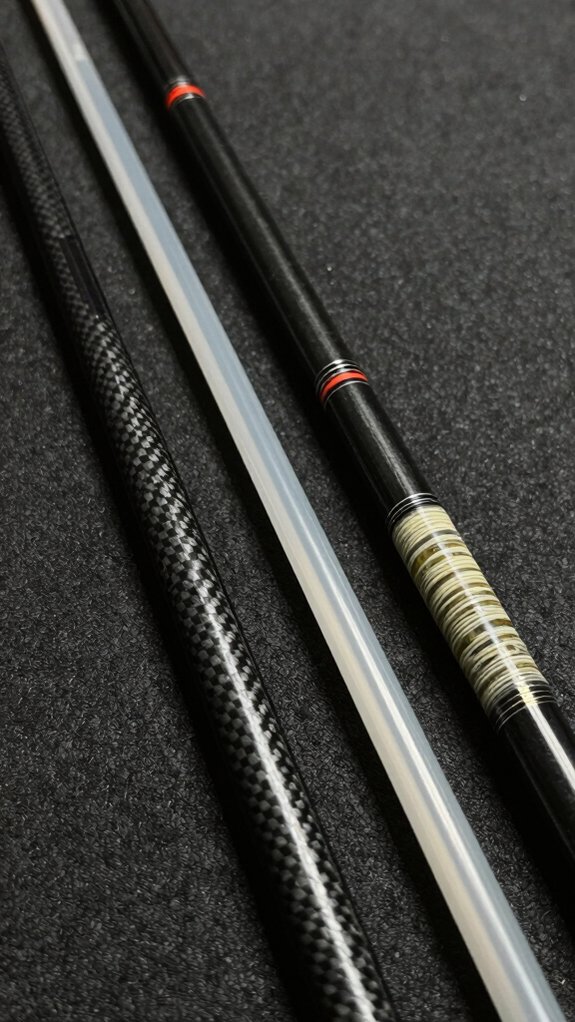
While carbon fiber might win on paper for raw strength and sensitivity, I’ve found that real‑world fishing demands more than just stiffness, it takes toughness to survive sudden surges, rocky snags, and the inevitable tangles that come with hard‑charging fish.
Carbon fiber (or high‑modulus graphite) offers the best strength‑to‑weight ratio, giving you a lightweight, powerful rod with incredible sensitivity. But it’s also more brittle, side impacts can mean catastrophic failure.
Fiberglass? It’s the king of toughness. Super flexible and shock‑absorbent, it resists breakage like no other.
That’s why I often recommend composite rods: they blend carbon’s sensitivity and power with fiberglass’s break‑resistance. You get a balanced mix of durability, sensitivity, and strength, perfect for anglers who want reliability without sacrificing performance.
Best rod materials for saltwater and trophies
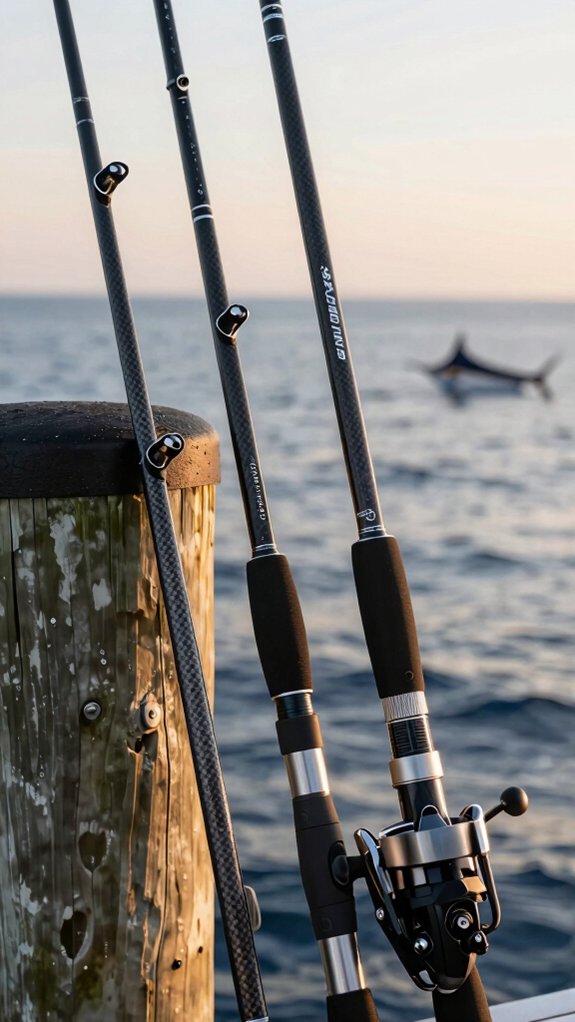
Land a 200‑pound marlin or wrestle a charging tuna, and you’ll quickly learn that not all fishing rods can take the punishment of saltwater giants. When targeting trophy fish, your best bet comes down to smart material choices and solid blank construction. Here’s what works:
- Carbon fiber (high‑modulus graphite), Lightweight and stiff, perfect for setting hooks fast.
- Fiberglass, Tough as nails, with superior impact resistance in rough saltwater conditions.
- Composite rods, The sweet spot, blending graphite’s power with fiberglass’s shock absorption.
- Hybrid builds, Reinforced with Kevlar or braided carbon for extreme durability.
Don’t just trust the material, look at guide quality, reel seat strength, and taper design. A well‑built blank construction makes all the difference when drag’s screaming and the fish is surging. Choose wisely, and you’ll land more trophy fish with confidence.
Does strongest also mean most durable rod?
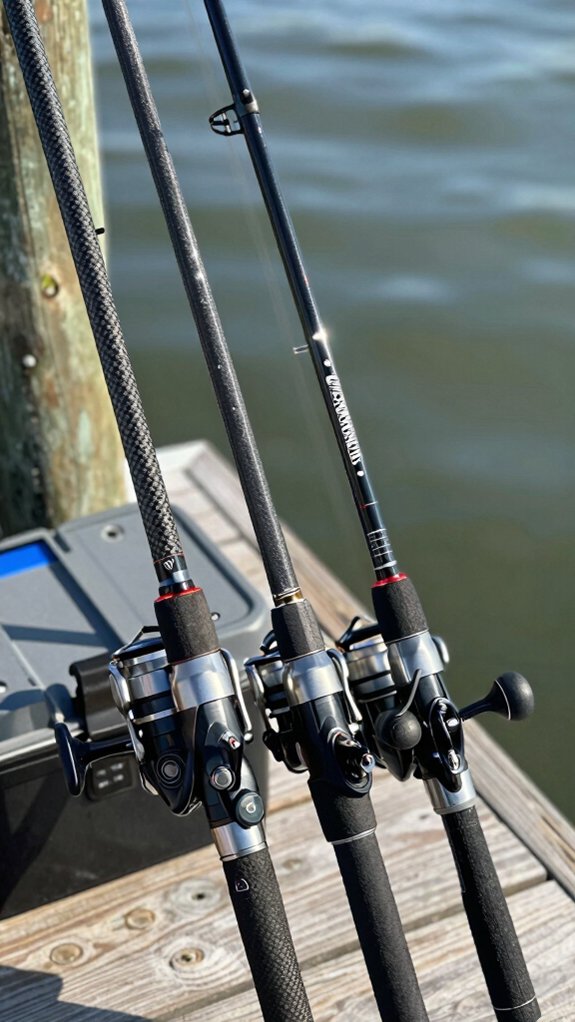
| Material | Strength | Impact Resistance |
|---|---|---|
| High-modulus carbon | ⭐⭐⭐⭐⭐ | ⭐⭐ |
| Fiberglass | ⭐⭐⭐ | ⭐⭐⭐⭐⭐ |
| Carbon–fiberglass composite | ⭐⭐⭐⭐ | ⭐⭐⭐⭐ |
That’s where fiberglass and carbon–fiberglass composite shine, offering solid power with far better impact resistance and real-world toughness. If you fish hard and fast, sometimes a slightly heavier rod that survives abuse is smarter than a featherlight glass cannon. Trust me, I’ve snapped my share testing gear, learn from my mistakes.
How to choose the strongest rod material
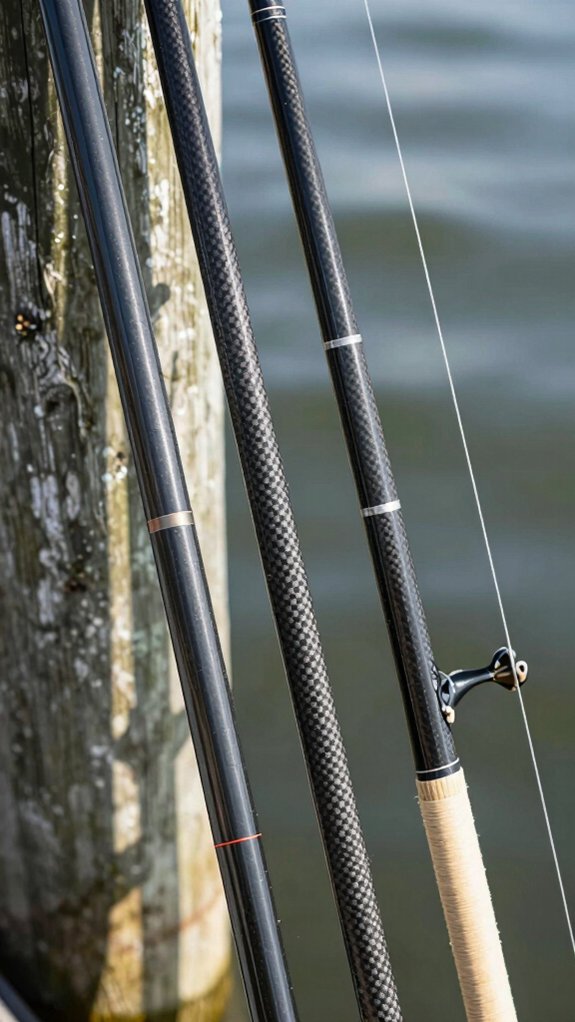
The strongest rod material for you depends on what you’re fishing for, where, and how you’re fishing, so let’s break it down simply.
If you’re after big bass in heavy cover or tossing big lures, a high-modulus graphite or composite rod might be your best bet for power and sensitivity.
But if you’re bouncing around rocks or fishing from a kayak, tougher fiberglass or a graphite-fiberglass blend could save you from a snapped rod and a lost fish.
target species
When you’re after hard-pulling brutes like offshore tuna, marlin, or giant salmon, going light on your rod material means risking a heartbreak snap mid-fight, so I always reach for high-modulus carbon fiber or advanced graphite composites.
These are the strongest fishing rod materials for saltwater fishing where power and sensitivity matter. But your target species should always guide your pick:
- Offshore predators, Use carbon fiber rods for 400+ ksi tensile strength.
- Sharks or heavy bottom fish, Choose fiberglass or composite rods for unmatched toughness.
- Big freshwater game, Go with heavy-power rods blending carbon and fiberglass.
- Versatile angling, Hybrid composite rods balance sensitivity and durability.
I match my setup to the fight: carbon for precision, fiberglass for punishment.
Whether it’s PE 6 line off a reel or 100 lb test, pairing rod material to target species keeps me in control, and brings home more fish.
fishing environment
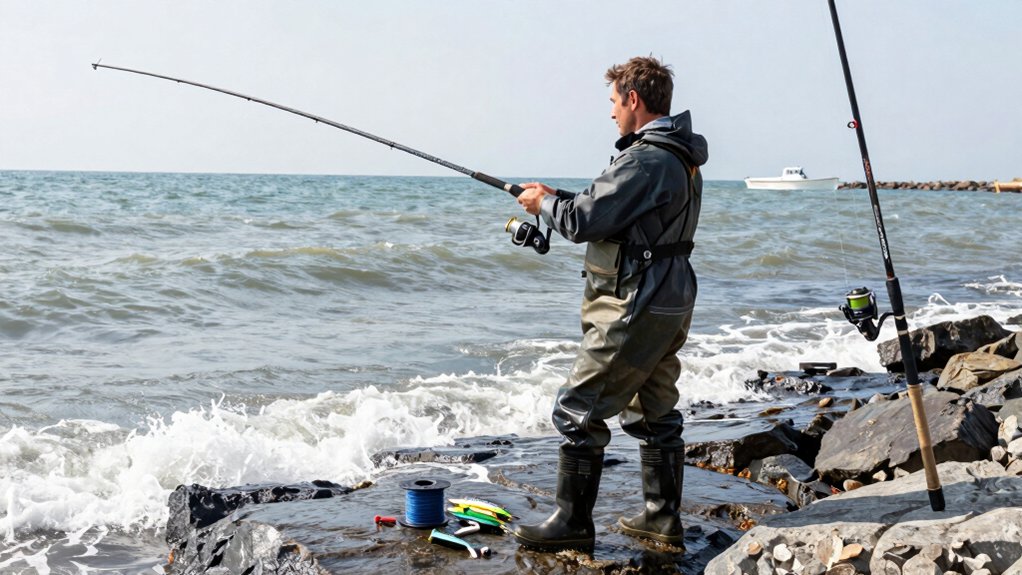
Since your fishing environment shapes how hard your gear gets tested, I always match the rod material to where I’m casting, because a rod that crushes it offshore might crack on a rocky shore.
In marine environments, I trust high-modulus graphite (carbon fiber) for its incredible backbone and power when battling tuna or tarpon. But on rocky banks or boat decks? Fiberglass wins for impact resistance, no more snap under stress.
That’s why I often reach for composite rods, they blend graphite’s stiffness with fiberglass’s shock absorption, perfect for shore, boat, or heavy structure.
And don’t forget rod hardware: even the strongest blank fails if guides corrode. I only use salt-rated components, because real strength lasts from tip to butt.
lure techniques
Honestly, I always pick my rod material based on the lure technique, because nothing ruins a big-fish moment like a blank snapping mid-fight. When throwing heavy lures, you need strength, not just sensitivity. Here’s how I match materials to power:
- Carbon fiber (high-modulus graphite): Best for strong, lightweight performance with big swimbaits or topwaters, great power-to-weight ratio.
- Fiberglass: Super tough and shock-absorbent; perfect when I’m slinging heavy jigs and can’t risk breakage.
- Composite rods: A smart blend, graphite’s sensitivity with fiberglass backbone, ideal for long casts and hard fights.
- Always check blank specifications, power ratings, and rod action, a heavy-fast action with thick taper boosts lifting power.
Shorter rods with quality construction amplify control. Trust me, pairing the right material to your technique keeps the fish coming, and the blanks intact.
Blanks intact.
modulus rating
If you’re after raw power without sacrificing casting performance, focusing on modulus rating is key, because stiffer isn’t just about feel, it’s about how efficiently your rod loads and transfers energy.
Modulus = stiffness in GPa
Think of modulus as your blank’s backbone, measured in gigapascals (GPP). High-modulus graphite or carbon fiber (40–70+ GPa) delivers elite stiffness, meaning less flex and more snap on long casts.
Higher T = stronger (but balance it)
Rods labeled 30T–60T use high-modulus carbon fiber for serious power. But remember: power isn’t just modulus. It’s the combo of stiffness, wall thickness, and smart layup design.
For heavy-duty fishing, I pick high-modulus blanks with reinforced layups, woven carbon + fiberglass. You get strength, sensitivity, and durability without the brittleness.
budget and care
When you’re chasing strong fish and need a rod that won’t quit, picking the right material means balancing strength, budget, and how you care for your gear, because even the toughest blank can fail if it’s misused or neglected.
Here’s how to make a smart, lasting choice:
- Carbon fiber offers the best strength-to-weight ratio but costs more, $300+, and demands careful handling to avoid fatigue.
- Fiberglass rods are budget-friendly (under $50) and incredibly durable, handling shock loads without damage.
- Composite rods blend graphite and fiberglass, giving you solid durability and power at a mid-range budget ($75–$200).
- No matter the material, proper care, like rinsing saltwater and storing rods vertically, prevents micro‑cracks and extends life.
Your rod’s durability isn’t just about material, it’s about how you treat it.
Common mistakes when picking rod materials
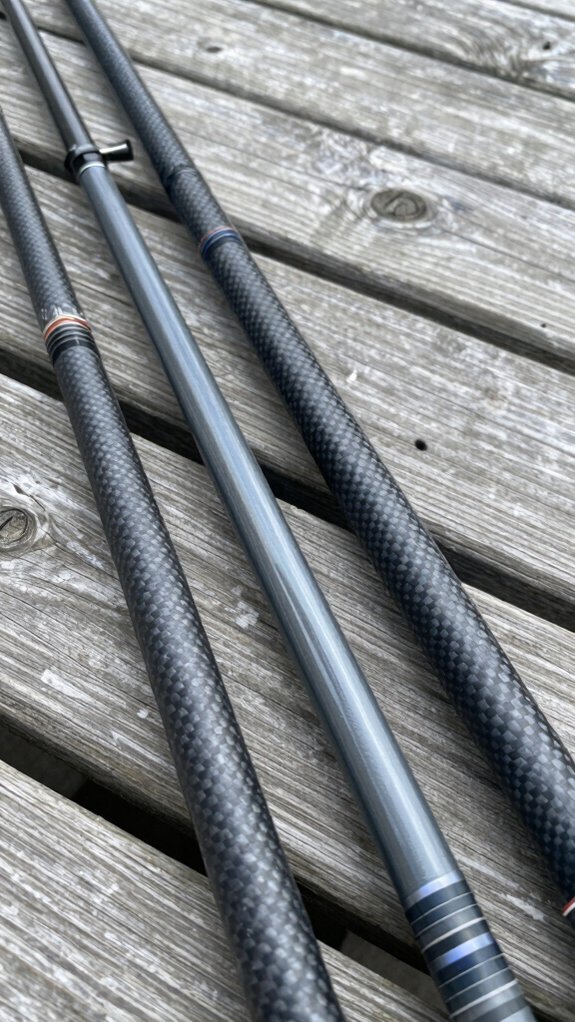
While it’s tempting to equate “strongest” with unbeatable power, I’ve seen plenty of anglers grab a high-modulus graphite rod thinking it’ll handle anything, only to snap it during a hard side cast or when wrestling a big fish near cover.
Graphite rods excel in stiffness and sensitivity, but carbon fiber can be brittle under sudden impact. Overlooking composite blends is a big mistake, composite rods provide the shock absorption and toughness needed to handle various fishing conditions without sacrificing too much power.
Choosing the right fishing setup means looking beyond marketing terms like “100% carbon.” Instead, check the blank construction, layer orientation, and specs like modulus and line rating.
Poor guides or weak reel seats can fail before the blank does, so rod materials to help you succeed must include quality build.
Smart picks balance strength, action, and durability.
Frequently Asked Questions
What Is the Strongest Fishing Rod Material?
I’d say high-modulus carbon fiber is the strongest, I’ve used it to land big fish with ease. It’s super light, crazy stiff, and delivers serious power, though I always handle it carefully to avoid damaging the brittle blank.
Is Graphite Stronger Than Fiberglass?
I’ve seen rods snap under 150 lbs of pressure, graphite handles more pull than fiberglass, so yes, I’d say graphite’s stronger in tension. But fiberglass? It bends without breaking, which matters when I’m fighting brute fish or tossing my rod around the boat.
Is There an Unbreakable Fishing Rod?
No, there’s no unbreakable fishing rod, I’ve snapped a few myself. Even my toughest carbon fiber blanks can fail if I overload them or side-cast too hard. You’ve gotta match the rod to the fish and fish it smart.
Which Is the Strongest Fishing Rod?
Isn’t it wild how a rod can feel like an extension of your arm? I’d say high-modulus carbon fiber’s the strongest, light, stiff, and powerful. But if you’re battling brutes, won’t you want the toughness of hybrid or fiberglass to back you up?
In Conclusion
The strongest fishing rod material is high-modulus carbon fiber, no question. It’s crazy stiff, crazy light, and transfers power like a lightning bolt to your reel. But here’s the twist: that raw strength can snap under sudden impact.
I’ve seen it happen on big tuna runs and rocky shores. So while carbon wins on power, the real pro move? A carbon-fiberglass blend, best of both worlds. Trust me, your next monster fish will test more than just your line.