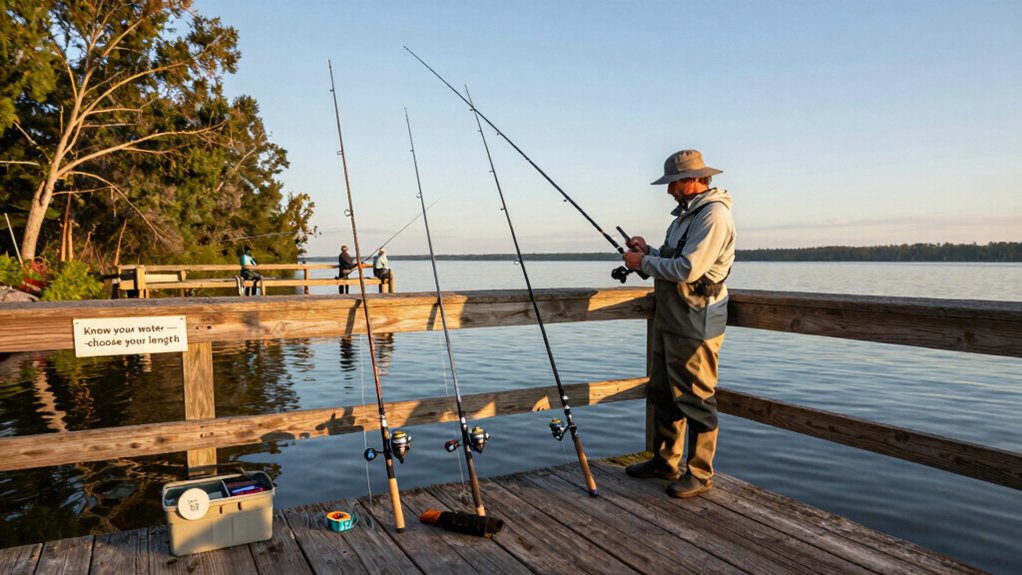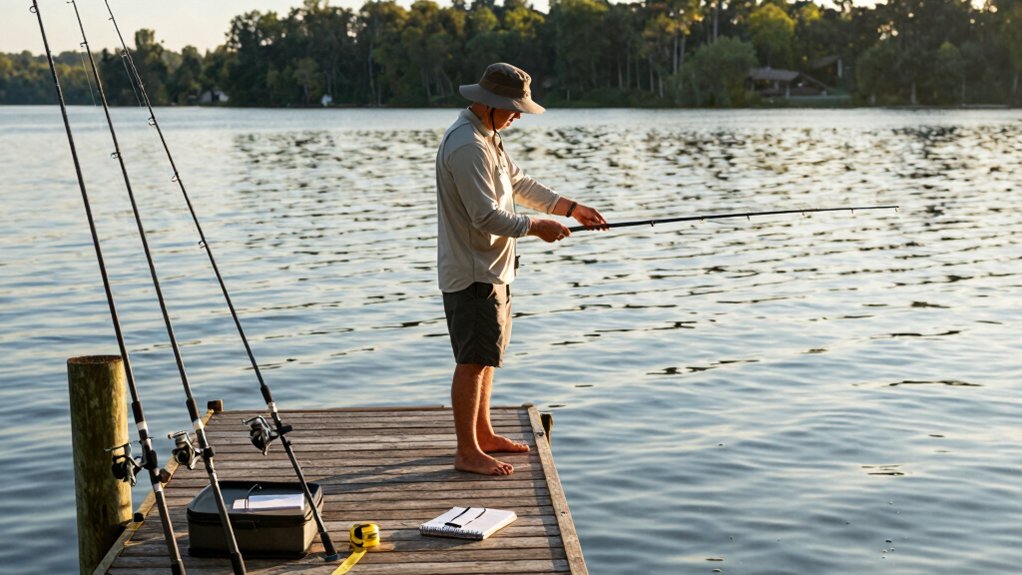
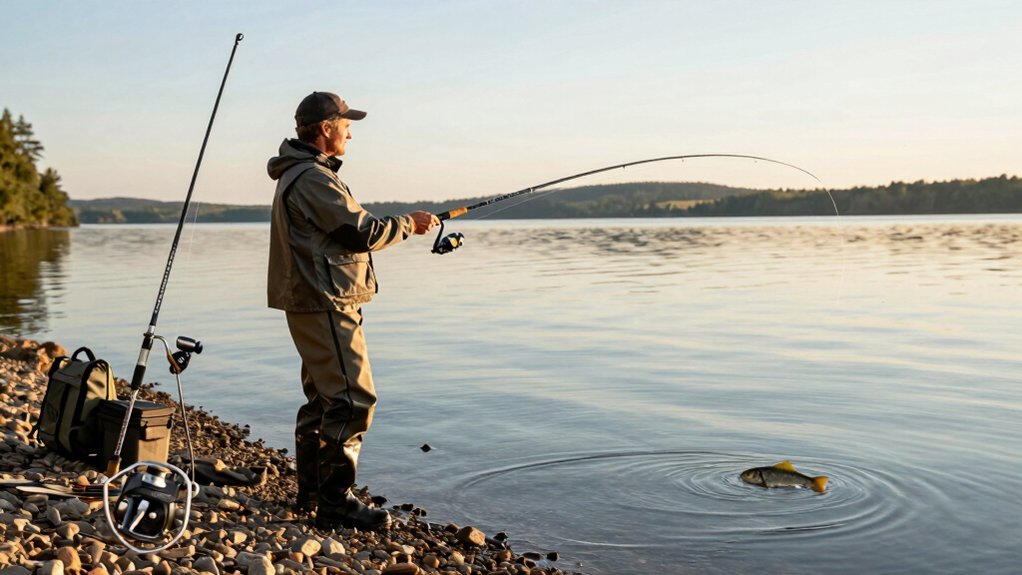

Yeah, Shakespeare rods are good for beginners and casual anglers who want a solid, no-frills rod without breaking the bank. I’ve tested several models over the years, and while they’re not ultralight or ultra-sensitive, they handle panfish, bass, and small catfish reliably. They’re heavier than pricier rods, and some reel seats feel flimsy, but their durability surprises people.
You’ll often find them outlasting rods twice the price, especially the Ugly Stik GX2-style blanks. Ready to find out which models actually deliver?
Is Shakespeare a good fishing rod?
Let’s cut to the chase: yes, Shakespeare makes good fishing rods, especially if you’re just starting out or want a reliable, no-frills rod without breaking the bank.
Shakespeare rods are solid good value picks for everyday anglers. I’ve used them for years as backup rods, and many hold up surprisingly well.
Models like the older Liberty series? Real workhorses, some say they feel just like pricier name-brand rods.
They offer rods for spinning, casting, even fly fishing, so there’s something for panfish, trout, or heavy catfish duty.
Sure, quality varies, some are stiffer and less sensitive. But for beginners, kids, or a “beater” rod you don’t sweat losing, they’re smart choices.
Most anglers I know upgrade later for lighter weight and finesse. Until then, Shakespeare gets the job done.
Pros and cons of Shakespeare fishing rods
Shakespeare rods bring solid value to the bank, especially if you’re after dependable performance without stretching your budget.
Pros:
- Good value is Shakespeare’s sweet spot, many anglers say these rods punch above their weight, matching higher‑end models in everyday freshwater use.
- Some models, like older Liberty rods, boast legendary durability and smooth action.
- The brand even pioneered early carbon‑fiber fly rods, proof of innovation.
Cons:
- Modern lines can feel heavier and less sensitive, with mixed build consistency, some feeder rods seem overbuilt.
- Plastic twist‑lock reel seats? A weak point. I keep a backup zip tie in my tackle box.
- Guides and finishes aren’t as refined as Abu or St. Croix.
For beginners or casual use, Shakespeare rods are a smart, good valuepick. But serious anglers usually upgrade.
Who are Shakespeare rods best for?
Here’s who benefits most:
- New anglers, Learn casting and basics without fear of breaking an expensive rod.
- Families, Kit out kids with durable rods built for clumsy hands and rocky shores.
- Casual fishers, Perfect for pond panfish or shore carp, no need for high‑end sensitivity.
- Budget‑conscious buyers, Spend $20–$40 instead of $100+ and still get a well made, functional rod.
I’ve seen beginners catch their first bass on a Shakespeare Micro, smiles all around.
While serious anglers eventually upgrade, these rods deliver real value where it counts: putting more fish on the line, not breaking the bank.
How to choose the right Shakespeare rod
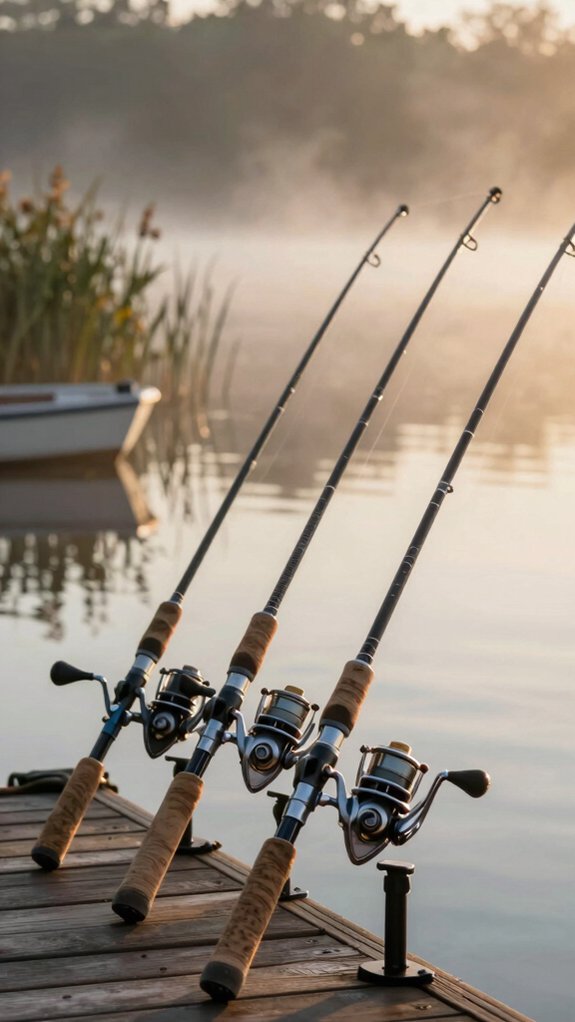
I’ve found the best way to pick the right Shakespeare rod is to start with what you’re after, whether it’s panfish, bass, or saltwater species, since that’ll point you to the right power and action.
If you’re chasing crappie or trout, I’d grab an ultralight like the Crappie Hunter, but for hard‑pulling catfish or carp, go with a medium‑heavy Ugly Stik‑style blank that won’t quit.
And don’t overlook length and price: longer rods cast farther, while compact models fit tight spaces, and luckily, most Shakespeare rods give solid performance without breaking the bank.
target species
When you’re sizing up your next catch, picking the right Shakespeare rod starts with matching it to your target species, because nothing kills momentum faster than a limp rod bending like a noodle against a hard-charging catfish.
Whether you’re using fly fishing rods for delicate trout presentations or a sturdy casting rod for bass battles, Shakespeare’s got a match. Here’s how to pick with purpose:
- Panfish or trout? Go ultright, sensitive tips detect even the shyest nibble.
- Bass or mixed species? A medium-action rod delivers casting distance and solid hooksets.
- Carp or catfish? You’ll need heavy power, strong backbone prevents rod lock-up.
- On the move? Travel rods like the Contender® keep you ready without sacrificing performance.
Choose right, fight fair, and land more fish, one species at a time.
rod power
While it might seem like just a matter of how thick the rod feels, choosing the right rod power on a Shakespeare model actually makes or breaks your chances of landing the fish you’re after.
Match Power to Your Target and Gear
I always check the rod’s rated lure weight and line class, Shakespeare rods like the Tiger® Casting 20.99–25.99 are labeled for a reason.
For panfish or trout, I go Medium-Light; for bass, Medium power pairs perfectly with my rod and reel.
Chasing big carp or catfish? I step up to Medium-Heavy or Heavy.
Telescopic models are great for travel, but I stick with two-piece rods for heavy power and durability.
With Shakespeare’s Ugly Stik toughness, I know my setup won’t snap when a hard-pulling fish says “nope.”
rod length
Choosing the right rod length on a Shakespeare model can make your casts more accurate, your retrieves smoother, and your hooksets sharper, so don’t overlook it when building your ideal setup.
The perfect rod length depends on where and how you’re fishing, and Shakespeare offers solid options across the board. Here’s how to pick with confidence:
- 6–7 ft rods, Ideal for bass or trout from shore or boat; great balance for most fishing rods.
- 7–9 ft rods, Give you reach and better line control for finesse work with light lures.
- 9–13 ft match rods, Perfect for long casts or pole-style fishing, like vintage Shakespeare float setups.
- Telescopic/travel rods, Compact and easy to pack, though slightly less powerful.
Match your rod length to your style, and you’ll fish smarter, not harder.
budget range
Here’s what to expect in the entry range:
| Price Range | What You Get |
|---|---|
| $20 to $25 | Basic but functional rods (e.g., Tiger®) |
| $25 to $30 | Improved blanks and guides |
| $30 to $37 | Bestsellers like Crappie Hunter |
| $37 to $47 | Alpha® Bigwater for heavier species |
| $65+ | Premium materials, near‑specialty performance |
Match your pick to your target fish and technique, these rods punch above their price.
Popular Shakespeare models and key rivals
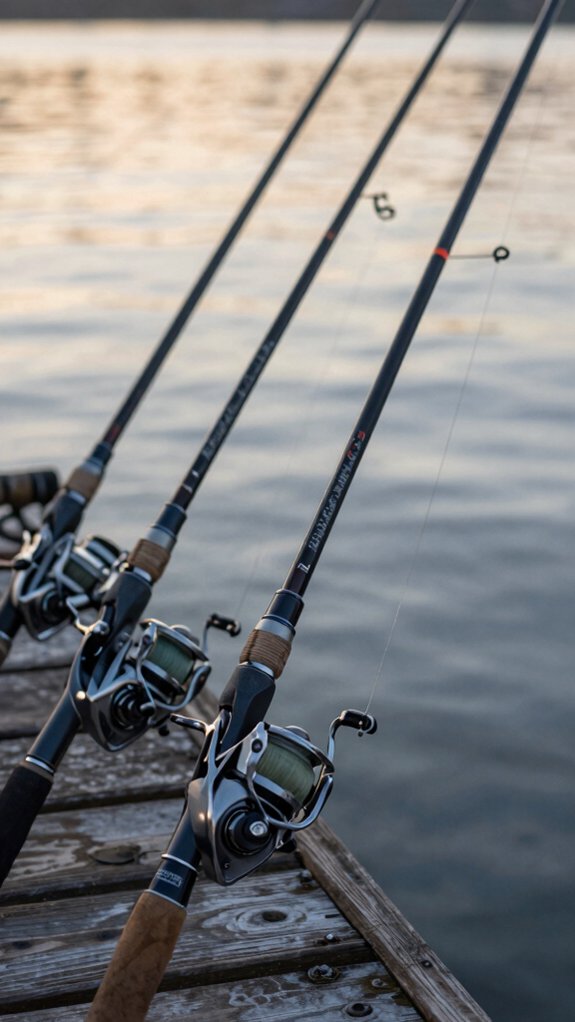
Yeah, Shakespeare rods like the micro ultralight Crappie Hunter and the all‑around Tiger casting rods deliver solid performance without breaking the bank.
I’ve found the Tiger rods especially handy for beginners or kids, thanks to their durable build and smooth action at under $26. While they won’t match the sensitivity of a Ugly Stik GX2, they hold their own in real‑world fishing situations, perfect if you want reliable gear that won’t drain your wallet.
Micro ultralight
When you’re stalking wary trout in skinny mountain streams or ticking jigs under docks for bluegill, the Shakespeare Micro ultralight spinning rod steps up as a nimble, responsive tool built for finesse.
This 56‑inch ultralight is light at just 3.1 oz, making it perfect for all‑day casting without fatigue.
Here’s why the Shakespeare Micro wins hearts:
- Playful action that telegraphs every subtle bite.
- Crisp sensitivity for feeling light taps from panfish.
- Compact 2‑piece design that’s easy to pack and travel with.
- Smooth performance with 1/32, 1/4 oz lures, ideal for small streams.
It’s not built for musky or heavy cover, but for finesse fishing, it’s spot‑on.
The plastic twist‑lock reel seat isn’t bombproof, so treat it kindly.
Compared to the Berkley Lightning, it’s more affordable with similar feel.
For beginners or casual anglers, it’s a balanced, budget‑smart win.
Tiger casting
The Shakespeare Tiger® Casting Rod absolutely holds its own as a solid, no‑frills choice for anglers who want a dependable rod without stretching the budget, especially if you’re just getting started or need a tough backup for rougher conditions.
Built tough for freshwater fishing, the Tiger® Casting Rod handles heavy use along rocky shorelines or on family fishing trips where gear takes a beating. Sure, it’s heavier and less sensitive than premium models like the Abu Garcia Veritas or St. Croix Triumph, but at $21–$26, it’s not trying to be.
What you get is Shakespeare’s reliable build quality and a consistent 5.0 rating from real anglers who value durability over finesse. If you’re after performance on a budget, the Tiger delivers, no surprises, no fuss.
Ugly Stik GX2
Grab your reel and let’s talk about the Ugly Stik GX2, it’s one of Shakespeare’s most trusted rods for a reason.
If you want a tough, reliable rod that won’t quit on you, the Ugly Stik GX2 delivers.
Built with a graphite and fiberglass blend, stainless-steel guides, and a rugged backbone, it’s made for battling bass, salmon, and big trout.
While it’s not ultralight, it can be well balanced with the right reel.
Here’s why anglers keep coming back:
- Nearly unbreakable, drops and tangles? No problem.
- Versatile casting, handles 1/4 to 1 oz lures with ease.
- Family-friendly, perfect as a “beater” rod for kids or casual trips.
- Proven durability, rated 8.0 for toughness by field testers.
It’s not the most sensitive, but for dependable, well-balanced performance in rough conditions, the Ugly Stik GX2 earns its spot.
Mistakes to avoid when buying Shakespeare rods
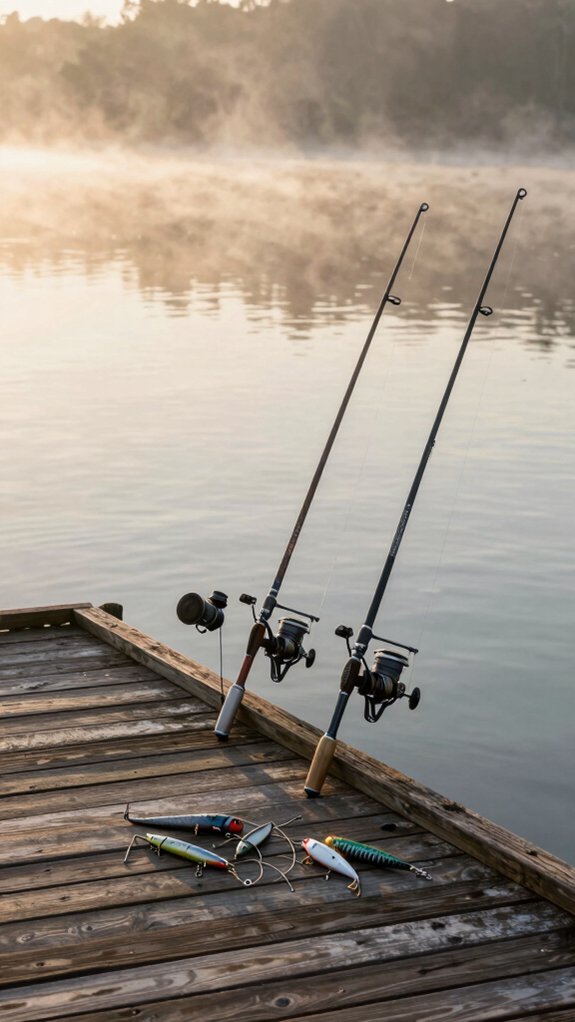
While it’s tempting to assume that picking up any Shakespeare rod means you’re getting the same reliable performance, I’ve learned the hard way that not all models are created equal, mixing up your choices here can mean the difference between landing a trophy crappie or snapping a rod on your first cast.
Mistakes to avoid when buying Shakespeare rods
First, don’t overlook the reel seat, some budget models use a plastic twist-lock that feels flimsy. I always bring backup rubber ties, just in case.
Second, skip the guesswork on action. The Micro is a solid choice for light panfish, but heavier rods like the Alpha® Bigwater handle catfish with ease.
Check availability too, the Tidewater® is often out of stock, while Wild™ and Contender® lines are new and popular.
Finally, compare specs: carbon vs. graphite, length, and casting weight. You’ll often get Shimano-like performance at half the price, if you choose wisely.
Are they worth it for the price?
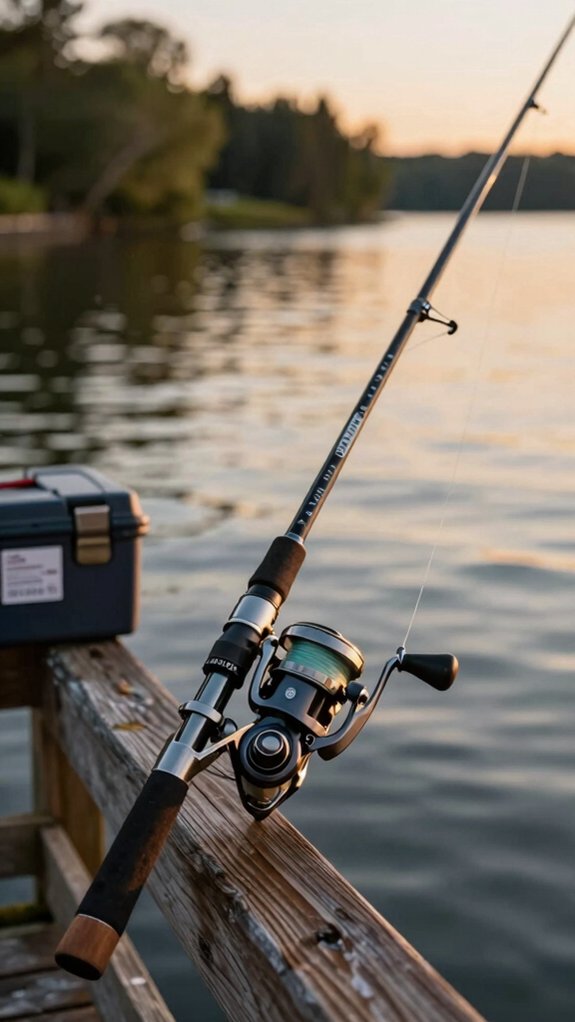
If you’re wondering whether Shakespeare rods deliver real bang for your buck, I’ll cut to the chase: yes, they’re absolutely worth it for what they are, solid, no-frills tools that punch above their weight in beginner to intermediate setups.
When you’re starting out or need a spare, these rods make smart sense.
Here’s why they feel worth it:
- Budget-friendly: Most Shakespeare rods cost just $20–$40, less than a dinner out, but ready to catch dinner (fish, that is).
- Durable enough: Anglers report 10+ years of use on older models, proof they’re built to last.
- Surprisingly capable: They handle panfish, bass, and catfish with ease, perfect for weekend fun.
- Low-risk, high-reward: Even if it gets beat up, you didn’t blow $200. That peace of mind? Priceless.
For new anglers, Shakespeare rods aren’t just worth it, they’re a no‑brainer.
Frequently Asked Questions
Is Shakespeare a Good Fishing Rod?
Yeah, I think Shakespeare makes good fishing rods. They’re affordable, durable, and perform well for the price. I’ve used them for years, and they handle most fishing tasks just fine, perfect if you’re starting out or want a solid backup rod without breaking the bank.
What Are the Top 3 Best Rods in Fish?
The top 3 rods I’d pick are the Abu Garcia Veritas PLX for finesse, PLUSINNO for value, and St. Croix Triumph Travel for portability, each nails performance, feel, and reliability without breaking the bank.
Who Makes the Best Quality Fishing Rods?
One in three pros trusts high-modulus graphite rods, I believe G. Loomis makes the best quality fishing rods, hands down. Their titanium guides and insane sensitivity blow me away every time I cast. You’ll feel even the lightest nibble.
Who Makes Shakespeare Fishing Rods?
I make Shakespeare fishing rods through my team at Pure Fishing, designing them with global factories to keep costs low while ensuring solid performance, yeah, they’re made overseas, but I stand by their value for everyday anglers like you.
In Conclusion
Yes, Shakespeare rods are worth it for beginners and casual anglers. They’re like a trusty pickup truck, no luxury, but they get the job done. You’ll save money without sacrificing reliability for everyday fishing.
Just don’t expect featherlight sensitivity or tournament‑grade precision. Upgrade the reel seat if needed, and pair it with decent line. As the old saying goes, “The best rod is the one you’ve got,” and for the price, Shakespeare gets you on the water, where it counts.