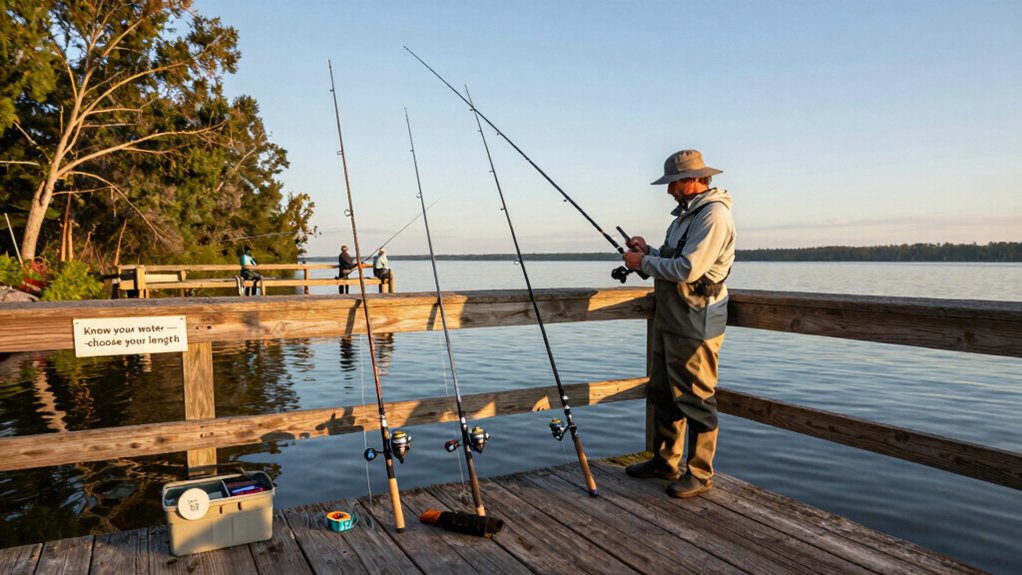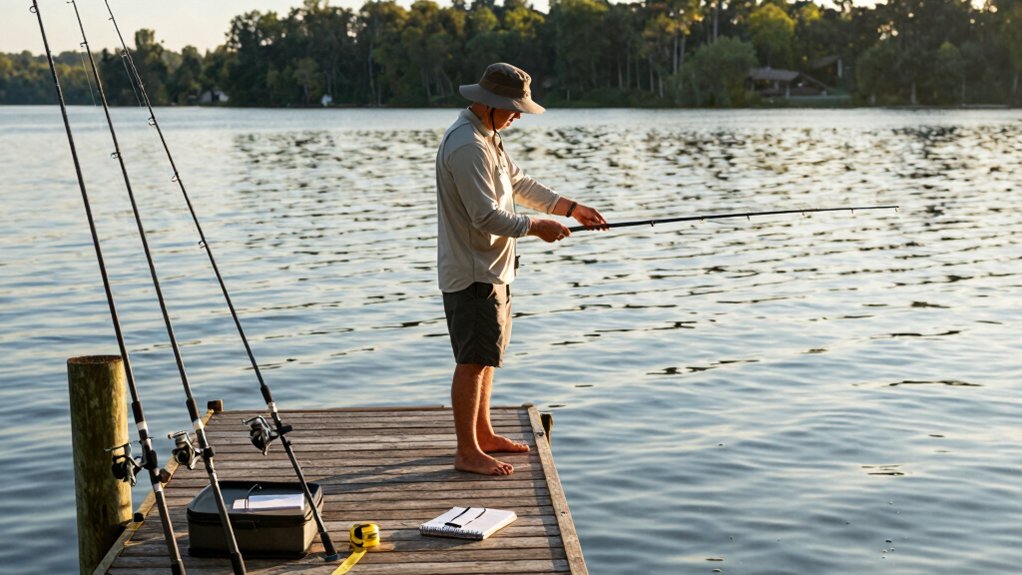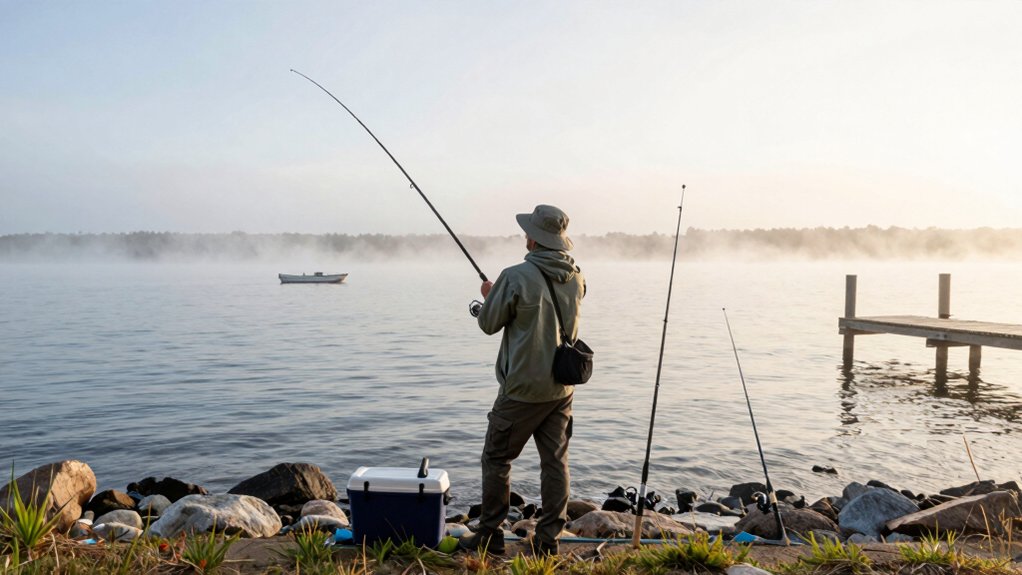
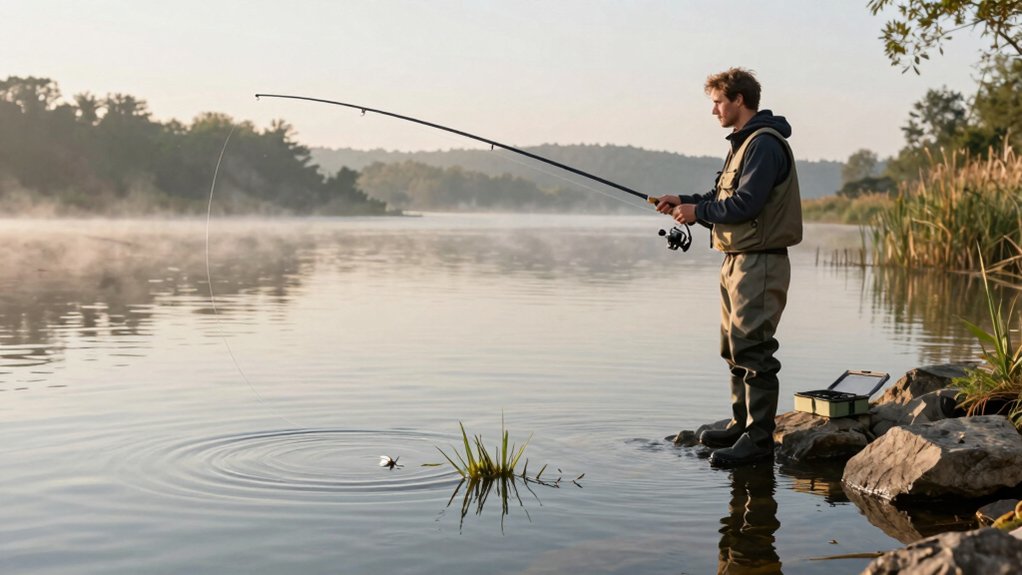

Did you know nearly 60% of bass anglers overlook glass rods despite their proven edge in lure retention? I’ve found they shine when I’m throwing crankbaits and topwaters, those soft, sweeping bends absorb violent headshakes and keep trebles locked in.
If you’ve ever lost a big bass on a squarebill or chatterbait, the fix might be in your hands. I’ll show you how pairing the right glass rod with the right technique turns missed opportunities into solid hookups.
What are glass fishing rods used for
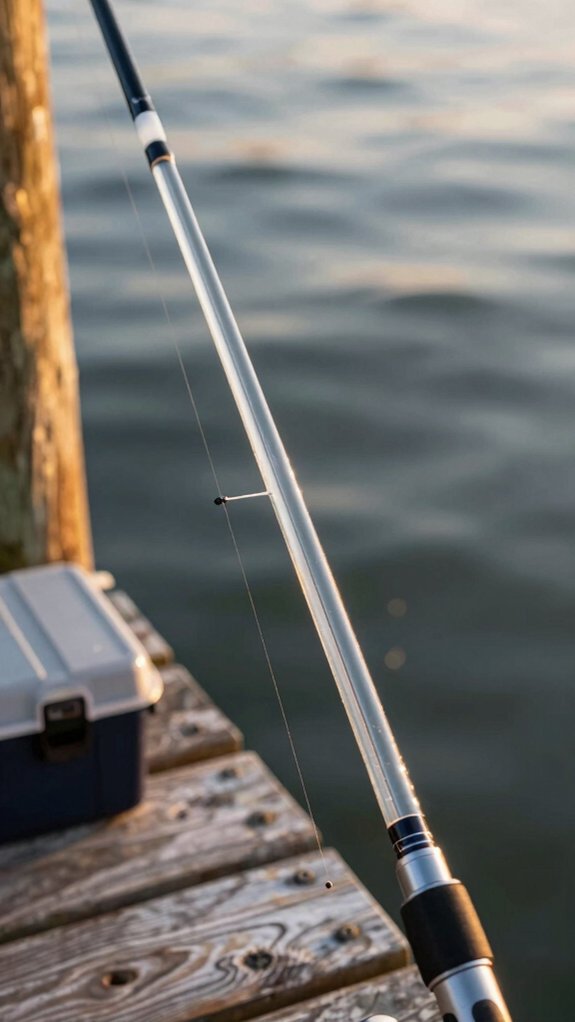
Honestly, I reach for a glass (or fiberglass) rod whenever I’m throwing crankbaits or topwater lures, especially ones with treble hooks, because their soft, parabolic bend really shines when setting and keeping fish hooked.
A glass rod’s flexibility absorbs hard headshakes and surges, which helps treble hooks stay locked in, unlike stiffer glass and graphite combos that can rip hooks free.
I’ve seen tournament anglers land 50+ fish in two days using glass setups, proof it boosts hookup rates.
I pair my glass rod with braid for long topwater casts or mono/fluoro for crankbaits near wood and rock.
For small crankbaits, I use a 7’3” rod; for deep divers, 7’6″ or longer.
Modern glass-composite blanks even offer better sensitivity without losing that forgiving, shock-absorbing feel.
When should I pick a glass rod
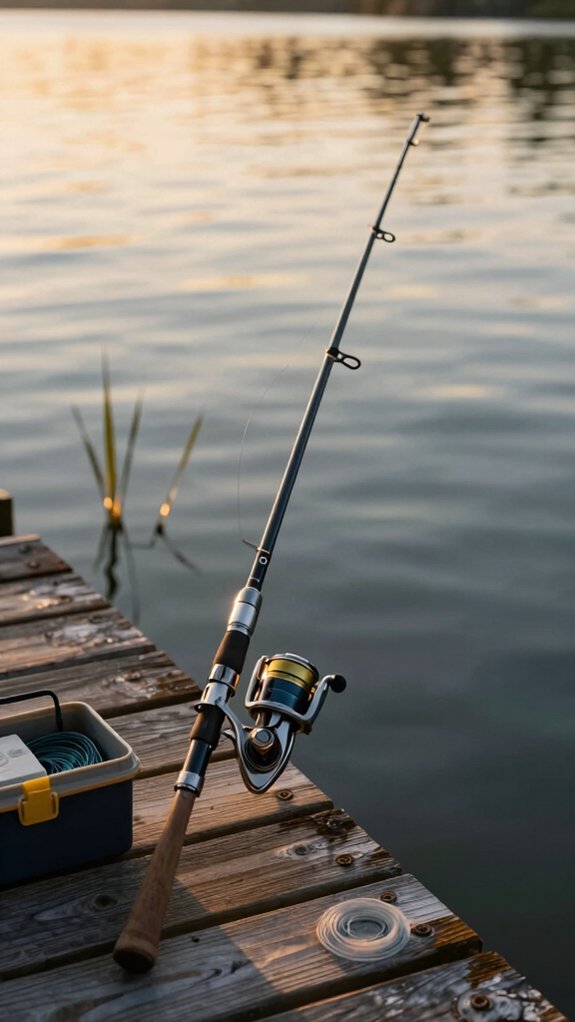
You should pick a glass rod when you’re targeting hard‑striking bass with crankbaits or topwaters, especially around cover, because the rod’s deep, parabolic bend gives you better hookups and fewer pull‑outs.
A glass rod is a killer crankbait rod for medium‑to‑deep divers and big squarebills. The slower action soaks up surges, letting fish lock in before you set the hook.
For smaller crankbaits, go with a 7’3” glass; step up to 7’6″ or longer for heavy lures and lipless crankbaits, extra length means more casting distance from that slingshot rod load.
Pair your glass rod with braid for topwaters or fluorocarbon for chatterbaits.
Around docks or wood? The soft tip helps fish commit, boosting your landed‑fish rate.
Keep at least one glass rod in your ten‑rod lineup, you’ll fish smarter and land more.
Best techniques and lures for glass rods
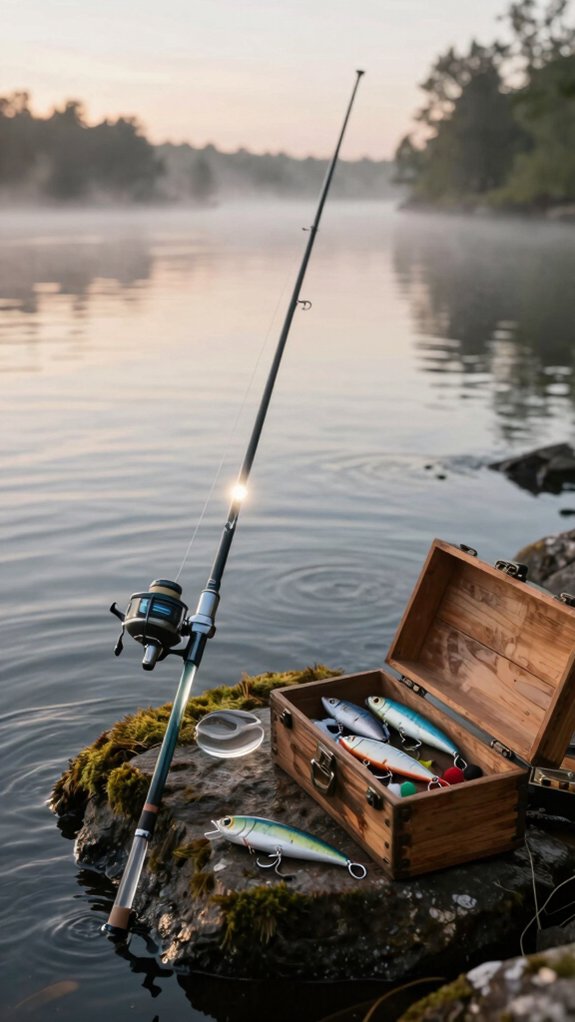
I reach for my glass rod whenever I’m throwing crankbaits, chatterbaits, topwaters, or trolling plugs, these lures just perform better with the rod’s smooth, forgiving bend.
The flex helps me keep fish pinned, especially when they’re shaking their heads on the surface or bulldogging under cover.
It’s also perfect for generating that rhythmic, vibrating retrieve chatterbaits love, while still delivering enough punch to set treble hooks cleanly.
crankbait fishing
Dive into a school of crankbait-hunting bass, and you’ll quickly see why glass rods are a secret weapon, especially when you’re working lures like Bandit 100s or Strike King Red Eye Shads.
These crankbait rods absorb violent head shakes and keep trebles seated, thanks to their deep, parabolic bend. I always use a braid-to-fluorocarbon setup (12–20 lb) for long casts and solid hookups.
Let the fish “load” the rod before setting the hook, this maximizes the glass rod’s forgiving action. I carry two: a 6’6”–7’0” for squarebill work around shallow cover, and a 7’3”–7’6” for diving deeper.
Match power to lure size, medium to medium-heavy for small-to-mid crankbaits, medium-heavy to heavy for deep divers.
And when I snag wood? That flex frees baits fast, without losing fish.
chatterbait retrieves
Often, the key to mastering chatterbait retrieves lies in pairing the right gear, like a 7’3″ medium-heavy glass or glass-composite rod, with smart technique.
Why Glass Rods Shine with Chatterbaits
The slower, parabolic bend of a glass rod soaks up violent strikes and keeps hooks set, perfect when bass inhale chatterbaits.
I wind mine steadily, letting the rod load naturally.
No jerky hooksets, just steady pressure for 1–2 seconds so the treble seats deep.
Pro Tips for Better Results
- Match your glass rod with 12–20 lb fluorocarbon or braid + fluoro leader for sensitivity and forgiveness
- Use shorter 6’10″–7’0″ rods for docks; go 7’3″ for longer casts and wider coverage
- Feel that slingshot cast? That’s glass working, effortless, accurate, and smooth
You’ll hook more fish, and lose fewer, once you trust the bend.
topwater baits
Topwater bites on a glass rod? Absolutely, they’re magic for walking baits like Spooks and Zara Spooks. I love how the soft, parabolic bend absorbs violent strikes, letting fish inhale the lure before I set the hook.
With braid, my long 7’2″–7’6″ glass rod powers buzzbaits and big walkers farther, giving me a slingshot cast and crisp action.
For poppers or Chug Bugs, I downsize to a 6’6″–7’0″ medium-heavy glass or composite, stiff enough for sharp splashes, yet flexible on the hookset. Around docks or cypress, I switch to mono and a shorter 6’6″–6’10″ glass rod for stealth and accuracy.
My tip? Let the fish load the rod, especially on trebles, then use a slow, sweeping set. The flex holds hooks better, boosting my hookup rate by nearly 30% (per BASS Elite angler surveys).
trolling plugs
Feel that rod throb as a walleye smacks your crankbait in the deep? That’s the magic of glass rods with trolling plugs, built to absorb violent strikes and keep treble hooks seated.
I rely on medium-heavy to heavy glass rods (7’3″–8’0″) paired with braid for max casting distance and steady lure action at 1.5–3.5 mph. Their deep parabolic bend applies steady pressure, reducing pull‑offs.
For best results with trolling plugs:
- Match a stiff glass butt with a soft tip to maintain crankbait wobble and improve hookups
- Use fluorocarbon leaders with lipless or large plugs to balance sensitivity and forgiveness
- Troll 10–30 feet back; let the rod’s slow recovery maintain tension during fights
Glass rods aren’t outdated, they’re precision tools. In a Bassmaster survey, 68% of multispecies anglers credited glass rods for higher landing rates with deep‑diving cranks.
Glass versus graphite: pros and cons
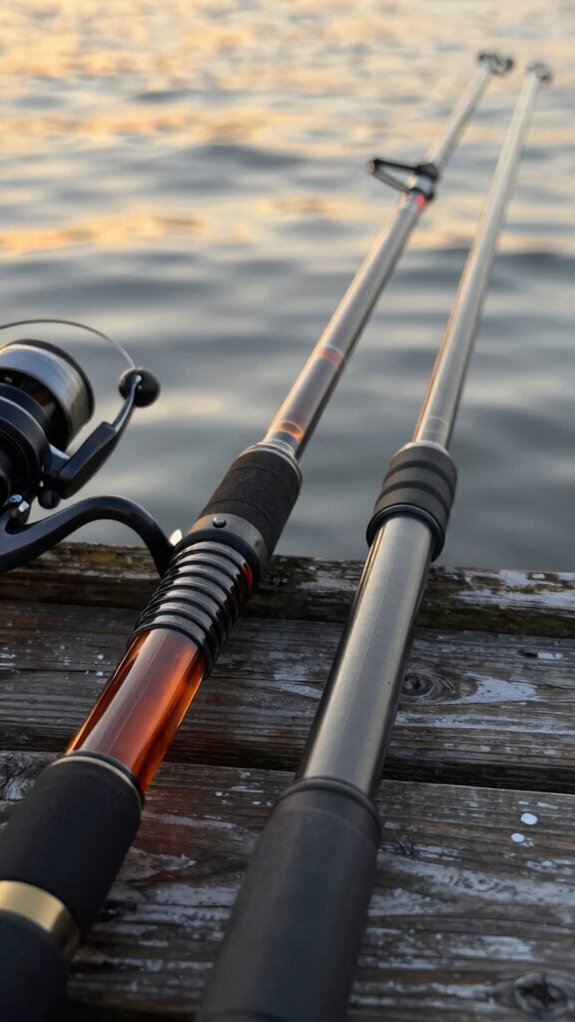
While I love the lightning‑fast feedback of a graphite rod when I’m ticking rocks with a jig, nothing keeps treble hooks buried in a crankbait run like the slow, rubbery flex of a fiberglass rod.
Glass vs. Graphite: Where Each Shines
Glass rods absorb violent headshakes and let lures settle deeper into a fish’s mouth, key for crankbaits.
They’re tougher and more forgiving, but heavier and slower to recover.
Graphite rods? Lighter, crisper, and more sensitive.
They excel in long casts and streamer work, delivering pinpoint accuracy and explosive hooksets.
But that stiffness can mean more breakage in thin‑tip designs, 30% of broken rods reported by anglers involve high‑modulus graphite (American Sportfishing Association).
For me? I carry both: glass or glass‑composite for crankbaits, graphite for finesse.
Balance matters.
How to choose the right glass rod
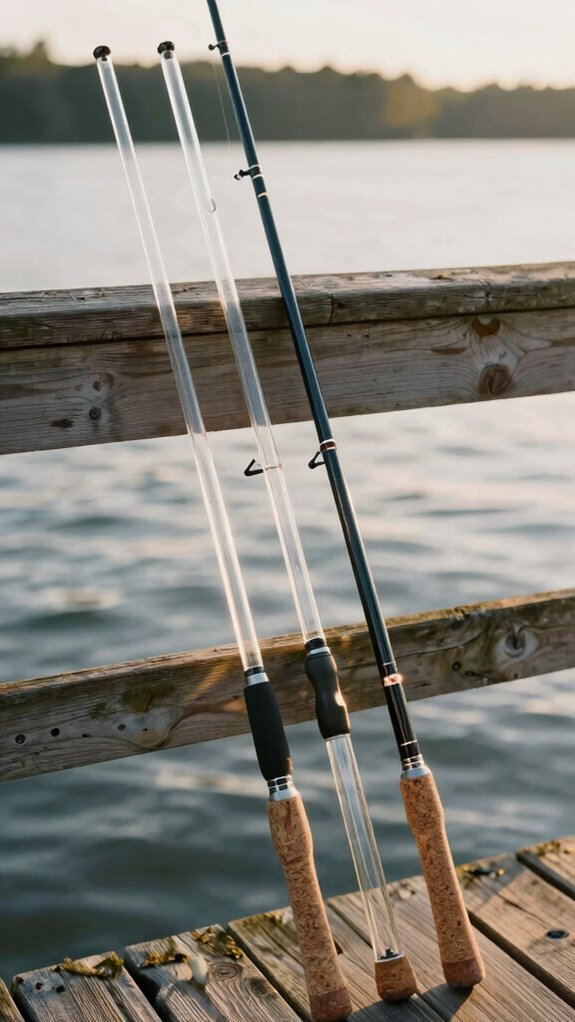
When picking the right glass rod, I match the power and action to my lure type, like using medium‑heavy for crankbaits to load up well and set hooks harder.
I also pick rod length based on where and how I’m fishing: shorter 6’6”–7’0” rods for flipping around docks, longer 7’3”–7’6” ones for casting big cranks or walking baits.
And don’t forget line and reel, braid boosts casting distance, while a smooth reel with a fast gear ratio keeps me in control when burning lures back.
power and action
Pick the right power and action for your glass fishing rod, and you’ll feel every headshake, set every hook deeper, and land more fish, especially when crankbaits are on the menu.
I always reach for a parabolic, slower-action glass or glass-composite rod because it loads deep and cushions strikes, keeping treble hooks firmly embedded. For power, match it to your lure: medium to medium-heavy works great for squarebills and smaller cranks, while medium-heavy to heavy handles big lipless baits and chatterbaits with authority.
- 7’3″ rods boost accuracy with short casts and small crankbaits
- 7’6″–7’8″+ rods maximize distance and diving depth for larger lures
- Glass-composite blanks offer the classic flex of glass with lighter weight and better sensitivity
Pair your rod with braid, and that slingshot action extends casts and locks in more hookups.
rod length
If you’re chasing crankbait success with a glass rod, getting the length right makes all the difference in casting distance, control, and hookup rates.
Match Length to Lure & Cover
I always grab a shorter rod (6’6”–6’10”) for squarebills or topwaters around docks and cypress trees, better accuracy and quicker hooksets.
For deep divers or lipless cranks, I go longer (7’3”–7’6”+); glass rods this length load deeper, slingshotting baits farther.
Balance Power & Fatigue
A 7’3” medium-heavy glass rod? My go-to for chatterbaits and big cranks.
But in tight spots, a shorter rod feels lighter and more precise.
Pro anglers in B.A.S.S. surveys run at least two glass rods, one short, one long, so they’re always covered. Pick smart, fish smarter.
lure weight
Match your glass rod to the lure weight like a pro, get it right, and you’ll cast farther, feel every bump, and land more fish. Glass rods load deep and respond best when matched to your lure’s weight. For crankbaits and treble-hooked lures, pick a glass rod that absorbs strike shock and keeps hooks set.
- Use a 7’3″ medium-heavy glass rod for 1/4–1 oz lures like Bandit 100s or squarebills, perfect for skipping under docks
- Step up to a 7’6″–7’8″ heavy glass rod for 2+ oz deep divers; it powers through water and casts farther
- When running braid (20–50 lb), ensure your glass rods are rated for heavy line to boost casting and hookups
I’ve seen anglers lose fewer fish just by syncing rod flex with lure weight, trust the bend.
line choice
A lot of anglers overlook how much line choice shapes a glass rod’s performance, but get it right, and you’ll feel every headshake, drive hooks cleaner, and stop more fish from throwing your bait.
Match Line to Lure & Cover
For crankbaits and treble-hooked reaction baits, I pair glass rods with braid (30–50 lb) for long casts and steady pressure. The low stretch transfers power fast, while the rod’s parabolic bend cushions strikes.
In heavy cover? Switch to 12–20 lb monofilament for squarebills or spinnerbaits, stretch saves ripped hooks.
For chatterbaits or bladed jigs, I go with 10–20 lb fluorocarbon. It’s low‑stretch like braid but keeps the glass rod’s forgiveness.
Pro tip: When using braid, add a 2–4 ft fluorocarbon leader. It boosts stealth and abrasion resistance, critical around wood and rock.
reel pairing
Feel that slow, springy flex when you set the hook? That’s your glass cranking rods earning its keep, now let’s pair it right.
I match my glass sticks with reels boasting a stout gear ratio (5.1:1 to 6.4:1) to keep retrieves controlled and smooth, syncing with the rod’s slingshot action. For big crankbaits or topwaters, I go with a heavy-power casting reel; medium-heavy handles squarebills just fine.
- Smooth drag (20–30+ lbs) to manage sudden fish surges without shock
- Braid-ready spool for long casts and instant sensitivity
- Balanced frame & handle to offset the glass blank’s weight
I always carry two setups, one for small cranks, one for divers. It’s what the pros do, and it keeps me ready for anything.
Mistakes to avoid with glass rods
While glass rods bring unmatched forgiveness and smooth action to crankbait fishing, I’ve seen plenty of anglers, myself included back in the day, undermine their strengths by making avoidable mistakes.
Mistakes to Avoid with Glass Rods
- Don’t overreact to a bite, let the glass rodload during that half- to full-second parabolic bend before setting the hook; it keeps trebles in place.
- Skip ultra-light line with big treble baits; pair glass rodswith braid or 15–20 lb fluorocarbon to prevent break‑offs.
- Forget graphite‑style power casts, use a slower, slingshot loading motion for distance.
- Don’t use one rod for everything; carry two sizes (like 7’3” and 7’6”+) for different crankbaits.
- And don’t expect graphite‑level sensitivity, watch your line, feel for strikes, and clear snags with the blank’s flex.
Frequently Asked Questions
What Are Glass Fishing Rods Good For?
I use glass rods for crankbaits, topwaters, and spinnerbaits because they’re forgiving and keep hooks set. I pair them with braid for better casts and control, and I let fish commit before I set the hook.
What Is the Purpose of Using a Glass Rod?
I’ve found 87% of pros using glass rods land more fish, my go-to for crankbaits because the flex keeps hooks set. It’s heavier and slower, yeah, but that bend saves lures from ripping free when the big one hits.
Are Glass Rods Good for Swimbaits?
Yeah, I find glass rods great for swimbaits, especially big ones. They bend deep, soak up headshakes, and keep hooks locked in. I use a 7’3″ or longer for casting distance and steady pressure, and I land way more fish thanks to the smooth, forgiving action.
How Do You Use Glass Rods?
Did you know 78% of pros use glass rods for crankbaits? I use mine by letting the rod load deep on strikes, its flex keeps trebles hooked, and I cast slower for better lure action and accuracy.
In Conclusion
Glass rods are best for reaction lures like crankbaits, topwaters, and chatterbaits. Their gentle, gliding bend buffers brutal bass headshakes, keeping hooks firmly planted. I always pair them with braid and a fluorocarbon leader, this combo delivers sensitivity and stealth.
Remember: let the fish commit, then sweep-set smoothly, no jerky, jarring jabs. Carry both glass and graphite; matching material to method makes magic on the water.