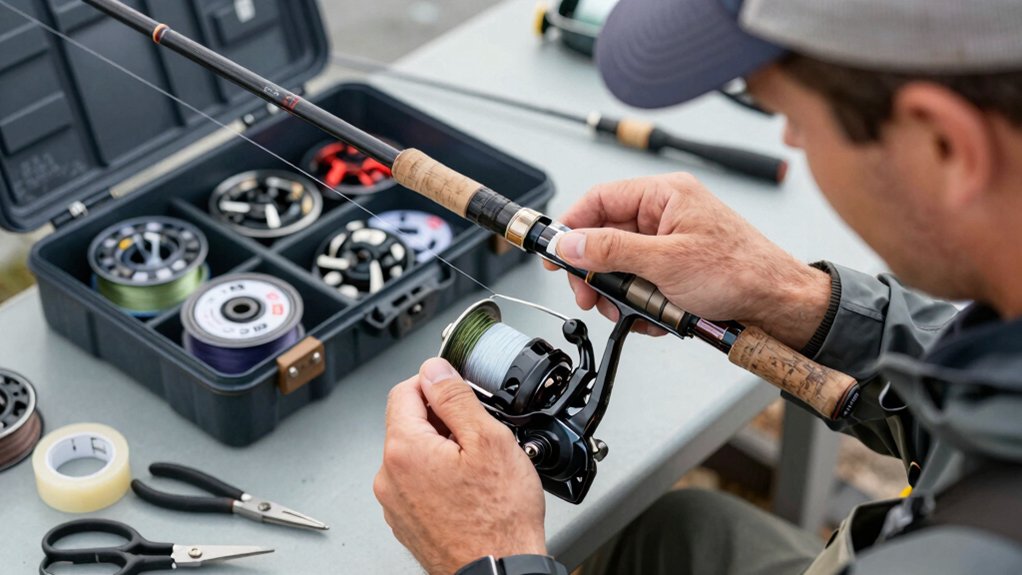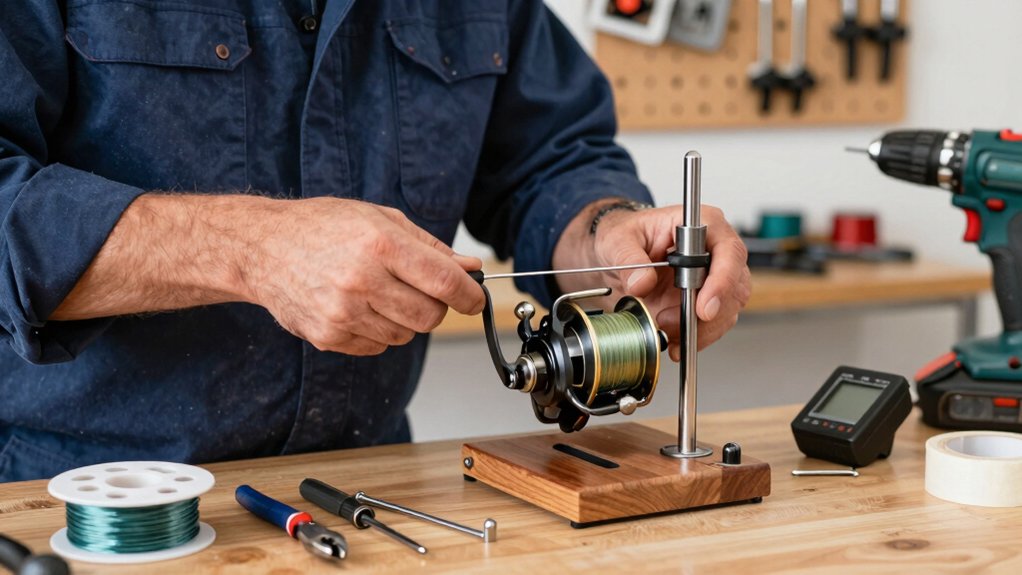
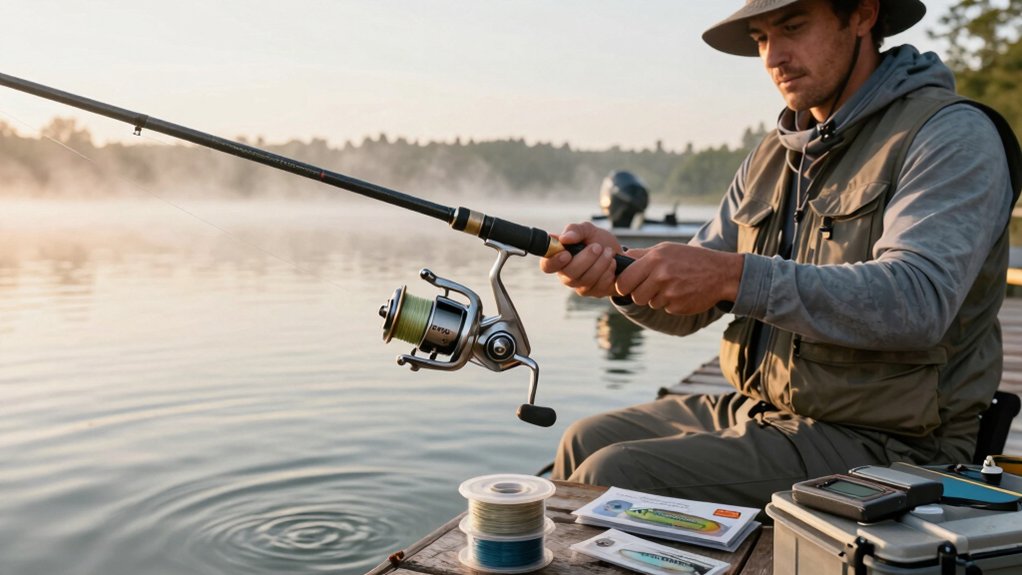

When I grabbed my 4000-sized reel for a weekend striper trip, I knew it was the sweet spot, big enough for 18‑pound fish, light enough to cast all day. That “4000” isn’t random; it’s a size class indicating line capacity, drag power, and gear strength, typically holding 150–200 yards of 10–20 lb braid.
It balances performance for everything from bass to redfish. But here’s what most anglers miss: not all 4000s are created equal, choosing wrong can cost you the fight.
What does 4000 mean on a reel?
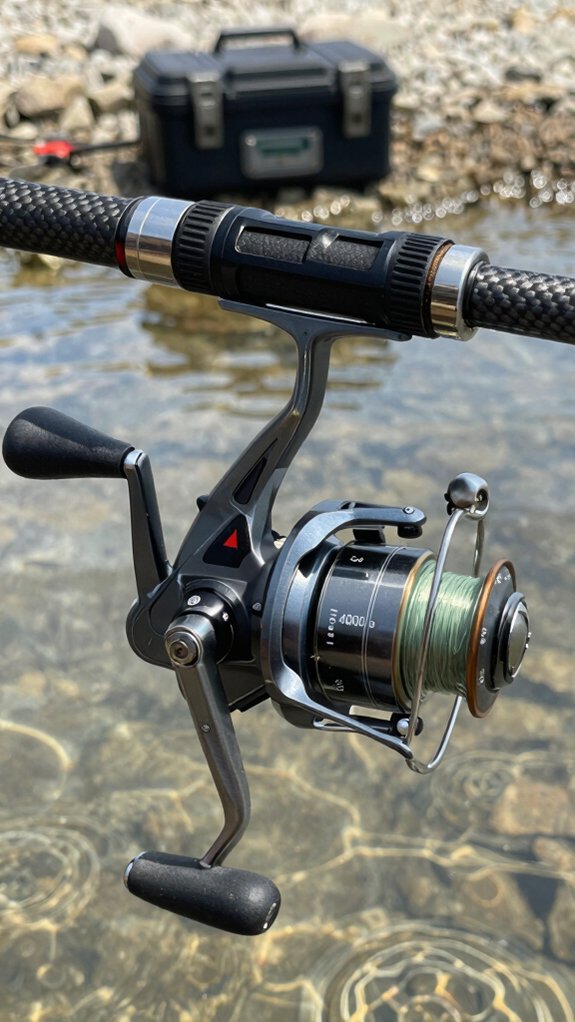
When you see “4000” on a spinning reel, it’s not just a random number, it’s a size class that tells you exactly what kind of fishing power you’re getting.
Think of a 4000 as medium tackle, bigger than 1000–3000 reels, with more line capacity and serious drag strength. It’s perfect when you’re stepping up for harder‑pulling fish.
I use mine for both big bass and saltwater inshore work: snapper, stripers, even small tuna don’t stand a chance.
Just remember:
- Match it with a 6–8 ft rod for best rod compatibility
- Spool with 8–20 lb mono or 20–40 lb braid
- Check the manufacturer’s specs, real spinning reel size performance varies
Balance matters. A well‑matched 4000 setup fights hard and casts true.
What line and drag for 4000 reels?
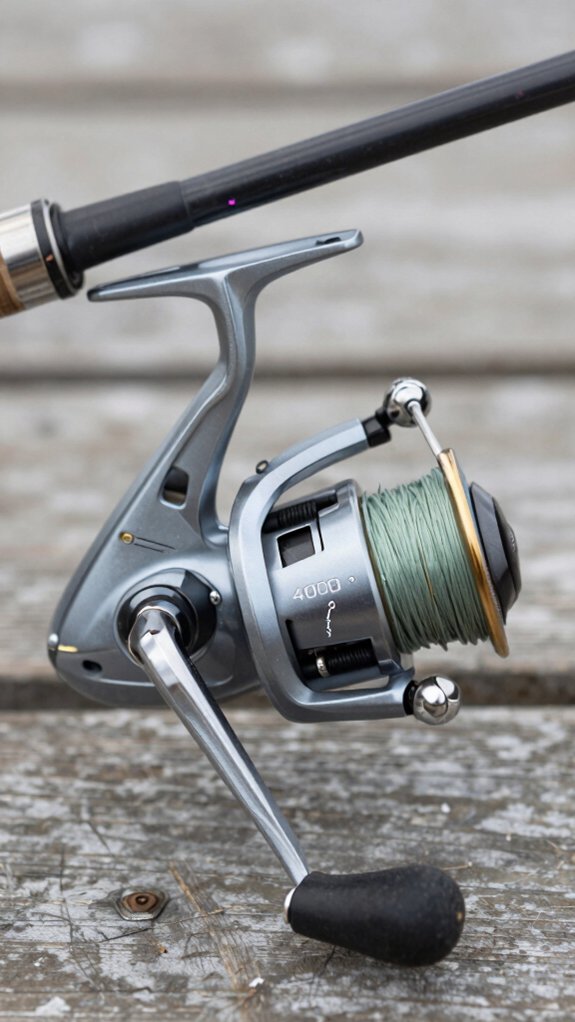
Match your line and drag to your 4000 reel’s sweet spot, and suddenly you’re reeling in hard-fighting fish with confidence, not crossing your fingers.
For a 4000 spinning reel, line capacity matters. I recommend 8–12 lb (3.6–5.4 kg) mono or 15–30 lb braid for surf and inshore versatility.
Braid vs mono? Braid boosts casting distance and strength in a thinner line, ideal when every extra yard counts.
Your drag setting should match line strength. Start at 25–30% of breaking strength: ~2–4 lb for 8–12 lb mono, ~5–9 lb for 20–30 lb braid. Most 4000 reels offer 10–20+ lb max drag, plenty for snapper, bass, or pike.
Choose the recommended test strength for balanced performance, and you’ll land more fish with less stress on your gear.
Is 4000 good for saltwater and freshwater?
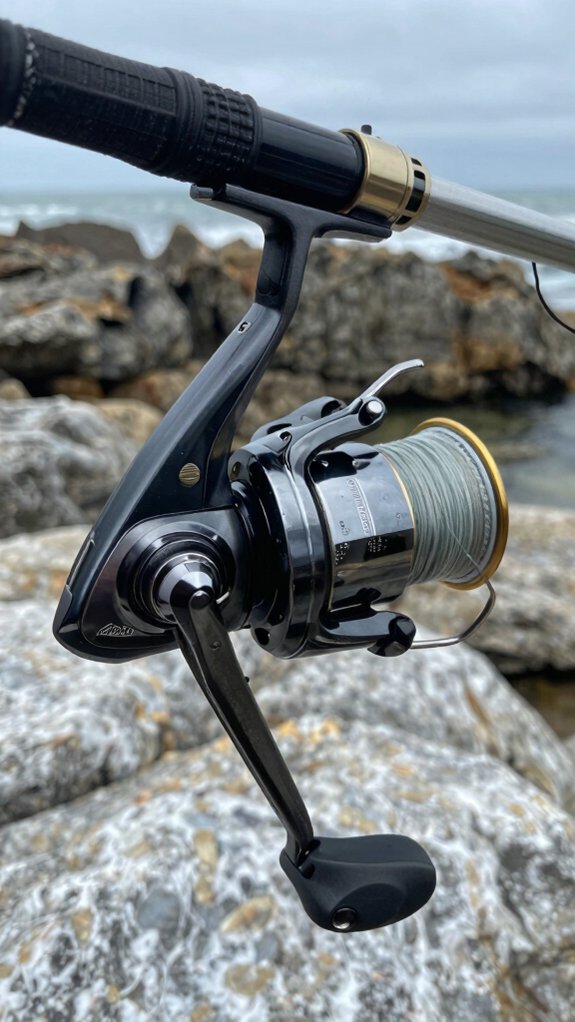
Absolutely, a 4000 spinning reel is a solid choice for both saltwater and freshwater, if you pick the right model and match it to the job.
For saltwater fishing, I rely on my 4000 reel when targeting snapper, sea bass, or striped bass. Just make sure it has sealed bearings and a corrosion-resistant body, saltwater demands that protection.
With a 20–30 lb braid and strong drag rating (8–12 lbs), it handles surf, inshore, and light offshore work like a champ. Pair it with an 8–10 ft surf rod for beach casting or a 6–7.5 ft medium-heavy for boat work.
In freshwater fishing, this reel crushes big bass, pike, and catfish. The extra line capacity and smoother drag outperform smaller 2500–3000 reels. I always check rod pairing for balance, nothing worse than a nose‑heavy setup after hours of casting.
3000 vs 4000 vs 5000 reel sizes?
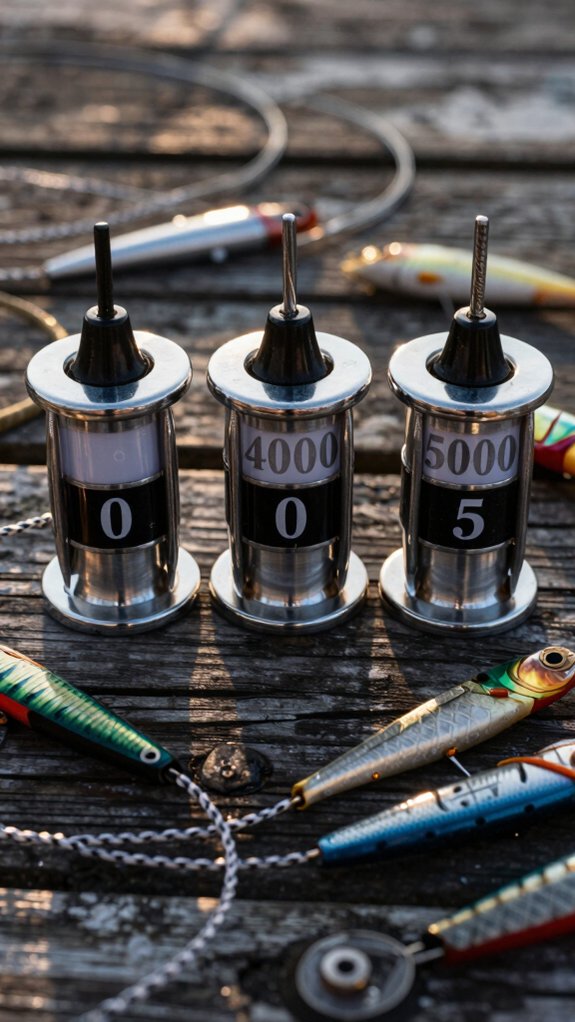
Ever wonder why choosing between a 0, 4000, or 5000 reel makes such a difference in your fishing success?
Let’s break it down:
- A 0-size spinning reel is tiny, great for ultralight finesse, but it lacks line capacity and maximum drag for anything over 5 lbs.
- The 4000 reel size? That’s where power meets versatility. It handles 8–12 lb mono or 15–30 lb braid, making it ideal for medium saltwater species and big freshwater predators.
Pair it with a 7–8 ft rod for balanced casting and control.
– 4000 vs 5000: The 5000 holds more line and offers stronger drag, better for heavy surf or tuna.
But for most anglers, the 4000 hits the sweet spot.
Choose smart, fish harder.
How to choose a 4000 reel size
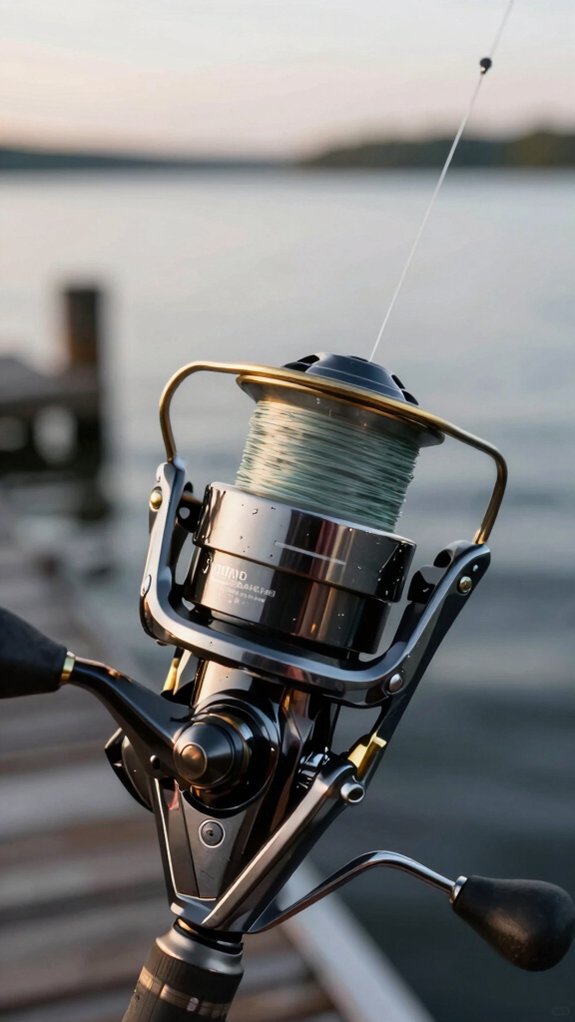
When picking a 4000 reel, I match it with a medium-heavy rod, usually 7 to 8 feet, so the setup feels balanced in my hands and casts smoothly.
I’m targeting species like snapper, larger bass, or small inshore tuna, and this size reel gives me enough drag strength and line capacity without being too bulky.
I spool it with 10–15 lb braid or 8–12 lb mono, which fits most 4000 spools well and handles the fight I expect from 4–10 kg fish.
rod match
Choosing the right rod to pair with your 4000 spinning reel makes all the difference in casting accuracy, comfort, and fish-fighting control.
Get the Rod Match Right
For a balanced setup, match your 4000 spinning reel with a rod length between 6.5 and 10 feet, 6–7 ft for estuary or boat work, 8–10 ft for light surf or rock fishing. Aim for rod power rated 4–10 kg (8–20 lb) to handle the reel’s line capacity and drag. This combo boosts casting distance and keeps the fight manageable.
Always test the balance: hold the rod with the reel mounted. If the tip dips or the handle feels heavy, tweak the rod length or power, or consider a 3500/5000 reel.
A well-matched rod means less fatigue and better control.
target species
A 4000 spinning reel lands right in the sweet spot when you’re after hard‑pulling fish that demand more line and power than small reels can handle.
When choosing a 4000 for your target species, think medium‑to‑large fish like snapper, barramundi, pike, or striped bass. These reels shine in inshore fishing and light offshore work, where line capacity and drag strength matter.
With 20–30 lb braid capacity and smooth drag systems handling 10–30 lb class runs, they’re built for fish that dive hard and run long. Pair it with a 6–8 ft rod rated for your line type, this rod pairing keeps your setup balanced and responsive.
You’re not overkill like a 5000, but you’ve got the edge when the fish fight back. Trust me, on the water, that balance makes all the difference.
line type
Spooling up with the right line type makes or breaks your 4000 reel’s performance, get this wrong, and you’re leaving fish on the table.
With a 4000 spinning reel, line capacity matters more because you’re after stronger species. I prefer spooling with braid, it’s thinner, so you fit more yardage and gain sensitivity.
Braid vs mono? Braid wins for line diameter: 30 lb braid is as slim as 10 lb mono, letting you maximize capacity.
If you go braid, add backing and leader to reach the reel’s mono pound‑test rating (usually 8–12 lb).
- Braid: better capacity, drag performance
- Mono: cheaper, stretch buffers sudden surges
Match line diameter to your target, tight wraps and full spools prevent slippage and boost casting.
Brand size differences: Shimano, Daiwa, Penn
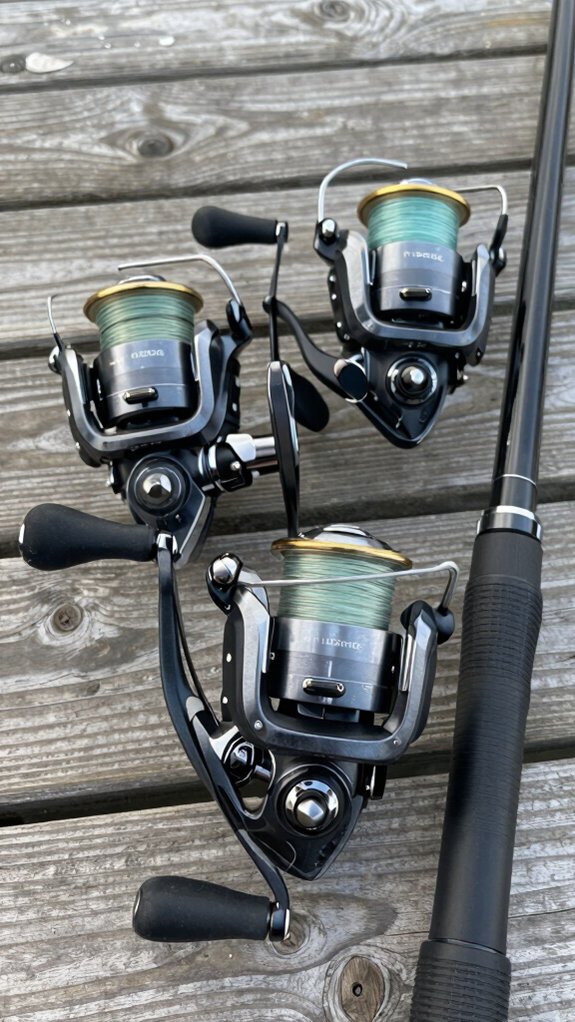
When you’re sizing up a 4000-class spinning reel, don’t assume it’s the same across brands, Shimano, Daiwa, and Penn each shape that number to fit their own design goals.
Spinning reel 4000 sizing differences matter more than you think. A Shimano 4000, like the Stradic, leans light and fast, great for finesse with 8–12 lb mono and smooth drag performance.
Daiwa 4000 models, such as the BG, often have slightly wider spools, boosting line capacity and casting distance. Penn 4000 reels, built for salt, pack tougher gears and a higher maximum drag, some hit 15+ lbs, ideal for surf or hard-pulling fish.
Always check line capacity (yards of 10–20 lb braid) and max drag specs. That “4000” label? It’s a starting point, not a guarantee. Match the reel to your target species and conditions, not just the number.
Mistakes to avoid with 4000 reels
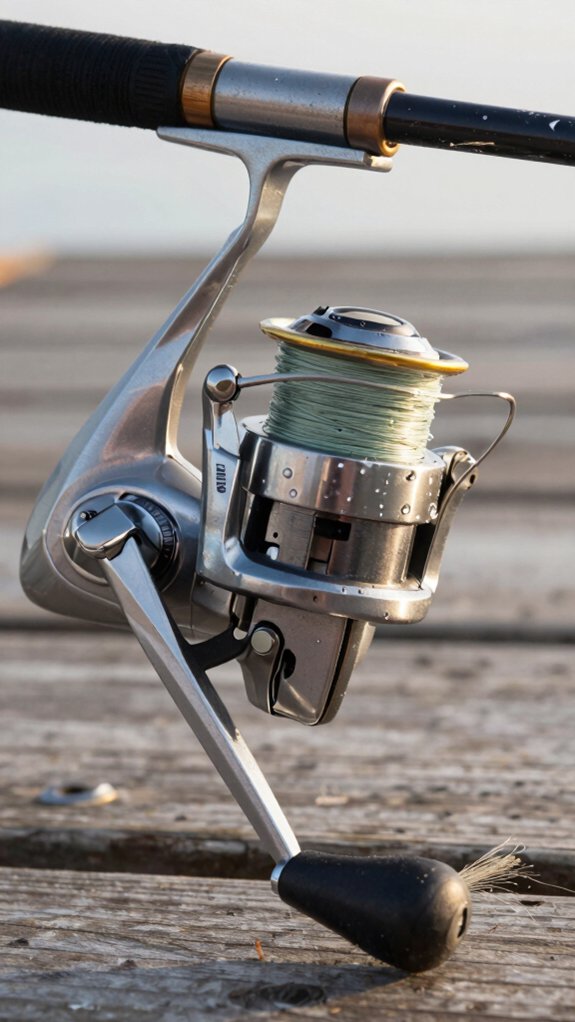
While you might be tempted to treat a 4000 reel as a one-size-fits-all solution, I’ve seen too many anglers sabotage their success by making avoidable mistakes, from poor rod pairings to cutting corners on maintenance.
Smart rod pairing is crucial: match your 4000 spinning reel with a medium-power rod (6–9 ft), not ultralight gear, for balanced casting and control. Respect the line capacity and drag strength, this reel shines with 8–20 lb line, ideal for inshore and light offshore species.
| Factor | Tip |
|---|---|
| Braid vs mono | Use proper diameter braid; thin braid reduces abrasion resistance in saltwater use |
| Drag setting | Don’t exceed recommended drag; risks spool damage |
| Maintenance | Rinse after saltwater use, unsealed reels fail fast without care |
Frequently Asked Questions
What Does 4000 Mean on a Fishing Reel?
It means I use a mid-sized reel perfect for bigger fish. I spool it with 8–12 lb mono or 15–30 lb braid and pair it with a medium‑heavy rod, I’ve landed barra and snapper without a hitch.
What Size Line for 4000 Reels?
I use 10–12 lb mono or 15–20 lb braid on my 4000 reel for most fishing, it’s strong enough for bass or snapper, casts well, and fills the spool without overloading it.
What Does 5000 Mean on a Reel?
My 5000 reel hauled in a 40‑pound king mackerel off the Florida coast, 5000 means bigger spool, more line, and stronger drag, perfect for heavy surf or offshore work where power and capacity save the day.
What Does 3000 or 4000 Mean on a Fishing Reel?
It means I pick a 3000 for lighter work, like bass or walleye, with 8–12 lb line, but I go with a 4000 when I need more line, drag, and power for bigger fish or saltwater action.
In Conclusion
A 4000 reel means you’re using a versatile mid-sized workhorse perfect for both freshwater bass and inshore saltwater redfish. It typically holds about 180 yards of 20 lb braid, enough line to handle a charging striper or a lake‑run brown trout. I set my drag at 30% of line strength, so with 20 lb braid, that’s a smooth 6 lbs of pressure, ideal for bending the rod without snapping the line.