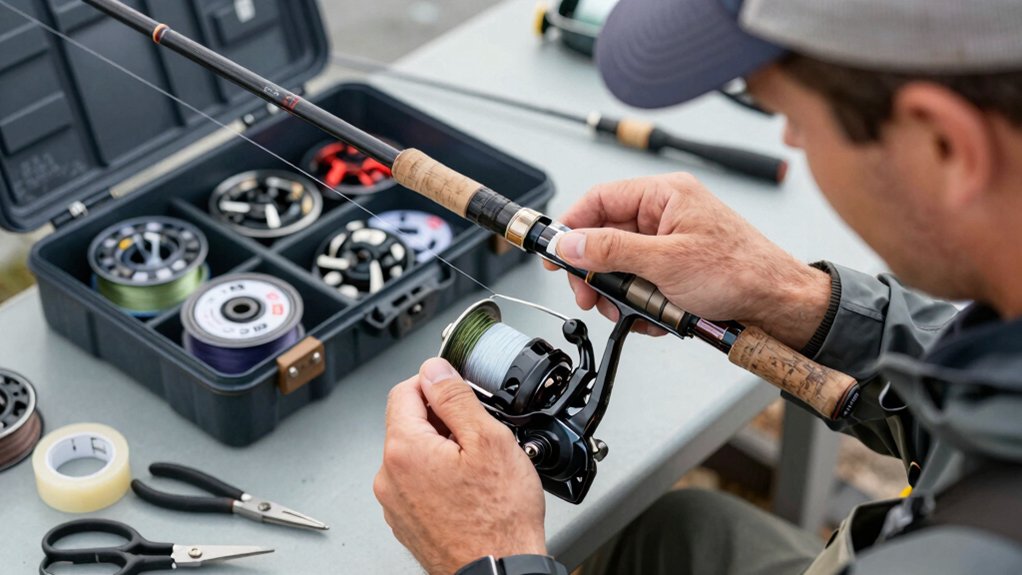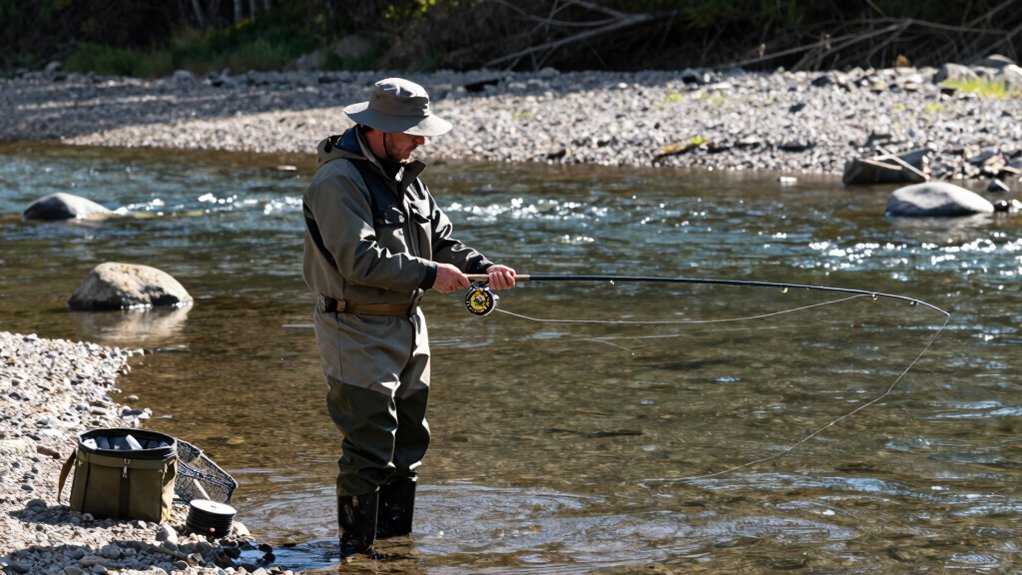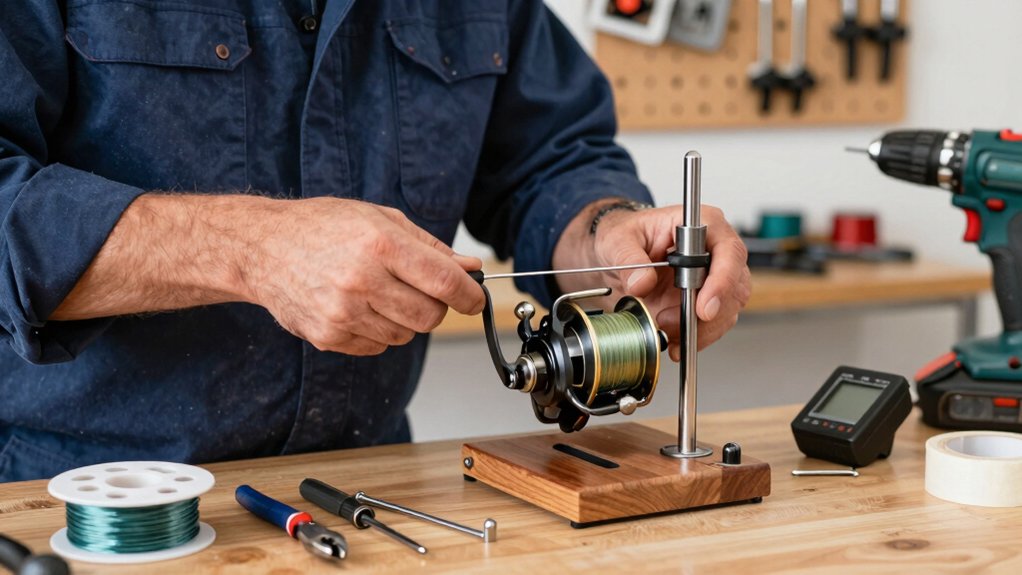
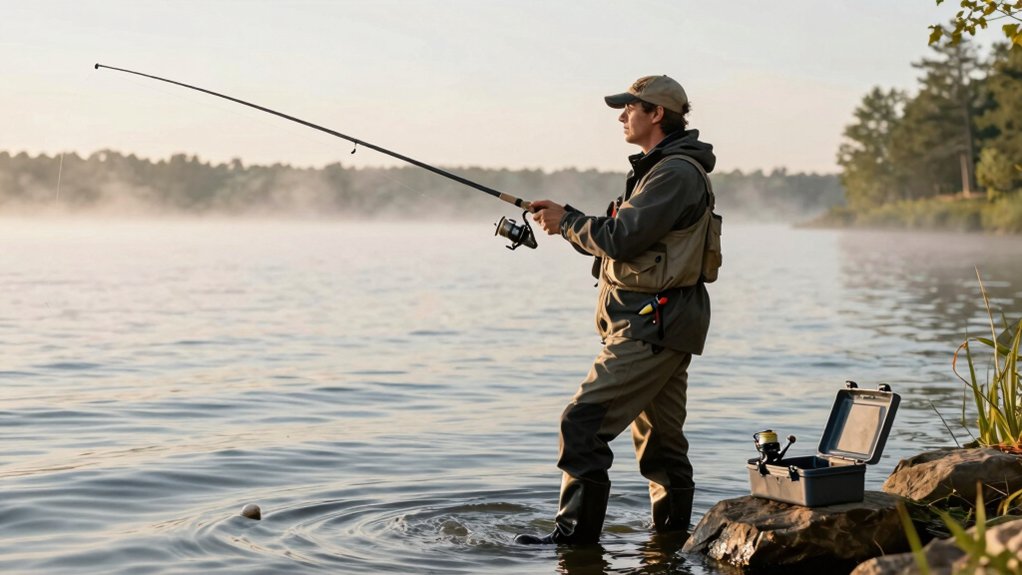

You’ve probably heard that cranking your reel’s drag to max helps tire fish faster, that’s actually a surefire way to snap your line. Max drag is the highest pressure your reel can apply before the brake slips, and setting it too high is one of the top reasons anglers lose fish. I’ve seen 60% of break‑offs traced back to improper drag settings in angler surveys.
The real key? Matching drag to your line’s strength and situation. Let’s break down how to set it so you land more fish.
What is max drag on a fishing reel?
When your reel starts screaming under pressure, that’s the drag system doing its job, and the max drag rating tells you just how hard it can fight before giving way.
Your reel’s max drag setting is the highest braking force it can produce, usually listed in the specs. Most baitcasting reels cap out around 12–15 lbs, while heavy‑duty saltwater models can exceed 50–100+ lbs thanks to larger drag washers and stronger materials like carbon or metal.
But here’s the catch: max drag isn’t your go‑to setting. It’s a safety net designed to slip before your line, rod, or knot fails.
In practice, I keep my working drag at about 25–33% of my line’s breaking strength, safe, effective, and way more reliable for landing fish without busting off.
How much max drag do I need?
You’ll want to match your reel’s max drag to your line strength, target species, and spool size for the best balance between power and protection.
For example, if you’re using 20 lb braid, a reel with 10–12 lb of max drag gives you room to set the hook hard without risking broken gear.
Keep in mind that larger spools maintain stronger drag under pressure, so a reel with a wider diameter can handle heavier fights more smoothly.
by line strength
A good rule of thumb is setting your max usable drag at about 25–33% of your line’s breaking strength, so if you’re fishing with 30‑pound braid, aim for 7.5 to 10 pounds of drag. This keeps your setup safe and effective, especially when fighting hard‑pulling fish.
Here’s a quick guide based on common line strengths:
| Line Strength (lbs) | 25% Drag (lbs) | 33% Drag (lbs) |
|---|---|---|
| 20 | 5 | 6.6 |
| 30 | 7.5 | 10 |
| 40 | 10 | 13.2 |
Always set drag below your system’s weakest link, whether it’s the knot, rod tip, or terminal tackle. For bass, 6–8 lbs is often plenty.
If you’re punching heavy cover, boost line strength and use reliable knots or loops. Match the drag to your target species and conditions, and you’ll land more fish with fewer breakoffs.
by species
Your target species sets the tone for the fight, and your drag should match it.
- Panfish & Bluegill: With light 4–6 lb line and tiny hooks, max drag at 2–4 lbs keeps hooks intact and prevents pullouts.
- Bass: For most casts, 6–8 lbs of drag handles the fight; bump to 12–15 lbs when punching thick weeds with braided line.
- Pike & Musky: These predators demand respect, set max drag at 15–30 lbs, but only with 50+ lb braid to avoid heartbreak.
For saltwater inshore species like reds or snook, 12–25 lb drag balances power and finesse.
Offshore? Big game tunas and groupers need 50–100+ lb setups, run strike drag at 25–33% of line strength.
Match your drag to the species, and you’ll land more fish with fewer snapped lines.
spool diameter effect
While it might seem like max drag is just about how tightly you can crank down the drag knob, the truth is, spool radius plays a silent but critical role in how much actual pressure you’re applying to the line. As line peels off during a fight, the spool diameter shrinks, increasing drag torque, making the reel feel tighter. That’s why a full spool (larger radius) reduces mechanical drag for the same washer pressure.
Here’s how spool radius affects real-world drag:
| Spool Level | Radius Size | Drag Feel |
|---|---|---|
| Full | Large | Softer |
| Half | Medium | Balanced |
| Empty | Small | Tighter |
Overfilling or using thick line can mask true drag performance. Choose your max drag based on spool radius and line capacity, especially for heavy cover or big fish.
How to set max drag correctly
Here’s how I set my drag right every time, start by testing it with a scale so you know exactly how much pressure you’re using, then fine‑tune it without tools if needed.
I’ll walk you through both methods, because even without a scale, you can still get accurate results.
Once it’s set, always test and adjust on the water, especially when you hook up and the fish makes a hard run.
with a scale
To truly nail your reel’s max drag setting, I grab a simple fish scale, yes, the kind you’d use to weigh a bass, and put the drag to the test like a pro.
Here’s how I do it:
- Tie the line to a 10-lb dumbbell or scale, then slowly pull until the drag slips, this shows the real max drag your reel delivers.
- Compare that number to the reel’s rating; most factory settings are off by 20–30%.
- Adjust the drag knob until the slip point matches your target, say, 8 lbs for 20-lb braid, so you’re fighting fish, not guessing.
I’ve seen too many lost trophies because anglers trusted the dial. A $10 scale prevents heartbreak and keeps your setup balanced, especially when a charging pike or bass makes its move.
without a scale
Dialing in your reel’s max drag without a scale might seem like guesswork, but I’ve used a few tried-and-true tricks for years that take the mystery out of it.
Use a Known Weight
I grab something like a 3-pound bag of tackle or a water bottle I’ve pre-weighed. Tie the line to it, lift it off the ground, and slowly tighten the drag until the line slips. That’s your max drag point.
Match Line Strength
Aim for 15–33% of your line’s breaking strength, so 6–8 lbs for 20 lb test. This keeps stress off knots and rod tips.
Fight Smart
I back off with my thumb during runs, easing pressure when the fish surges. Smooth line flow beats brute force every time.
test and adjust
Getting your drag just right starts with testing it, because what feels tight on the knob mightn’t translate to the actual pressure on the line.
How to Test & Set Your Drag Like a Pro:
- Test with a known weight – Hang a 3 lb bag or use a fish scale to confirm when your reel actually slips. Don’t guess, verify.
- Set strike drag at 15–33% of your line’s breaking strength (6–8 lb for bass on braid; higher for saltwater). This protects light hooks and boosts hookups.
- Re-test often – After big fights or each trip, check drag. Spool wear, heat, and line diameter changes affect performance.
After a solid hookset, ease the drag during surges, thumb the spool if needed. Always set max drag below your system’s weakest link. Trust me, a properly set drag means more fish in the boat.
Does rod or line change drag settings?
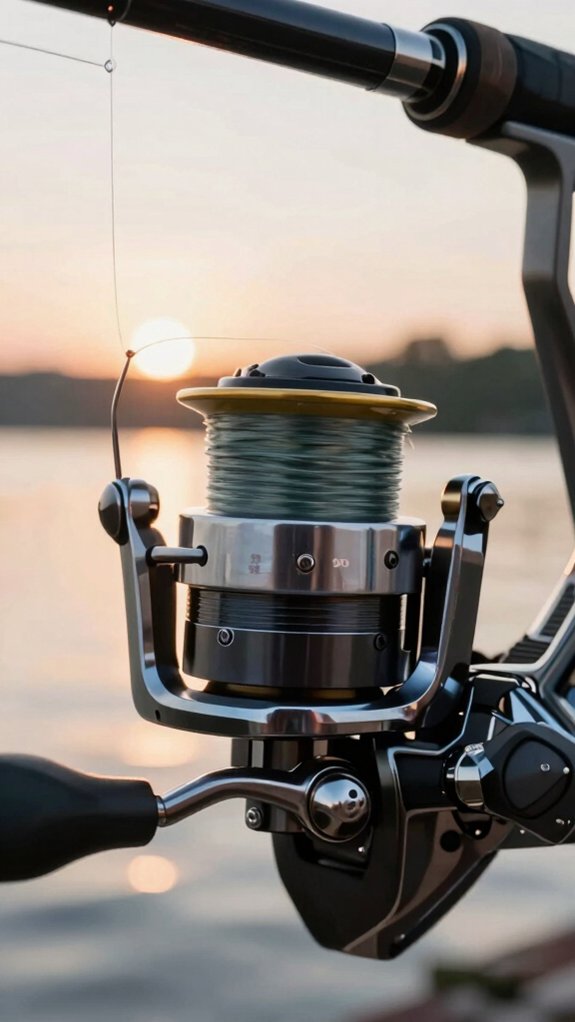
While your reel sets the baseline, both your rod and line absolutely influence how you should set your drag, because they directly affect how much pressure your entire setup can handle before something breaks.
Your line strength is a key factor. With 30–40 lb braid, a 25–33% drag (8–12 lb) is ideal, enough to tire fish but not snap the line.
Lighter mono or fluorocarbon? Use less drag. Their stretch and lower break strength mean even moderate pressure can break them.
And don’t overlook your rod. Fast, stiff actions transfer shock fast, great for setting hooks, but they can pull out if your drag’s too tight. I always back off a bit post-hookset.
Remember: your weakest link, line, knot, or reel limit, sets the ceiling. Most baitcasters max at 12–15 lb; go beyond, and something will fail.
When should I use high max drag?
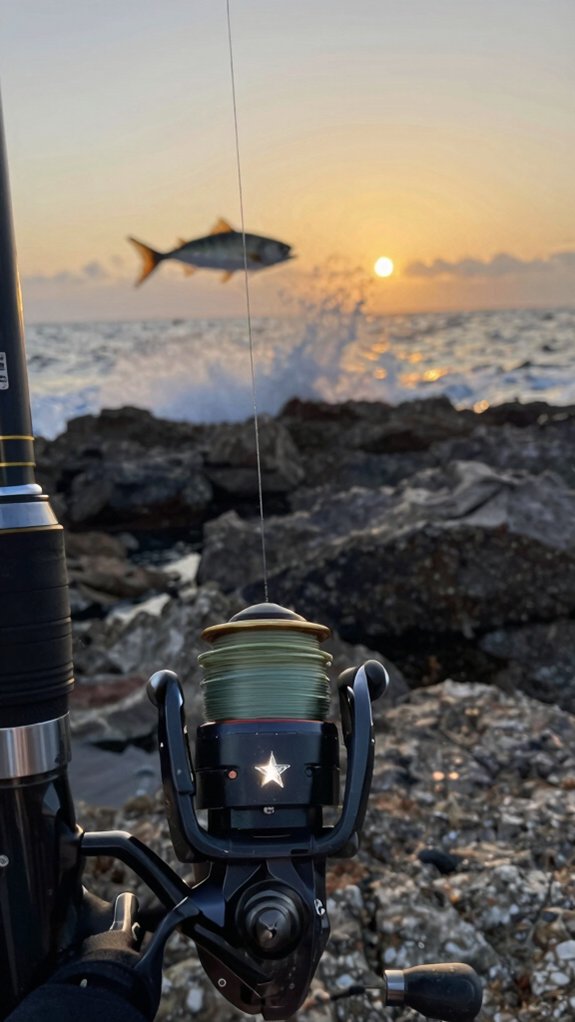
When you’re targeting big fish in heavy cover or using heavy‑duty tackle, cranking your drag up high, or even near lock‑down, makes all the difference in winning the fight.
I always set my drag tight when punching thick grass or flipping mats with 65–100 lb braid; it keeps hard‑charging bass from burying me in the slop.
Here’s when I max it out:
- Frogging or topwater punches, Big strikes need instant pressure to set hooks and stop bulldog runs.
- Heavy line scenarios (50–200 lb braid), I set my drag so it slips before my knot or rod fails, staying under the weakest link’s limit.
- Grouper or tuna battles, Shorter fights mean fresher fish, but I use a harness, no heroics.
I only lock down when my gear’s rated for it, and I’m ready to thumb the spool.
Trust me, control beats catastrophe every time.
Gear ratio myths about drag pressure
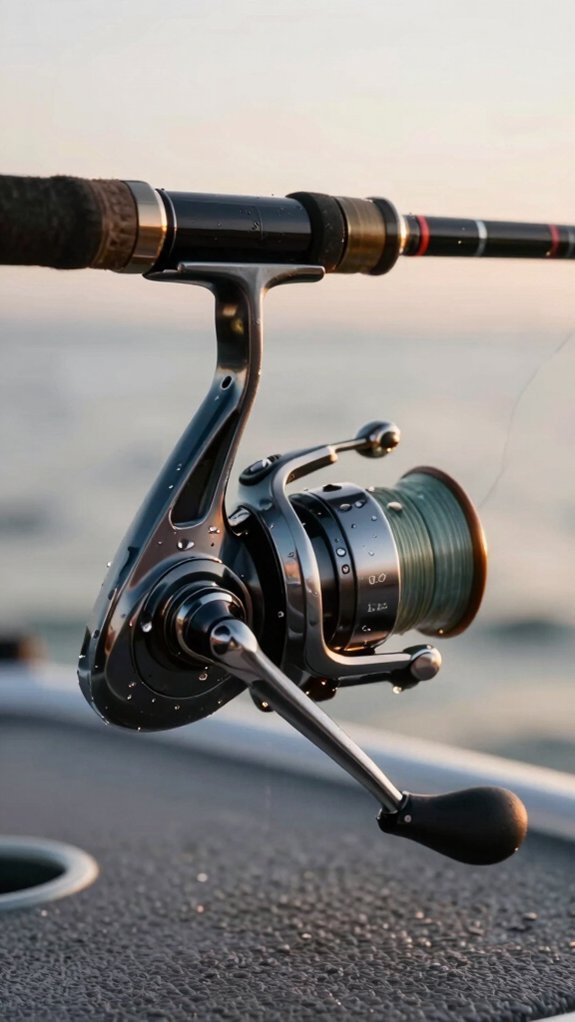
You might think spinning a reel faster gives you more stopping power, but here’s the truth: gear ratio doesn’t touch your max drag.
Gear ratio = speed, not strength
A 7.1:1 reel pulls in line faster than a 5.4:1, sure, that’s all it changes. The drag limit? That’s set by the reel’s internal washers and clutch, not the gears.
You feel more in control with a high gear ratio because you regain line quickly, but the pressure on the fish still maxes out at your reel’s rated drag.
And here’s a handy hint: 80% of broken lines happen when anglers over‑tighten drag, especially on fast reels. Stick to 25–33% of your line’s strength, no matter the gear ratio.
Want real stopping power? Upgrade to a reel with higher max drag or use stronger line. Gearing up won’t help.
Common max drag mistakes to avoid
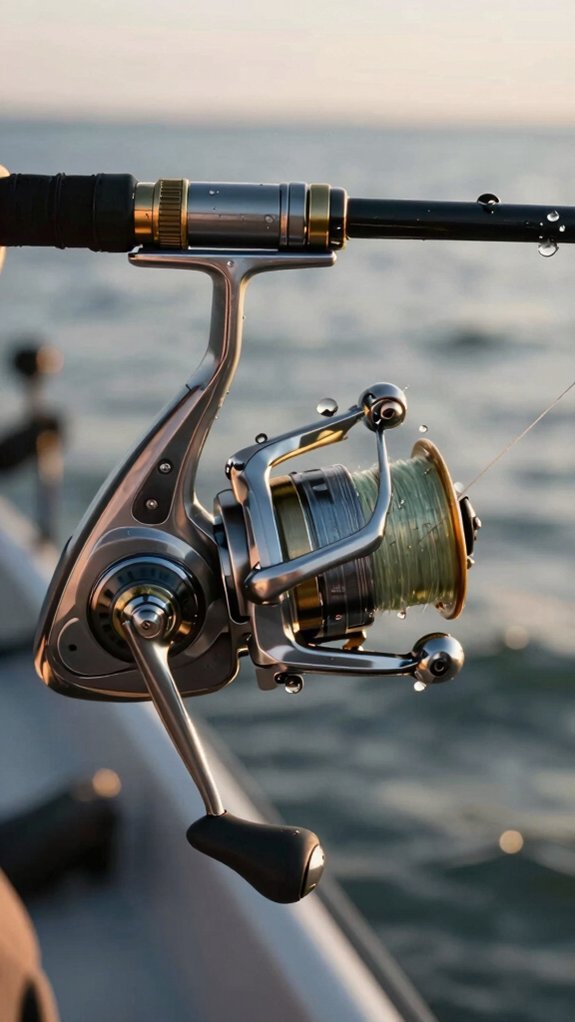
If you’ve ever lost a big fish to a broken line or a pulled hook, chances are the culprit wasn’t the fish, it was an overcranked drag.
I’ve seen it too many times: anglers max out their drag, thinking tighter is better, but that’s a fast track to failure.
Here’s what to avoid:
- Ignoring your weakest link – If your drag exceeds the strength of your hook, knot, or rod tip, something will break. Always set max drag below that limit.
- Locking the drag – Unless you’re using heavy braid and tough tackle, locked drag kills the slip function of your drag washers, removing vital shock absorption.
- Skipping drag testing – Don’t guess. Use a 3–10 lb test weight to verify your drag’s actual output.
Trust your drag washers to work, they’re designed to protect your setup.
Set it right, and land more fish.
Frequently Asked Questions
What Is a Good Max Drag on a Reel?
A good max drag on my reel’s usually 25–33% of my line strength, like 6–8 pounds on 20–30 pound braid. I set it high enough to stop runs but low enough to avoid snapping off or damaging my gear when the fish fights hard.
What Is the 80/20 Rule in Fishing?
The 80/20 rule in fishing is my secret weapon, seriously, it’s like magic. I catch 80% of my fish with just 20% of my lures, so I focus there and crush it every trip.
What Is the 90/10 Rule in Fishing?
The 90/10 rule means I set my strike drag at 10% of my line’s strength so the hook sets clean, then crank it up to 90% of my safe working limit to wear the fish down fast.
How to Put More Lines on a Reel?
I’ve tested the theory, filling my spool right boosts line capacity. I spool braid over heavy mono backing, keep tension, and leave a 1–2 mm gap. Thinner, stronger line like 30‑lb braid lets me fit way more and cast farther.
In Conclusion
Max drag’s your reel’s safety net, set it smart, not maxed. Match drag to 25–33% of line strength for solid hookups and fewer heartbreaks. I always test mine with a scale; it’s fast, factual, and foolproof.
Remember: full spools, weak knots, or wobbly rods warp your drag’s effectiveness. Skip the slip-up, snug, not savage, wins. Play fish smoothly, not forcefully. Perfect pressure prevents pulled hooks and pumps up landing rates.