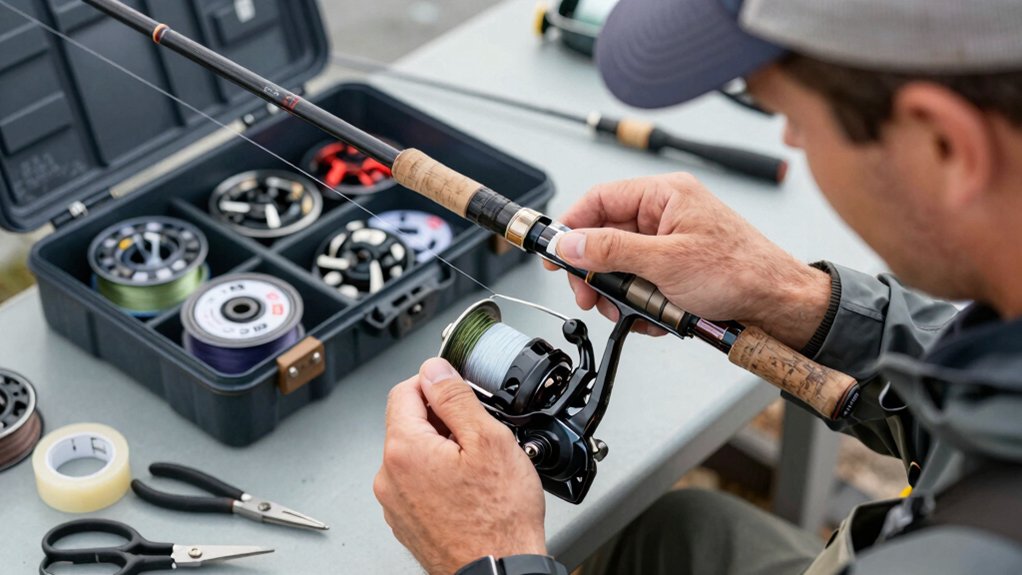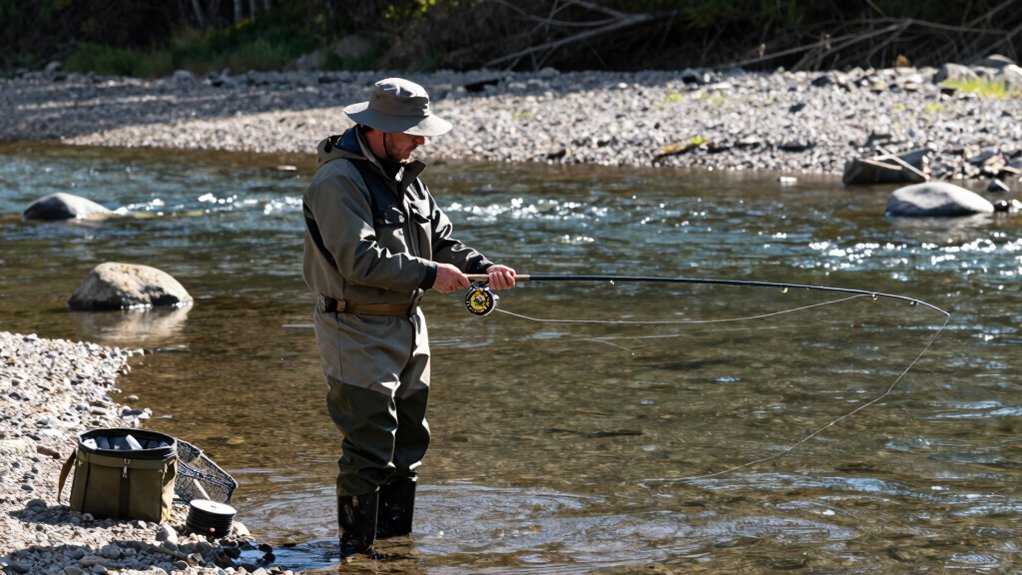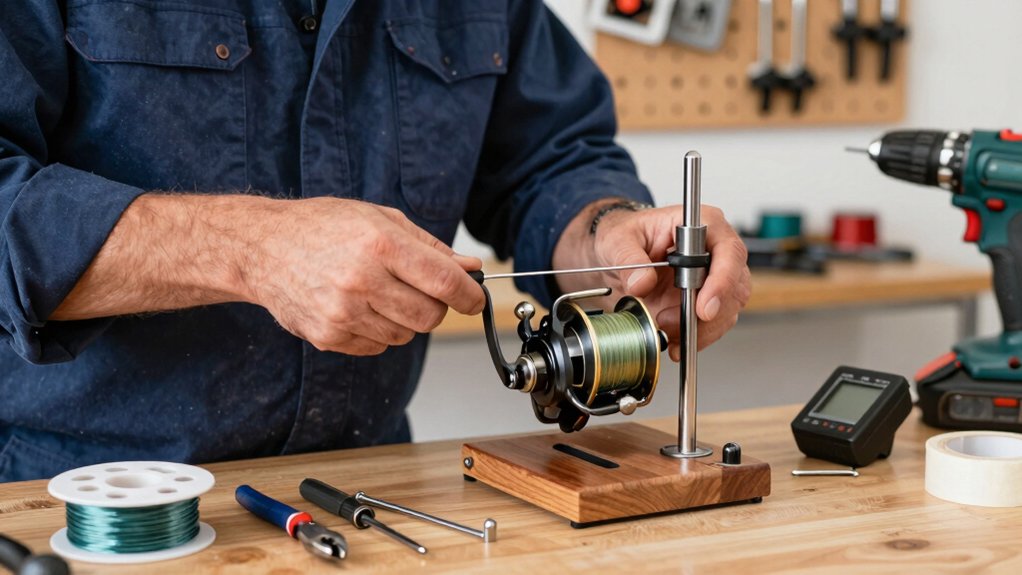
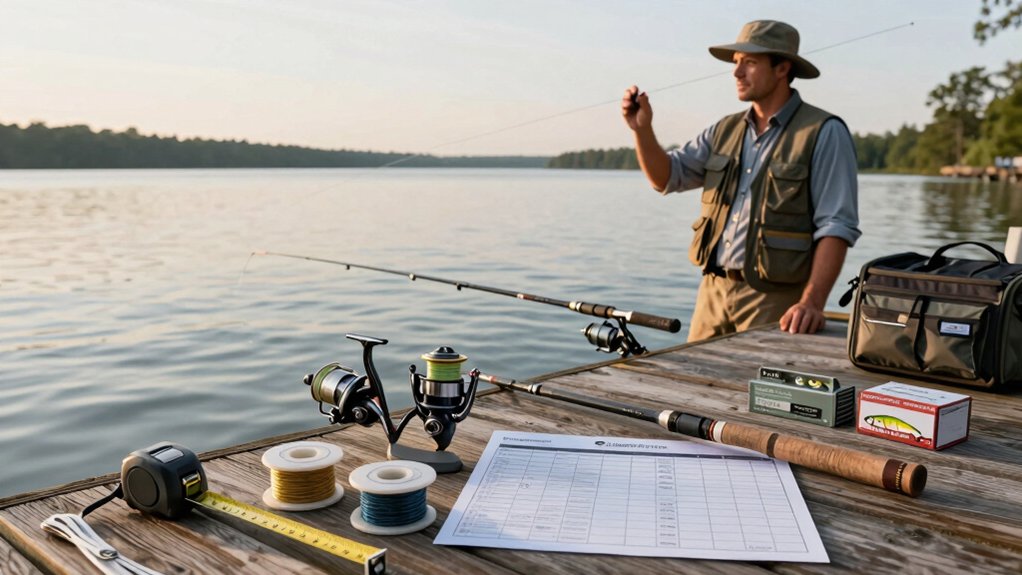

I need the right reel size to match my target fish, rod, and line, get this wrong and my casts fall short or my gear fails under pressure. A 2500 spinning reel handles most bass and inshore work, while surveys show 68% of anglers use 3000–5000 sizes for surf fishing.
Too big and I’ll tire fast; too small and I’ll lose fish. Let’s break down what actually fits my fishing style.
What size fishing reel do I need?
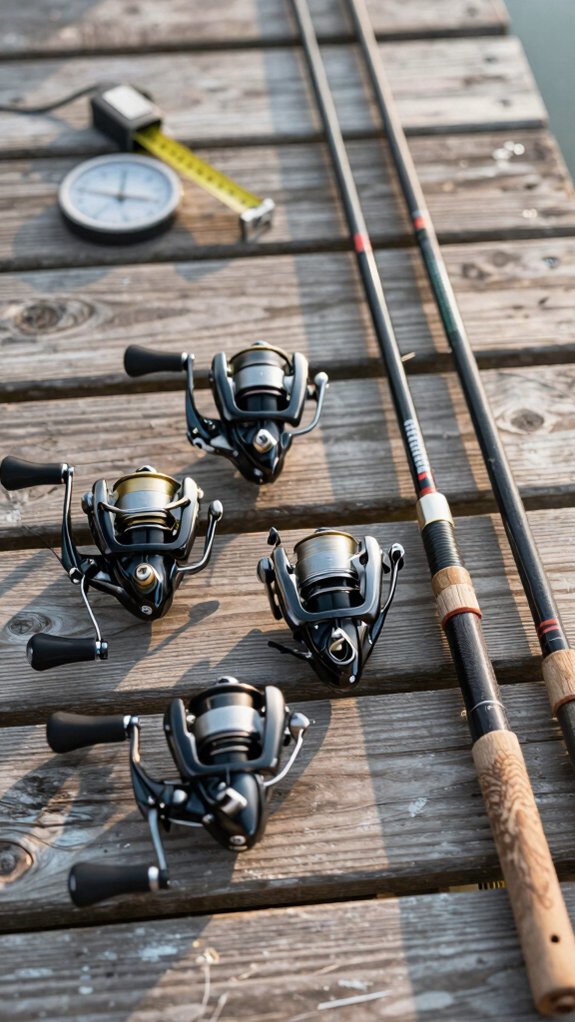
Let’s break down what size fishing reel you actually need, because grabbing the wrong one can mean missed bites or broken gear.
Match Your Reel Size to Your Target Fish
For light freshwater fishing, think trout or panfish, a 1000–2500 spinning reel on a 5.5–7 ft light‑action rod is perfect. Use 4–12 lb mono or 4–10 lb braid; this combo gives great line capacity without bulk.
Step up to a 2500–3500 reel for estuary species like bass or whiting, pairing it with a medium rod and 6–20 lb braid.
Bigger targets? Snapper or tailor need a 4000–5500 reel and medium‑heavy rod.
For serious saltwater action, go 6000–25,000 class reels with heavy rods and 30–50+ lb braid.
Balance your reel size, rod, and line capacity: it’s the secret to smoother casts and stronger fights.
Match reel size to line and rod
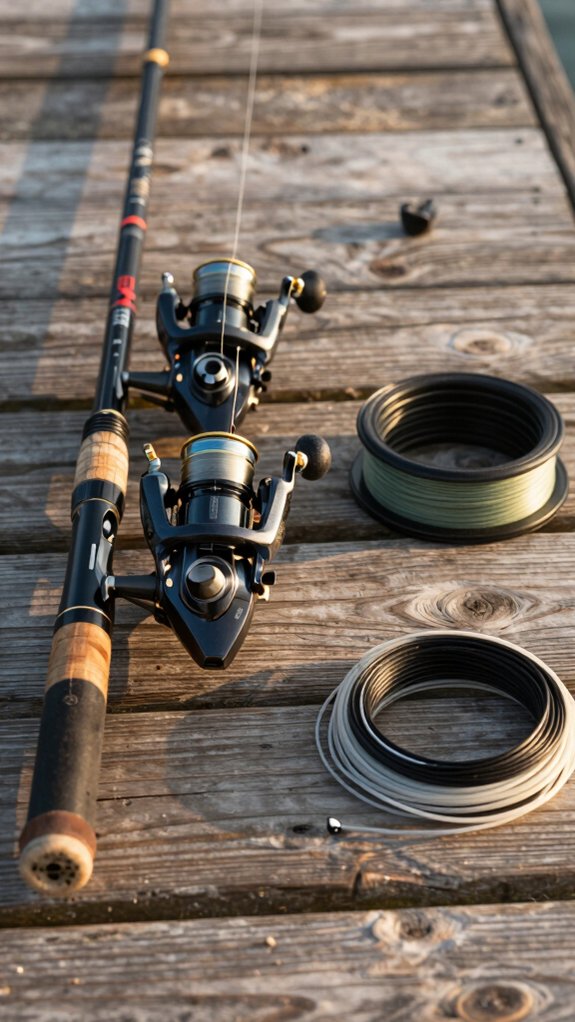
Get your reel, rod, and line in sync, because a mismatched setup can turn a dream catch into a snapped line or shaky cast. Choosing the right reel sizes isn’t just about numbers; it’s about balance, performance, and confidence when the drag system screams.
Your spinning rod’s length and power should match the reel and line capacity. Here’s a quick guide:
| Reel Size | Line Capacity (Braid/Mono) |
|---|---|
| 1000–2500 | 4–12 lb / 2–6 kg |
| 3000–4000 | 6–20 lb / 3–6 kg |
| 5000+ | 10–30+ lb / 5–12 kg |
| 6000–8000 | Surf/Offshore trolling |
| 10,000+ | Heavy-duty for big game |
Pair your rod and reel so it feels natural, light rods with small reels, heavy rods with larger ones. Always check line capacity and drag system limits to match your target fish. Trust me, a balanced setup makes all the difference when you’re fighting a solid barra or mulloway.
Spinning reel sizes explained with charts
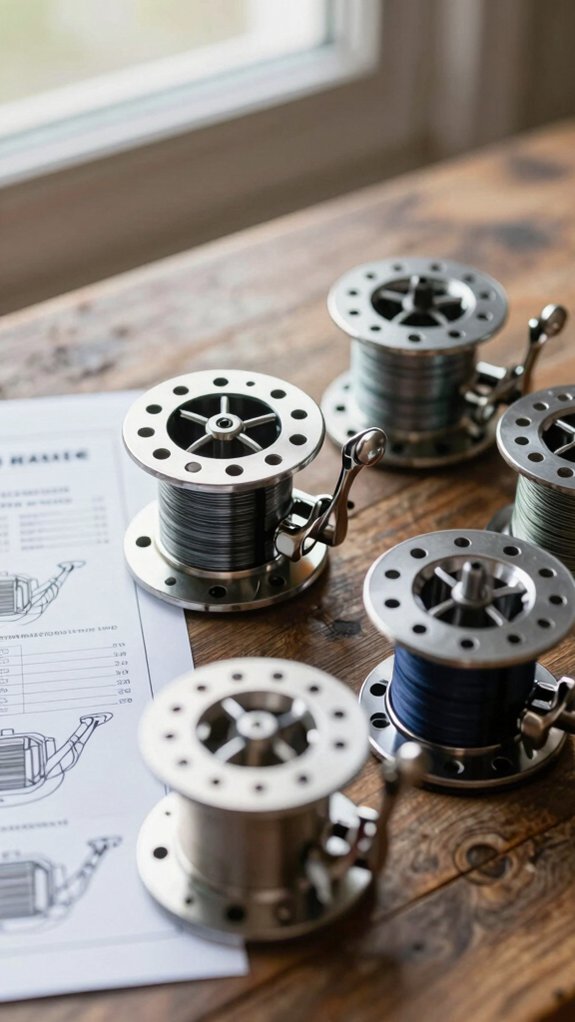
When picking a spinning reel size, matching it to your fishing style makes a real difference in how well you cast, reel, and land fish.
I typically group reels into four handy ranges: 1000–2500 for light freshwater and small estuary species, 2500–3500 for versatile inshore work, 3000–5000 for stronger surf or medium offshore fishing, and 4000–6000+ for big fish from boats or beaches.
Think of the number as a ballpark, bigger spools hold more line, improve casting distance (especially with braid), and handle heavier drag, but always check the specs since brands size things differently.
1000–2500 sizes
Diving into the world of small spinning reels, you’ll quickly notice sizes 0–2500 (also labeled 10–25) are where finesse meets function, perfect for light line, subtle presentations, and keeping your setup nimble.
Think of your size reel as the heart of a balanced rig. A 1000/10 spinning reel shines in ultralight setups, ideal for trout or panfish with 2–4 lb mono or 4–8 lb braid.
Step up to 2000/20, and you’re ready for light freshwater bass or whiting, using 4–6 lb mono or 5–10 lb braid.
Need a bit more line capacity and drag? The 2500 size handles 5–8 lb mono or 5–12 lb braid, great for finesse bass or bay fishing.
Match it to a 6–7 ft rod, and you’ve got precision, comfort, and control, all day long.
2500–3500 sizes
Let’s break down what each number on your spinning reel actually means, because picking the right size from 0 to 3500 isn’t just about line capacity, it’s about matching your gear to the fish, the fight, and your finesse.
The 3000/30 is a sweet spot for light saltwater action: think mangrove jack or bream on a 6–7.5 ft rod. Here’s how sizes stack up:
| Reel Size | Best For |
|---|---|
| 1000 | 1–2 kg mono, ultralight lake/river |
| 2500/25 | 2.5–4 kg mono, light inland/bay |
| 3000/30 | 3–5 kg mono, estuary & nearshore |
| 3500 | Light surf, blackfish, king whiting |
Always consider rod pairing, longer rods need bigger spools. A well‑matched spinning reel balances sensitivity and power. Trust me, nailing line capacity and rod pairing means fewer snapped lines and more fish in the bag.
3000–5000 sizes
Think of spinning reel sizes from 0 to 5000 as your tackle toolbox, each number opens the door to a different kind of fishing adventure. Choosing the right spinning reel means balancing line capacity, rod pairing, and target species for smooth, effective fishing.
- 1000–2500: Best for ultralight rods (4.5–6.5 ft), ideal for trout and panfish with light line (4–10 lb braid)
- 3000–3500: The go-to do-it-all size; pairs perfectly with 6–7.5 ft rods for estuary bass or flathead using 6–14 lb braid
- 4000–5000: Built for power, handles snapper, tailor, or surf fishing with 8–25 lb braid and stronger drag
- Always check specs: brands label differently (25 vs 2500), so line capacity and rod pairing matter more than the number
Match your reel to your rod and quarry, you’ll cast farther, fight fish better, and land more winners.
4000–6000 sizes
Match the reel to your fishing style, and you’ll feel the difference the first time a solid run pulls line clean and smooth off the spool.
When stepping up to a 6000 size, you’re entering the world of large-capacity reels built for serious fish. These beasts handle heavy braid (12–30 lb) and suit heavy power rods from 6–10 ft, perfect for boat fishing, beach, or rock work targeting kingfish or mulloway.
| Reel Size | Line Capacity (Braid) | Best For |
|---|---|---|
| 1000–2500 | 4–12 lb | Trout, bream |
| 3000–4000 | 6–20 lb | Snapper, bay fishing |
| 5000–5500 | 10–25 lb | Surf, light offshore |
| 6000+ | 12–30 lb | Boat, rock, big fish |
Bigger numbers mean more line capacity and drag strength, balance matters most.
Which baitcasting reel size for me?
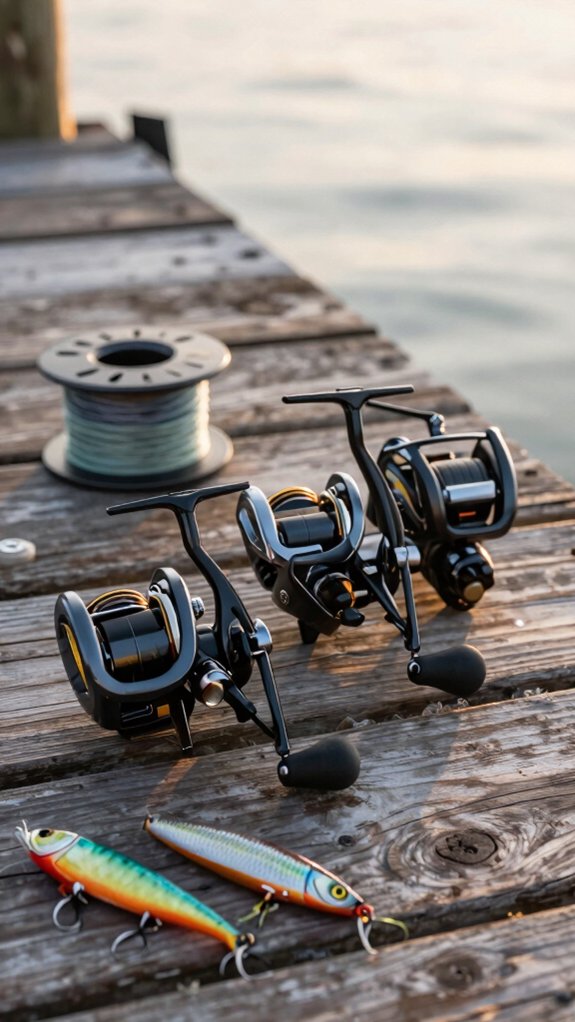
You’ll want to pick a baitcasting reel size based on your fishing style and gear setup, so let’s break it down simply.
A 100,150 size works great for light finesse fishing with small lures and thin lines, especially when using shorter rods and targeting finicky bass.
If you’re casting heavier baits or fishing thick cover, step up to a 200 for all‑around use, a 300 for power tactics, or even a 400+ for big swimbaits and hard‑pulling fish.
100/150 size
Finessing small soft plastics around brush piles or making pinpoint casts to tight cover? A 150-size baitcasting reel is your go‑to for lightweight accuracy and comfort.
This low‑profile reel balances perfectly with light medium rods, reducing fatigue during long days on the water.
Ideal for finesse fishing, it handles 8–12 lb mono or 15–30 lb braid with ease.
- Perfect for soft plastics, small crankbaits, and light lures
- Fits snugly in your palm for better casting control
- Line capacity holds ~100–150 yards of 10–12 lb braid, plenty for freshwater bass
- Gear ratios (6.3:1–7.1:1) offer quick retrieves without sacrificing finesse
I’ve found this size excels in heavy cover where precision matters most.
It’s not built for surf or big saltwater runs, but for anglers chasing smart, structure‑hugging bass? It’s a game‑changer.
200 size
When you’re standing at the tackle shop shelf staring down a wall of baitcasting reels, the number labels, 100, 200, 300 and up, can feel more confusing than helpful.
Your reel size should match your rod power and fishing style, just like pairing a spinning reel to your needs. Here’s a quick guide:
| Reel Size | Best For |
|---|---|
| 100–150 | Finesse bass, light line (8–12 lb mono / 15–30 lb braid) |
| 200–250 | All-around bass fishing (10–17 lb mono / 30–50 lb braid) |
| 300–400 | Heavy cover, big baits, 30–65+ lb braid |
Smaller baitcasting reels fit light rods, boosting comfort and control. Larger sizes deliver serious line capacity and drag strength.
Match wisely: a 300+ on a finesse rod feels clunky, while a 100 on a heavy rod lacks power. Balance is everything.
300 size
If you’re wondering which baitcasting reel size fits your fishing style, start by matching it to the techniques and gear you use most, because the right size isn’t one-size-fits-all, it’s your-size-fits-you.
Here’s how to choose based on your setup:
- Small reel (100–150): Perfect for finesse work with light lines (8–12 lb mono) and a medium power rod, ideal if you love accuracy over brute strength, unlike a spinning reel built for distance.
- 200–250 size: The sweet spot for all‑around bass fishing; pairs well with 30–50 lb braid and a medium‑heavy rod.
- 300–400+: Go big for flipping, frogging, or heavy cover, this reel size delivers high line capacity and torque.
- Always balance your reel size with rod weight and action for smoother casts and better control.
400 size
While every angler’s go-to baitcasting reel size depends on their target species and favorite techniques, I’ve found that most bass fishermen land on a 200–250 size as their everyday go-to, because it strikes the perfect balance between control, line capacity, and casting precision.
If you’re using medium-heavy to heavy power rods for flipping, punching, or cranking, this reel size handles 20–40 lb braid with ease.
For lighter finesse work, I downsize to a 100–150 reel on medium-light rods, think small swimbaits or light jigs.
And while we’re talking size, don’t forget spinning reels: a small size spinning reel (like 1000–2000) pairs perfectly with light power rods for delicate presentations. Match your fishing reel to your rod and line, and you’ll cast farther, fight fish better, and stay balanced all day.
Do I need saltwater or sealed drag?
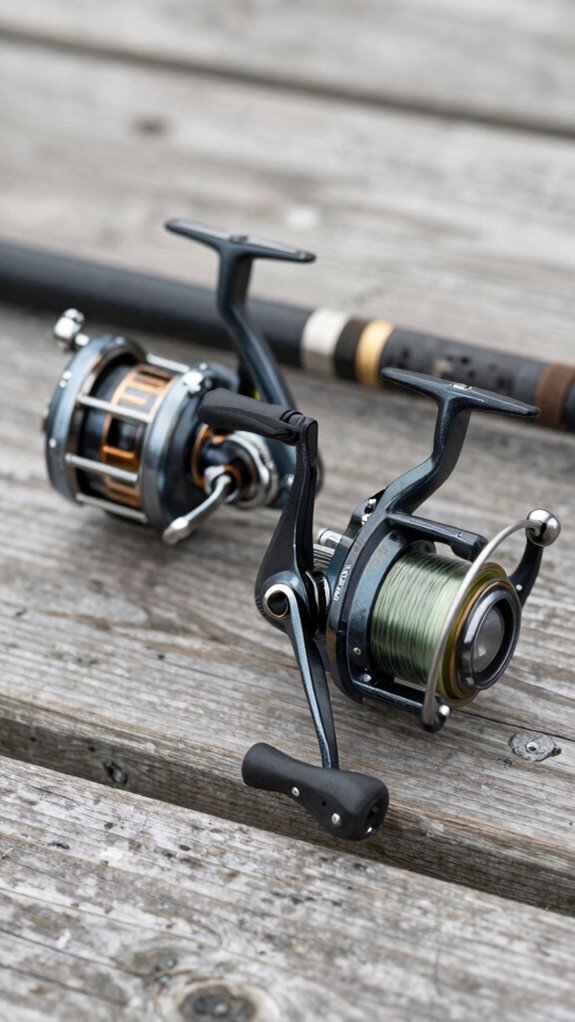
Though your fishing adventures might take you from freshwater lakes to briny coastlines, one thing’s certain: if salt’s in the mix, your reel needs to be ready.
For saltwater-safe performance, look for corrosion-resistant materials like anodized aluminum and stainless steel. A sealed drag is a game-changer, it keeps salt, sand, and grit out of your drag stack, especially if you’re fishing surf, rocks, or estuaries.
- Sealed bearings boost durability against salt spray
- Fully sealed drags are best for frequent saltwater or big-fish hunts
- Occasional inshore trips? A sealed main bearing may suffice
- Even freshwater reels benefit from sealed components when conditions get gritty
I always rinse my reel post-fish and do light maintenance, sealed doesn’t mean no maintenance. Trust me, your reel will last years longer with the right protection.
Gear ratio, parts, and key features
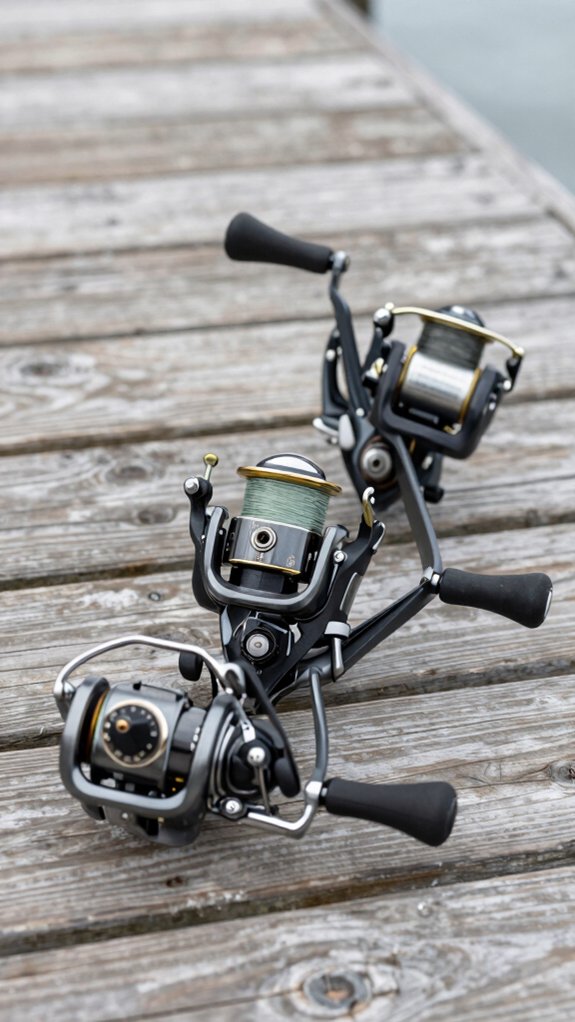
When you’re trying to match your reel to the way you fish, gear ratio is where the rubber meets the road, get it right, and you’ll have the speed or power you need for your go-to techniques.
A high gear ratio (6.2:1+) zips line in fast, perfect for burning spinnerbaits or crankbaits on spinning rods.
Lower ratios (4.8–5.5:1) deliver more torque, ideal for dragging big fish from thick cover.
Your spool size affects line capacity and casting ease, match it to your target species and line type.
The drag system must be smooth and strong; set it at 25–30% of your line’s breaking strength to avoid snaps.
Look for sealed bearings and quality gears, they make retrieves buttery and boost durability.
Features like anti-reverse and line capacity markings? Small touches that make a real difference on the water.
What reel sizing mistakes should I avoid?
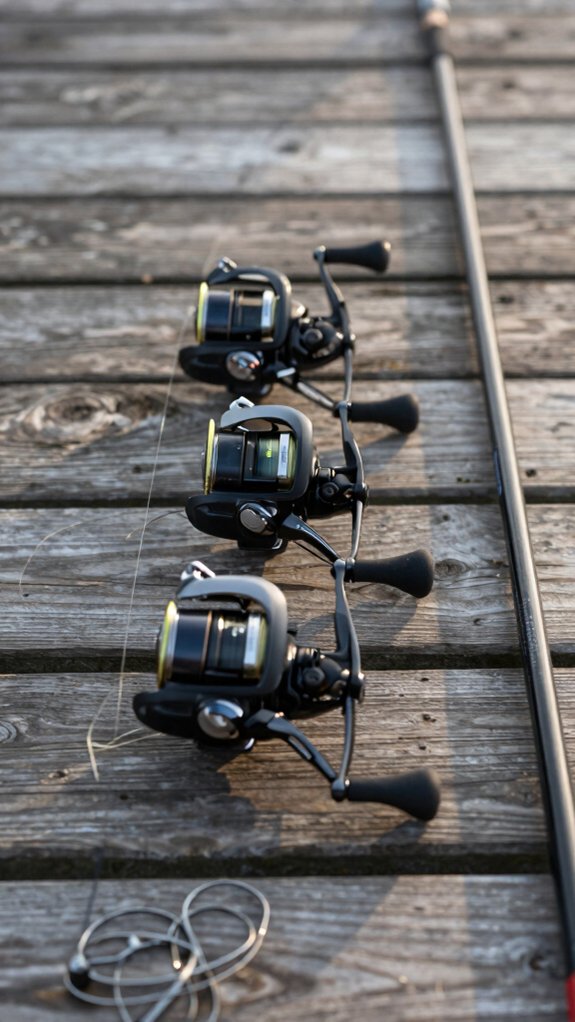
If you’ve ever lost a hard‑fought fish or struggled with awkward casts, chances are your reel size was working against you, not with your setup.
Avoid These Common Reel Sizing Mistakes:
- Don’t undersize your reel: A 2500 on a 10–11 ft surf rod lacks line capacity and drag strength for 20–30 lb class fishing, risking break‑offs.
- Avoid overspooling light line on big reels (like 4–6 lb mono on a 6000); excess spool diameter causes tangles and poor casting control.
- Ignore rod balance at your peril, a heavy 8000 reel on a 6 ft ultralight rod fatigues you fast and kills casting feel.
- Never skip manufacturer specs, reel size labels are guides, but actual line capacity and max drag determine real‑world performance.
Match reel size to technique, not just target species, for smarter, balanced setups.
Frequently Asked Questions
What Size Reel for Match Fishing?
I’d go with a 1000–2000 size reel for match fishing, it’s light, balances well on short rods, and handles 1–4 kg line perfectly for close‑range pole work. If I’m casting farther, I’ll bump up to a 2500–3000 for extra line and drag.
How Do You Choose the Right Reel Size?
Choosing the right reel size is like tuning an instrument, get it wrong, and everything’s off. I match my reel to my line, rod, and target fish, checking specs so I’m ready when the big one bites.
What Size Reel Is Best for All Rounder?
I’d pick a 3000–3500 reel for an all-rounder, it handles 8–10 lb mono or 8–15 lb braid, balances well on 7–8 ft rods, and works great for freshwater, estuaries, and light surf, making it my go‑to choice for most fishing adventures.
What Is a 4000 Size Reel Good For?
A 4000 size reel’s perfect for targeting snapper, barramundi, or tailor. I use mine on 6–7 ft rods for estuary work or light surf: handles 4–6 kg line and casts like a dream without being too bulky.
In Conclusion
The right reel size? It’s the secret to smoother casts, stronger fights, and more fish in the boat. Imagine your line zipping freely, your drag humming under pressure, no tangles, no snaps.
Pick wrong, and you’re one snag away from heartbreak. But match your reel to your rod, line, and target species, like 3000–4000 for inshore versatility or 6000+ offshore, and suddenly, every cast feels just right. Trust me, balance isn’t luck. It’s the move that turns hope into haul.