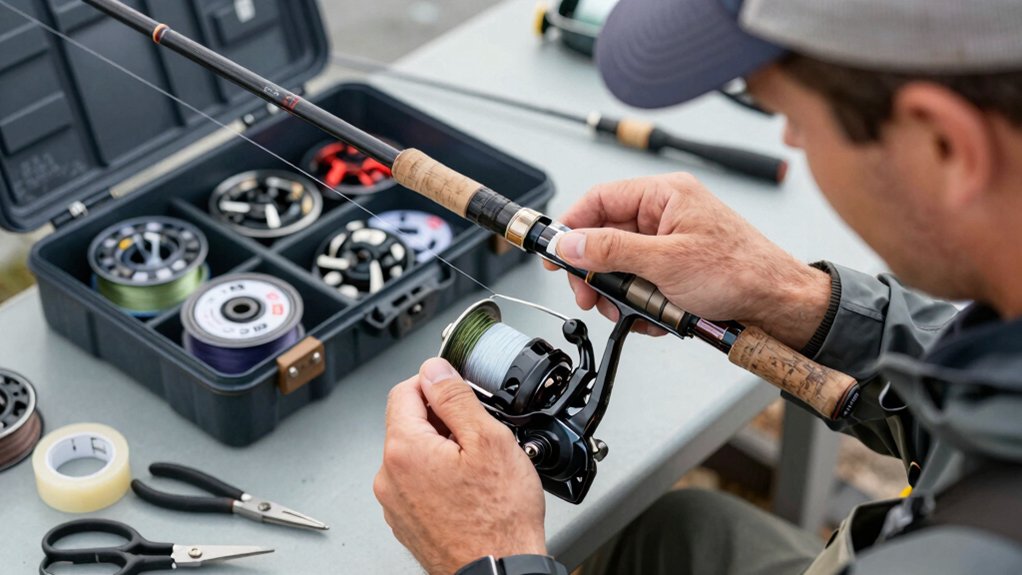

I need the right reel size based on what I’m fishing for and the line I’m using, there’s no one-size-fits-all. A 1000–2500 reel works great for trout with light line, while bass demand 2500–3500 spools with heavier braid. Bigger predators? Think 5000+ for pike or tuna.
Get it wrong, and I’ll fight drag issues or blow out my gear. But here’s the thing, most anglers overlook how line capacity and spool design quietly shape every cast and fight.
What size fishing reel do I need?
So, how do you know what size fishing reel you actually need? It all comes down to matching spinning reel sizes to your target species, line capacity, and rod balance.
For light tackle fishing, think trout or panfish, go with 1000–2500 reels and 2–8 lb mono.
Bass or walleye? I prefer 2500–3500 reels spooled with 6–12 lb mono, great line capacity and solid drag strength.
After pike or inshore saltwater species? Step up to 3000–5000 reels with 10–20 lb mono.
Heavy surf or tuna? I grab 4000–6000+ reels with 30–65 lb braid.
Always check drag strength and make sure your reel balances well with your rod. A well‑matched setup fights smoother, casts easier, and lands more fish. Trust me, getting the right size makes all the difference.
Spinning reel size chart by species
I’ll help you pick the right spinning reel size based on the fish you’re after, because using the right gear makes all the difference.
For panfish and trout, go with a 1000–2500 reel and light line so you can cast small lures accurately and enjoy every bite.
Bigger fish like bass or pike need stronger setups, so step up to larger reels with heavier line to handle their power and speed.
panfish sizes
When it comes to panfish, finesse is everything, those light bites from bluegill, crappie, and perch demand a setup that’s sensitive, balanced, and ready for quick, accurate casts. I always match my spinning reel sizes to the situation: for ultralight action, I go with a 1000–1500 reel on a 4.5–6 ft rod, spooled with 1–3 lb mono.
If I’m mixing in small bass or need more line capacity, I bump up to a 2000–2500 on a light action rod. For heavier structure or bigger bream, I choose 2500–3000 reels with stronger drag and braid.
| Reel Size | Line (Mono/Braid) | Best For |
|---|---|---|
| 1000–1500 | 1–3 lb / 2–6 lb | Ultralight finesse |
| 2000 | 4–8 lb / 6–12 lb | Mixed panfish |
| 2500 | 6–10 lb / 10–20 lb | Light structure |
| 3000 | 8–12 lb / 15–20 lb | Bigger strikes |
| Tip: Balance > specs | – | Keep it light |
bass and walleye
Most of the time, I reach for a 2500–3000 reel when targeting bass or walleye, it’s the sweet spot for balance, line capacity, and smooth performance across a wide range of techniques.
For Bass Setups:
A 2500-3000 reel pairs perfectly with 6.5–7 ft medium to medium-heavy rods. Spool it with 8–12 lb mono or 10–20 lb braid for crankbaits, soft plastics, or topwaters.
Need more power? Step up to a 3000–4000 for flipping or heavy swimbaits, use 20–40 lb braid and a stiff rod.
Walleye Fishing Tips:
Stick with spinning reel sizes 2500–3000, 6–10 lb mono or 10–15 lb braid, and a medium-light rod.
On big rivers or deep lakes? Go 3000–3500 for better line capacity and drag strength.
A 5:1–6:1 gear ratio keeps bass setups versatile and effective.
pike and muskie
While pike and muskie may look similar and both put up heart-pounding fights, they demand different spinning reel sizes, especially when you’re chasing trophy-sized fish that can strip 100+ yards of line in a single run.
For pike, I stick with a 3000-5000 spinning reel. It gives me enough line capacity for 10-20 lb mono or 20-40 lb braid, perfect for handling heavy lures and long runs.
A 3000-3500 size balances well with a medium 6.5-7.5 ft rod, making single-handed casting smooth on lakes and rivers.
But for muskie, I size up to 5000-8000 reels. These beasts need 30-50 lb braid and a bulletproof drag system.
On big water with swimbaits or poppers, I pair 6000-8000 reels with 7-9 ft rods rated for 20-40 lb, so I never run out of line.
catfish setups
Chasing catfish means matching your spinning reel to the species and situation, and I’ve found the right size makes all the difference between landing a slab and losing it to the deep.
Small Channel or Blue Catfish (5–15 lb)
Go with a 4000–5000 spinning reel, 10–20 lb mono or 15–30 lb braid, and a 7–9 ft medium-heavy rod.
Solid drag and decent line capacity keep you in control.
Larger Channel or Flathead (10–25 lb)
Step up to 5000–6000 size, 15–30 lb mono or 20–40 lb braid.
You’ll need the drag strength and line capacity for strong runs.
Trophy Catfish (30+ lb)
Use a 7000–10000 reel with 30–50 lb braid and an 8–10 ft heavy rod.
Big spools and smooth drag systems handle long, powerful runs.
inshore saltwater
When the salt spray hits your face and you’re eyeing those rolling tides along the shoreline, picking the right spinning reel size can make or break your inshore game.
For light inshore species like snook or sea trout, I go with a 2500–3000 spinning reel, plenty of line capacity and smooth drag power for delicate casts.
Chasing bigger redfish or small tarpon? Step up to a 3000–4000 reel with 20–30 lb braid. It handles stronger runs and gives you reliable drag power when they dive for cover.
For heavy hitters like grouper or jack crevalle near reefs, I trust a 4000–6000 saltwater-rated reel. These handle 30–65 lb braid, resist corrosion, and survive brutal fights.
Always match your spinning reel sizes to rod power and rinse your saltwater-rated gear after every trip, your drag performance will thank you.
when to upsize
If you’re wondering when to upsize your spinning reel, the answer comes down to three real‑world factors: what you’re chasing, where you’re fishing, and what you’re throwing.
When to upsize:
- Targeting larger species like kingfish or mulloway? They demand stronger gear.
- Facing strong current or deep water? You’ll need more line capacity.
- Using heavy lures or braid over 30 lb test? Thicker or longer lines fill smaller spools too fast.
I always upsize one reel class when chasing fish that make long runs, think tuna or big pike.
A 6000+ reel with 50 lb braid handles those drag‑screaming fights better.
And trust me, nothing’s worse
Than running out of line mid‑fight.
Upsize early, fish confidently.
when to downsize
While bigger isn’t always better, I’ve found that downsizing your spinning reel at the right moment can actually put more fish in the boat, especially when finesse, accuracy, and sensitivity matter most.
When to Downsize: It’s All About Matched Performance
Downsizing improves rod balance and boosts feel, key for finesse fishing. If you’re chasing panfish or trout, I drop to a 1000–2000 spinning reel with 2–6 lb mono.
For bass on drop-shot rigs? A 2500–3000 reel with 6–10 lb line increases hookups and cuts fatigue.
Even in estuaries, switching from a 4000 to a 3000 reel gives better control with light lures and 6–12 lb line. Surf anglers fishing close in can ditch the 5000+, a 3000 or 4000 with 10–20 lb braid improves cast accuracy.
Just ensure your downsized reel still handles line capacity and drag needs.
What fly reel size matches my rod?
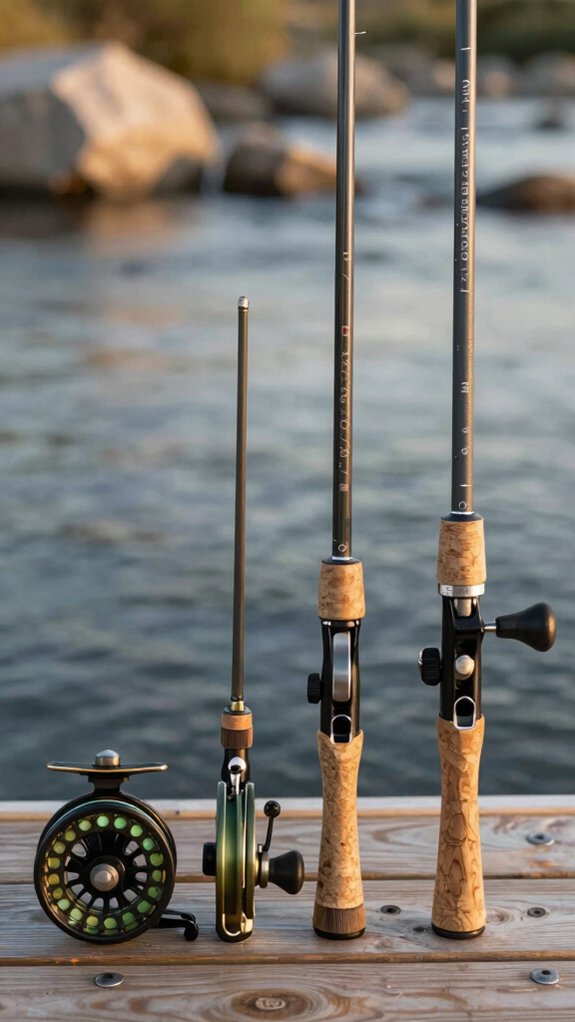
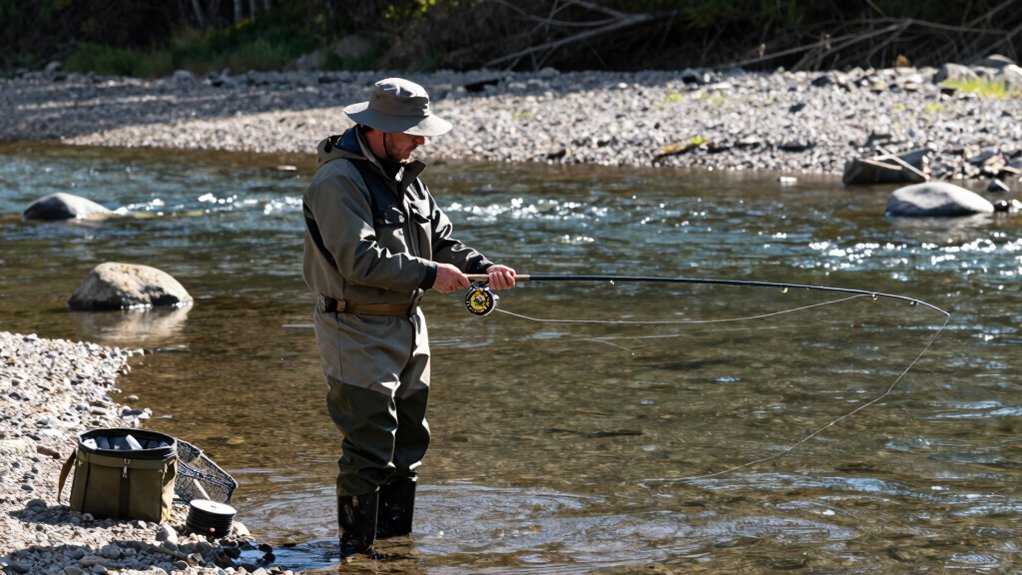
Match your fly reel size to your rod weight first, this is the golden rule for building a balanced, effective setup.
Getting the line weight and backing capacity right ensures smooth casting and strong fights.
Here’s how I match mine:
- 2–4 wt rod → Use a 2–4 wt reel (ultralight trout); balance combo with 50–100 yd backing.
- 5–6 wt rod → Choose a mid-sized reel (3–3.5″ diameter); holds 100–150 yd of 20–30 lb backing + WF line.
- 7–9 wt rod → Step up for big streamers or light saltwater; 200+ yd backing, sealed drag.
- 10–12+ wt rod → Go big: large-arbor reels handle heavy line and 20–50 lb backing for tarpon or pike.
When in doubt, check the rod’s printed line weight, your reel should match it.
A balanced combo feels natural, not tip‑heavy.
Trust me, it makes all the difference when you’re casting all day.
What do reel size numbers mean?
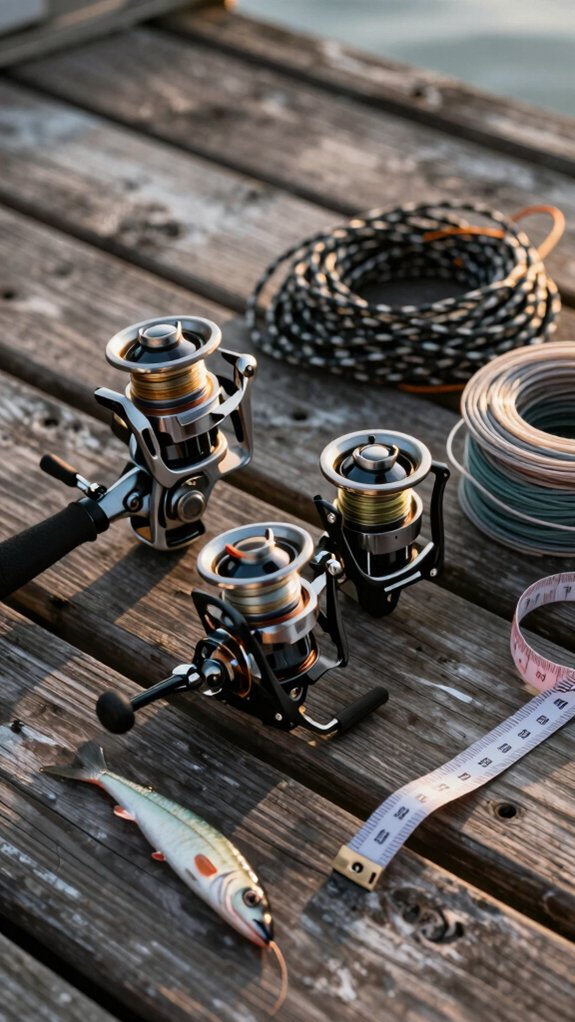
When you’re staring at a wall of reels labeled 1000, 2500, or 300, confused about what those numbers actually mean, you’re not alone.
Those spinning reel sizes are just shorthand for reel class, giving you a quick idea of line capacity, drag strength, and overall size. Think of model numbers like clothing sizes, close, but not universal. A 2500 from one brand might match a 25 from another.
Here’s how to decode them:
- 1000–2500: Ultralight to light (4–10 lb braid)
- 3000–4000: Medium power, great for bass or inshore
- 5000+: Heavy saltwater or big freshwater fish
Baitcasters use different numbers (100–400+), but same idea.
Always check actual line capacity and drag strength, your rod’s rating and target species should guide the final choice, not the number alone.
How does line capacity affect size?
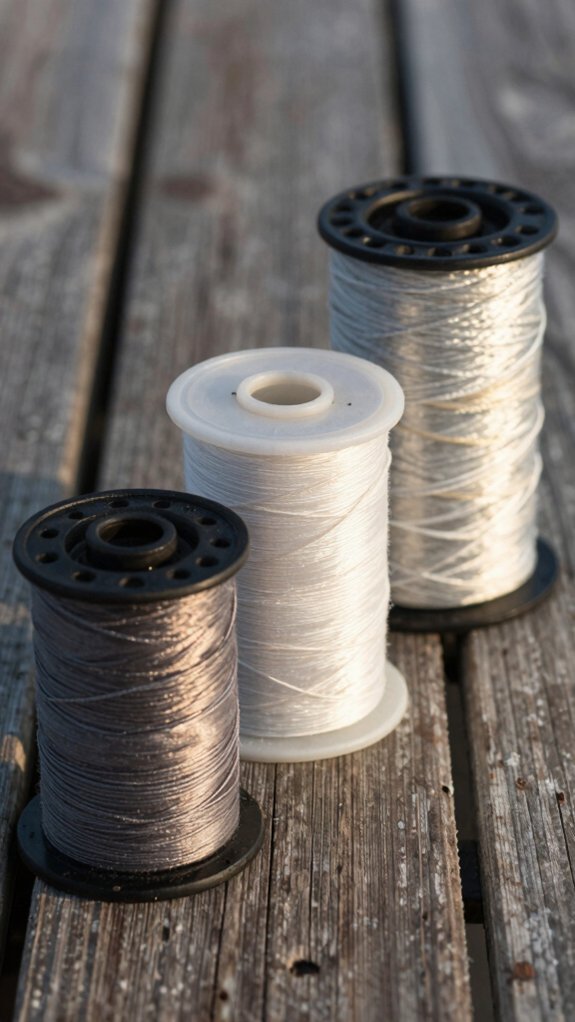
Line capacity reel, and it’s all about matching what you’re fishing for with the right setup.
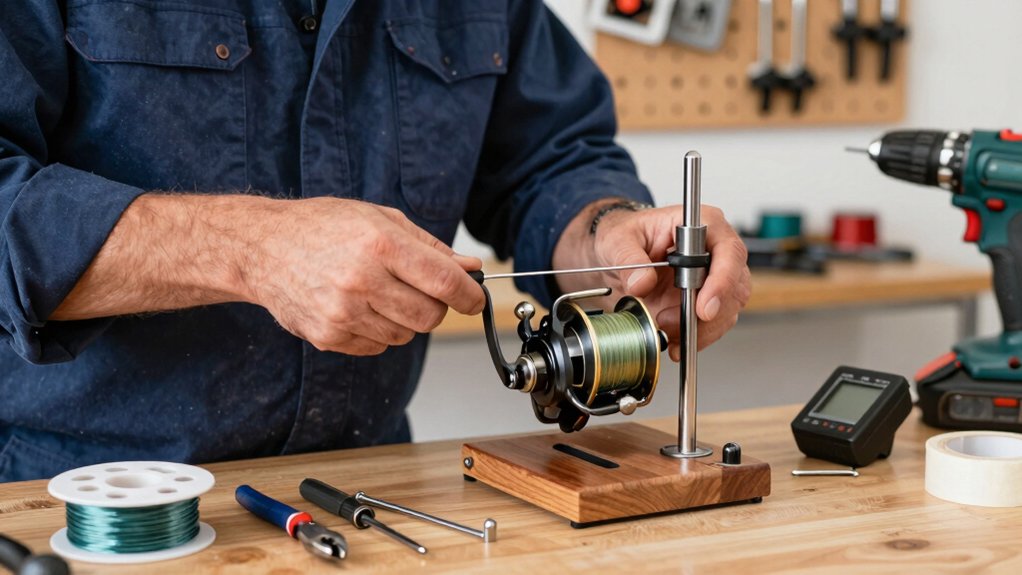
A reel’s arbor size determines how much line fits, mono takes up more space than braid, so you can spool about twice as much braid at the same strength, which means a smaller reel can still give you serious yardage.
If you’re after hard-running fish like tuna or sharks, you’ll need plenty of backing, so go big enough to handle 200–500+ yards without skimping.
mono capacity
If you’ve ever lost a hard‑fighting fish because your line ran out mid‑drag, you already know why mono capacity matters, it’s the backbone of your reel’s endurance.
Your spool size directly impacts how much line you can carry, and matching it to your target species keeps you in the fight.
Here’s how to nail it:
- Check mono capacity specs, Manufacturers list yards at specific pound‑tests; this is your baseline for line capacity.
- Size by species, A 2500 reel (150–200 yd of 6–8 lb mono) works for trout, while offshore species need 6000+ reels with 200+ yd of 20+ lb test.
- Consider braid vs mono, Braid’s thinner diameter doubles yardage on the same spool for the same strength.
- Leave 5–10 mm headroom, Prevent overfilling and tangles.
Use our species line guide to match spool size to real‑world fights.
braid capacity
Spooling up with braid? Braid capacity is key, line capacity matters more with braid because its thin diameter lets you fit way more yardage on the same spool.
Thanks to braid vs mono differences, 10 lb braid takes up about as much space as 20 lb mono, so you can downsize reels without losing strength.
That means a 2500 reel with 150–200 yards of 10 lb braid can outperform a larger mono-spooled reel.
But don’t skimp on spool diameter, wider, deeper spools handle high yardage per pound-test better, reducing line stacking and drag heat when battling hard-pulling fish.
Always check your reel’s rated braid capacity. For example, a 6000 holding 350 yards of 30 lb braid gives you the reserve you need for offshore runs.
arbor size
Your reel’s arbor size, think of it as the spool’s backbone, directly shapes how much line you can wind up and how fast it comes back in.
A larger arbor means a larger spool diameter, which boosts line capacity and improves retrieval speed with fewer wraps per inch.
Here’s how arbor size impacts your fishing:
- Larger spool diameter = more line capacity, especially helpful when spooling thin, high-strength braided line.
- Large arbor reels reduce line memory and coiling, keeping your braid tangle‑free.
- Bigger arbors run cooler under drag, crucial when battling long‑pulling fish like tuna or kingfish.
- Match arbor size to target species: small for light rigs, large arbor for heavy mono or 30+ lb braid.
Choosing the right arbor size means smoother casts, fewer knots, and more confidence when the reel screams.
backing needs
Most of the time, I’ve found that getting your backing right makes or breaks a reel’s performance, especially when a hard-pulling fish makes a surprise run.
Match Line Capacity to Your Target
Spool capacity isn’t just about how much line fits, it’s about fight control. Braid is thinner than mono, so 10 lb braid takes up nearly half the space of 10 lb mono. That means a 3000 reel holding 200 yds of 10 lb mono can handle 350–400 yds of the same strength braid.
Always check the manufacturer’s yds per lb-test specs, model numbers can be misleading. For heavy setups with braid backing under mono or fluorocarbon, leave 5–10% spool space free to prevent burrowing.
Bigger fish? Go bigger: a 6000+ reel with 300–600 yds of 20–30 lb braid handles long runs and powerful surges.
Saltwater considerations for choosing reel size
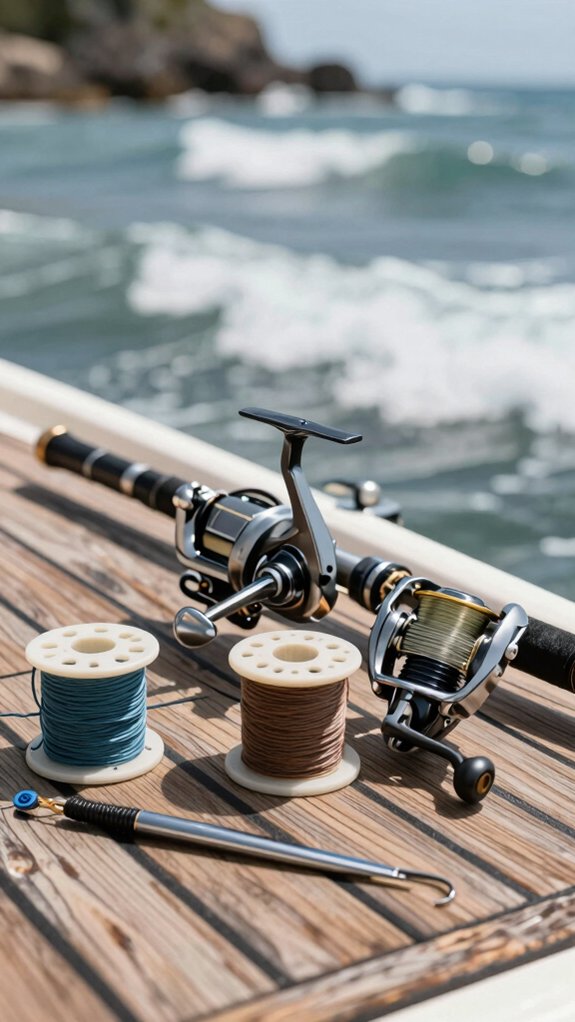
When you’re chasing fish in saltwater, picking the right reel size isn’t just about power, it’s about matching your gear to the species, environment, and conditions you’ll face. For successful saltwater fishing, your spinning reel sizes should balance line capacity, drag systems, and corrosion‑resistant materials.
Here’s how to choose:
- Inshore (snook, redfish): Use 3000–4000 reels with 8–20 lb braid, great line capacity and smooth drag for lighter work.
- Light offshore/surf: Step up to 5000–8000 reels; 20–50 lb braid handles Spanish mackerel or small tuna with ease.
- Heavy-duty (GTs, sharks): Go 14,000+ with 30–50+ lb braid, built for brute strength and deep runs.
- Always choose saltwater‑rated reels, sealed drag, corrosion‑resistant bearings, and rinse after every trip.
Match your reel to the rod, and you’ll land more fish with less fight.
Mistakes to avoid when choosing reel size
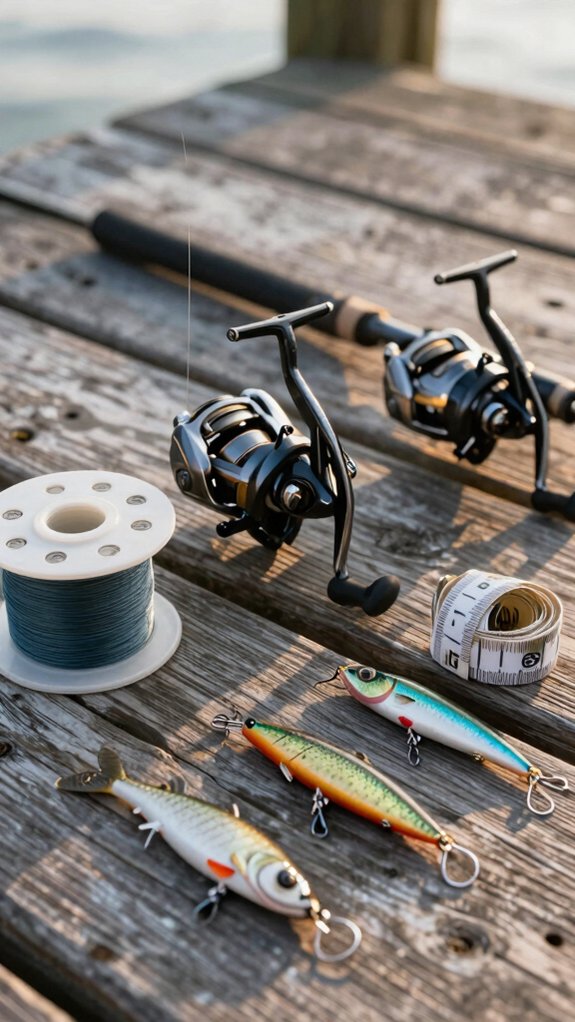
While it’s tempting to grab the shiniest or biggest reel off the shelf, choosing the wrong size can wreck your day on the water, fast.
Avoid these common mistakes:
- Don’t pick a reel size by number alone, check actual line capacity. An undersized reel (like 1000–2500) on heavy line lacks drag strength and spool space, increasing break‑offs.
- Oversized reels (6000+) add bulk, tire you out, and hurt casting, especially on light rods.
- Always confirm rod compatibility. A 2500–3000 reel balances best with 6–7 ft rods; 4000–5500 suits longer surf rods.
- And remember: braid is thinner than mono, same pound‑test, double the yards. Match line type to line capacity.
Get it right, and you’ll feel every twitch, and land more fish.
Frequently Asked Questions
How Do I Know What Size Fishing Reel I Need?
I pick my reel size based on what I’m chasing and my rod. If I’m after bass or walleye, I grab a 2500–3500 reel; for pike or salmon, I go 3500–5000, I match it to my line and rod so everything feels balanced and fights smoothly.
What Is a 4000 Size Reel Good For?
My 4000 reel’s my go-to workhorse, built like a tank for battling snapper, tailor, or mulloway. It’s perfect when I need extra line and drag strength without lugging around a bulky offshore beast.
What Is a 3000 Size Reel Good For?
I use a 3000 size reel for medium freshwater and light saltwater fishing, it handles 6–10 lb mono or 10–20 lb braid perfectly. It’s great for bass, walleye, or mangrove jack when I need extra line and drag without sacrificing castability.
Is 3000 or 4000 Reel for Inshore Fishing?
I’d need a miracle to land a charging kingfish on a 3000, so yeah, I grab my 4000 for inshore battles. It’s got the guts, line, and drag to win when the big ones run, and trust me, they always run.
In Conclusion
The right reel size ties everything together, like the heart of your setup, pumping confidence with every cast. I’ve learned matching species, line, and reel isn’t just tech specs, it’s rhythm, balance, like pairing a good rod with a trusted friend.
Too big? You’ll tire fast.
Too small? That trophy fish wins. Now, with the right spin, every cast feels just right, smooth, strong, ready. You’re not just guessing, you’re geared to win.