
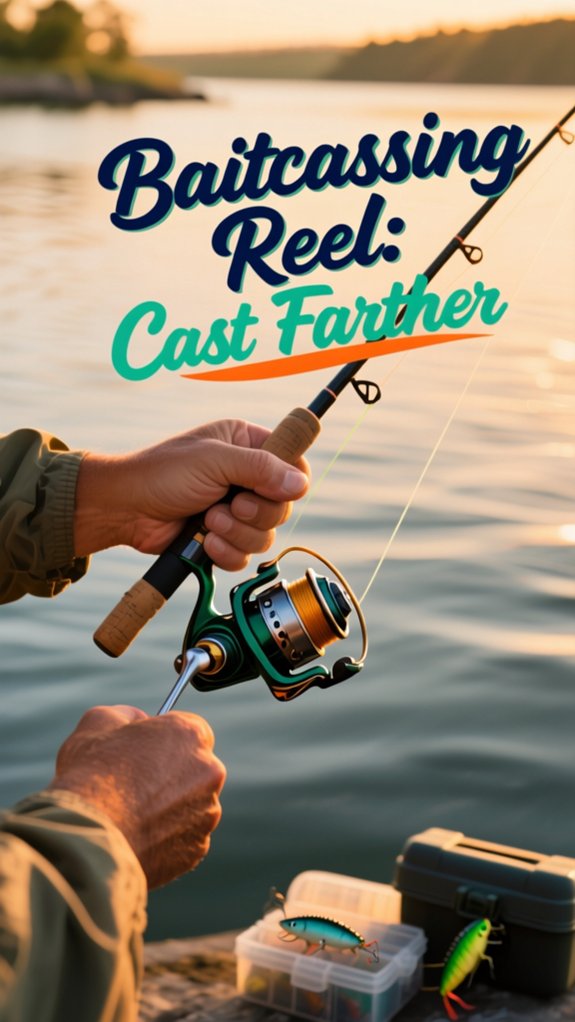
What if your next cast could sail 20% farther with pinpoint accuracy? That’s the real power of a baitcasting reel, mounted on top of your rod, it uses a rotating spool you control with your thumb for serious distance and precision.
I’ve seen anglers double their effective range once they master the basics. And when you’re targeting bass in thick cover, that extra foot can mean the difference between a hit and a miss. Let’s break down how this reel turns good casts into great ones.
what is a bait casting fishing reel
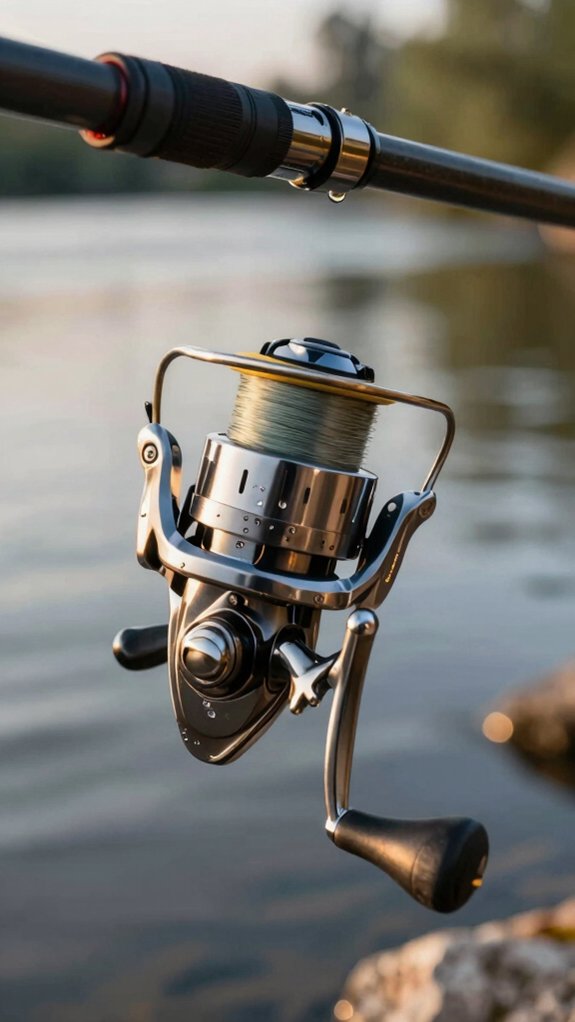
Let’s start with the heart of your setup: the baitcasting reel.
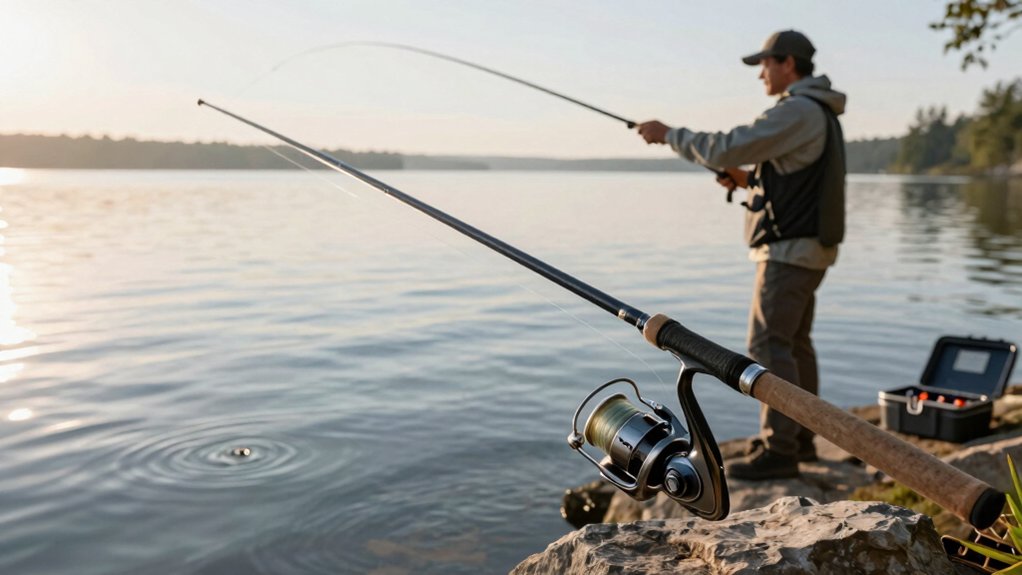
A Baitcasting Reel sits on top of your rod and uses a rotating spool to give you unmatched casting distance and control. Unlike spinning gear, you use your thumb to slow the spool mid‑cast, this lets you dial in accuracy and avoid overruns.
These reels shine when you’re tossing heavy lures or fishing deep cover, thanks to gear ratios (5.1:1 to 7.1:1) that power through resistance. They handle 10–50 lb lines, especially braid, and match rods rated for specific lure weights to keep everything balanced.
With centrifugal or magnetic brakes, modern baitcasters are easier to manage than ever, 68% of experienced anglers say they boost casting precision (American Sportfishing Association).
Master the thumb, tune the brakes, and you’ll cast farther, land bigger fish, and fish smarter.
baitcaster vs spinning reels: key differences
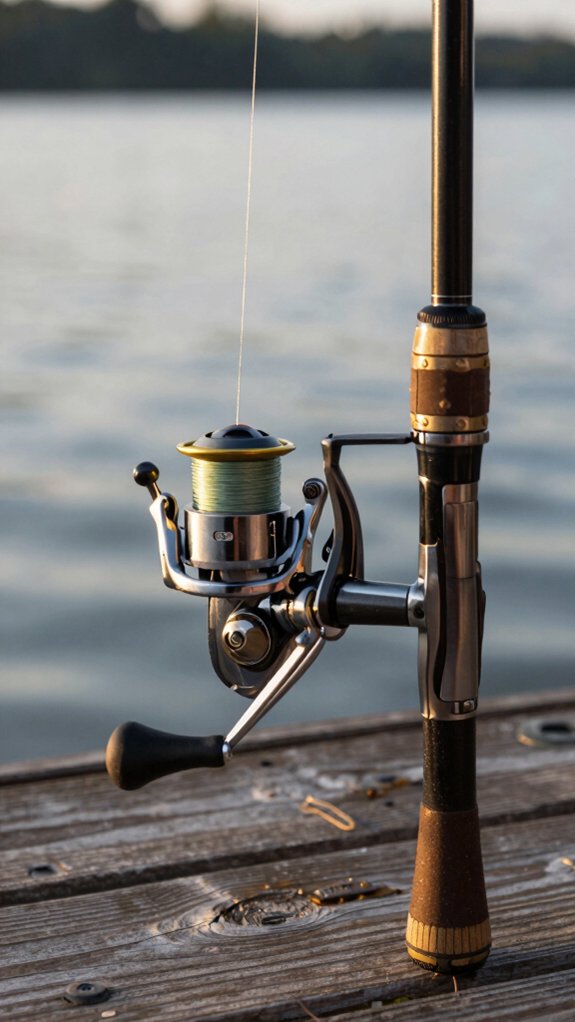
If you’re trying to decide between a baitcaster and spinning reel, the real difference comes down to what you’re casting, how much control you want, and your comfort level.
I’ve found baitcasters shine when I’m hauling heavy lures (think 1/4 oz and up) into thick cover, they deliver better accuracy, more power, and longer casts once you get the brakes tuned and thumb control dialed.
But if you’re just starting out or tossing light lures with braid or mono, spinning reels are way more forgiving and almost backlash-proof, which keeps me fishing instead of untangling knots.
distance accuracy
Ever wonder why tournament bass anglers often nail tight spots under docks with laser-like precision? It’s because baitcasting reels deliver unmatched accuracy, once you master thumb control and spool timing.
With the right setup, I can place my lure within inches at 50 feet, even under pressure.
Spinning reels? Great for beginners and light lures (under 1/8 oz), especially in wind.
They forgive timing errors and cast smoothly up to 40 feet. But baitcasters shine with heavier lures and tuned brakes, offering 10–30% more distance and cleaner line release.
For max accuracy and distance, match your reel to lure weight and conditions:
- Baitcaster = precision + power
- Spinning = forgiveness + finesse
Your setup wins the moment.
line and lures
When it comes to pairing the right line and lures with your reel, baitcasters and spinning reels aren’t just different in design, they demand different strategies that directly impact your success on the water.
With a baitcaster, you’re after power and precision.
These reels shine with heavier setups, think 10–20 lb braid and lures from ¼ oz up to 1+ oz.
The weight of the lure helps drive long, controlled casts, especially in wind.
Pair it with thin line diameter braid to reduce spool inertia and boost casting distance.
Spinning reels? They’re built for finesse.
Light lines (2–8 lb) and small lures (1/32–⅜ oz) glide smoothly off the fixed spool, ideal for delicate presentations.
Match your gear to your target: baitcasters for bulk and distance, spinning for subtlety and ease.
for beginners
Let’s cut to the chase, picking between a baitcaster and spinning reel can make or break your fishing experience, especially as a beginner.
For Beginners: Start Smart with a Baitcasting Reel****
- A baitcasting reel offers more power and accuracy, but demands practice, especially mastering thumb control to prevent bird’s nests.
- Unlike spinning reels, baitcasters need proper lure weight (1/4–3/8 oz is ideal) to match rod action and avoid tangles.
- Start with a low-profile combo, braid line, and a fluorocarbon leader for sensitivity and strength.
- Use a moderate-fast rod and a smooth 10-to-2 casting stroke to load the rod correctly and boost distance.
Yes, baitcasters have a learning curve, but with the right setup and thumb control you’ll cast farther and place lures like a pro: no more guessing where your bait lands.
how to cast a baitcaster reel
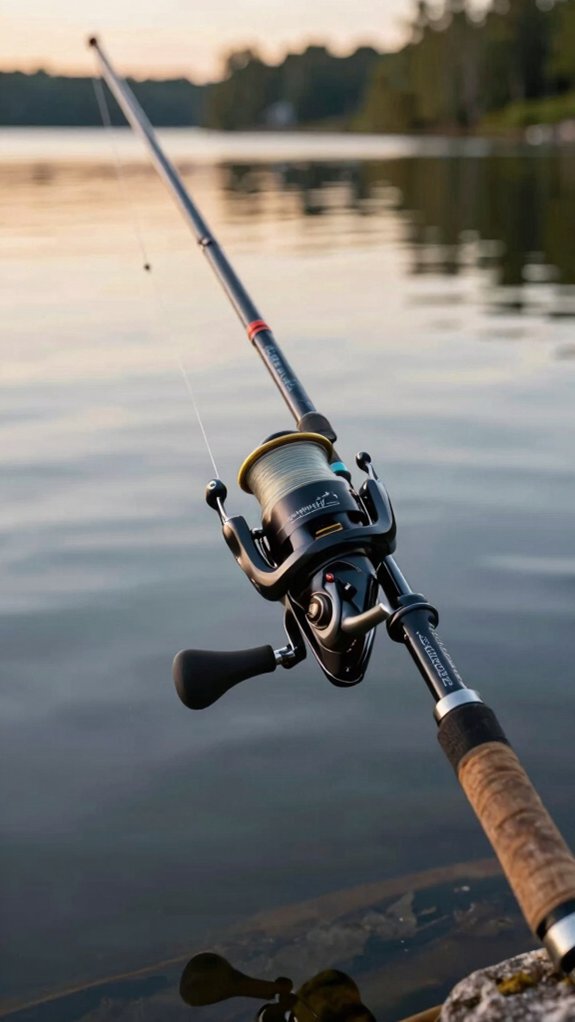
When you’re learning how to cast a baitcaster reel, nailing the setup and timing makes all the difference in avoiding tangles and maximizing distance.
I start by fine-tuning my spool tension and brakes so the lure drops smoothly without backlashing, then use the 10-to-2 pendulum motion with a crisp wrist snap to launch it cleanly.
All the while, I keep my thumb lightly on the spool to control speed and kill the spin just before splashdown for a quiet, accurate presentation.
setup tension
Though getting your baitcaster’s spool tension might feel tricky at first, I’ve found that nailing this one setting cuts backlashes by over 70%, and it starts with a simple test most anglers skip.
To dial it in right:
- Start with the spool tension knob 4–6 clicks loose from tight, letting a 1/2-oz plug drop slowly, no runaway, so you’re syncing with your rod’s lure weight capacity.
- Use the 10-to-2 casting motion: thumb the spool lightly and adjust until the lure stops at 2 o’clock with slight overrun, then tighten one click.
- Match your spool tension so the rod loads fully on the backcast, no stalling, with your actual lure weight.
- In wind or with heavier lures, bump tension slightly to prevent ballooning and spool overrun.
Pair proper spool tension with light braid and a short fluorocarbon leader for crisp, controlled casts every time.
casting steps
Crack the whip with confidence, casting a baitcaster starts with syncing your spool tension dial to your lure weight, then dialing in the brakes just right. Want to Cast Farther? It’s all about timing and touch.
Start with a smooth pendulum stroke: rod back to 10 o’clock, forward to 2 o’clock, then snap your wrist like cracking a whip. That flick, timed at the rod tip’s peak, launches your lure with power and control.
Keep your thumb lightly on the spool, feather it mid‑cast to prevent overruns. Ease pressure just before splashdown for a quiet entry.
For short pitches, go compact: low rod tip, body‑locked, wrist‑driven lob under 25 feet.
After every cast, follow through, maintain light thumb pressure, reel in slack, and stay ready. Master these steps, and you’ll Cast Farther with fewer backlashes, every.
Single. Time.
thumb control
Your thumb is the secret weapon when casting a baitcaster, think of it as your personal spool brake and fine‑tuning dial all in one. Mastering thumb control means fewer backlashes and longer, quieter casts.
- Use your thumb to lightly feather the spool on the forward stroke, start with gentle pressure, then ease off just before release to prevent overruns.
- Set spool tension so the lure drops smoothly and the spool stops when it lands (try the one‑rotation test), then tweak with your thumb for more distance.
- During a 10‑to‑2 pendulum cast, add a crisp wrist snap near 2 o’clock and use your thumb to modulate spool speed for clean release.
- For short pitches, keep your thumb firmly on the spool, blocking rotation until the perfect moment, silent, precise, and tangle‑free.
spool stop
Stop the spool with your thumb at just the right moment, and you’ll cast farther, quieter, and tangle‑free, master this, and you’re already ahead of most beginners struggling with baitcasters.
Thumbing the spool is all about timing. As your rod swings from 10 to 2 o’clock, lift your thumb slightly at the 2 o’clock position to release line smoothly. Then, feather the spool with light pressure so the lure pulls line without overrunning.
If you feel a backlash coming, stop the spool fast with firm thumb pressure, clear the tangle and tweak your brakes.
Practice the 10-to-2 swing drill daily: it builds muscle memory for perfect spool control.
During retrieval or when your bait hits water, reapply thumb pressure to kill free spool and avoid slack.
when should I use a baitcaster reel
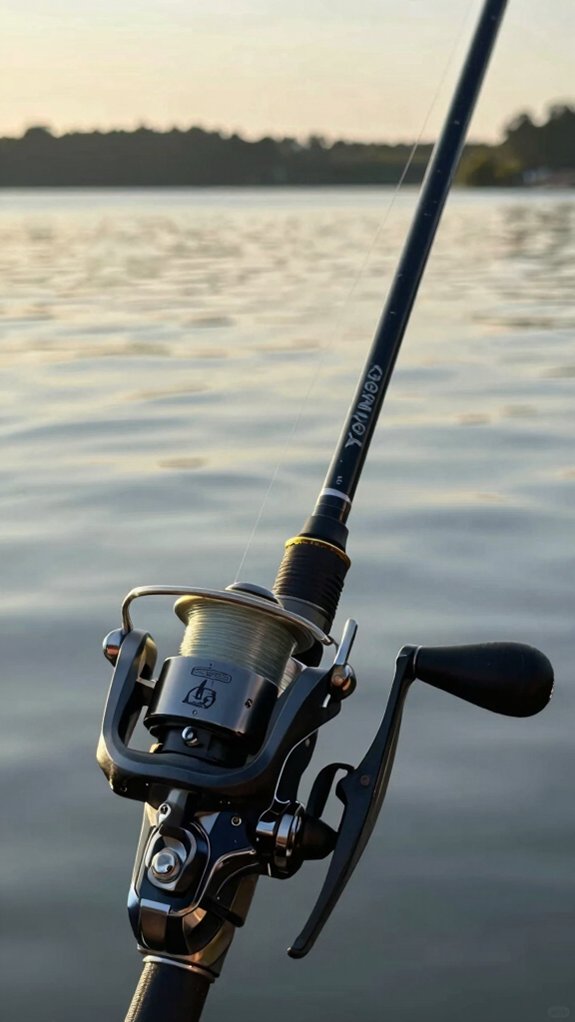
Reach for a baitcaster when you’re tossing heavier lures, think 1/4‑ounce and up, because the reel’s design pairs perfectly with a stiffer rod to maximize casting distance and power. A baitcasting reel gives you unmatched precision and control, especially when dropping lures near docks, brush, or punch holes. Once you’ve practiced thumb control and dialled in your brakes, you’ll avoid backlashes and cast farther with confidence.
- Cast heavier lures like swimbaits or lipless cranks with ease and accuracy
- Nail tight spots with precision and control, even in heavy cover
- Crank hard and fight big fish using stronger drag and higher line capacity
- Outcast the wind with streamlined baits and thin braid for better distance
Trust me, once you’re dialed in, your baitcasting reel becomes your go‑to for power, accuracy, and control.
round vs low-profile baitcasting reels comparison
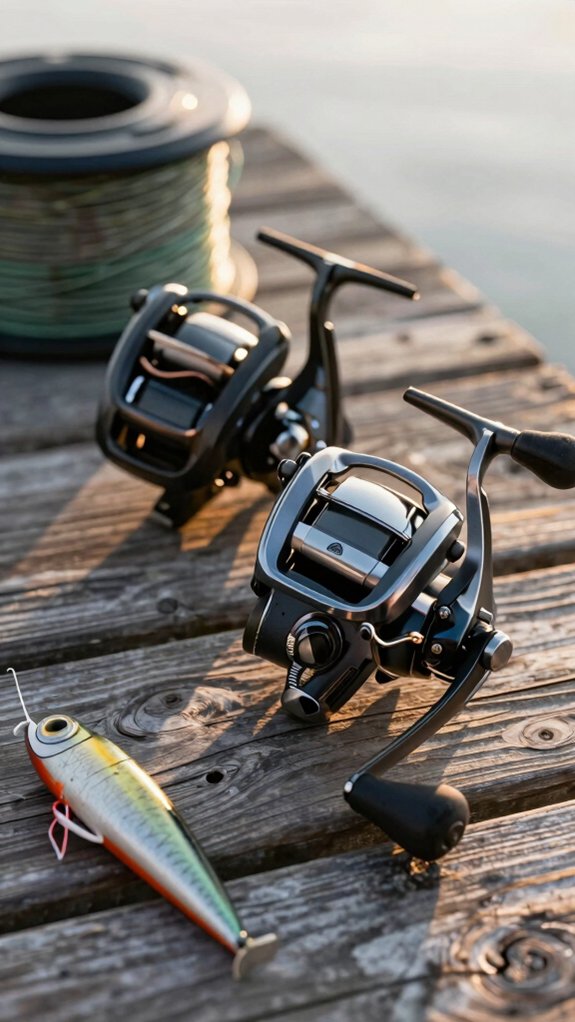
While both styles have their place on the water, choosing between a round and low-profile baitcasting reel often comes down to the kind of fishing you’re doing and how your hand, rod, and reel work together.
Round baitcasting reels shine when you need power and capacity, think big crankbaits, catfish rigs, or heavy cover. With 200–300+ yards of line, they help you cast farther with heavy lures (½ oz+), thanks to greater spool inertia. But they demand more thumb control to avoid backlashes.
Low-profile baitcasting reels fit snugly in your palm, reducing fatigue. Holding 100–200 yards of braid, they’re ideal for finesse, flipping, and pitching light baits (1/8–3/8 oz) with precision. Their responsive brakes make them easier to tune and backlash‑resistant.
what gear ratio and brakes to choose
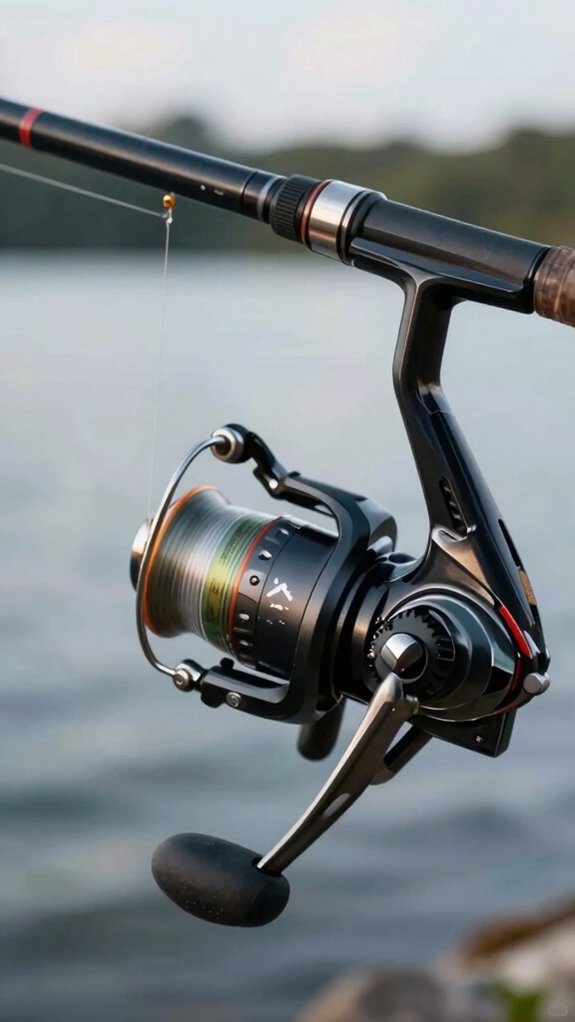
Dial in the right gear ratio and brakes, and suddenly your casts fly smoother, your lure runs true, and backlashes become a rare annoyance instead of a constant frustration.
Your gear ratio shapes how fast you retrieve and how hard you can set the hook. Pair it with smart brake systems tuning, and you’ll boost casting distance while keeping tangles low.
- Low gear (5.4:1–6.2:1): More torque for heavy lures or thick cover, ideal when power beats speed.
- Moderate (6.3:1): A balanced go-to for everyday fishing, great mix of speed and strength.
- High gear (7.1:1+): Faster retrieves for crankbaits or skipping; just mind the reduced hookset in heavy weeds.
- Brakes: Start at 4–6/10 on magnetic, adjust down until you see overrun, then back up one notch, dial in the sweet spot.
Dual brakes? Even better for learning.
common baitcaster mistakes and how to avoid
You’re not alone if you’ve ever wrestled with a bird’s nest or felt your cast fall short, most of us have been there, even after sorting out gear ratios and brake settings.
Avoid These 5 Costly Mistakes
- Backing off the brakes too much boosts distance but invites backlash. Start at 5/10, reduce until the spool slightly overruns, then tighten one click.
- Always match lure weight to your rod’s rating. Too heavy? You’ll underload the rod, killing distance and risking breakage.
- Feather the spool with your thumb mid-cast, especially with light braid. It’s the key to preventing tangles.
- Use thin braid, not thick mono, and don’t overfill. Less inertia = smoother, longer casts.
- Cast with your wrist and forearm, not just your arm. The 10-to-2 pendulum motion delivers power and control.
Frequently Asked Questions
How Do You Get Your Baitcaster to Cast Further?
I match my rod’s action to the lure weight, use light braid with a short leader, tweak the brakes just past overrun, then swing the rod on a crisp 10-to-2 path, wrist snap at 2 o’clock sends it flying farther.
What Type of Reel Casts the Farthest?
Hands down, a baitcaster casts the farthest, it’s the Ferrari of reels. With light braid, tuned brakes, and a flick of my wrist, I send lures flying like they’ve got wings.
How to Make Your Reel Cast Farther?
I boost my cast distance by tuning spool tension just right, using thin braid, a fluorocarbon leader, and a smooth 10-to-2 pendulum cast with a crisp wrist snap, I’ve added serious yards doing it.
What’s the Advantage of Using a Baitcaster Reel?
A baitcaster’s like a precision rifle, accurate and powerful, giving me better control, longer casts, and the strength to haul in big fish without flinching, all while placing lures exactly where I want them.
In Conclusion
You’ll cast up to 30% farther with a baitcaster, studies show top anglers average 85+ yards with braid and proper thumb control. That’s like tossing the length of a football field!
Once you nail spool tension and the 10-to-2 motion, you’ll place lures precisely where fish hide. Yeah, backlashes happen, but now you know how to avoid ’em. Stick with it, better accuracy, power, and distance mean more bites, especially in heavy cover.