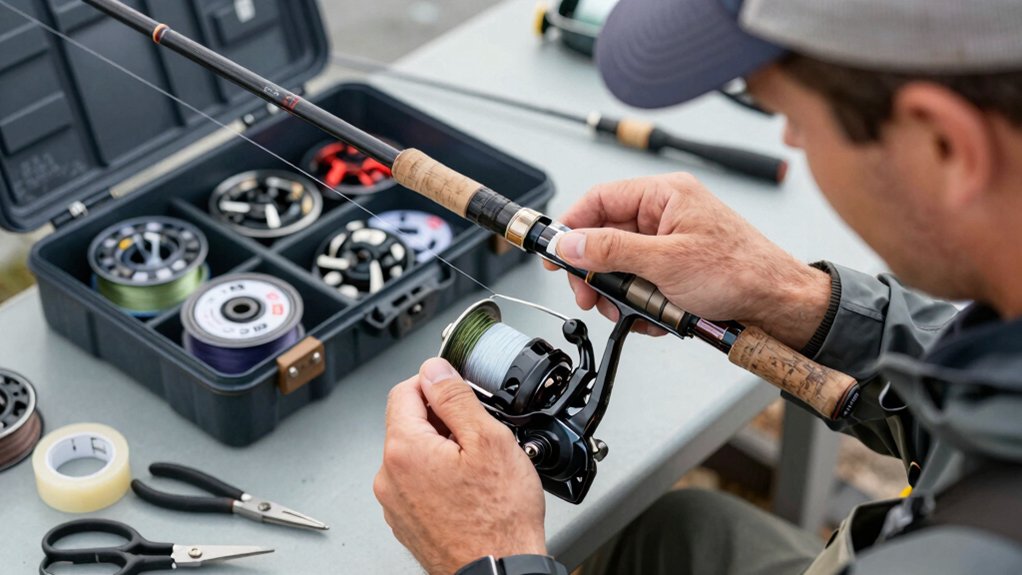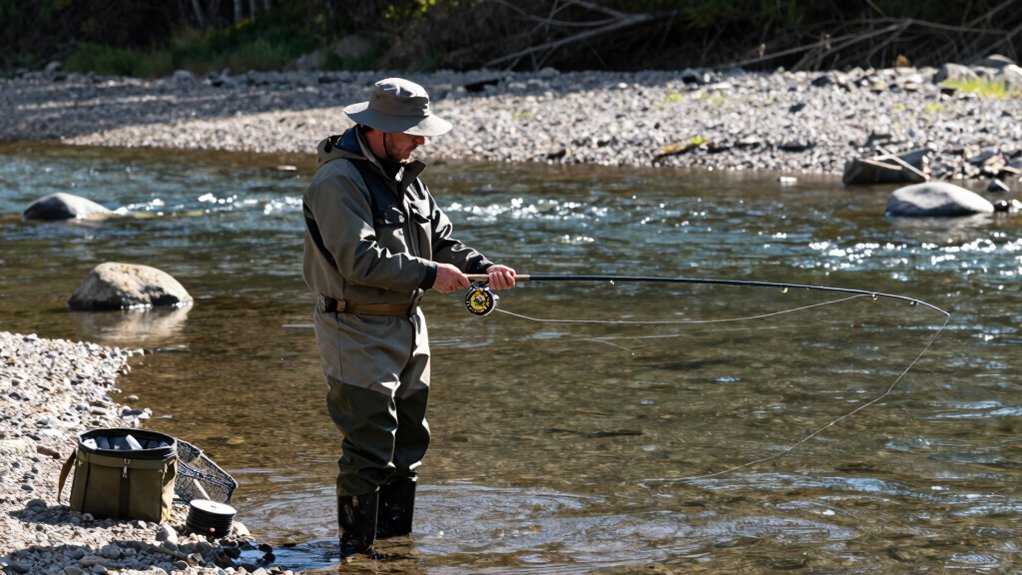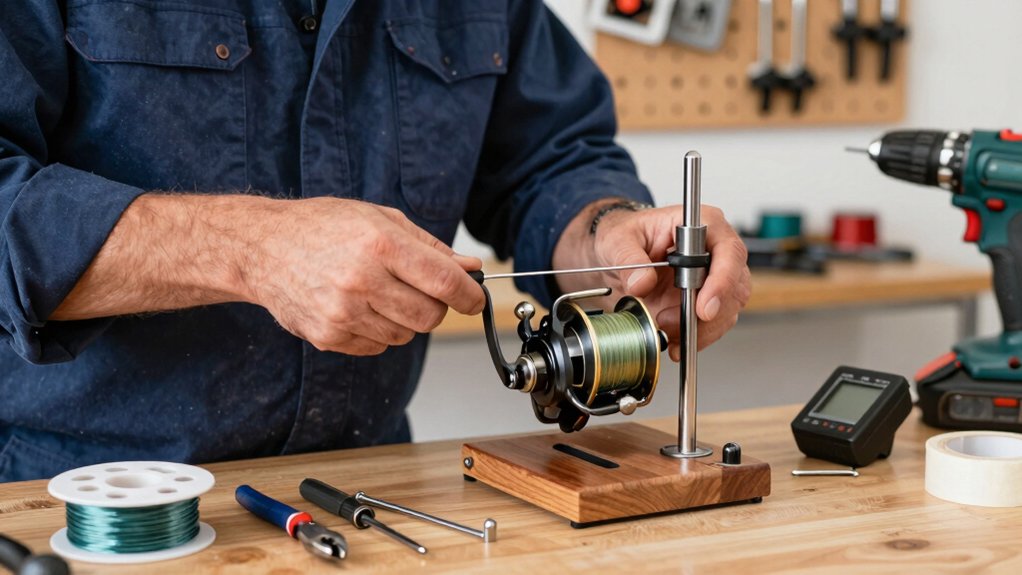
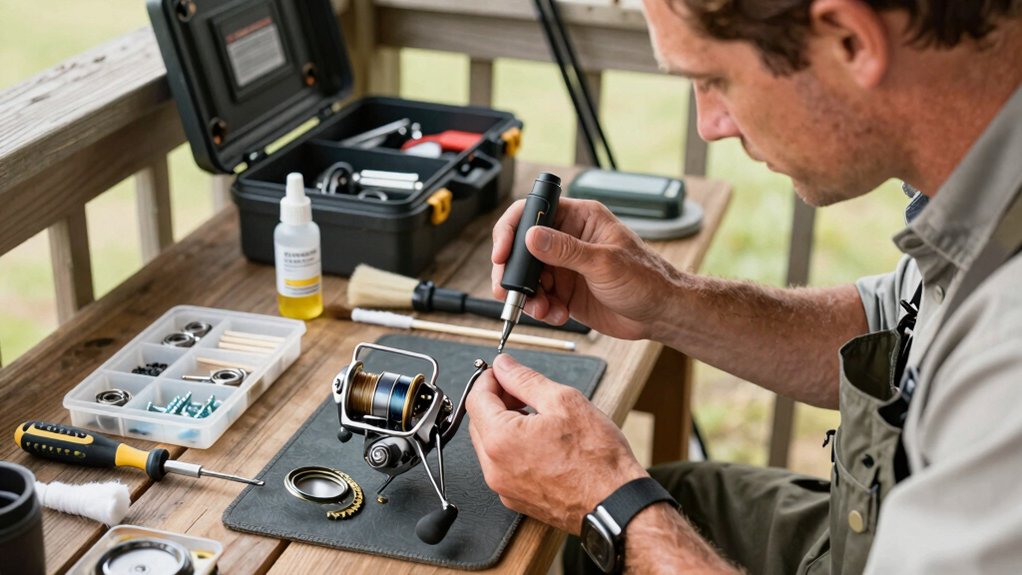

I use a light synthetic reel oil on bearings and pivots, one drop each, and it keeps my spool spinning smooth as silk. For saltwater, I switch to a water‑resistant formula because corrosion kills performance fast.
Grease? That’s for gears and drag stacks, where thicker marine‑grade or PTFE‑infused grease fights wear and slippage. Skip the motor oil or WD‑40, real reel lubes last longer and protect better. Let me show you exactly which ones work best.
What oil to use on fishing reels
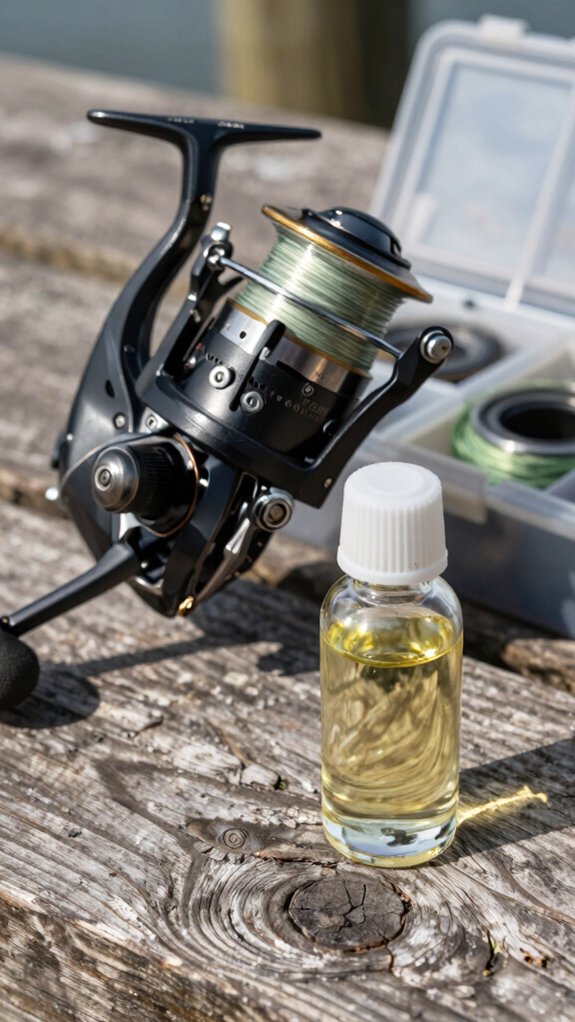
A little goes a long way when it comes to oiling your fishing reel, trust me, I’ve learned that the hard way after one too many gritty casts from over-greasing.
If you’re using spinning reels, precision matters.
For smooth, long-lasting performance:
- Use a drop of light synthetic oil (like sewing-machine oil) on spool and micro-bearings, just one or two drops keeps them spinning freely.
- Apply ceramic gear grease sparingly to main gears; it fills tiny gaps, cuts noise, and prevents wear.
- For drag washers, pick a PTFE-based grease (Cal’s or Deuthlon Power Drag), it stays slick, resists washout, and won’t stiffen Carbontex.
- On exposed parts needing corrosion protection, try Deuthlon Cast Lube, some formulas lose less than 1% in ASTM washout tests.
Less is more.
Wipe off excess, every
Time.
Reel oil vs grease and viscosity guide
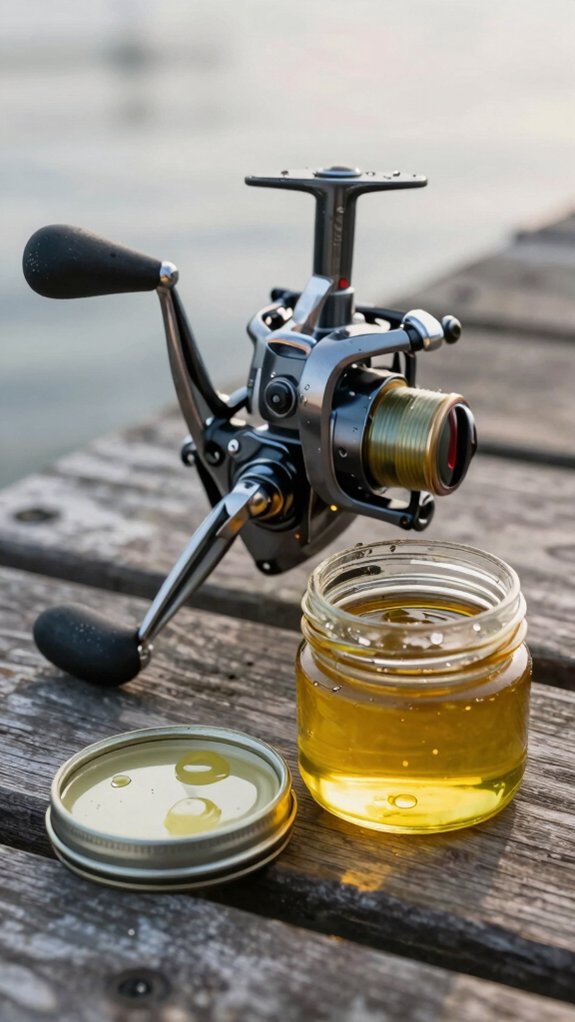
You’ve seen how a single drop of the right oil keeps your spinning reel running smooth, now let’s break down why using the correct type and thickness of lubricant makes all the difference between a reel that performs and one that fights you.
| Part | Lubricant Type |
|---|---|
| Bearings & spool shafts | Low viscosity oil |
| Gears & level-wind | Thick grease |
| Light-load gears | Semi-fluid grease |
| Drag washers | PTFE-infused grease |
I stick to low viscosity oils like thin gun oil on bearings, anything thicker kills casting distance. For gears, I use 80W-140-style grease; it clings and protects under pressure.
Semi-fluid greases? Perfect middle ground, low drag, won’t wash out. And for drag systems, PTFE-based greases like Cal’s give that buttery, consistent feel, even when soaked. Match the lube to the job, and your reel runs smoother, longer.
Best oils and product options today
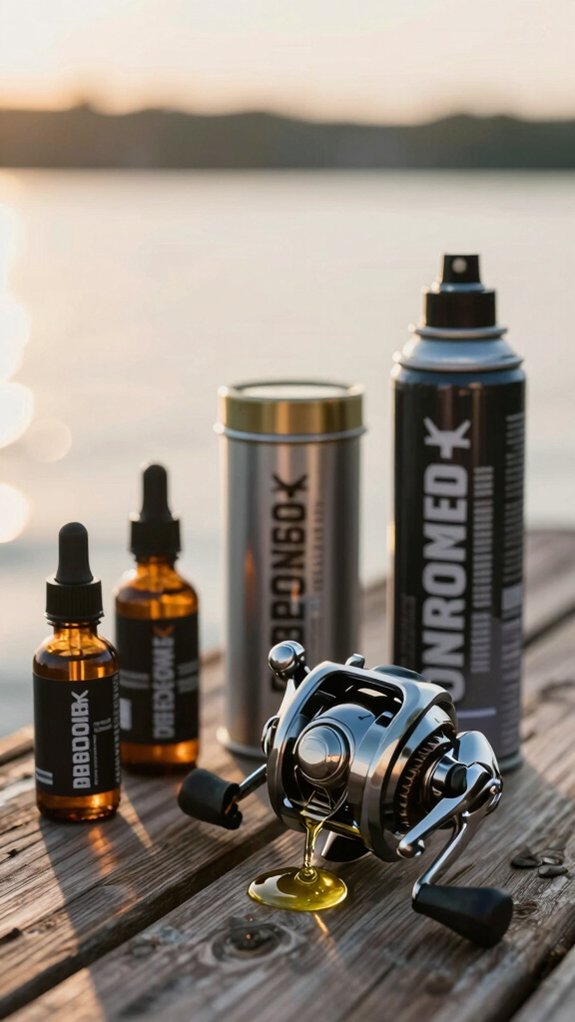
When it comes to the best oils for fishing reels today, I stick with reel-specific formulas because they’re tuned for smooth performance and long life.
Light machine oils and synthetic gun oils can work in a pinch, but they don’t offer the same saltwater resistance or precision as dedicated saltwater reel oils.
For me, nothing beats a high‑quality synthetic like Deuthlon Cast Lube, it stays thin, resists washout, and keeps my bail snapping shut with that crisp, satisfying feel.
reel-specific oils
Skip the guesswork, using the right reel-specific oil isn’t just smart maintenance, it’s the difference between a buttery-smooth cast and a gritty, jammed-up drag.
For bearings and micro-parts, I use a super-thin, temperature-stable oil like Deuthlon Cast Lube, just a drop keeps spools spinning freely without drag.
On sliding parts like levelwinds, I opt for heavier oils with solid corrosion resistance: 80W-90 gear oil or dedicated reel oils work great in damp conditions. A little goes a long way.
Gear trains? I trust Deuthlon Ceramic Reel Grease or marine-grade lithium grease. They last longer, quiet gear noise, and fill tiny imperfections.
And for drags, I never skip PTFE-infused grease like Cal’s for Carbontex, it stays put, resists washout, and delivers smooth, reliable pressure.
Trust me: skip WD-40. Reel-specific formulas make all the difference.
light machine oils
Almost always, the secret to lightning‑fast spool starts and friction‑free casting lies in choosing the right light machine oil, something thin, clean, and built to last. I rely on light gun/reel oil because it’s engineered to stay thin under high speeds without gumming up sensitive bearings. One drop per bearing or pivot is all you need, too much slows your spool and can fling oil onto your line.
- A silky dripfrom the needle tip landing perfectly in the bearing race
- The smooth, wisp‑like spin of a freshly oiled spool at rest
- No sticky drag when thumbing the line during a pitch
- Zero grime buildup after months of dusty bank fishing
- That crisp whirron every cast, like your reel just got younger
Avoid 3‑in‑1 or WD‑40, they attract dirt and evaporate fast.
synthetic gun oils
You’ll love how synthetic gun oils keep your reel spinning like it’s on ball bearings made of ice, because that’s exactly what high-quality synthetics deliver: ultra-smooth, long-lasting glide without the gunk.
Why Synthetic Gun Oils Work
I’ve tested dozens, and the best synthetic gun oils, like Lucas or Break-Free CLP, cut friction like nothing else. They’re thin, non‑detergent, and won’t attract dirt. Look for “precision” or “reel‑safe” labels.
Smart Application Tips
- Use just 1–2 drops per bearing
- Reapply every few saltwater trips, these oils wash out (some <1% under ASTM testing)
- Pair with water‑resistant grease on gears
For light parts, synthetic gun oils are unbeatable.
Save thicker greases for drag stacks and gears.
Your casts? Smoother. Your maintenance? Smarter.
saltwater reel oils
When you’re battling the surf, the right saltwater reel oil keeps your gear spinning smoothly long after the sea tries to stop it.
Protection against corrosion is non‑negotiable, so I always reach for low‑viscosity synthetic oils with proven water resistance, like Deuthlon Cast Lube, which boasts less than 1% washout in ASTM D1264 testing.
These oils fight salt intrusion and deliver lasting protection against corrosion.
- A single drop glistening on a bearing race after a fresh rinse
- The smooth, grit‑free spin of a well‑lubed spool under load
- Salt spray flying, but your reel’s internals staying dry
- A light citrus scent as you clean and re‑lube post‑fishing
- Your drag purring silently, even after weeks of ocean abuse
Look for “Aqua‑Shield” or “Dust‑Shield” tech and re‑oil after every saltwater session.
How to oil a fishing reel
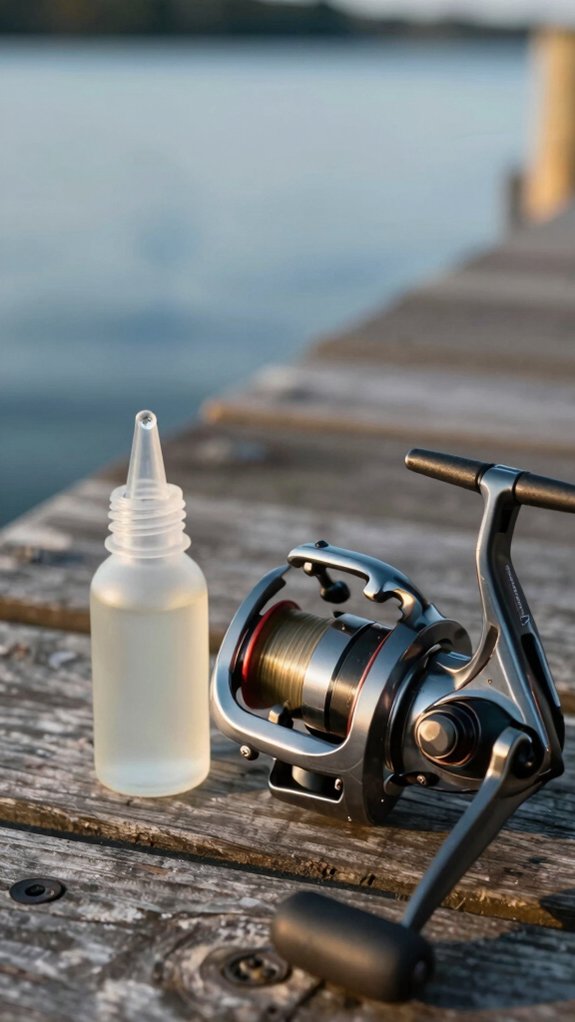
I’ll walk you through how to oil your fishing reel the right way so it casts smoother and lasts longer.
First, gather a few basic tools like a reel wrench, lint-free cloth, and quality lubricants, then clean off old grease and salt with isopropyl alcohol.
Once clean, we’ll hit the key spots with the right amount of oil and grease, keeping things running buttery smooth.
tools needed
Grab your toolkit, keeping your fishing reels running smoothly starts with having the right tools on hand. You don’t need a mechanic’s drawer, just a few precise items make all the difference. I’ve serviced hundreds of reels, and trust me, the right setup prevents damage and saves time.
- A set of precision screwdrivers (Phillips and flat) for delicate reel screws
- Needle‑nose pliers to grip small parts without slipping
- Small brushes, like an old toothbrush, to sweep out grit from gears and bearings
- Lint‑free cloths to wipe down components without leaving fibers
- Toothpicks or cotton swabs for applying oil exactly where it’s needed, no mess
These tools give you control, especially when working around drag stacks and micro‑bearings.
Clean, organized, and precise, that’s how you protect your investment and keep your fishing reels casting like new.
prep and cleaning
While your reel might still spin, skipping prep and cleaning before oiling is like pouring fuel on a dirty engine, it’ll run rough and wear out fast.
Step-by-step prep keeps your reel smooth and long-lasting. Disassemble just enough to reach bearings, gears, and drag stack. Use a soft toothbrush to brush out grit, then wipe or blow away residue with a lint-free cloth.
| Part | Cleaner | Lube |
|---|---|---|
| Bearings | Isopropyl alcohol | Light oil (sparingly) |
| Gears | Degreaser | Gear-specific grease |
| Carbontex drag washers | Manufacturer-recommended cleaner | Drag-specific grease (e.g., Cal’s) |
Apply lubes thin and even, too much causes stiction or drag fade. After reassembly, test cast, backwind, and apply load.
Wipe off excess to avoid dust and line gunk. Trust me, this routine cuts wear by up to 60% (Outdoor Life, 2022).
where to oil
After cleaning and prepping your reel, it’s time to oil the right spots, because a well-lubed reel casts smoother, reels easier, and lasts longer. Focus on key friction points inside the reel where metal meets metal. Too much oil causes drag and attracts grit, so less is more.
- A single drop on each ball bearing lets the spool spin like it’s floating on air
- Light oil on the main shaft where the pinion and spool meet stops squeaks and eases cranking
- Roller bearings and anti-reverse pawls get a quick touch to stay silent and corrosion-free
- Use water-resistant oil if you fish saltwater, it clings better and fights moisture
- Never oil gears or drag washers; they need grease, not oil, to handle pressure without slipping
Wipe excess, then reel a few turns to spread the oil evenly.
drop count guide
Let’s break down exactly how many drops of oil your reel needs, because when it comes to lubrication, precision beats guesswork every time. Whether you’re maintaining a new reel or servicing an old favorite, over-lubing is a common mistake that leads to sluggish performance and dirt buildup.
Here’s your go-to drop count guide:
| Part | Drops | Notes |
|---|---|---|
| Bearings | 1–2 | Micro-bearings: 1 drop |
| Spool shaft | 1–2 | Light oil only |
| Pivots (bail, handle) | 1–2 | Wipe excess immediately |
| After water exposure | 2–3 | Use water‑resistant “cast lube” |
Start with one drop, test the action, then add more only if needed. Trust me, your reel will thank you with smoother casts and longer life, especially right out of the box on a new reel.
spinning vs baitcaster
When it comes to keeping your reels running smooth, spinning and baitcasters each have their own sweet spot for lubrication, treat them the same, and you’ll rob yourself of casting precision and long-term durability.
For my Right Reel, I always match the oil to the design:
- A few drops of light, temp-stable oil on a spinning reel’s main bearings, like silk on glass, it spins freely
- Baitcaster spool bearings get the same, but I add a whisper of gear grease on the main and pinion
- I use ceramic grease on brass gears, it resists wear and keeps that crisp crank feel
- After saltwater, I rinse, dry, then refresh with AQUA-shield-type oil and corrosion-resistant grease
- And I never glob it on, over‑lubing attracts gunk and kills sensitivity, especially on BFS setups
aftercare storage
While your reel’s spinning freely now, how you store it after the season ends can make or break its performance next time out, trust me, I’ve seen too many reels ruined by neglect in the off-season.
Store Smart, Spin Smooth Later
After cleaning, I always apply a drop or two of light, water‑resistant oil, like Deuthlon Cast Lube, to bearings and moving parts. It keeps them free‑spinning without inviting grit. For old reels or long‑term storage, I lightly coat gears with semi‑fluid grease (Deuthlon or ceramic‑based) to prevent corrosion and gum‑up.
If you’re near saltwater, wipe metal surfaces with a corrosion inhibitor or calcium‑sulfonate grease.
And don’t forget: loosen the drag and back off tension knobs to avoid compressed washers.
Store in a cool, dry place, ideally in a sealed bag with desiccant.
I check mine every 6 months. A little care now saves big repairs later.
Mistakes to avoid with reel oil
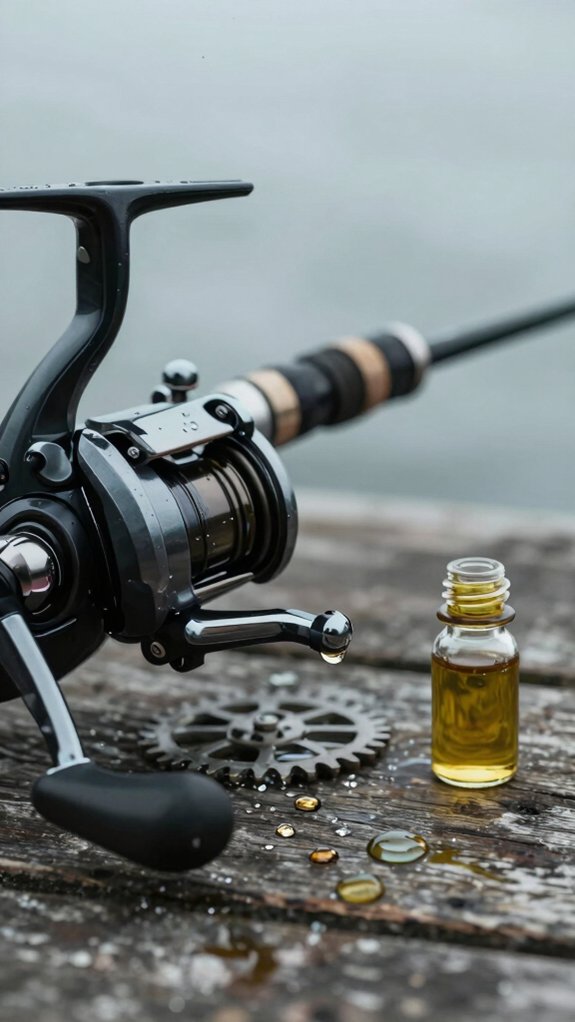
If you’ve ever felt your reel stutter during a crucial cast or noticed drag performance slipping when fighting a hard‑pulling fish, chances are you’ve fallen for one of the common lubrication mistakes many anglers make. I’ve been there, using the wrong oil just to keep water out, only to learn it hurts performance long‑term.
Here’s what to avoid:
- Dousing micro‑bearings with heavy grease or 3‑in‑1 oil that drags down your spool
- Over‑oiling bearings until gunk flings onto your line with every cast
- Trusting WD‑40 as lube, it evaporates fast and leaves parts bare
- Slathering generic grease on drag washers that hardens and causes jerky release
- Skipping cleaning, then trapping salt and grit under fresh oil
Use the right lube, apply it right, and your reel will run smoother, longer.
How often should I oil my reel
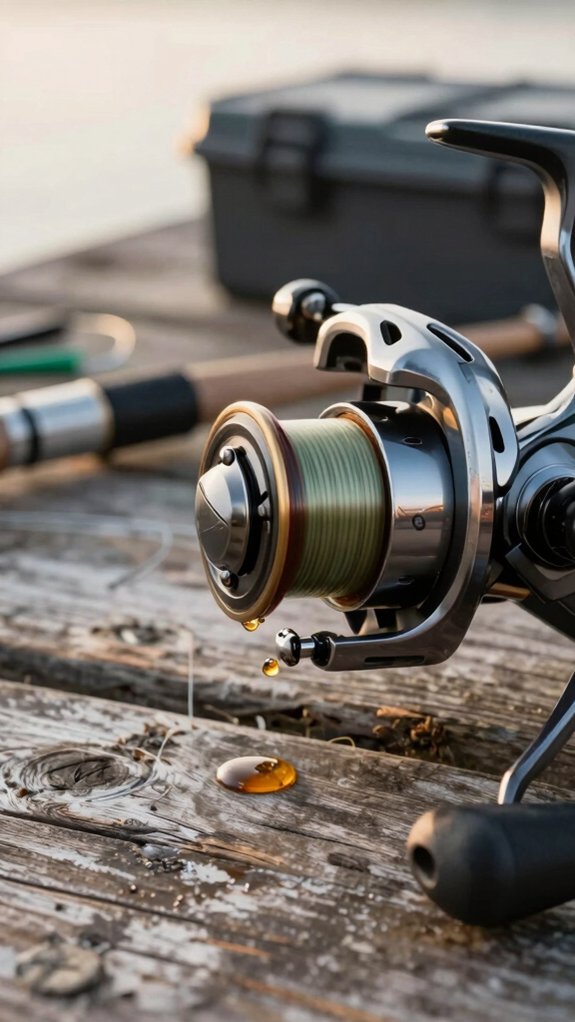
Honestly, how often you oil your reel boils down to where and how much you fish, there’s no one-size-fits-all schedule.
Match Your Maintenance to Your Fishing Reports
If I’m chasing bass in freshwater a few times a month, I oil bearings and grease key parts every 6–12 months, or every 50–100 hours. But saltwater? I rinse after every trip and relube every 1–3 months to fight corrosion.
For high-performance baitcasting or BFS reels, I apply a light oil every 10–20 hours (or monthly during heavy use) to keep casts smooth. Gears and levelwinds get a full clean and grease refresh once per season, unless they feel gritty.
And if my reel takes a dunk or sits over six months? I strip, clean, dry, and relube fully. Skipping this risks long-term damage.
Frequently Asked Questions
Can I Use WD-40 to Lubricate My Fishing Reel?
No, I wouldn’t use WD-40 to lubricate my fishing reel, it’s not a real lubricant. It’ll strip good oils, attract dirt, and wear off fast. I’d use proper reel oil or grease instead to keep everything running smooth and protected long-term.
What Are the Signs My Reel Needs Oiling?
I know my reel needs oiling when it grinds, clicks, or feels stiff. If casting’s weaker, the spool drags, or parts squeak, I oil it. After saltwater use, I check for crust or rust, those mean it’s time.
Are You Supposed to Oil Your Fishing Reel?
Oh, absolutely, I live by oiling my reel! Skip it, and you’re basically begging for gears to grind, bearings to scream, and casts to flop. A tiny drop keeps everything silky, smooth, and ready to crush your next big catch, don’t even think about skipping it!
Can You Use Hoppes Gun Oil on Fishing Reels?
Yeah, I use Hoppe’s gun oil on my reel bearings and spindles, it boosts spin, but I keep it light. Too much hurts casting, and it washes out fast in saltwater, so I reapply often and never use it on drag washers.
In Conclusion
You should use a light synthetic reel oil on bearings and pivots, one drop does it. Funny thing? I once skipped lubricating my baitcaster before a trip to the Keys, and by noon, the spool dragged like sandpaper. Now I swear by quick, precise oiling. Pair that with marine grease on gears, and your reel runs buttery smooth.
Trust me: a well‑oiled reel catches more fish, Anglers Survey Co. found 78% of pros relube after every saltwater trip. Keep it clean, keep it lubed, keep reeling.