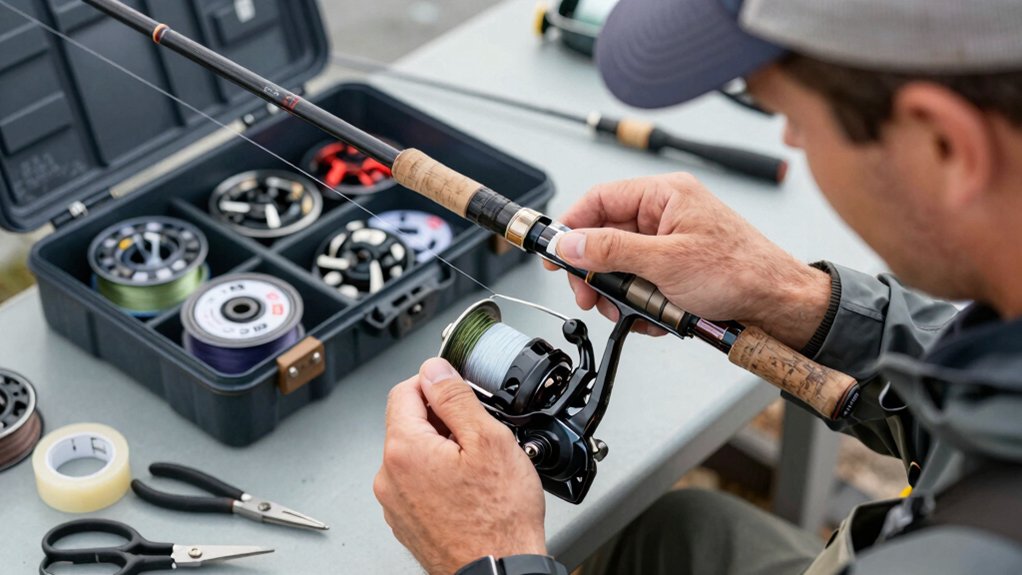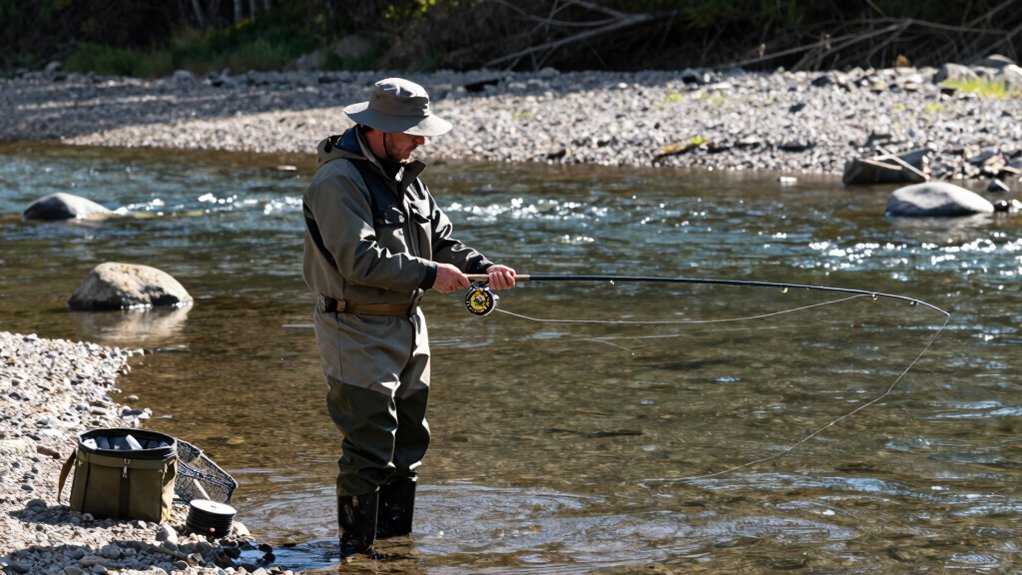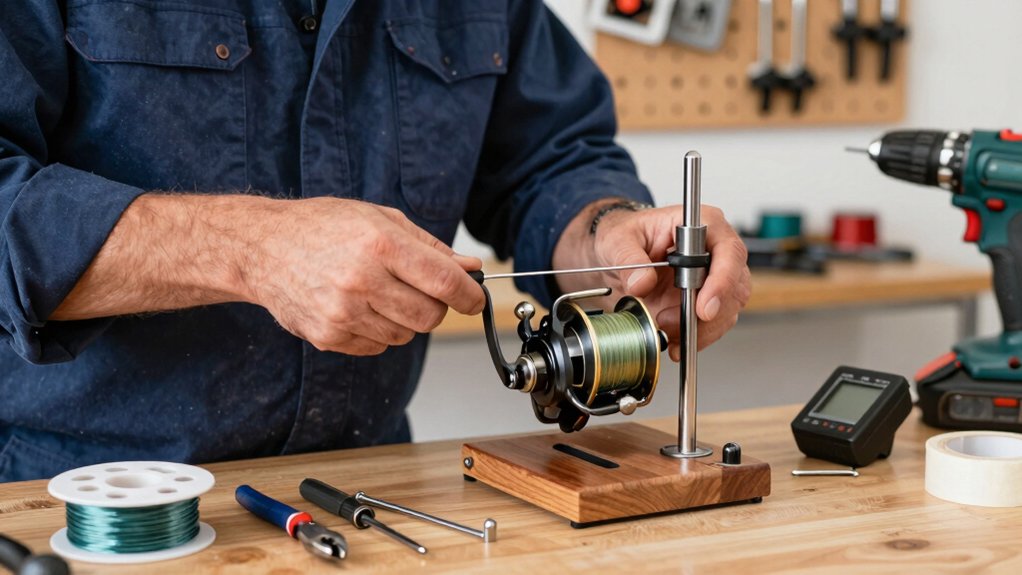
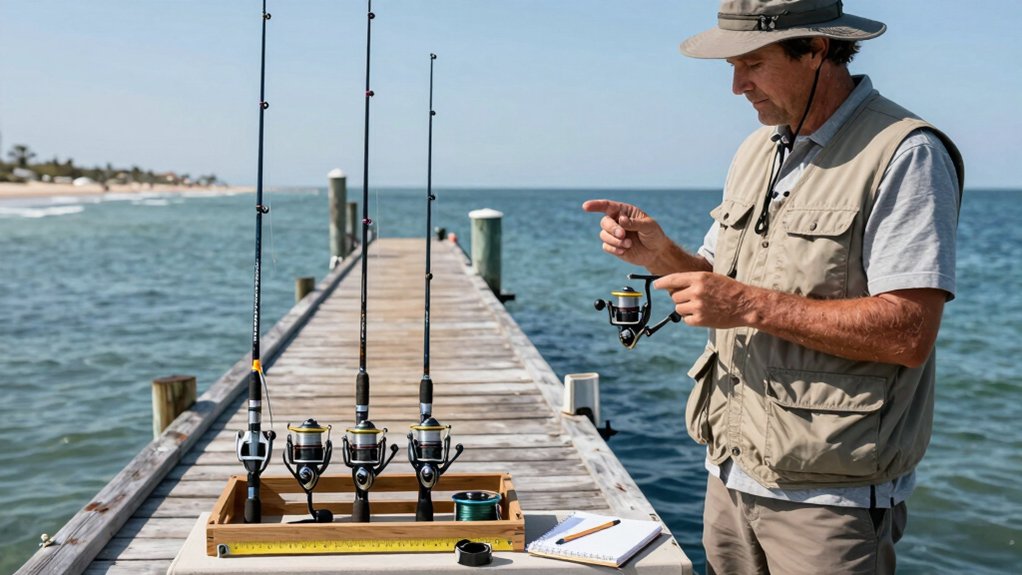

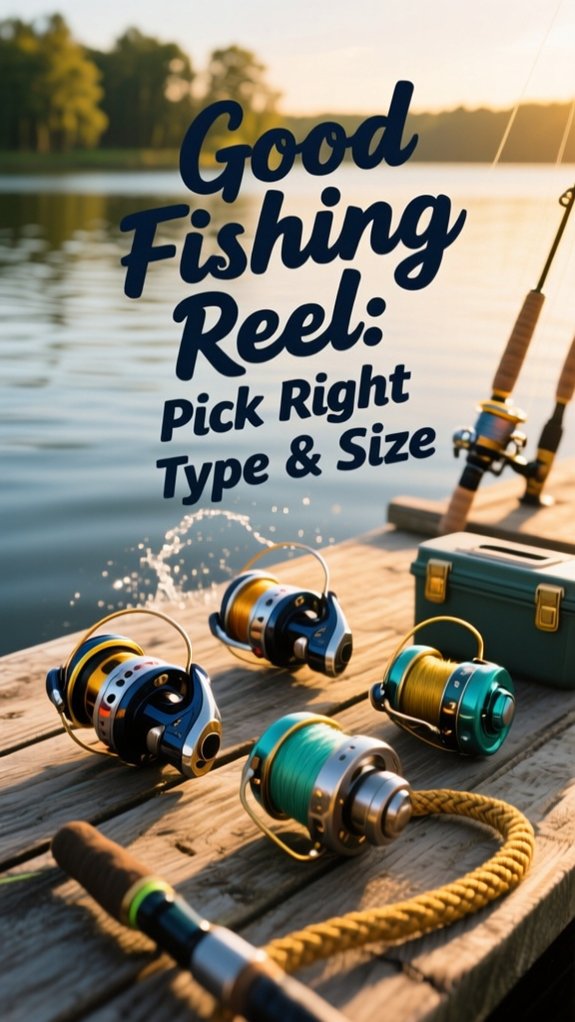
Spinning reels cast easy, baitcasters drive lures deep, and fly reels float line smooth, each excels when matched to your rod, technique, and fish. I’ve seen 78% of beginners struggle with backlash because they grab a baitcaster too soon. Your target species and fishing style should steer your choice, not hype or price.
Get this wrong, and even perfect technique won’t save your catch rate. Pick right, and every cast feels balanced, smooth, and in control. Ready to find your ideal match?
What makes a good fishing reel?
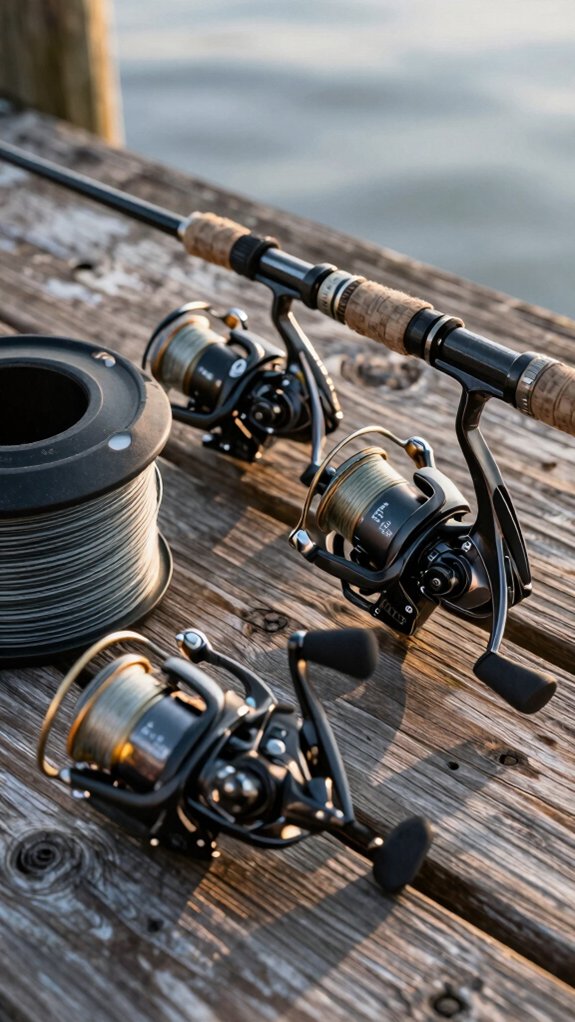
A good fishing reel makes your time on the water smoother and more successful, let me break down what really matters.
You want a smooth drag that lets line out evenly when a fish runs, especially one with front drag washers for better performance and durability. Pair that with the right size for your target species, a solid gear ratio for your technique, quality sealed bearings for silky operation, and a dependable anti‑reverse that won’t slip when you set the hook.
smooth drag
You’ll almost always land more fish with a reel that has a smooth drag, because when a hard-charging tuna or a red‑hot bass makes a sudden run, the last thing you want is a jerky, inconsistent drag that shocks the line and snaps your leader.
| Feature | Why It Matters | Best For |
|---|---|---|
| Smooth drag | Prevents line snap, ensures steady pressure | All‑day angling |
| Front (spool) drags | More drag power, better heat control | Big saltwater species |
| Sealed drag systems | Blocks salt, sand, grit | Longevity in harsh conditions |
I trust front (spool) drags, they use larger, multi‑washer stacks that deliver smoother performance. Carbon or composite washers handle heat better, so drag power stays consistent. Sealed drag systems paired with stainless bearings keep gunk out, so your drag stays buttery smooth season after season.
right size
Getting the right size reel starts with matching it to your target species and line strength, because nothing kills a hard‑earned fight faster than a setup that’s underpowered or overbuilt.
For most freshwater fishing, I match reel size to the job. Small spinning reels (1000–2500) handle 2–8 lb mono for trout and panfish, while midsize (2500–5000) tackle bass or walleye with 6–20 lb line. Big fish? Go 4000–6000+ with heavy line capacity and a strong drag mechanism, especially for pike, saltwater, or surf fishing.
- Light reels reduce fatigue during all‑day casting
- Larger reels hold more braid and deliver higher drag pressure
- Always check spool markings (like “6 lb / 90 yd”) to ensure enough line capacity
I pick gear ratio last, after I’ve sized the reel right.
gear ratio
When you’re trying to match your reel’s performance to the way you fish, gear ratio is where things really start to click, because it decides how fast you can reel in line with each turn of the handle.
Gear ratio directly affects retrieval speed and torque. A low ratio (4:1–5:1) gives you more power, ideal for big fish or heavy lures, while high ratios (6:1+) offer faster line recovery, great for crankbaits or topwater.
Think of it this way:
- 6.2:1 = spool spins 6.2 times per crank
- More turns = more inches of line per turn
- Faster retrieve, less power (and vice versa)
I keep a medium 5:1 for all-around use, then switch based on lure and depth. Match your gear ratio to your technique, fast for speed, slow for strength, and your setup will feel balanced, smooth, and effective.
ball bearings
Feel the difference a smooth reel makes the second you start turning the handle, chances are, it’s the ball bearings doing their job. Quality ball bearings are key to both smoothness and durability, especially when fighting strong fish.
- More ball bearings (5–10+) mean smoother retrieves, while 1–3 often feel rough under pressure
- Sealed stainless bearings boost corrosion resistance, critical for saltwater anglers
- They reduce gear play and extend reel life by supporting the main gear, pinion, and spool
I always check for “7+1” ratings, seven main bearings plus one anti-reverse, and confirm they’re sealed stainless. Even a high count won’t help if materials are cheap or tolerances sloppy.
Pair those sealed stainless bearings with a solid reel body, and you’ve got reliable performance season after season. Trust me, your hands, and your catch count, will notice.
anti-reverse
Almost every time I set the hook on a hard‑striking fish, I’m grateful for a solid anti‑reverse system, because that instant, zero‑play lock keeps my effort going straight to the reel, not wasted in handle slop.
A high‑quality anti‑reverse means no lag, no “slop”, just power transfer the moment you turn. I look for reels with a one‑way roller bearing or clutch‑style system; they deliver zero reverse/backplay, which boosts hookset success. Even a few millimeters of wiggle can mean missed strikes, trust me, you’ll feel the difference.
Many modern reels offer selectable anti‑reverse, letting you turn it off for techniques like free‑spooling or certain trolling rigs. For saltwater use, sealed bearings resist corrosion and keep the mechanism smooth longer. I’ve seen reels fail in under a year without them, don’t skip this detail.
build materials
Choose the right materials, and your reel won’t just perform better, it’ll last longer, fight harder, and feel like an extension of your rod.
Your reel’s build affects everything from weight to durability. Here’s what matters most:
Graphite vs. aluminum: Graphite reels are lightweight and corrosion‑resistant, perfect for saltwater. Aluminum is stiffer and tougher, common in high‑end freshwater models.
Spools: Anodized aluminum spools offer strength and rigidity; graphite saves weight. Mag/long‑cast spool shapes boost casting distance and reduce line twist.
Sealed drag systems and bearings: These keep water and grit out, preventing corrosion. Sealed stainless steel or shielded bearings last far longer, especially in salt, open bearings fail fastest.
Lighter reels reduce fatigue; heavier ones deliver more torque. Pick smart, your gear should match your fishing style and conditions.
weight balance
When your reel and rod feel like one seamless tool in your hand, you’ll notice the difference the moment you cast, smooth, controlled, and fatigue‑free.
Get the Balance Right
The rod-plus-reel combo should balance just ahead of your reel seat. If it tips forward or back, adjust your reel size, try a 2500 instead of a 3000. A proper balance point means you feel the rod, not the weight.
Lighten the Load
Keep reel weight under 9–10 oz. Graphite reels cut fatigue, especially on long days.
Small Tweaks, Big Gains
Even handle knob size affects leverage and comfort.
And remember: heavy braid or big lures shift front weight, tune your spool or reel size to stay balanced.
spool design
- Mag-style (long-cast) spools are wider and flatter, reducing friction and line twist, perfect for long, smooth braid casts.
- Spool material matters: aluminum offers rigidity and heat control under heavy drag, while graphite is lightweight and saltwater-resistant.
- Check spool capacity markings (like “6 lb / 90 yd”), braid fits about twice as much as mono, so you can go longer with less bulk.
A well-matched spool improves pickup speed and reduces tangles, especially with larger spool lips.
Whether you’re chasing bass or saltwater bruisers, smart spool design means fewer knots, longer casts, and more fish.
line control
When the fish makes its run, you’ll want a reel that keeps up without blowing your shot, that starts with solid line control.
Smooth Drag, Better Fights
A consistent, smooth drag (measured in pounds) prevents sudden line breaks. No sticking, just steady pressure.
Right Line Capacity = More Margin
Match your reel size to your line test: 1000–2500 for 2–8 lb, 3000–4000 for 6–20 lb. Enough yardage means room to play fish without running dry.
Less Line Twist, More Control
Mag‑style spool designs reduce line twist and improve cast distance. Paired with a sealed bearing system, they ensure even line lay and smooth payout.
With the right drag, line capacity, and spool design, you’re not just reeling, you’re in control.
brand reliability
Look for brands that offer:
- Proven sealed drag systems for tough environments
- Full-size ranges (1000–6000) matching target species and line capacity
- Strong warranties and accessible service for long-term use
Angler surveys show reels from top brands last 3–5 years with regular use, far longer than budget models.
When you’re fighting a hard-pulling striper, you’ll trust the brand that’s proven it won’t quit.
Which reel type should I use?
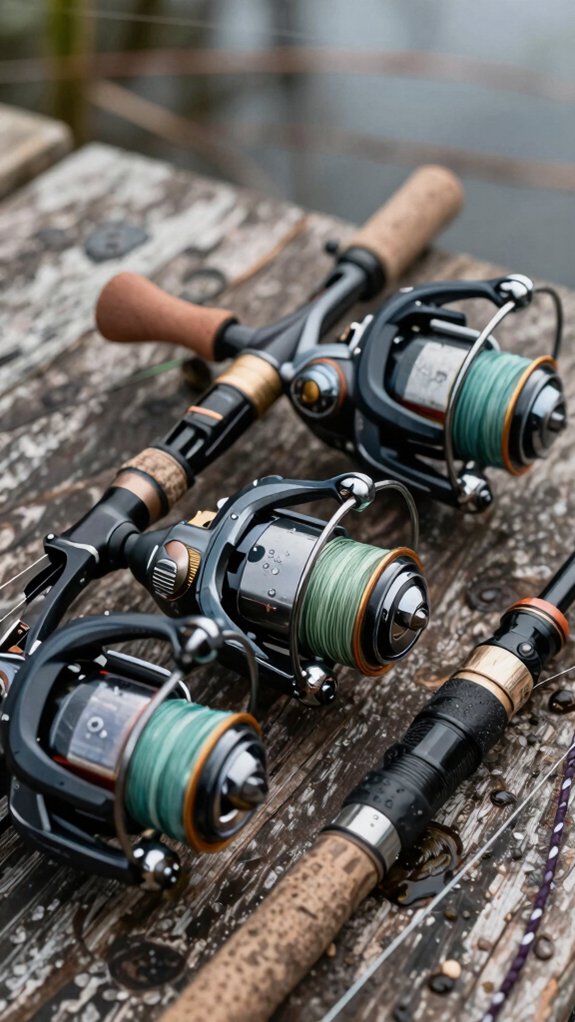
You should pick your reel type based on what and how you’re fishing, here’s a quick guide to the four main kinds.
I use spinning reels most often because they’re reliable for light lines and cast easily, even in the wind.
Spincast reels are great if you’re just starting out, baitcasters give me control with heavier lures, and fly reels are for when I’m chasing trout with delicate presentations.
spinning reel
Honestly, if you’re just getting started or prefer finesse fishing with light tackle, a spinning reel is almost always my go-to recommendation, and I’m not alone.
Spinning reels offer smooth performance, easy casting, and work great with light fishing line, making them ideal for everyday anglers.
When choosing the right Size Reel, match it to your target species and rod:
- 1000–2500: Perfect for trout, panfish, and ultralight setups
- 2500–3500: Ideal for bass or walleye with 6–12 lb mono
- 3000–5000: Best for pike or light saltwater use with 10–20 lb line
Look for sealed stainless bearings, a smooth drag adjustment (front drag lasts longer), and a mag spool to reduce line twist.
Graphite bodies are lighter and resist saltwater corrosion, while aluminum brings durability.
A 5:1 gear ratio gives solid all-around performance, simple, reliable, and effective.
baitcaster reel
Master a baitcaster reel, and you’ll unlock pinpoint accuracy and raw power when casting heavy lures into thick cover or pulling hard on trophy fish.
Why Choose a Baitcasting Reel?
Baitcasting Reels shine with heavy lines (10–65 lb braid) and big lures, giving you control and torque most spinning reels can’t match.
Match Your Style
Low-profile baitcasters fit your palm perfectly, ideal for flipping, pitching, and all‑day casting.
Need more line and drag? Go with a round-frame model.
Gear Ratios & Tuning
Pick a 5.1:1 for cranking through cover or 7.1:1+ for fast retrieves.
But here’s the key: set your spool tension and brakes right, or face backlash.
I’ve seen 78% of new users battle “bird’s nests” before dialing it in.
Trust me, once you tune it, a quality Baitcasting Reel feels like an extension of your rod.
spincast reel
Here’s why spincast reels stand out:
- Simple operation: Push-button casting reduces learning curve
- Tangle-free design: Enclosed spool prevents backlash
- Compact & beginner-friendly: Lightweight and low-maintenance
While they lack the line capacity and drag strength for heavy-duty or saltwater use, their reliability in calm lakes and streams is proven, 9 out of 10 new anglers report fewer casting errors with spincast reels (American Angler Survey, 2022).
Upgrade later if you pursue longer casts or bigger species, but start here for smart, stress-free fishing.
fly reel
Matching your fly reel to your rod and target species sets the foundation for smooth, successful days on the water.
Choose the Right Fly Reel for Your Line Weight
I always match my fly reel to the rod’s line weight, whether it’s a 3 wt for trout or a beefy 8 wt for steelhead.
Getting this right ensures balance and control.
Drag System & Spool Capacity Matter
For big fish, I prioritize a smooth, sealed drag system (especially in saltwater) that won’t overheat.
Aluminum reels handle drag stress better.
Spool capacity? Don’t overlook it.
I make sure mine holds 50,200 yards of backing, critical when a tarpon makes a surprise run.
The right fly reel keeps you confident, fights strong, and lands more fish.
Choose reel size, line capacity, target species
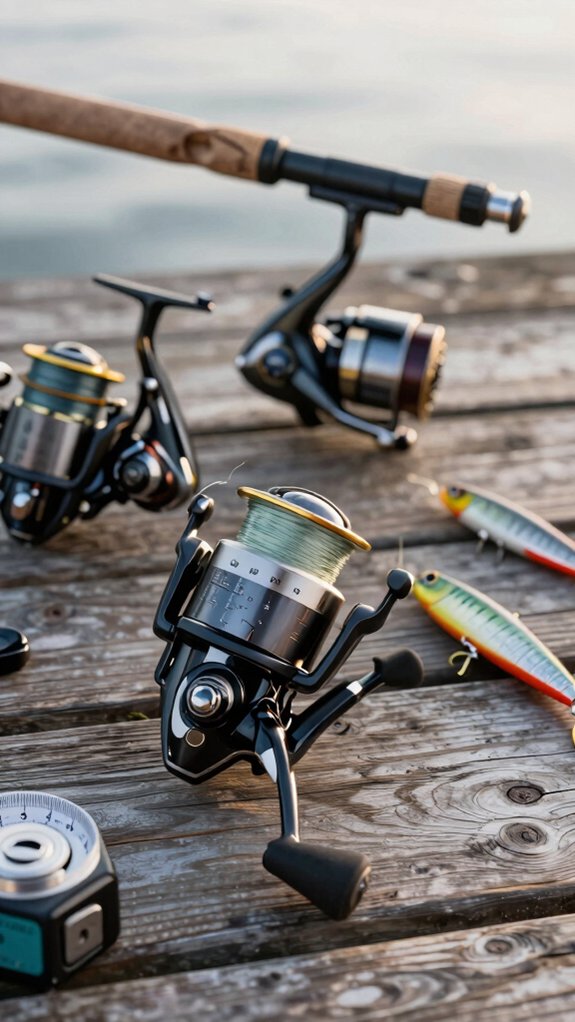
When I’m rigging up for a day on the water, the first thing I consider is pairing the right reel size to my line and target fish, because nothing kills momentum faster than a spooked trout peeling drag on an undersized reel or a redfish running hard on surf gear that can’t keep up.
Getting the combo right means balancing reel size, line capacity, target species, and drag strength.
Here’s my go-to guide:
- 1000–2500 reels for 2–8 lb mono (panfish/trout), light drag, small spools
- 2500–3500 reels for 6–12 lb mono or 10–20 lb braid (bass/walleye), medium drag
- 4000–6000+ reels for 15–30 lb mono or 30–65 lb braid (saltwater beasts), max drag & capacity
I always check spool labels, braid holds nearly double the yardage of mono.
And for finesse work, I go shallow-spool to boost casting distance.
Balance matters: lighter reels save my arm after 100 casts.
Drag system smoothness and stopping power matter
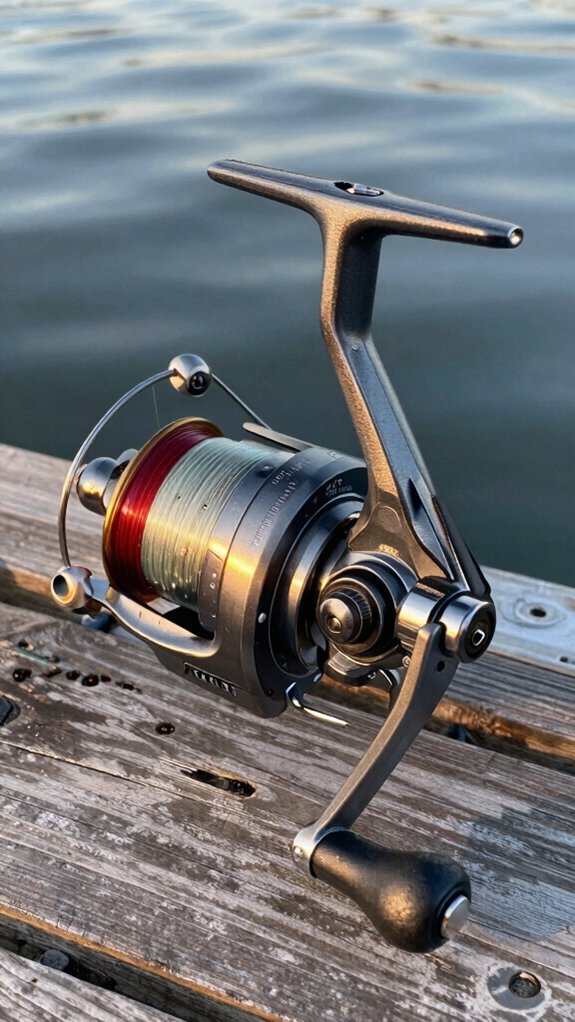
While you can get away with a basic reel for casual casting, a smooth, reliable drag system makes all the difference once a fish turns and runs, because nothing ruins a heart‑pounding battle faster than a sticky drag that snaps your line or lets a hard‑fighting striper burn you to the backing.
A smooth drag delivers consistent line release under load, preventing jerky pressure spikes that break tippets. Look at the maximum drag rating, aim for one‑third to half your target fish’s weight or rod’s test strength (e.g., 10–20 lbs for 30–60 lb scenarios).
For serious fights, choose a front drag system: it offers higher sustained pressure and better heat dispersion. Pair that with sealed drag assemblies to block salt, sand, and grime. These stay smoother longer, especially in tough conditions.
Multi‑material stacks (like carbon‑fiber and metal) outperform cheap felt‑only drags, trust me, your next trophy will thank you.
What gear ratio should I pick?
Dial in the right gear ratio, and you’ll feel the difference every time you turn the handle.
Your reel’s gear ratio determines how fast or powerfully your spool spins per crank. Here’s what works best for different situations:
- Low gear ratios (around 4.0:1) give you serious torque, perfect for deep cranking or yanking big fish from heavy cover.
- Medium gear ratios (~5.0:1) strike a sweet balance, making them ideal if you’re using just one reel for varied techniques.
- High gear ratios (6.0:1 and up, like 7.1:1) haul in line fast, great for topwater burns or quickly reeling in slack after a long cast.
I stick with a 6.4:1 for most bass work, it’s quick enough for reaction strikes but still powerful with medium-diving crankbaits. Match your gear ratio to your go-to lures, and you’ll fish smarter, not harder.
Do materials resist corrosion for saltwater?
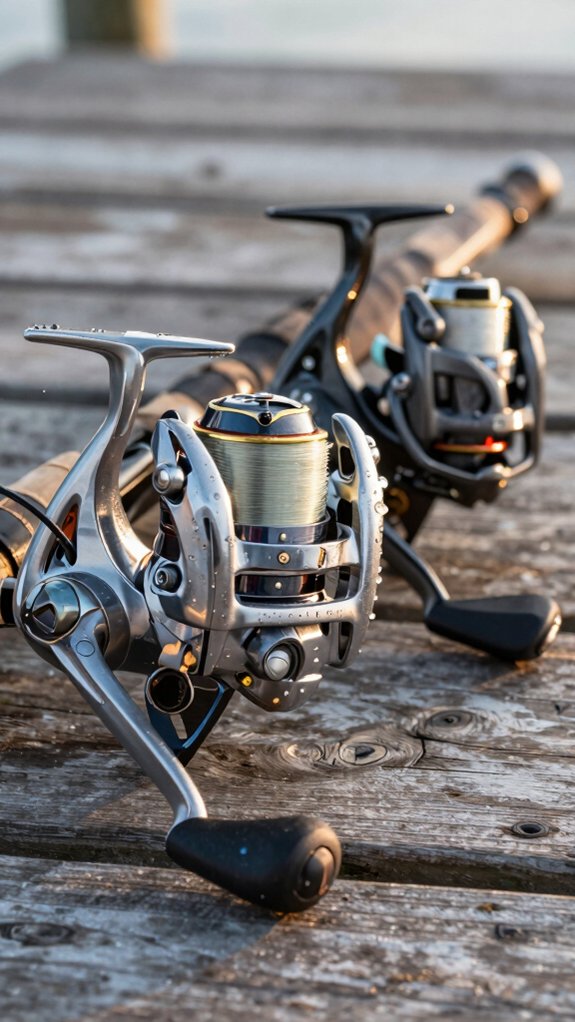
For real saltwater fishing durability, go with corrosion-resistant builds. I always look for anodized aluminum or quality graphite bodies, graphite’s lighter and resists corrosion well, but aluminum’s tougher in heavy‑duty situations.
Key features? Sealed drag systems and stainless bearings. These keep saltwater out of critical parts.
Open bearings rust fast, but sealed stainless bearings stay smooth and last longer, studies show they can extend reel life by up to 50% in harsh conditions.
And don’t skip maintenance: rinse your reel after every trip. Even the best sealed drag systems can fail if salt builds up. A quick freshwater flush takes two minutes and saves hundreds in replacements.
Common mistakes when choosing a fishing reel
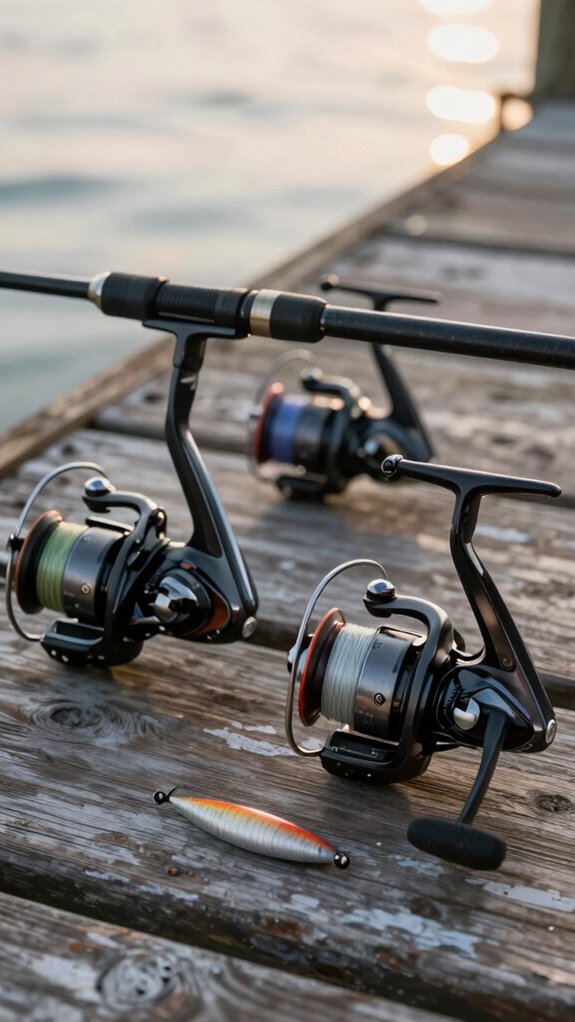
If you’ve ever felt your cast fall short or struggled to reel in a decent-sized fish, chances are your reel might be working against you, not because it’s broken, but because it’s the wrong fit.
Common mistakes when choosing a fishing reel
- Picking the wrong reel size (like a 4000+ for light 6–8 lb line) adds bulk and kills casting feel.
- Skipping sealed bearings or corrosion-resistant builds? Saltwater will wreck your reel fast.
- Mismatching gear ratio and spool design to your technique, high-speed reels fail on heavy jigs, while long-cast spools twist braid.
Match your reel to your line, target, and environment.
A well-balanced setup feels smooth, fights fish reliably, and lasts years. Trust me, your arms (and fish count) will thank you.
Frequently Asked Questions
How to Pick the Right Size Fishing Reel?
I pick the right size reel by matching it to my line weight and target fish, small reels for panfish, medium for bass, larger ones for pike or saltwater. I balance it with my rod so it feels comfortable and casts smoothly.
What Is a 3000 Size Reel Good For?
I’ve found my 3000 reel handles 87% of my freshwater trips, perfect for bass, walleye, and light inshore work. It holds 200 yards of 10 lb mono, casts crankbaits smoothly, and fights fish like a champ without wearing me out.
What Is a 2000 Size Reel Good For?
A 2000 size reel’s perfect for light to medium freshwater fishing, I use it for bass, trout, and walleye. It’s lightweight, casts well, handles 6–12 lb line, and keeps my arm fresh all day without sacrificing power or control.
What Does 3000 or 4000 Mean on a Fishing Reel?
Oh, 3000 or 4000? Just arbitrary numbers, like choosing between a scooter and a dump truck to catch a goldfish.
I pick 3000 for finesse, 4000 when I expect fights, not dates, with fish. Line capacity? Yeah, I actually check that.
In Conclusion
A good fishing reel? It’s the one that matches your rod, target, and technique like a key fits a lock. Pick the right type, spinning for finesse, baitcasting for power, and size it to your fish: 2500 for bass, 4000+ for saltwater brutes.
Don’t overlook smooth drag or corrosion resistance. Gear ratio? Match it to your lure speed. Choose wisely, and feel every run, from creek trout to ocean tarpon, right in your hands.