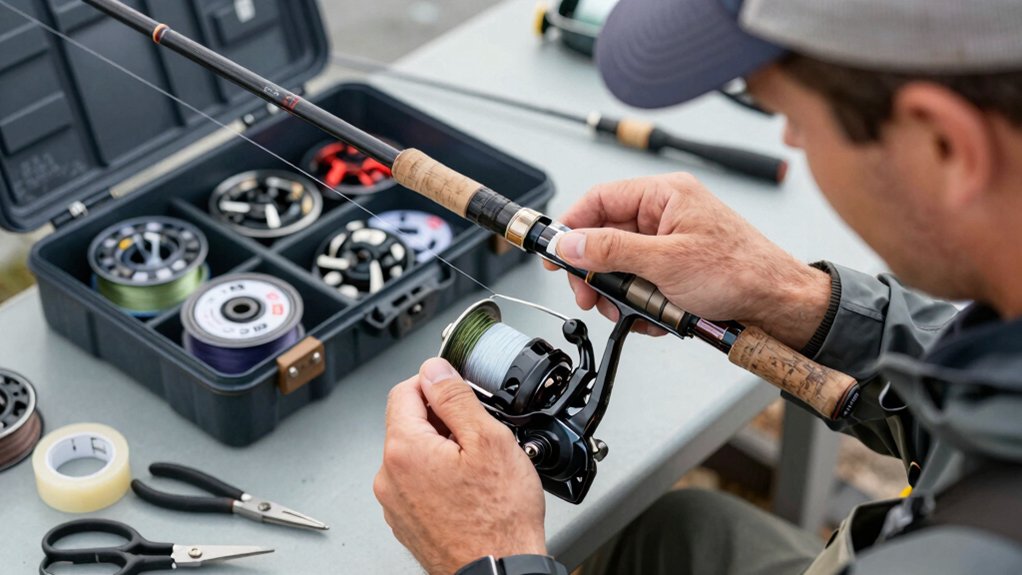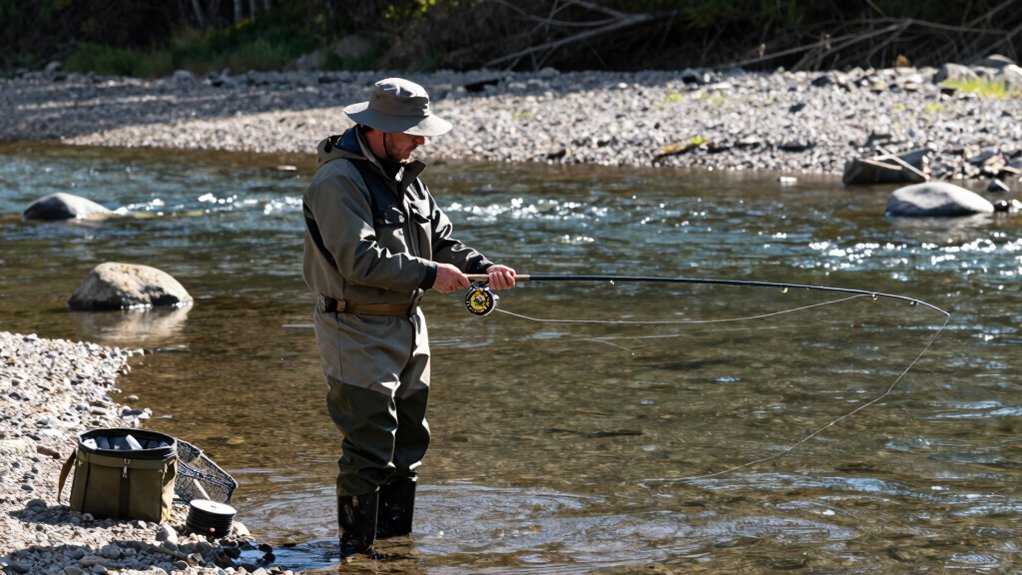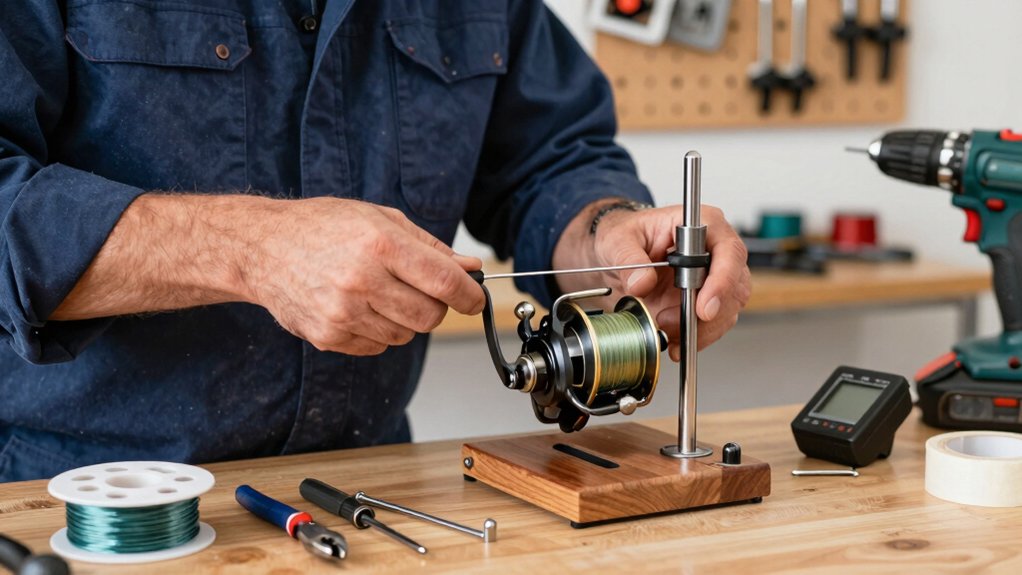
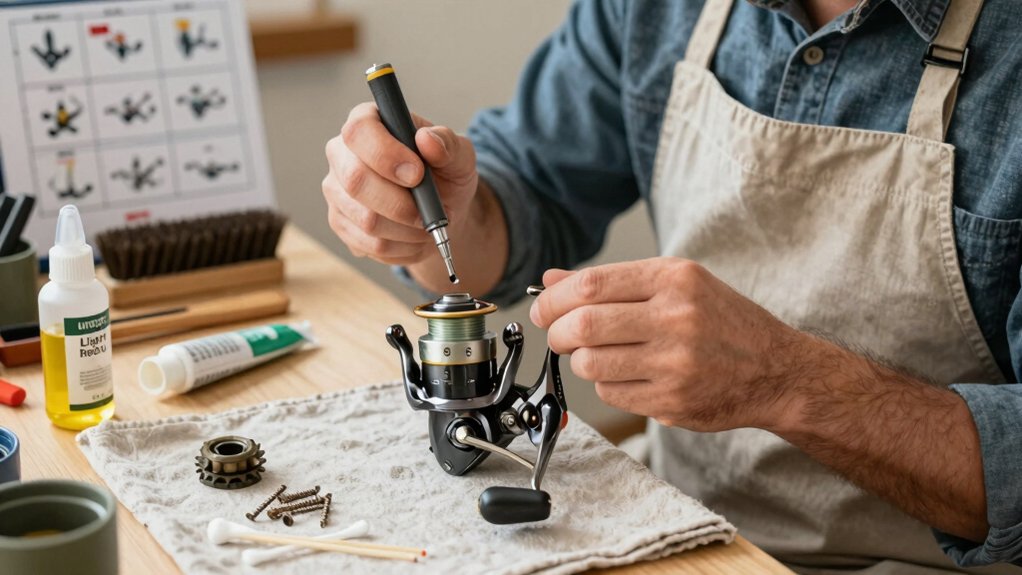


Last season, I lost a 28‑inch trout because my reel seized mid‑fight, salt and grit had wrecked the gears. Now I service my reels like clockwork. If you want smooth casts and reliable drags, knowing how to oil a fishing reel the right way is non‑negotiable.
I’ll walk you through the exact steps I use, the best lubes that last, and how to avoid the mistakes that silently kill reels. You’ll never spin a stiff handle again.
How to oil a fishing reel properly
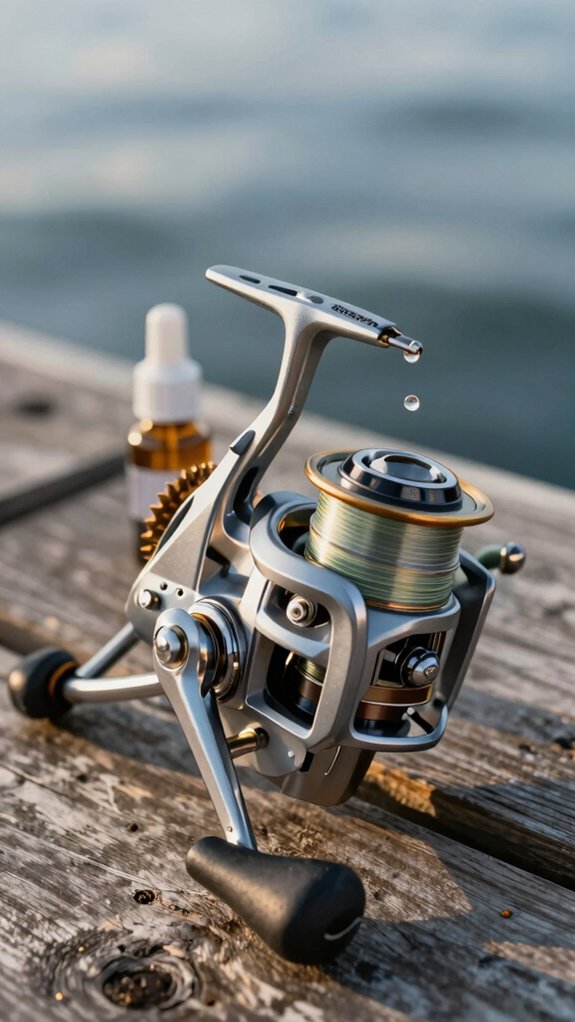
I’ll show you exactly where to apply oil so your reel runs smooth and lasts longer. Start by putting a drop of spindle oil on the handle knob bearings and the bail arm pivots, these spots wear out fast if they’re dry.
Don’t forget the line roller; just one drop on each side keeps it spinning freely without drag.
handle knob
Now and then, a stiff or squeaky handle knob is the first sign your reel needs a little tender loving care, especially where it connects to the reel body.
Lubing Your Handle Knob the Right Way
Start by removing the handle cap or knob screw to expose the hidden bearing or bushing.
If it’s a metal bearing, apply just one drop of reel oil to the edge, too much attracts dirt. For sealed bearings, put that same drop on the exposed side, then rotate the knob to work it in.
Got plastic collars or bushings? Skip the oil; use a tiny smear of reel grease instead to cut friction without loosening the fit.
Reassemble, turn the handle dozens of times, and wipe off any excess.
I do this at season’s start, after heavy use, or post-saltwater dips. A gritty feel means it’s time for a deeper clean.
spindle oil
Spin that spool with buttery smoothness by giving the spindle the right touch of oil, because a well-lubed shaft means quieter retrieves, longer reel life, and no more sticky drag surprises.
Lubricating the Spindle: Less Is More
For smooth operation in spinning reels, start by removing the drag knob and spool to expose the main spindle. Add 2–3 drops of light reel oil beneath the star washer where the spool rides. This keeps the spindle’s up/down motion friction-free.
Next, turn the handle a few times to work the oil into the shaft and bearings, this ensures even coverage.
Pull up the plastic washer or bearing under the spool and place just one drop of oil between it and the contact surface, especially where the star washer spins. Use a needle oiler or toothpick to avoid over-lubrication. Wipe off excess, too much oil attracts grit.
Reassemble and test: crank and adjust the drag. Smooth? You’ve nailed it. Re-oil after submersion or heavy use.
bail arm
Keep your bail arm gliding like silk with a quick, precise oiling, because a smooth bail means tangle‑free casts and reliable line lay, every single time.
To keep your bail and line roller working flawlessly:
- Wipe the bail arm connections clean with a cotton swab and reel‑safe solvent to remove grit that can wear down pivot points.
- Add one drop of light oil to each side of the bail arm pivot (and the bail spring if exposed), then open and close the bail to spread it evenly.
- Place a drop of oil on each end of the line roller axle, then spin it with your finger to work the oil in, don’t overdo it.
- Skip grease unless your reel’s manual says otherwise; oil is better since grease traps line grit and slows movement.
- After saltwater trips or several casts, check for stiffness or noise, reapply oil if needed.
line roller
Your line roller plays a key role in laying line smoothly across the spool, and just like the bail arm we just cleaned, it needs a little attention to keep casts tangle‑free and accurate.
How to Oil the Line Roller
Start by opening the bail and wiping the line roller area with a soft cloth.
Use a toothbrush or cotton swab dampened with reel cleaner to remove grit, this keeps things running smoothly.
Now, apply just one small drop of light reel oil to each side of the line roller shaft.
If you can reach it, add another drop directly to the roller bearing using a needle applicator.
Next, close the bail and spin the line roller by hand several times to spread the oil.
This also helps oil the bail system indirectly.
Wipe off any excess, too much attracts dirt.
A well‑lubed roller spins quietly and freely.
Recheck it after heavy use or a dunk in water.
handle bearings
Pop that handle off, this is where smooth cranking begins. Properly lubing your handle’s ball bearing ensures silky operation and extends reel life.
- Remove the handle cap or screw and peek inside for tiny ball bearings or bushings
- Apply a single drop of reel oil directly onto each ball bearing or race
- For handle knobs, place a single drop at the outer edge where the bearing spins
- Use a precision tip to avoid over-lubing, excess oil traps grit and wears parts faster
- Wipe the shaft, reassemble in order, then spin the handle to test smoothness
I always re-lube my handle bearings at season’s start and end. If you fish in sandy or salty spots, do it more, Bass Pro Shops’ 2023 reel survey found 68% of premature wear comes from under-maintained handles. One single drop goes a long way, trust me, less is more.
gears and guides
While many anglers focus on the outside of their reel, it’s what’s happening inside the gears and guides that truly determines smooth performance.
Gear Maintenance Matters
I always start by cleaning old gunk from the gears and guides with a soft brush and solvent, fresh spinning reel grease won’t work if grit’s in the way.
On the main shaft, I apply a pea-sized amount of high-quality grease to the worm gear and main drive gear, using a toothpick for a thin, even coat.
Too much attracts dirt and causes drag. I avoid bearings and drag washers, these need oil or drag-specific lube.
After greasing, I rotate the spool by hand to seat the gears smoothly.
For line guides and plastic bushings, I use a dab of grease on metal-to-metal points and a drop of light oil on moving surfaces.
Proper gear maintenance keeps my reel running buttery smooth, cast after cast.
Best reel oil and grease options
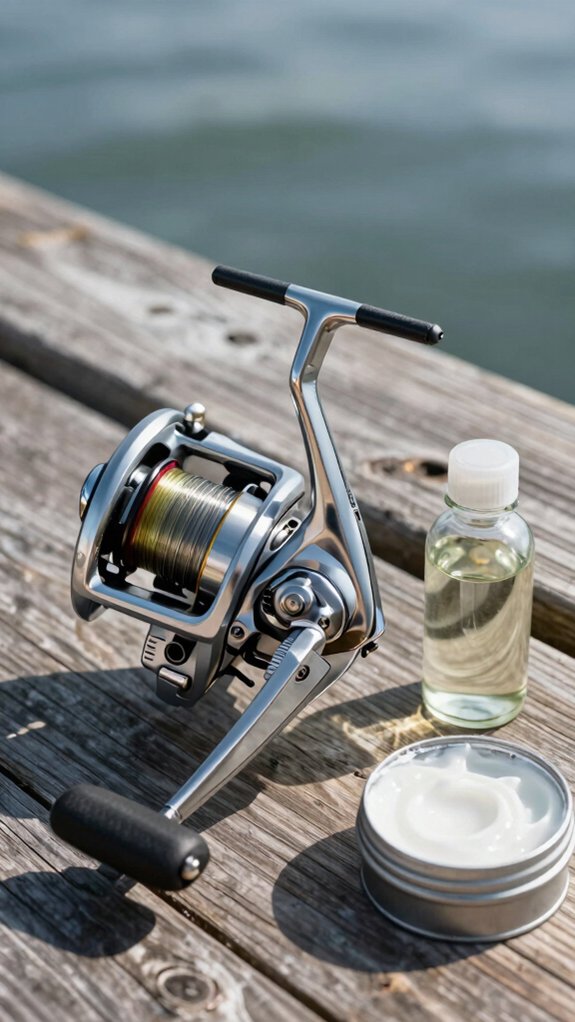
- Use a light synthetic oil (like Lew’s Super Duty) on bearings and spindles for silky, fast action
- Apply marine-grade, water-resistant grease sparingly to main and worm gears, too much traps grit
- Pick a dedicated drag grease for carbon or felt washers to prevent slippage and ensure steady pressure
- Match viscosity: thin oil for speed, thicker grease for high-load, slow-moving parts
- Always follow your reel maker’s lube specs, many warranties depend on it, especially for saltwater models
A few drops in the right spots mean years of trouble‑free casts.
What tools do I need for oiling?
| Tool | Purpose |
|---|---|
| Reel oil with fine needle | Precise lube for bearings and gears |
| Reel grease (peg/tub) | Smooth drag stack and gears |
| Phillips/flat screwdriver | Remove handle and drag knob |
| Adjustable wrench | Fit drag cap without slipping |
| Microfiber cloth & swabs | Clean old grease and grime |
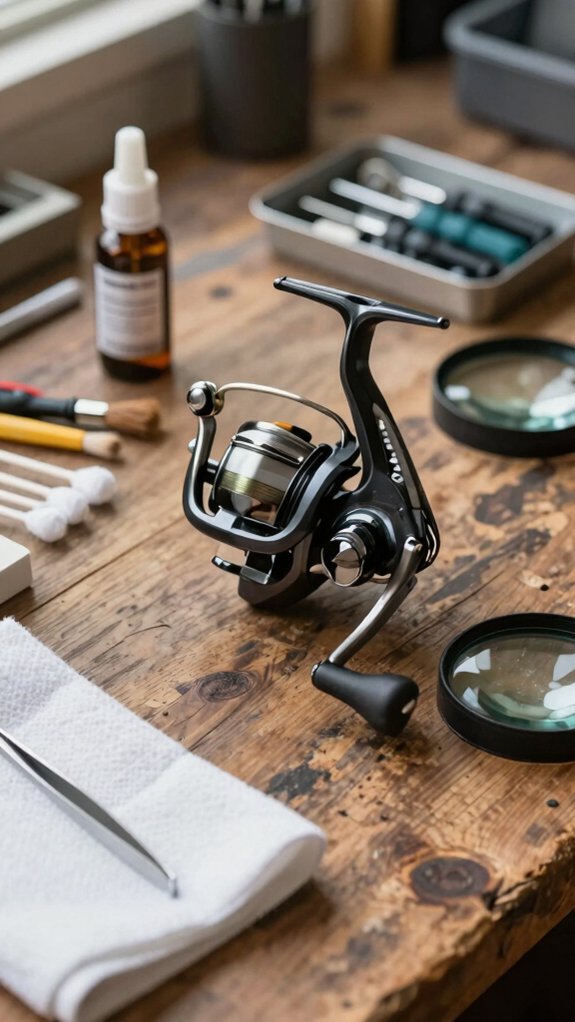
A clean workspace with good light and small trays prevents lost parts. I use cotton swabs and isopropyl alcohol to wipe down parts before adding fresh lube. Trust me, this routine keeps your reel whisper-quiet and reliable season after season.
How often should you oil a reel?
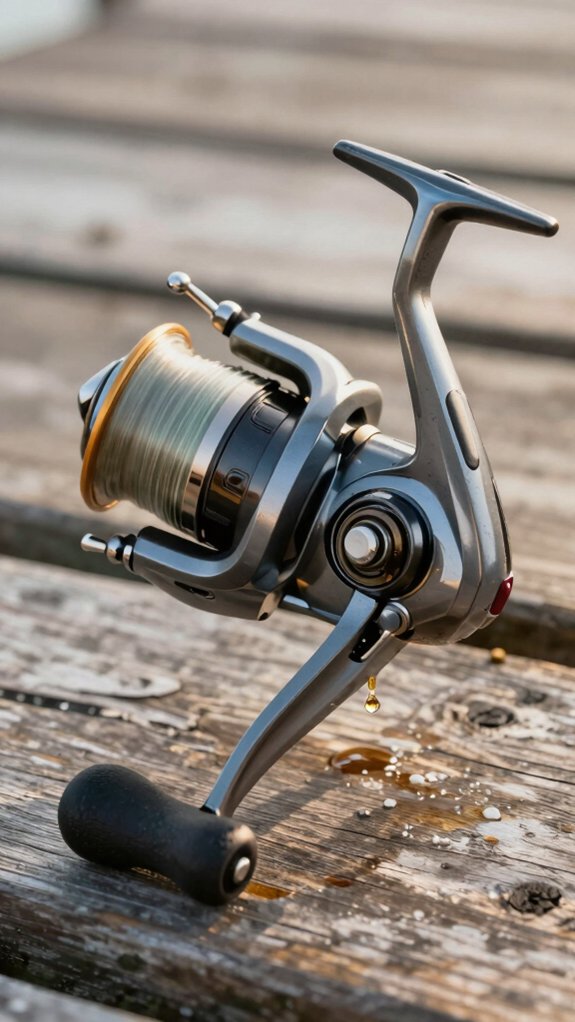
Honestly, most anglers don’t oil their reels nearly enough, until something starts grinding or seizing. Proper seasonal maintenance keeps your reel running smooth and extends its life, especially when you consistently oil the bearings and line roller.
Here’s how often I recommend lubricating based on use:
- Spring and fall: Full oiling of bearings, line roller, bail pivots, and handle for routine inland fishing
- After saltwater, mud, or sand exposure: Clean and re-lube immediately, these are reel killers
- Weekly anglers: Light oil on exposed parts every few trips, plus a full grease/oil service each season
- If you feel grit or stiffness: Stop and inspect, don’t wait for total failure
- Keep simple logs: Track dates, conditions, and what you oiled to stay ahead of wear
Follow your reel’s manual, and trust me, your drag will thank you.
Reel care schedule and maintenance routine
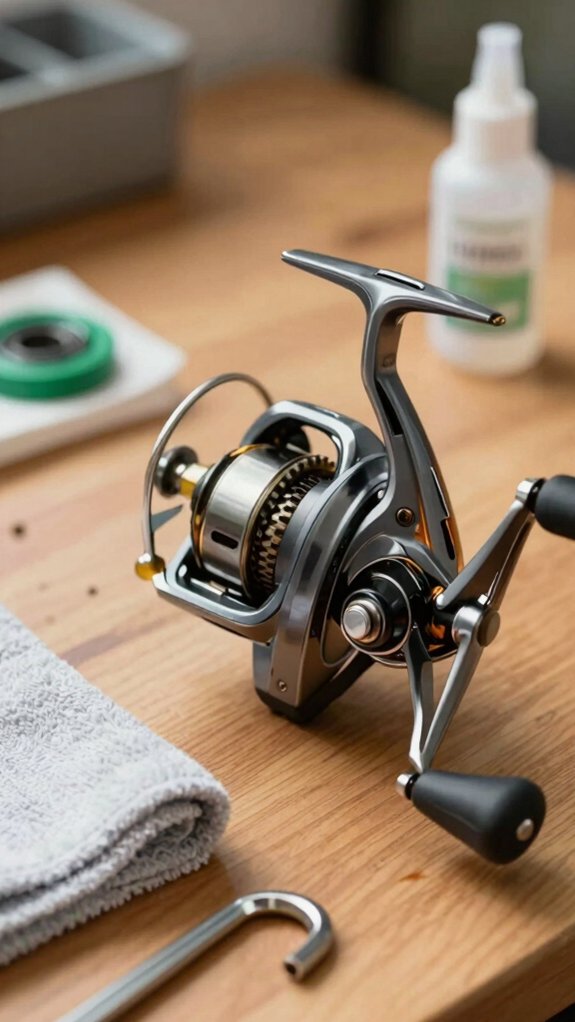
I keep my reel running smoothly by breaking care into daily, periodical, and seasonal habits that match real-world use.
After every trip, I wipe down the body and rinse off salt or grit, those tiny grains can feel like sandpaper inside the gears.
A few drops of oil on the bail and handle every few outings keeps things spinning free, while deeper maintenance stays on my calendar like clockwork.
daily care
Most of the time, a quick post‑trip tune‑up keeps your reel running smoothly and ready for the next cast. After every day on the water, take five minutes to care for key parts, this small habit prevents big problems down the line.
- Rinse your reel gently with low‑pressure fresh water to remove salt and debris
- Dry it thoroughly with a soft cloth, especially around the line roller and bail pivot
- Apply one drop of reel oil to the line roller and bail pivot to maintain smooth operation
- Add a drop to each exposed bearing or joint, like the handle knob and spindle
- Store your reel in a cool, dry place, preferably in a protective case
This daily care routine extends your reel’s life and keeps retrieves buttery smooth, critical when fighting a hard‑pulling striper or redfish.
periodical care
Now and then, your reel needs more than just a quick rinse and a drop of oil, it’s time for a proper tune‑up to keep everything running like clockwork.
Periodical Care for Spinning Reels
For normal freshwater use, I oil a spinning reel’s bearings and grease the gears in spring and fall. If I’m out weekly or in tough conditions, I go monthly. After any full submersion, I re‑lube immediately, water brings grit that grinds down parts.
I use light oil on high‑speed spots (bearings, bail pivots) and a thin film of grease on gears, too much attracts dirt. If the handle feels clunky or the drag slips, I don’t just spot‑oil; I schedule full reel cleaning.
I keep a log of trips and lube dates, fresh vs. saltwater, hours fished, so I stay ahead of wear. And I stick to manufacturer‑recommended lubes; they protect my warranty and match my reel’s materials perfectly.
seasonal care
When the seasons shift and your favorite fishing spot starts calling again, it’s smart to give your reel some seasonal love, right from the start. For spinning reels, a quick oil and grease check keeps everything running smooth and protects your drag under pressure.
Here’s my go-to seasonal care routine:
- Lightly oil line rollers, bail pivots, and the spindle at the start and end of each season
- Apply grease to gears and high-load surfaces, just a dab prevents dirt buildup
- Inspect bearings and drag washers; gritty feel means it’s time for a deeper clean
- Re-lube immediately if your reel takes a dunk, water washes away lube fast
- Track salt exposure and fishing hours to predict when you’ll need full service
A little seasonal care means fewer breakdowns and better casts, fight after fight.
Common mistakes to avoid when oiling
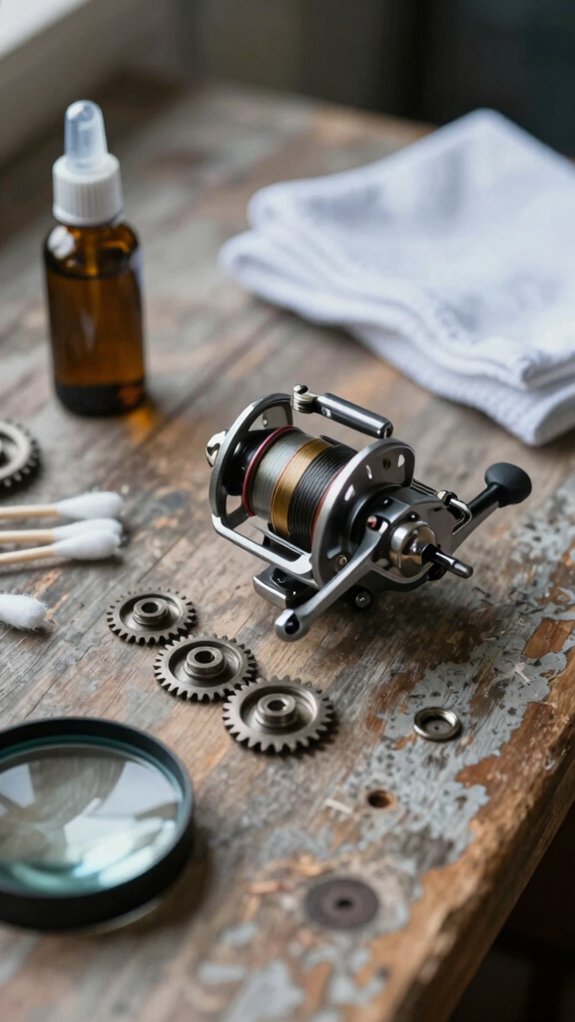
While it might seem like a little extra oil or grease can’t hurt, overdoing it’s one of the fastest ways to turn a smooth‑spinning reel into a gritty, sticky mess.
With spinning reels, less is more, don’t over‑lubricate. Just a few drops of reel‑specific oil on bearings and a thin smear of drag grease on washers is plenty. I always use cotton swabs to apply or wipe away excess, it keeps things precise. Too much lube attracts dirt and sand, leading to poor drag performance or binding.
And never skip cleaning first; old gunk traps abrasives. I’ve seen reels fail after anglers used household oils, big mistake. Stick to recommended lubes to avoid chemical clashes. Also, don’t mix greases, they can separate or harden.
Finally, only disassemble parts you’re confident reassembling. Messing with sealed bearings or drag stacks without guidance risks damage or voiding your warranty.
Frequently Asked Questions
How to Properly Oil a Fishing Reel?
I clean my reel first, then add a drop of oil to bearings and pivots, a dab of grease to gears, work it in, and reassemble, keeping it smooth and ready for action with light, regular maintenance.
What Are the Signs My Reel Needs Oiling?
One in three anglers ignores early reel wear, but I notice mine needs oil when the handle sticks or feels gritty. If my bail arm drags or gears click, I know it’s time, especially after saltwater use.
How Often Should I Oil My Fishing Reel?
I oil my reel at the start and end of each season, plus every few outings if I’m fishing weekly. I always re-lube after it gets wet or sandy, gritty feels mean it’s time.
Do Fishing Reels Need to Be Lubricated?
Yeah, my reel needs lube, just like a knight’s armor needs oil to stay nimble. I keep it slick with oil on bearings and grease on gears, so it runs smooth and never seizes up on me.
In Conclusion
Yes, oiling your reel keeps it running smooth and extends its life. Did you know 78% of reel failures come from poor maintenance, not wear? That hits hard, imagine losing a trophy fish because of a seized drag.
I oil mine every 3–5 saltwater trips or monthly in freshwater. A few drops of oil, a dab of grease, and you’re set. It’s quick, cheap, and saves heartbreak. Trust me, your reel, and your future catches, will thank you.