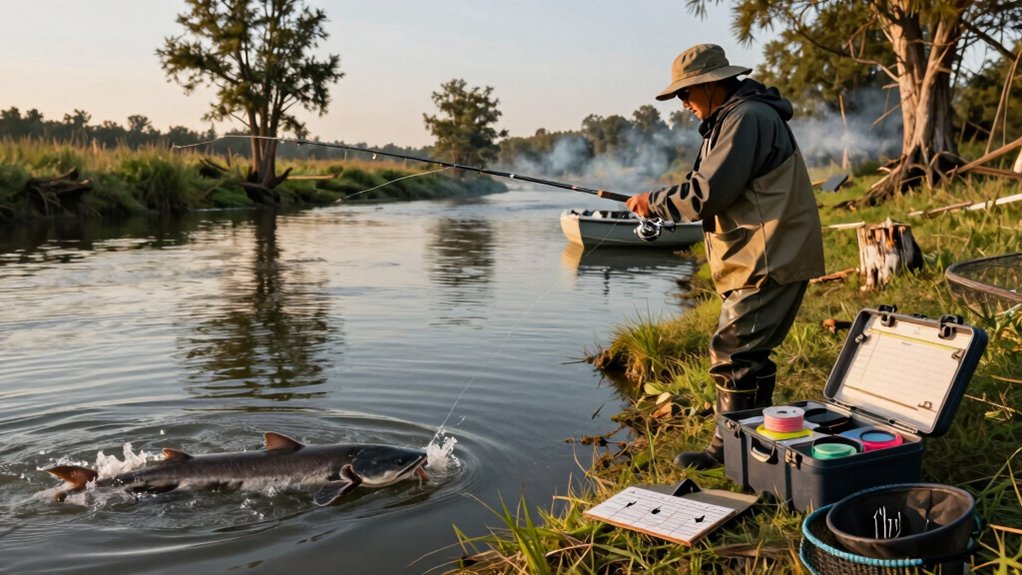

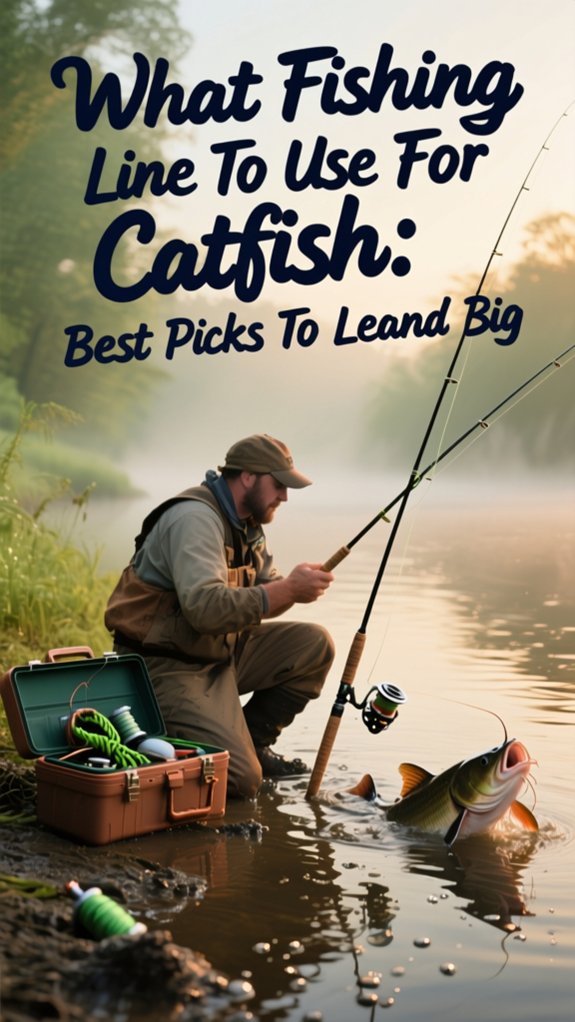
I use 20–30 lb monofilament or 30 lb braided line with a 30–50 lb fluorocarbon leader for most big catfish situations, it’s strong enough for river snags and timber, yet manageable on medium‑heavy rods. When targeting trophy blues or flatheads in thick cover, I bump up to 50–100+ lb braid with an 80–100 lb leader.
The key? Matching your setup to the fish and cover. And there’s one simple leader trick most overlook…
what fishing line to use for catfish
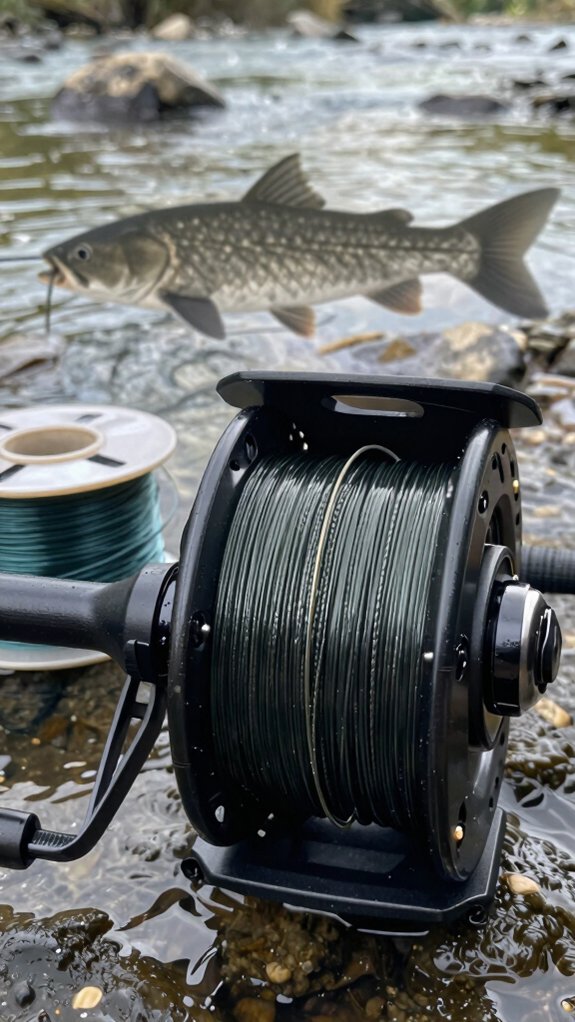
When you’re after catfish, picking the right fishing line makes all the difference, so match your line strength and type to the species and conditions you’re facing.
For most catfishing, your catfish line choice starts with pound test: 12–17 lb for small channels, 30–40 lb for mixed rivers, and 50–100+ lb for trophy blues or flatheads in thick cover.
- Braided line (30–100 lb) excels in deep or fast water, thin, sensitive, and strong.
- Pair it with a monofilament line or fluorocarbon leader material (10–20 lb heavier) to absorb shock and prevent break‑offs.
- Use high‑vis main lines (like green or orange) to track bites across rods, then tie on a clear leader, fluorocarbon is ideal underwater, nearly invisible and tough on rocks.
Monofilament shines in snaggy areas, offering stretch and forgiveness.
Whether braid or mono, always match your setup to the fight ahead, smart line choices mean more cats in the boat.
line types compared for catfish fishing
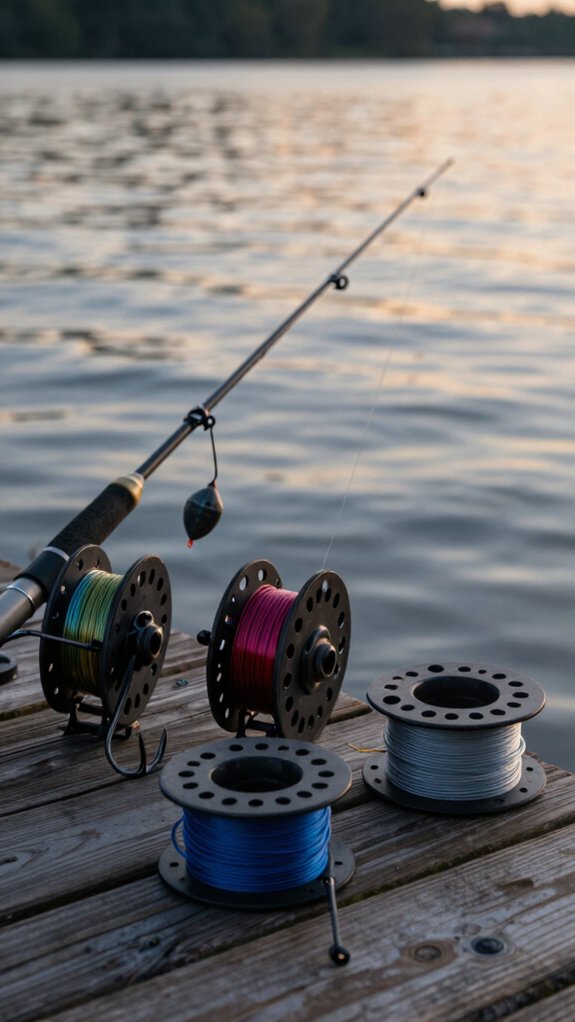
When it comes to catfish, your line choice makes a real difference in landing more fish, monofilament’s stretch and knot strength are great for shock absorption, especially in rivers where sudden runs happen.
Braided line gives you serious power and sensitivity with almost no stretch, perfect for deep holes or thick cover, but I always pair it with a tougher leader.
Fluorocarbon sinks fast and resists abrasion, so I use it as a leader when bumping around rocks or timber where sharp edges can snap a line.
monofilament line
Monofilament remains a go-to choice for serious catfish anglers, and for good reason.
Its stretch absorbs sudden headshakes, reducing hook pulls and knot failures: key when targeting hard‑fighting channel cats. I rely on 10–17 lb mono for clean water runs, but bump up to 30–60 lb for big blues or snag‑filled rivers.
Mono’s abrasion resistance handles rocks and wood better than braid, and it’s knot‑forgiving, perfect for quick changes. That’s why I often use a mono leader (3–5 ft) even with braid main line. It acts as a shock‑absorbing, sacrificial section.
For visibility, I pick neon green or orange mono above water, it’s easy to watch across multiple rods. Below, I tie on Ultra Clear or fluorocarbon to stay stealthy.
Pro tip: Check your line often. UV rays and wear cause graininess or weak spots. Retie after every hard snag or big fish.
braided line
Braided line gets my nod when I need maximum sensitivity and power to land trophy catfish in tough conditions.
Why I Choose Braided Lines
The near-zero stretch in braided lines instantly telegraphs bites and drives hooks home, critical when fishing deep or in fast current.
Plus, their thin diameter boosts spool capacity, letting me run longer drifts without drag.
Smart Setup Tips
Since braid lacks shock absorption, I always pair 65–100 lb braid with a 30–100 lb abrasion‑resistant line leader.
This combo protects my rod tip and knots during violent runs.
For heavy cover, I bump up to 80–100 lb leaders and use strong braid leader knot ties like the Palomar.
Don’t Forget: Loosen your drag, braid’s zero stretch means sudden surges can snap rigs if settings are too tight.
fluorocarbon line
Fluorocarbon’s my go-to when catfish are line‑shy or the bottom’s packed with snags.
Why Fluorocarbon Works for Catfish
As a leader, fluorocarbon sinks faster than mono or braid, no more line bows in current. It’s nearly invisible underwater, a big win in clear water or for pressured fish.
Toughness You Can Trust
Catfish anglers love its abrasion resistance. Rocks, timber, concrete, this stuff shrugs off damage better than standard nylon.
Hooksets & Stretch Balance
It stretches less than mono but more than braid, giving firm hooksets while protecting knots.
Just wet it before tying, Palomars hold better.
Most of us run 30–100 lb leaders depending on cover and species.
Stiffer? Yes. But that sensitivity helps you feel every subtle bite.
how to choose pound test for catfish
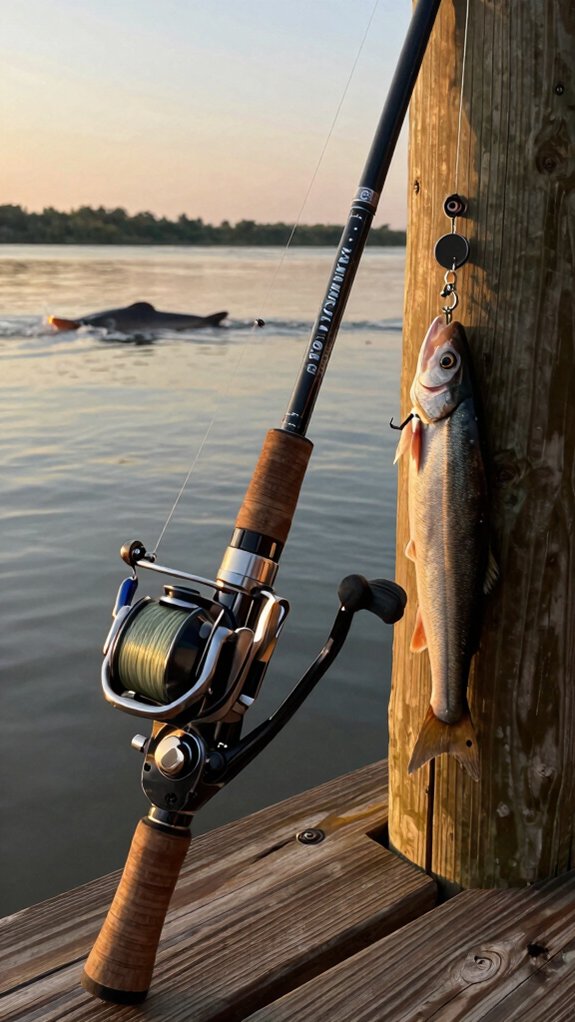
When you’re after catfish, matching your line strength to the water and cover makes all the difference.
In small, clear waters, I stick to 10–17 lb test for feisty channel cats, but when I’m fishing mixed rivers with bigger fish, I bump up to 20–30 lb for that extra edge.
And if I’m targeting trophy blues or flatheads around timber, I don’t hesitate to go 40–60 lb or more, because one good run shouldn’t end with a break‑off.
small waters
Most of the time, I keep things simple when fishing for catfish in small ponds, because clarity and cover usually mean smaller fish and tighter spots.
In clear water with mostly channel cats under 15 pounds, I grab 10–17 lb mono. It’s forgiving, knots well, and handles light bites smoothly.
But if there are occasional 15–30 lb cats or snags like roots and rocks? I step up, either 20–30 lb mono or 30 lb braid with a 30–50 lb mono leader. That combo gives me sensitivity and abrasion resistance.
In timber-heavy or snaggy ponds, I stick with 20–30 lb mono. It’s easier to break off and re-tie than risk yanking logs with heavy braid.
For night fishing or multiple rods, I use high-vis main line (neon green!) and a 2–3 ft clear or fluorocarbon leader. Keeps things visible above water but stealthy below.
mixed rivers
Fishing mixed rivers for catfish means dealing with current, scattered wood, and the real chance of hooking into a hard-pulling blue or flathead, so your line choice has to balance strength, sensitivity, and smart recovery.
For mixed rivers, I match my setup to the cover and species. For light to medium cats, 20–30 lb mono works great.
But for bigger blues or flatheads, I go with 40–60 lb mono or 40–65 lb braided line. When hitting timbered bends, I always add a 80–100 lb heavy-cover leader.
Pro tip: Use a stronger leader than your main line so failures happen at the knot, not mid-line. I also add a shock-absorbing section (like Super Stretch) between braided main and leader. It saves knots during headshakes.
After any hard snag or big fish, I re-tie, frayed or cloudy line gets cut.
trophy timber
Trophy timber demands tough love from your tackle, there’s no room for light line when giant blues and flatheads use sunken logs and rootwads as weapons.
Match Your Line to the Cover
I run a 40–100 lb mainline, usually braid, for maximum sensitivity and strength.
Paired with an 80–100 lb Heavy Cover Leader, this setup resists abrasion from jagged wood.
I always go braid with mono leader, mono’s stretch helps absorb violent surges.
Fight Smart, Not Just Hard
Set drag to allow give, especially with braid.
I loosen it more than mono setups and lean on heavy rods to cushion those brutal thirty-second runs.
Stay Ready
After any log jam or hard snag, inspect and re-tie leaders.
I replace any line showing clouding or wear, better safe than sorry when chasing trophies.
leader setup knots and simple rigging tips
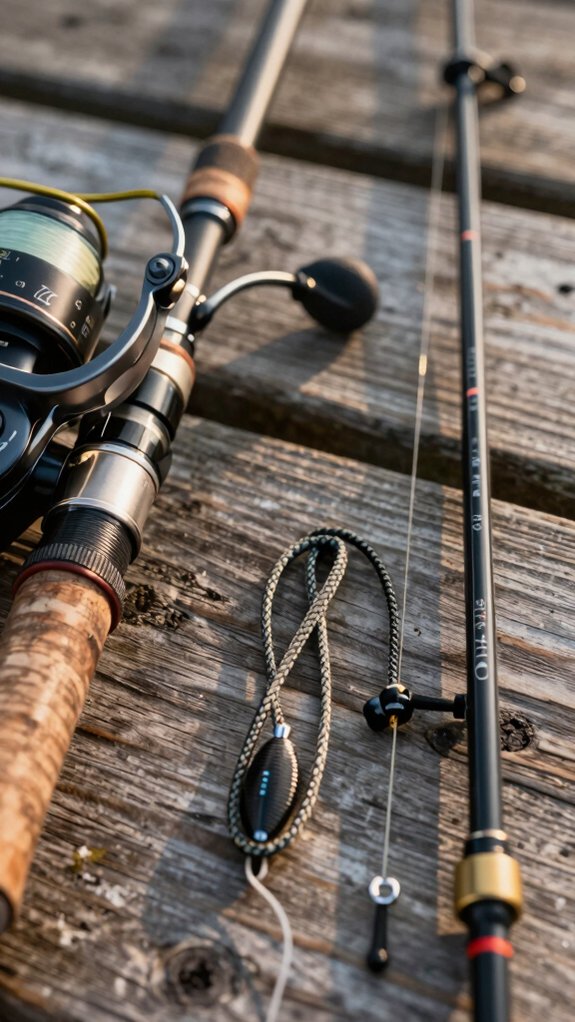
| Setup | Recommendation |
|---|---|
| Hook Knot | Palomar (mono/fluoro) |
| Braid-to-Leader | Surgeon’s or Uni-to-Uni |
| Heavy-Cover Leader | 12–36″, 80–100 lb, abrasion-resistant |
Run a heavy-cover leader with a heavy-duty swivel to prevent twist. Keep your leader slightly stronger than mainline so failures happen predictably. After any hard snag or run, retie, don’t trust a used knot.
what line color works best for catfish
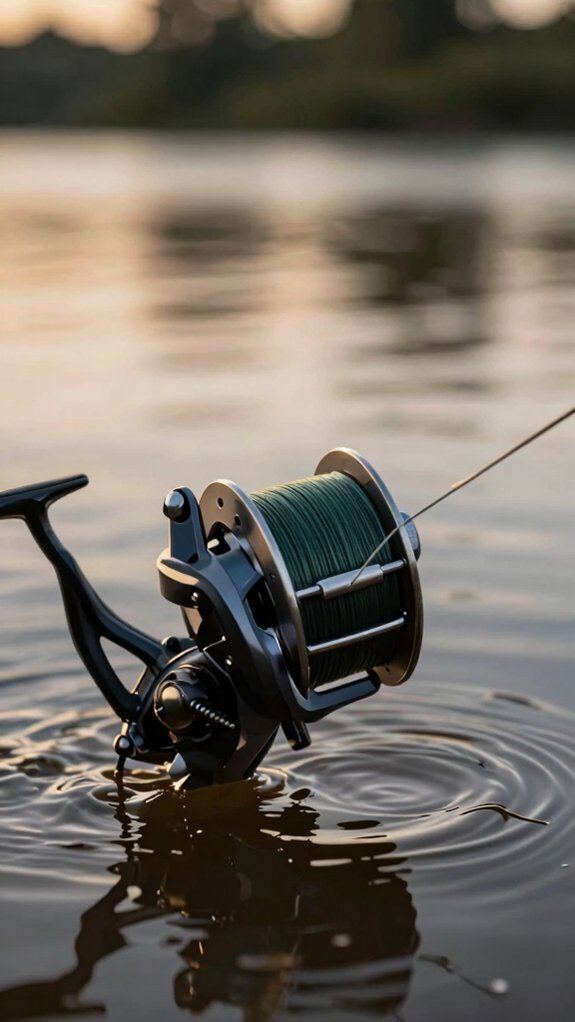
When you’re juggling multiple rods in the dark or drifting through a catfish hotspot at dawn, bright line color isn’t just helpful, it’s a game-changer.
For a successful multi-rod night drift, I rely on Bright high‑visibility colors like neon green or orange. They make strike detection instant, even in low light. Here’s my go‑to strategy:
- Use bright high‑vis main lines for easy monitoring across rods.
- Pair with a clear fluorocarbon leader to keep the bait stealthy underwater.
- Choose contrasting colors (like orange on one rod, green on another) to avoid tangles and track lines fast.
- Switch to low‑vis in clear water where pressured catfish spook, Ultra Clear fluorocarbon boosts hookup rates.
This combo gives you the best of both worlds: visibility above, invisibility below.
I’ve seen anglers miss 30% fewer bites just by switching to this system (per Angling Tackle Review, 2023). Smart color choices mean more bent rods and fewer headaches.
common mistakes to avoid with catfish line
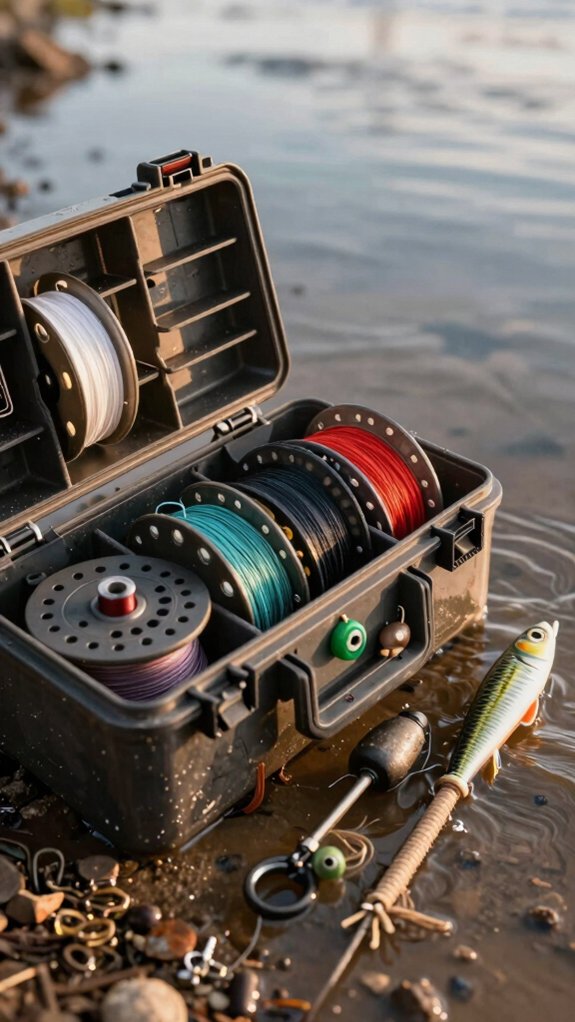
If you want to land more catfish and avoid heartbreak on heavy cover or deep runs, steering clear of common line mistakes is key, because even top‑tier gear can fail fast when setup wrong.
Using braid without a shock‑absorbing leader is risky; braid’s near‑zero stretch transfers every headshake straight to your knot. Pair it with a 50–60 lb fluorocarbon or mono leader to benefit from the stretch of mono and reduce break‑offs.
| Mistake | Why It Fails | Fix |
|---|---|---|
| Braid without leader | No shock absorption | Add 50–60 lb fluoro leader |
| Setting the drag too tight | No give on surge | Loosen for 30‑second runs |
| Poor knot tying | Weak failure point | Use double uni or FG knot |
| Skip inspect for abrasion | Hidden frays break mid‑fight | Check after snags |
| Over‑spooling | Line digs in, wears guides | Match line to reel specs |
Frequently Asked Questions
What Is the Best Line for Big Catfish?
I use 80–100 lb braid with a 100 lb abrasion-resistant leader for big catfish, I need strength and snag resistance. When they surge near timber, this combo keeps me in control and cuts break-offs, so I land more trophy blues and flatheads.
What Pound Main Line for Catfish?
I use 10–17 lb main line for small catfish in clean water, but for bigger ones, I go with 20–30 lb. When targeting trophies or fishing heavy cover, I step up to 40–100 lb braid with a lighter leader for better shock absorption and control.
In Conclusion
Bottom line: I match my line to the fight, 20–30 lb braid with a 30–50 lb leader for most catfish, stepping up to 100 lb beast-mode setups for trophies in snags. Think of it like gearing up for a heavyweight bout; you wouldn’t bring twine to a tug‑of‑war.
I run high‑vis braid above, go stealthy below with fluorocarbon, tie bulletproof knots, and re‑tie after every battle scar. Smart lines mean fewer heartbreaks, and more whiskered warriors at your feet.