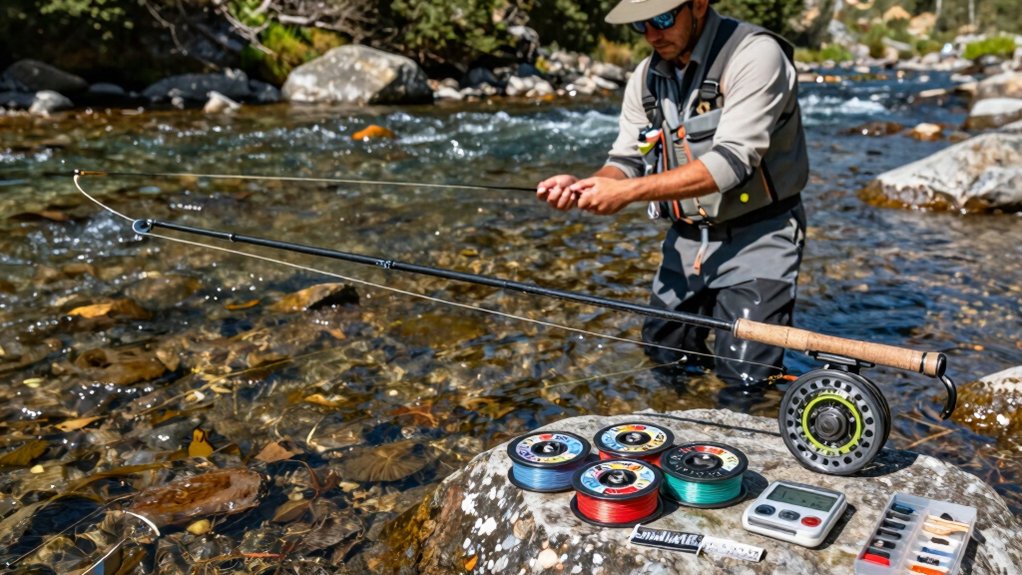

I picture the morning sun glinting off a quiet stream, your fly drifting just right, now imagine your line spooking trout instead of sealing the deal. That’s why choosing the right fishing line size isn’t guesswork, it’s the difference between a bent rod and a missed chance. Most anglers default to 6‑pound test, but the truth?
The ideal line depends on water clarity, cover, and trout size. Let’s break down the exact pound tests that turn guesses into guarantees.
what size fishing line for trout
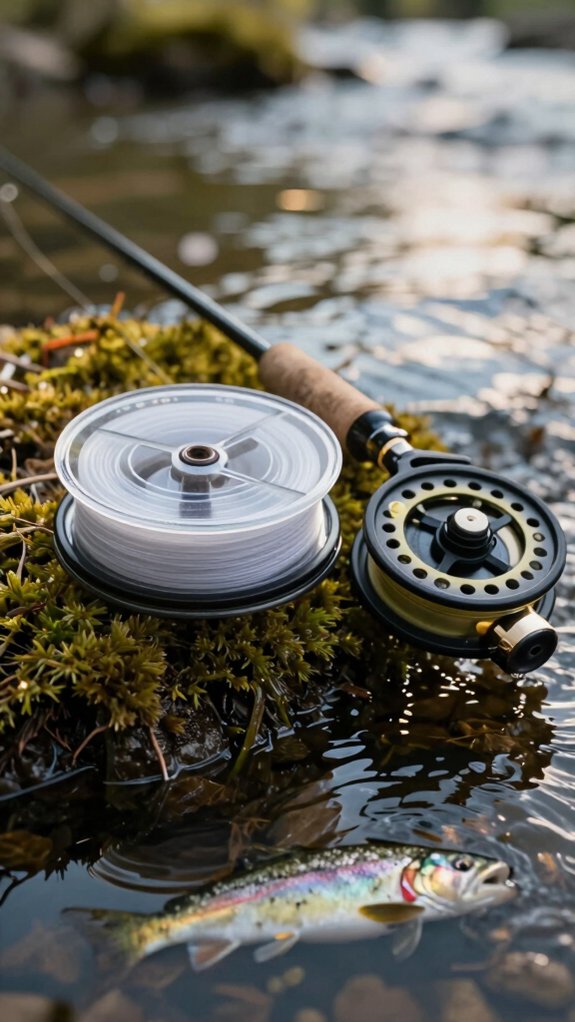
So, what size fishing line should you actually use for trout? It depends on the situation, but I’ll break it down simply. For most trout fishing, I reach for 8 lb test monofilament or fluorocarbon (≈0.010–0.012″). It’s a sweet spot, strong knots, decent stealth, and good abrasion resistance.
If the water’s clear and the trout are spooky, I drop to 4–6 lb fluorocarbon (≈0.008–0.010″), it’s nearly invisible and perfect for wary fish. Facing heavy cover or strong current? I switch to 10–12 lb braided lines for power and sensitivity, then add a 6–8 lb fluorocarbon leader (12–24″) for stealth.
And for tiny mountain streams with small trout? 2–6 lb monofilament keeps the fun alive and improves light lure action. Match your line weight to the conditions, and you’ll land more trout, every time.
line size by trout and water type
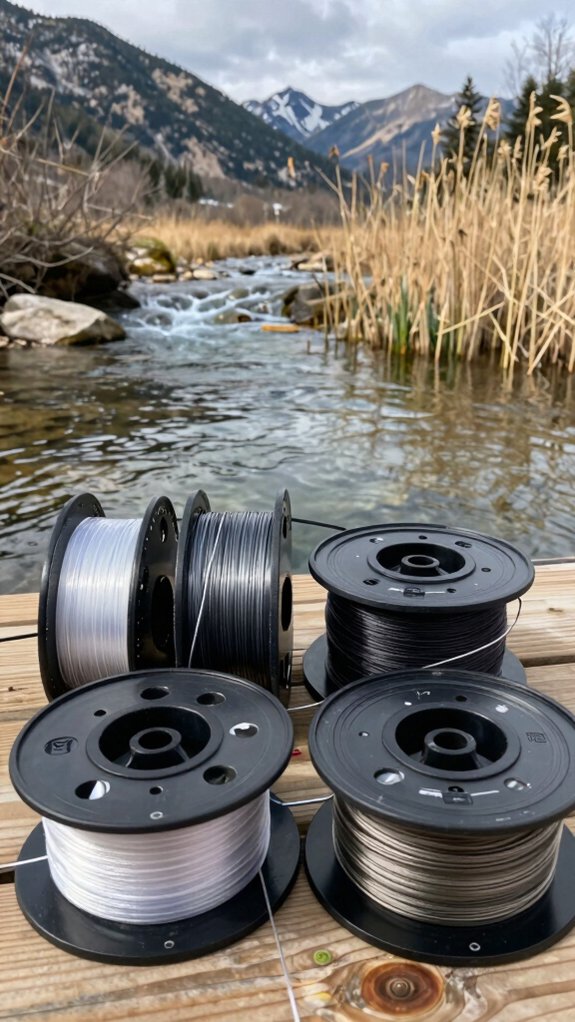
When you’re matching your line size to the trout species and water type, getting it right makes all the difference in both detection and landing success.
Small Streams & Skittish Trout
For brook or brown trout in tight mountain runs, I go ultra-light: 2–6 lb monofilament line or 2–4 lb fluorocarbon lines.
Less bulk means fewer spooked fish.
Rivers & Lakes (Rainbows, Browns)
An 8 lb test is my go‑to, great balance of strength and thin diameter.
I pair it with fluorocarbon leaders one size down (6 lb) for stealth in clear water.
Big Trout & Heavy Cover
Targeting lakers or toothy char? I bump to 10–12 lb fluorocarbon lines or braid, with matching leader sizes.
Heavy Trolling or Giant Trout
For deep spoons or 20+ inchers, I trust 12–15+ lb braid or 15–20 lb mono/fluoro.
which line type works best for trout
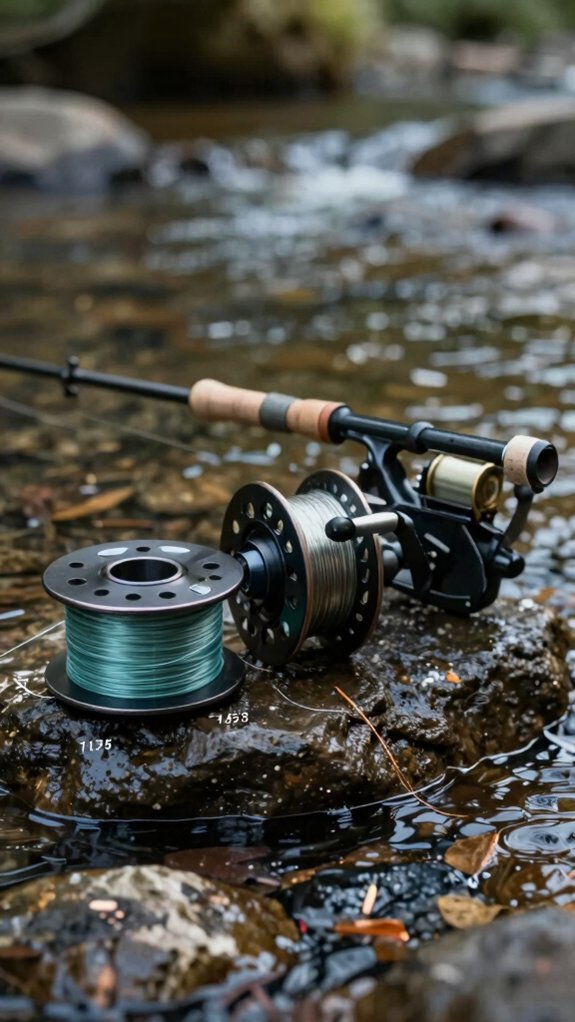
Choosing the right line type can make or break your trout fishing success, especially when matching it to the conditions and species you’re after.
For most situations, I lean on monofilament fishing with 6–8 lb test, it’s forgiving and floats well for float rigs. In clear, spooky water, fluorocarbon fishing shines: it’s nearly invisible and sinks, so I use 6 lb fluoro leaders when trout are cautious.
When casting lures or drift fishing, I spool up braid line (10–20 lb, like Sufix 832) for sensitivity, then add a 6–8 lb fluoro leader.
And remember, never use only fluorocarbon as your mainline for float fishing, it sinks!
Here’s my go-to line strategy:
- Use floating mono for dry flies and float rigs
- Pick fluorocarbon leaders for stealth in clear water
- Pair braid with fluoro for long casts and feel
- Always match the lightest line the cover allows to stay undetected
line sizes for trout techniques and rigs
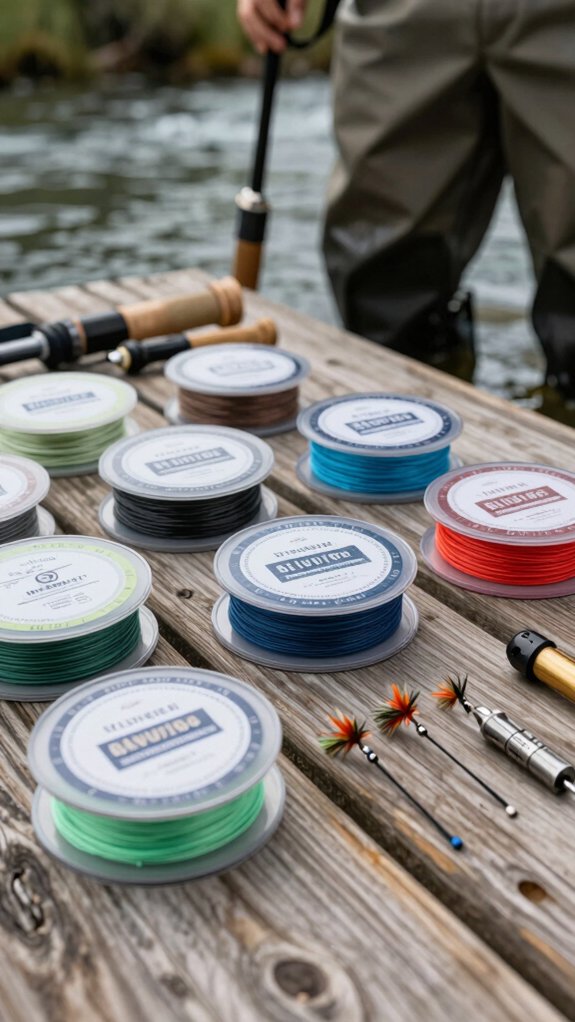
When you’re matching line size to your trout fishing method, picking the right setup makes all the difference in feel, presentation, and landing fish.
For float fishing or casting lures, I stick with 6–8 lb monofilament or fluorocarbon, it’s thin enough to drift naturally but strong enough to handle snags and lively trout. If I’m drift fishing or bottom bouncing in tougher water, I bump up to 10–12 lb braid or fluoro to stay in control and keep fish pinned.
float fishing
Most of the time, I reach for 6–8 lb monofilament when float fishing for trout, it’s the sweet spot for balancing stealth, castability, and strength.
I prefer a thin, supple floating monofilament like Raven Mainline or Sunline Iso Special because it stays on the surface, reduces sag, and makes mending easier.
For spookier fish, I downsize to 6 lb; for heavy cover or bigger trout, I bump up to 8 lb.
If you want extra sensitivity, here’s my go-to approach:
- Use 10–20 lb braid as your mainline.
- Attach a 6–8 lb monofilament or 6–7 lb fluorocarbon leader.
- Keep the leader 12–36″ long for natural float action.
- Avoid sinking fluorocarbon as your main float line, it kills buoyancy.
This setup keeps your float riding high and your presentation invisible.
casting lures
Dialing in the right line size for casting lures can make or break your trout game, get it right, and your lures dive true, cast farther, and fool even the pickiest fish.
For most trout casting, I stick with 6–8 lb test monofilament, it’s thin enough for smooth lure action and long casts, yet strong enough for 12–20″ fish.
If I’m using ultralight gear with small spoons or micro-jigs, I go with 4–6 lb fluorocarbon leader to stay invisible and boost hookup rates on spooky trout.
When casting in heavy cover or needing extra sensitivity, I spool up braid with fluoro leader, 10–20 lb braid up front, 8–10 lb fluoro at the end.
And for big streamers or powerful browns in heavy current? I don’t hesitate, 10–12 lb for streamers gives me the control and shock absorption I need.
drift fishing
While reading the river’s rhythm matters, your line choice can make or break a drift fishing setup, get it wrong, and you’ll miss subtle takes or lose fish to snags.
For most trout drift rigs, I stick with 8 lb mono, it’s the sweet spot for strength, stealth, and feel. But conditions change, so here’s my go-to lineup:
- Use 6–8 lb mono for light rigs and calm, clear runs, ideal for spooky stocked trout.
- Step up to 10–12 lb fluorocarbon when bouncing over rocks or weeds; it handles abrasion like a champ.
- Choose braid with fluorocarbon leader (15–20 lb braid + 6–8 lb fluorocarbon) for deep, long drifts, zero stretch means solid hooksets.
- Always match line to water clarity and structure, lighter in glassy pools, heavier in tough terrain.
Trust me, the right combo turns more drifts into catches.
bottom bouncing
When you’re after trout that hug the riverbed, getting your bait to tick the bottom without getting hung up starts with the right line setup, let me break down what actually works.
For bottom bouncing, I rely on braid or fluorocarbon in the 10–20 lb range. Stocked trout? 10–12 lb fluorocarbon’s enough. Chasing big wild ones in heavy current? Step up to 15–20 lb braid like Sufix 832 or PowerPro.
My go-to: 15–20 lb braid mainline with a 6–8 ft, 10–12 lb fluorocarbon leader. Why? Braid gives me sensitivity and casting distance; fluorocarbon sinks and stays invisible near the bottom.
Rocky or snaggy terrain? Don’t skimp, use 20 lb fluorocarbon or braid to resist abrasion.
Always match your line to rod capacity and fish size. And never skip that fluorocarbon leader it’s the secret to more bites.
how to choose the right line size
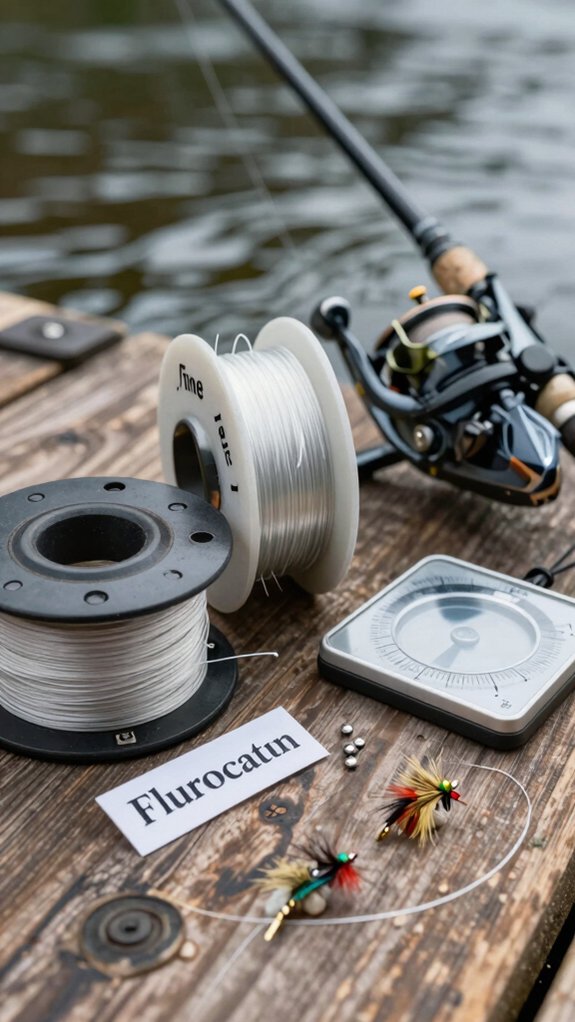
When picking the right trout line size, I match it to the fish I’m after, how clear the water is, and what kind of cover I’m fishing around.
If I’m after finicky trout in crystal-clear streams, I go light, 4–6 lb fluorocarbon on a long leader, so they won’t spook, but in gnarly brush or deep rivers, I bump up to 10–12 lb for extra strength.
And depending on whether I’m using braid, mono, or fluorocarbon, I always tweak my leader length and material to keep my setup balanced and stealthy.
target trout size
Honestly, I almost always start with 8 lb-test when I’m chasing average-sized trout, because for fish up to 16 inches, it’s the sweet spot between invisibility and strength.
But your target size changes everything. Here’s how I adjust:
- 8 lb-test: my go-to for most creeks and rivers with trout under 17 inches.
- Ultralight setups (4–6 lb mono): perfect for spooky fish in clear, small streams.
- Braid with fluorocarbon leader (6–8 lb braid + 10–12 lb fluoro): gives me sensitivity and stealth for bigger, cautious trout.
- 15–20 lb braided main line: I break this out for trophy fish or heavy snags where control and abrasion resistance matter most.
Match your line to the fish you’re after, lighter for finesse, heavier for power.
It’s not just strength; it’s about presentation, feel, and landing what you hook.
water clarity
Because trout rely heavily on sight in clear water, I always downsize my line to stay invisible to wary fish, especially in sunlit streams where a thick or reflective line can spook trout before they even see the lure.
Clear Water & Spooky Trout
For these conditions, I use 4–6 lb fluorocarbon as my main line or pair 20–30 lb braid with a 6–8 lb fluorocarbon leader/tippet. The thin, refractive properties of fluorocarbon make it nearly invisible underwater, key when targeting spooky trout.
In gin‑clear spring creeks, I go even lighter: 3–4 lb fluorocarbon or 5X–6X tippet (2–4 lb) on a 9–12 ft leader boosts stealth.
Always match your leader/tippet to the main line, 1–2 lbs lighter, to maintain invisibility and improve hookups.
cover and abrasion
If you’re fishing around logs, boulders, or thick weeds, I bump up my line strength without sacrificing too much stealth, because getting snagged isn’t the only risk; abrasion from rough cover can slice through light line like a knife.
When tackling heavy cover, abrasion resistance is key. Here’s how I match line to structure:
- Heavy cover (snags, rocks): 10–12 lb fluorocarbon or braid
- Open water or clean gravel: 6–8 lb fluorocarbon for stealth and strength
- Deep timber or thick weeds: 20–30 lb braid with a 6–10 lb fluoro leader
- Buoyant presentations (dry flies, floats): 6–8 lb floating mono or buoyant braid
I always pick the smallest diameter that still handles abrasion, like 8 lb fluorocarbon (~0.011″) over 12 lb (~0.014″) when possible.
Less visibility, same toughness. Trust me, that balance means more trout in the net and fewer snapped lines.
line type choice
Now that we’ve covered how structure affects line strength, let’s talk about how to pick the right line type and size based on how and where you’re fishing.
Your trout fishing line choice shapes your success.
For most spinning or bait fishing, I stick with 6–8 lb monofilament, 8 lb for big rivers, 6 lb for spooky trout in small streams.
If I’m using braid (15–30 lb), I always add a 4–6 lb fluorocarbon leader. It’s nearly invisible and tough against rocks.
For ultralight fun with small stocked trout, 2–4 lb fluorocarbon or mono gives amazing feel and stealth.
Snaggy water? I bump up to 10–12 lb fluorocarbon for abrasion resistance.
Clear water? Go light, 4–6 lb fluoro or 6 lb mono.
Murky water or heavy cover? I grab 8–12 lb mono or braid for control.
leader setup
Let’s break down your leader setup so you can match the line size to your fishing situation with confidence.
Your go-to? Start with a 9-foot tapered leader and a 5X tippet, it’s perfect for most dry-fly and nymphing scenarios. But adapt as conditions change:
- In clear, spooky water with tiny flies (16–20), switch to a 9–12 ft leader and 6X–7X tippet for stealth.
- Chasing big trout with streamers? Shorten the leader to 7–8 ft and use 3X–4X tippet for better turnover and abrasion resistance.
- Fishing deep with sinking lines? Use 3–5 ft leaders with stiff butt sections and 3X–5X tippet to avoid tangles.
- Always refresh the last 12–18 inches of tippet, fresh knot strength means more fish landed.
Carry 3X–7X spools. Smart tweaks mean fewer refusals and better drifts.
common line size mistakes to avoid for trout
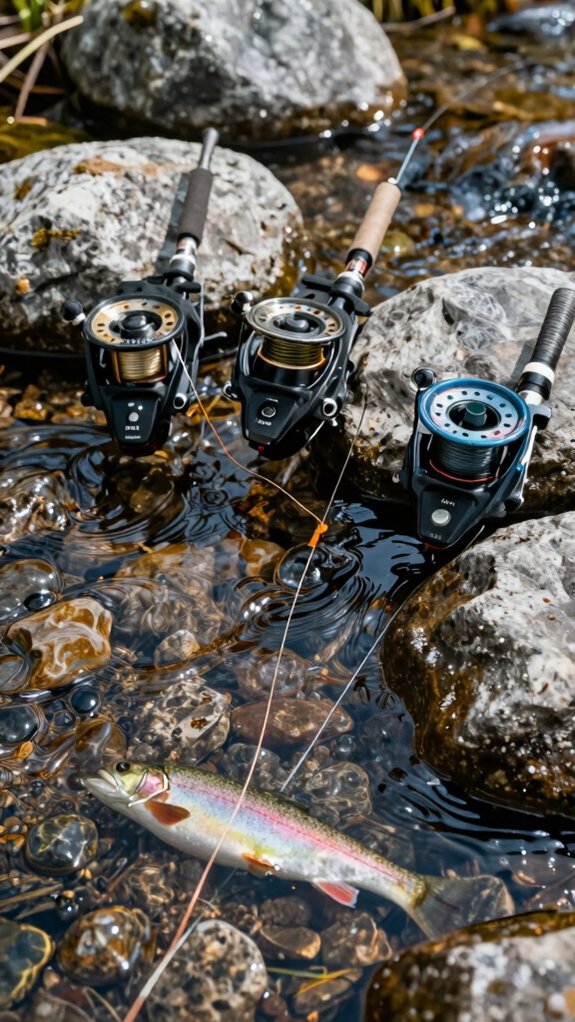
While it might seem like a stronger line gives you a better shot at landing trout, going too heavy is one of the fastest ways to spook fish and ruin your presentation. The best fishing line isn’t always the strongest, it’s the one that matches water clarity and conditions. In clear water, a 6–10 lb mainline with a 4–8 lb fluorocarbon leader keeps your setup invisible and effective.
Common mistakes? Using 12–15 lb line for trout, overkill and easily spotted.
Or skipping a leader with braid; visible spectra spooks trout. Always add a fluorocarbon leader.
And remember: sinking fluorocarbon as a mainline kills float action. For strike detection, floating mono (8 lb) is best.
Match tippet strength to fly size, follow the rule of 3, and adjust for water clarity. Lighter lines win where trout see well.
Frequently Asked Questions
What Is the Best Size Line for Trout Fishing?
I use 8 lb test as my go-to line, it’s light enough for good casts but strong enough for most trout. In clear, tight spots, I drop to 4–6 lb for stealth.
Is 8lb Line Too Much for Trout?
Better safe than sorry, no, 8 lb isn’t too much for trout. I use it often because it handles most situations well, but I drop to 4–6 lb when fish get spooky or I’m casting tiny flies.
Is a 4x or 5x Leader Better for Trout?
I’d pick 5X as my go-to for trout, it’s light enough to stay invisible but strong enough for most situations. I’ll step up to 4X when the water’s rough or the fish are big.
Is 10 Lb Braid Good for Trout?
Yeah, 10 lb braid works for trout when I need power or cast far, but I always use a 6–8 lb fluorocarbon leader to stay stealthy and protect my rod from harsh landings.
In Conclusion
Match your line to the water and trout you’re chasing, success starts there. I’ve found that using the right size and type makes all the difference between a story about “the one that got away” and a photo of your personal best. Remember: “The right tool for the job” isn’t just a saying, it’s how I land more trout.
Keep it light for clear water, stronger for heavy cover, and always trust fluorocarbon for stealth. You’ve got this.