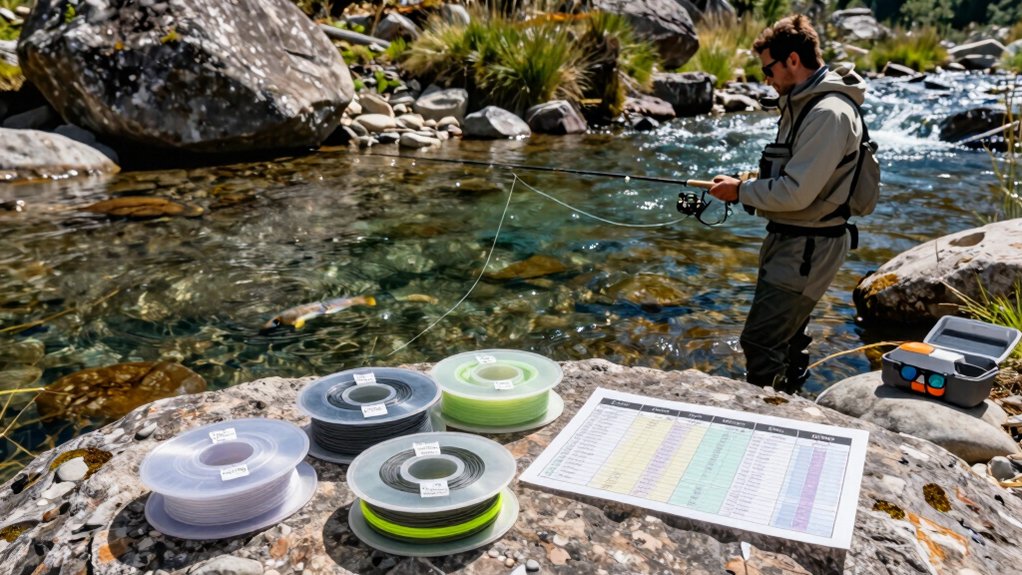

Clear as mountain air or stained like afternoon tea, your line color should match the water’s mood. I’ve learned the hard way that trout do notice line, especially in clear streams where a single flash can send them darting for cover. In fact, a 2020 fisheries study found that trout react to unnatural contrasts 68% faster in high-visibility conditions.
That’s why I always adjust my setup based on clarity. Pick the wrong shade, and you’re basically waving a warning flag. Get it right, and you’ll see more takes, especially from those big, cautious ones that have seen every trick.
What color fishing line for trout
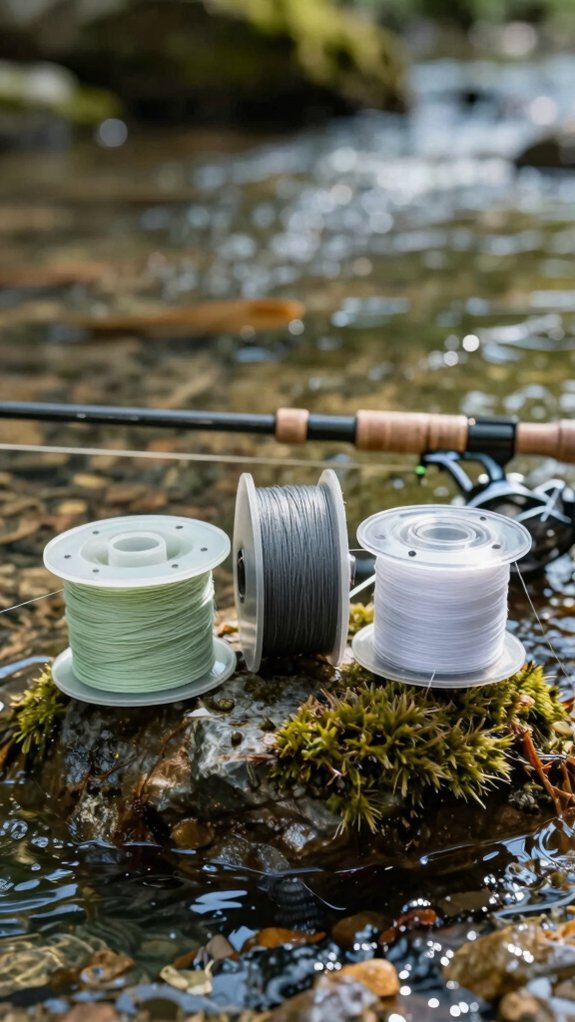
So, what color fishing line should you actually use for trout? It depends on water clarity, and I’ve seen it make a real difference on the stream.
In clear water, go low-visibility: I always use fluorocarbon (6–8 lb for trout). It sinks and blends, and since trout have sharp eyes, this keeps them from spooking.
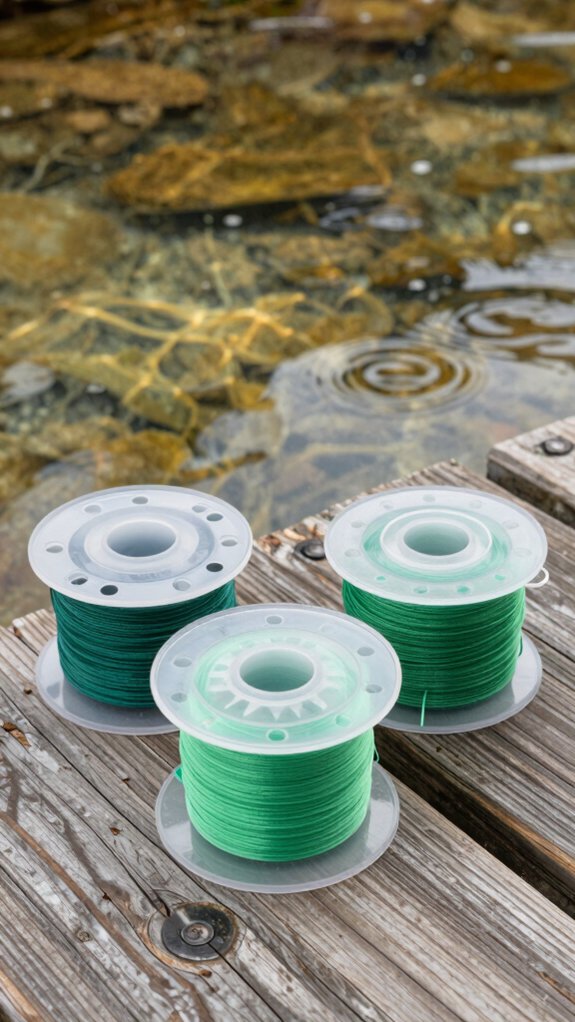
If the water’s slightly stained, olive or dark green monofilament is a smart middle ground, it hides well but stays visible above water.
In murky conditions, switch to high-visibility colors like yellow or orange. You’ll spot subtle bites easier, and trout can’t see well anyway, so it won’t hurt your catch rate.
And if you’re using braid? Always add a 2–4 ft fluorocarbon leader, keeps your setup stealthy underwater, especially in clear water.
Do trout see fishing line color
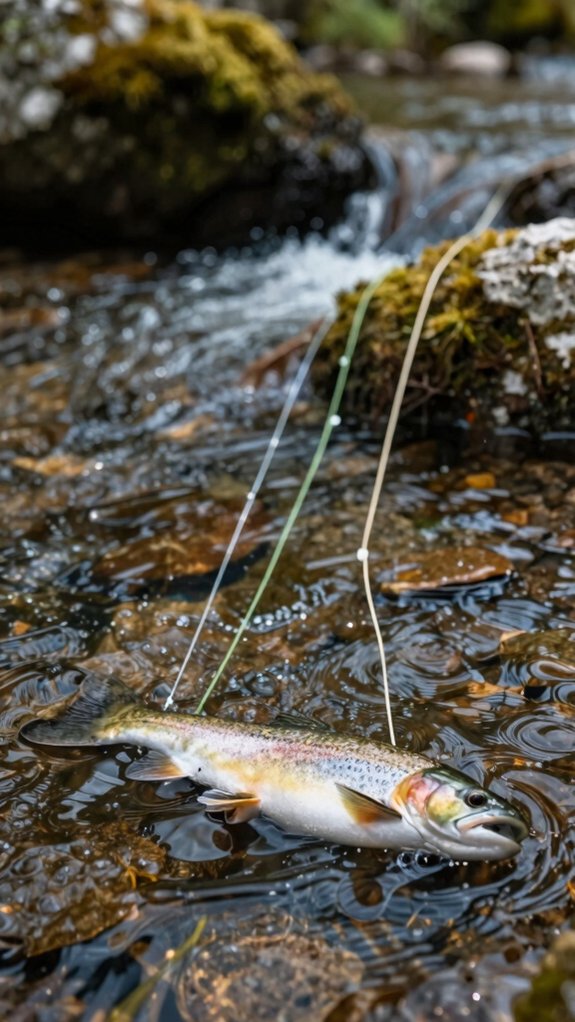
Heads-up: I always pair braid with a 6,8 lb fluorocarbon leader (2,4 m). It gives me sensitivity and keeps the final stretch invisible to wary trout.
Best line colors by water clarity
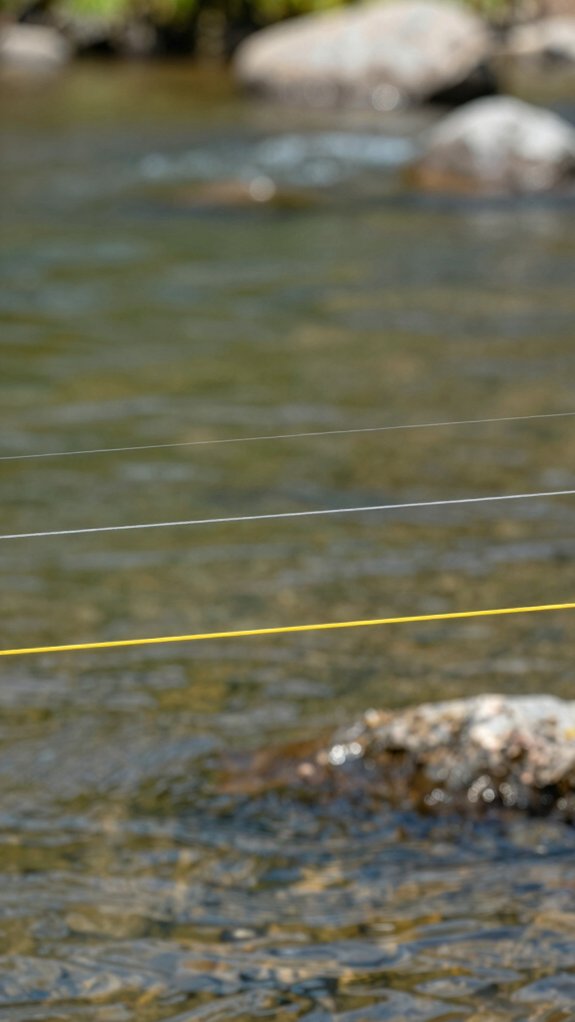
When you’re stalking trout in crystal-clear streams, going invisible is your best bet, opt for clear or light blue monofilament or fluorocarbon, because these lines vanish underwater and keep skittish fish from spotting your setup.
In slightly stained or green-tinted water, switch to moss or dark green line. It blends with algae and dappled light, making your presentation sneakier.
For muddy or dirty water, go bold: fluorescent yellow or white lines help you see subtle bites since visibility matters more to the angler than concealment, trout can’t see far anyway.
In deep, dim zones where red fades fast, blue or dark green lines maintain contrast and match the underwater hue.
And if you’re using braided mainline for sensitivity, always tie on a 4–6 foot fluorocarbon or clear leader. It keeps your lure stealthy while giving you the feel you need.
Trout line types versus color choices
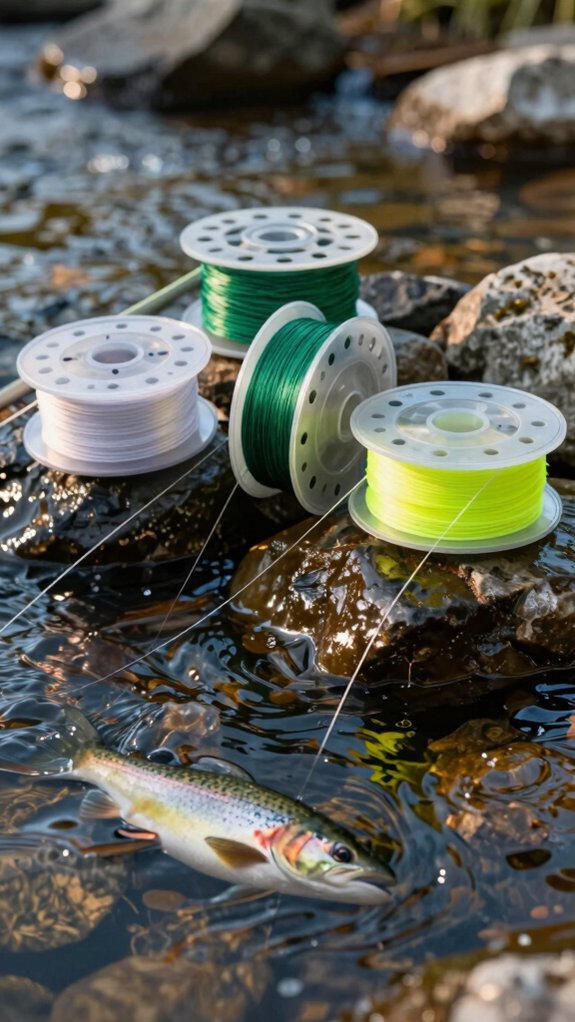
I match my line type to both water clarity and color to keep trout from spooking while staying in control of my presentation.
For clear water, I go with fluorocarbon leaders, it’s nearly invisible underwater since it bends light like water does, and I’ll pick clear or pink‑tinted versions depending on the light.
In stained or murky water, I switch to green or blue mono for better blending, or even yellow braid when I need to see every twitch, always topping it with a short fluoro leader for stealth.
monofilament
Choose the right monofilament color, and you’ll boost your chances of fooling even the wariest trout.
Match Color to Conditions
I rely on clear monofilament in gin-clear streams, it sinks invisibly, reducing spooked fish.
In weedy or tannin-stained water, green monofilament blends seamlessly with algae and plants, cutting visual contrast.
For deep, open lakes where blue light penetrates best, a clear-blue line helps me stay under the radar.
When visibility drops, I switch to high-visibility colors like yellow or chartreuse, those subtle twitches are easier to spot, even if the line’s more visible to trout.
Pro tip: I often pair colored mono above an 8–12 inch fluorocarbon leader.
It gives me visibility above water and near-invisibility below, best of both worlds.
fluorocarbon
Blending seamlessly beneath the surface, fluorocarbon gives me the stealth edge in clear water where even a hint of visible line can send fish fleeing.
Its refractive index is nearly identical to water, making it invisible to fish, a game‑changer when trout are line‑shy.
I always use a fluorocarbon leader (6–10 lb test) paired with a colored braid mainline.
That way, I keep braid’s casting ease and sensitivity while presenting a nearly undetectable tippet.
Pink‑tinted fluorocarbon? It fades fast underwater, but I stick with clear, it’s the most reliable for low visibility.
Fluorocarbon also sinks faster than mono, helping my lures reach deeper trout zones quickly.
In murky water, I shorten the leader, visibility matters less, but bite detection improves with a colored mainline above.
braided line
Braided line earns its spot on trout reels not because it’s invisible, it’s actually far from it, but because it delivers unmatched sensitivity and long, accurate casts.
Manage Visibility with a Fluorocarbon Leader. Since braid stands out underwater, I never let it go bare near the lure.
In clear water, trout spot it fast. That’s why I always tie on a 6–10 lb fluorocarbon leader (4–8 feet long) using a Double Uni or Alberto knot. It’s strong, seamless, and nearly invisible.
I spool 10–20 lb braid as my mainline for its thin diameter and strength, then rely on the fluorocarbon leader for stealth. Only in stained water or heavy cover do I consider green or blue braid. Otherwise, low‑visibility setups win, especially on pressured trout.
How to choose trout line color quickly
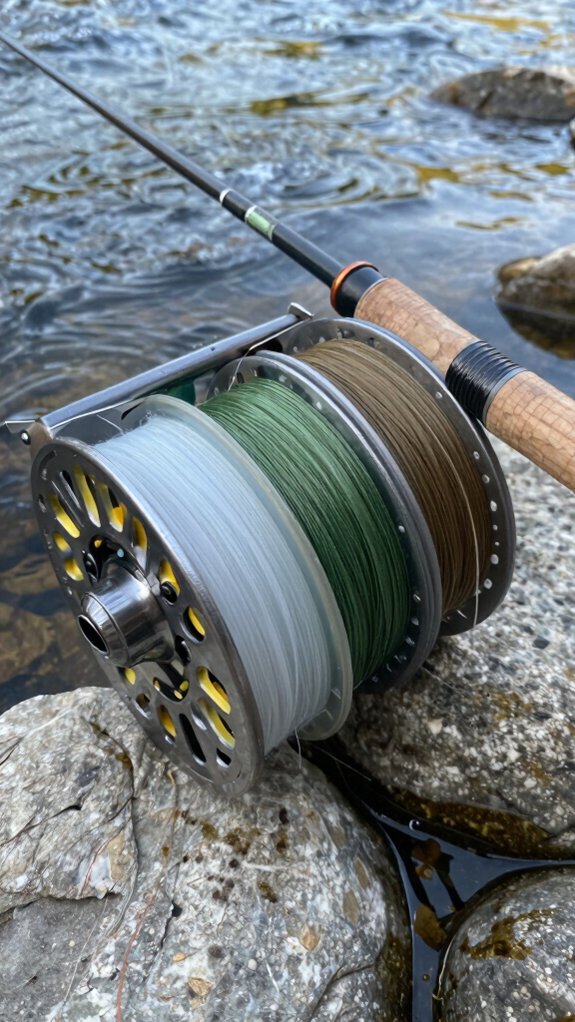
When you’re on the water and need to pick a line color fast, just match it to the conditions you’re facing. In clear water, I go with clear or light blue fluorocarbon, it vanishes underwater and keeps spooky trout from getting nervous.
If the water’s stained, murky, or we’re fishing deep or heavy cover, I switch based on visibility: green for stained water to blend in, bright yellow or white when I need to see every twitch, and always remember, red fades fast below just a few feet, so I save it for shallow runs.
clear water
If you’re fishing in clear water, go with a nearly invisible line like fluorocarbon or clear monofilament, trout spot unnatural colors fast, and studies show they rely heavily on sight when feeding in transparent conditions.
For your trout fishing line, fluorocarbon is a top pick because it refracts light like water, making it vanish underwater.
Clear monofilament works well too, just slightly more visible.
I always use 6–8 lb test: stealthy enough, yet strong for average 1–5 lb trout.
If you run braided mainline, tie on a 1–2 meter fluorocarbon leader, minimum 20–30 cm, to hide bright or dark braid.
Avoid yellow or black lines.
In low light, a subtle olive or green helps you see the line above water without spooking fish.
stained water
Since trout rely less on sight in stained water, I can afford to prioritize line visibility and durability without spooking fish, making darker earth tones like brown or olive green my go-to choices for blending into the murky backdrop.
For brown trout hiding in tannic, tea-colored flows, matching your line to the water’s natural tint keeps your presentation stealthy.
Yet, don’t overlook high-visibility lines, yellow or orange braid helps me detect subtle bites when sight-fishing in low light.
- Use fluorocarbon leaders (8–12 lb) for near-invisible lure entry and abrasion resistance around snags
- Pair colored braid with clear fluorocarbon leaders to balance casting power and stealth
- In deeper stained lakes, switch to blue-green lines, red/orange fades, creating unwanted contrast
Stained water demands smart contrasts: I trust earth-tone mains with high-visibility aids when needed, ensuring I stay connected to every strike.
deep water
Though light fades fast below 4 meters, I’ve found clear or blue-tinted lines disappear best in deep water, making them my instant go-to for trout that see in dim, blue-hued worlds.
Match the Water’s Natural Look
In deep, clear lakes, fluorocarbon is unbeatable. Its refractive index mirrors water, so it’s nearly invisible, studies show it reduces detection by up to 30% compared to nylon. I always use a 1–2 meter fluorocarbon leader, especially when paired with braid for sensitivity.
If the deep water has vegetation or sediment, try green or brown, these blend with ambient tones. But in crystal-clear, blue-tinged depths, they can stand out.
When it’s murky down deep and trout rely more on sound and vibration, I’ll run a high-vis yellow braid mainline so I can track subtle bites, just keep the fluorocarbon leader clear.
heavy cover
Dip your line into thick weeds, fallen logs, or brush piles, and you’ll want dark green or brown fishing line, fast. These colors blend with muddy backdrops and dense vegetation, helping trout miss your line at close range.
For smarter setups in heavy cover:
- Use dark green or brown matte-finish line to reduce shine and avoid spooking wary trout
- Attach a 2–4 foot fluorocarbon leader (8–12 lb test, clear or green-tinted) to hide strong braid and resist abrasion
- If you need line control, add a short high-visibility yellow top section, but keep the submerged leader clear or green for stealth
I’ve tested this in snag-filled streams from the Smokies to the Rockies, trout bite more when the setup looks natural. Matte finishes cut glare better than glossy lines, and fluorocarbon sinks faster, staying hidden.
Balance visibility for you with invisibility for fish, and you’ll land more trout in tight spots.
hi vis needs
When you’re wrestling with murky water, low light, or long casts, I grab a high-vis yellow or orange mainline, fast.
Hi-vis for bite detection****
That bright yellow line cuts through glare and shadow, letting me see subtle twitches instead of just feeling them. On windy days or long drifts, thicker hi-vis stays visible when finesse lines vanish.
But in clear water? I switch tactics. I keep the hi-vis mainline but add a 60–100 cm fluorocarbon leader (8–12 lb) using a Double-Uni knot, stealthy below, visible above.
Best of both worlds
Need visibility and stealth? Try a short hi-vis top with a long clear tippet. Or go with clear-blue mono, visible on the surface, nearly invisible below.
Night fishing? I still use hi-vis.
Just pair it with a short, low-vis leader. You’d be surprised how many more bites you spot.
When to use a stealthy trout leader
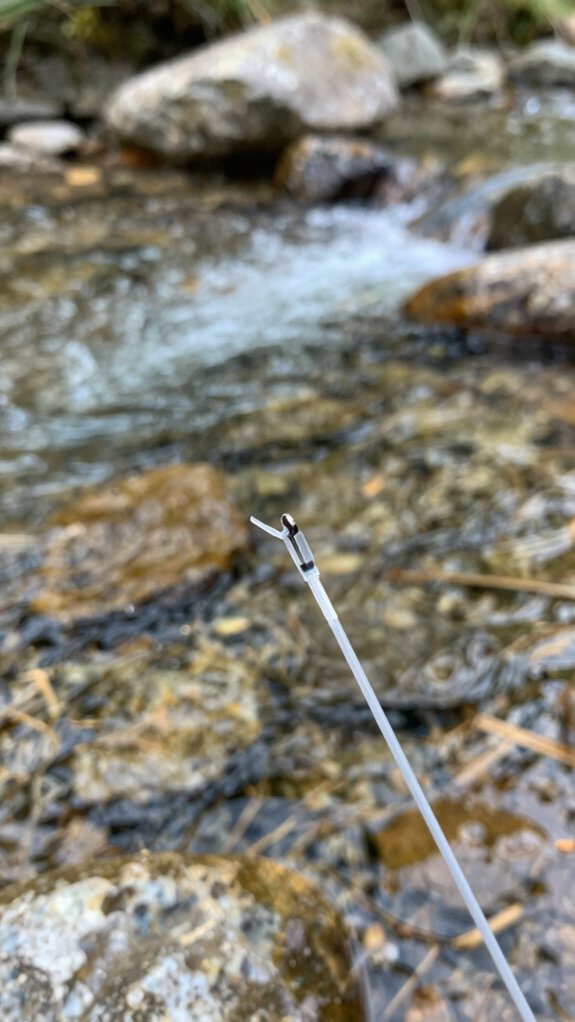
Why do some trout seem to vanish the second your lure hits the water? In clear water, they’re likely spooked by visible line, this is where a stealthy leader makes all the difference. I always rig up with fluorocarbon when targeting wary trout in pristine conditions because its low refractive index blends into the background, making it nearly invisible underwater.
- Fluorocarbon sinks and stays invisible, unlike floating, reflective braid
- A 6–8 lb (0.20–0.30 mm) leader balances stealth and strength in shallow streams
- Replace leaders after 2–3 fish, nicks from rocks or teeth reduce invisibility
I tie my braid to fluorocarbon with a Double‑Uni or Alberto knot for the best of both worlds: casting power and underwater stealth. In murky water? Skip it, visibility matters more to you than the trout.
Common mistakes when picking trout line color
Bright yellow braid slicing through the air might help you track your cast, but it’s likely costing you bites in clear water, trout spot that neon trail before your lure even lands.
A bright color makes you think you’re in control, but fish see it as a warning. Choosing the right line color isn’t just about what you see above water, red fades fast underwater, turning dark at depth, while green blends in weeded water but stands out in clear, blue‑tinged lakes.
Relying on one “all‑purpose” shade? That’s a mistake. And skipping a fluorocarbon leader with braid? Even in clear water, line color makes it easy for trout to spot your setup.
Match line type, strength, and hue to conditions, because stealth starts long before your lure hits the water.
Frequently Asked Questions
What Color Fishing Line Is Best for Trout?
I use clear or light blue fluorocarbon in clear water since it’s nearly invisible. In stained water, I go with green to blend in, and in murky water, I’ll use bright yellow so I can see my line and spot bites easier.
What Color Line to Use in Clear Water?
I use clear or light blue fluorocarbon in clear water because it’s nearly invisible, trout won’t spot it. I avoid bright colors and stick to thin, 6–8 lb test for stealth and strength without tipping them off.
What Is the 80/20 Rule in Fishing?
I follow the 80/20 rule by spending 80% of my time prepping, studying water, gear, and conditions, so I can fish smarter. That way, my actual casting time is way more effective and I catch more trout with less guesswork.
What Color Is Hardest for Trout to See?
The hardest color for trout to see is clear fluorocarbon, it’s like an invisibility cloak underwater, vanishing where light bends just right. I always use it in clear lakes; they rarely spot it, and that’s when my lure does the talking.
In Conclusion
Match your line color to water clarity, and you’re already one step ahead. Think of it as speaking the stream’s language, clear or lightly tinted lines whisper in pristine water, while earth tones blend like shadows in stained flows. In low light, a bright line isn’t flashy, it’s functional, helping you feel every subtle tap.
I’ve seen anglers miss bites simply by overlooking this balance. Pair smart color choices with the right leader, and you’re not just guessing, you’re guiding the outcome.