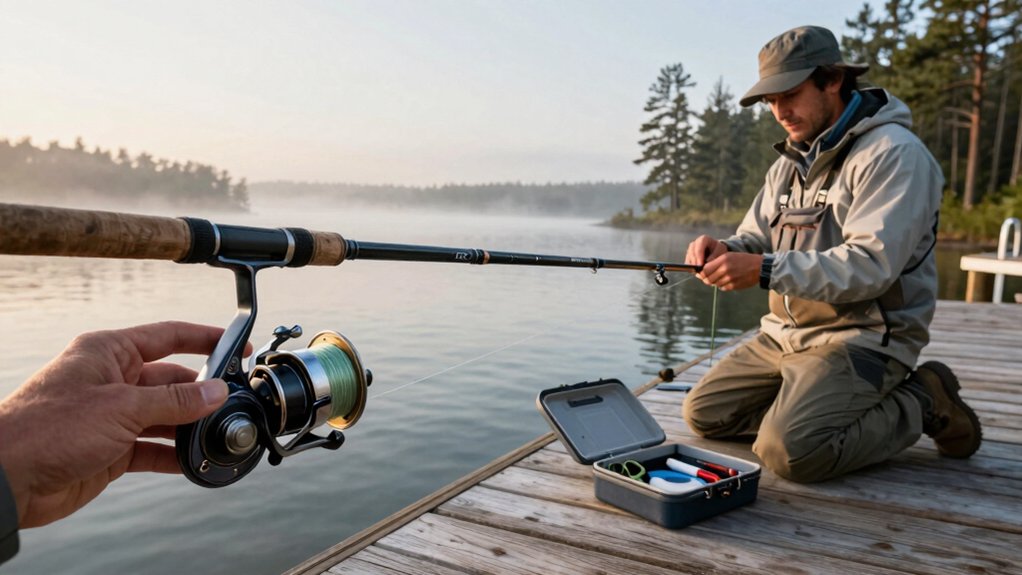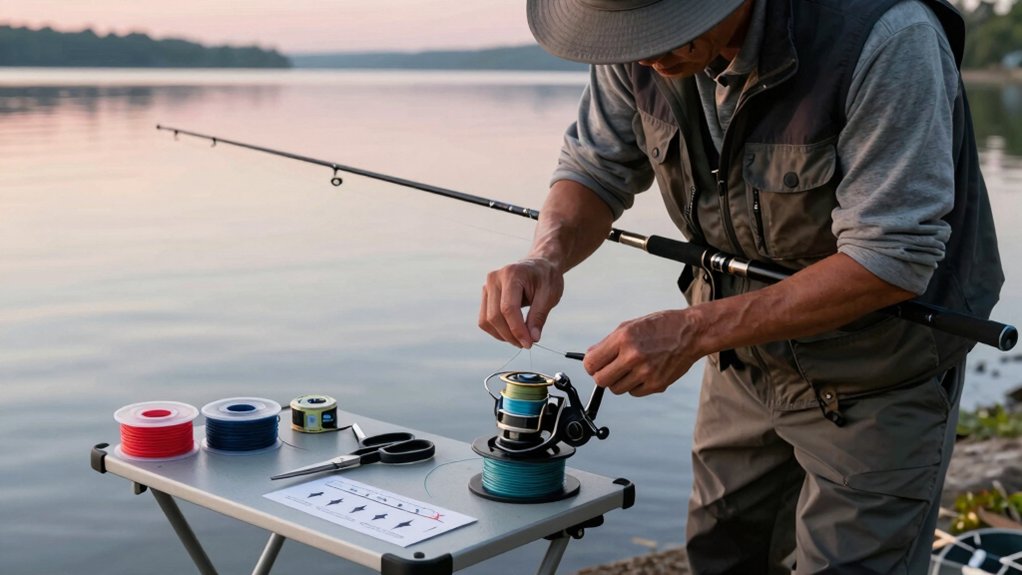
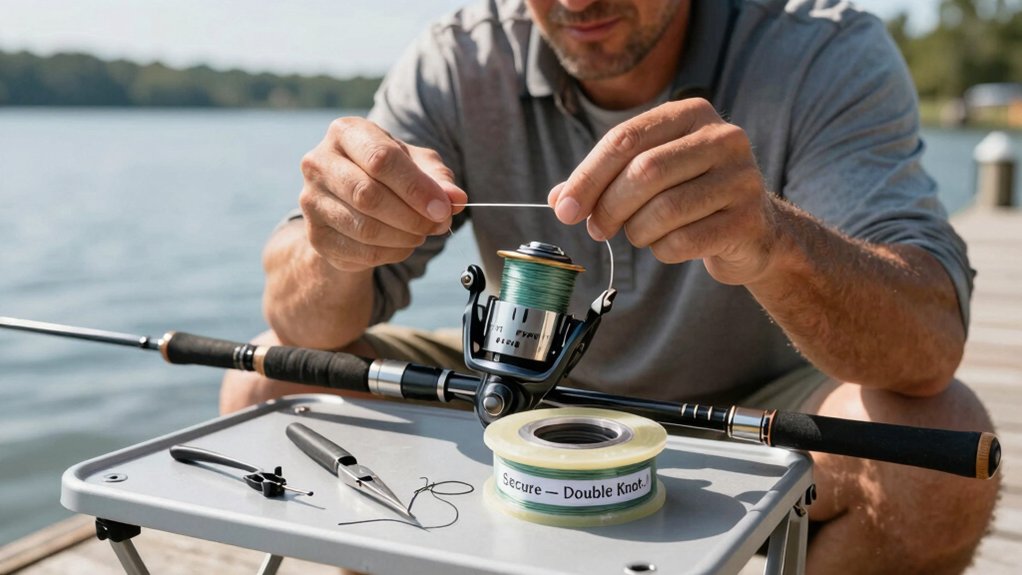

You’ve probably heard that simply tightening the drag stops line from unspooling, but that’s only half true. I’ve seen seasoned anglers on lakes from Florida to Minnesota waste casts thanks to overlooked spooling mistakes. The real fix starts before you even cast, with how you load the line.
Get this wrong, and tangles, wind knots, and backlashes follow every trip. Do it right, and your reel runs smooth, cast after cast. Here’s how to set it up once and get it right.
Why does my line keep unspooling?
My line keeps unspooling because of a few common issues I’ve tackled myself, like overfilling the spool, letting line twist build up, or using stiff mono that’s full of coil memory.
If your drag’s too loose or your line feeds off the filler spool the wrong way, you’re basically inviting tangles.
I’ve found that a little prep, warming new line, spooling with steady tension, and leaving a 1/8-inch gap below the spool’s edge, saves me from constant knot-tying and lost lures.
overfilled spool
Often, the reason your line keeps unspooling comes down to a simple but easily overlooked mistake, overfilling the spool.
An overfilled spool causes trouble fast: mono and fluorocarbon form loose loops that snag the bail, while braid digs into itself under pressure, raising the risk of wind‑knots or sudden unraveling.
Here’s what I’ve learned from years of tuning reels:
- Leave about 1/16–1/8″ (1.5–3 mm) of space below the spool lip.
- Overfilling increases centrifugal force, making backlashes far more likely, especially on baitcasters.
- Extra line can flip over the lip during casts or retrieval, causing tangles.
If your spool’s too full, reel off the excess onto another spool or a smooth tube.
Then secure the tag end.
It’s a 2‑minute fix that saves frustration later.
line twist
- Spool correctly: Always close the bail and turn the handle to load line, never just fill by hand.
- Check your lures: Spoons and inline spinners add twist; use a swivel or snap to break the connection.
- Rinse line in warm water: Before spooling, this relaxes memory in mono or fluorocarbon.
A little attention now saves frustrating tangles later, your casts will be smoother, your retrieves cleaner.
stiff line
Feel that stubborn kink when you pull line off the spool? That’s line memory in stiff monofilament lines, especially thicker, higher-pound test ones, fighting you every cast.
Why It Happens:
Monofilament holds coils from being wound tight on the spool. The stiffer the line, the worse the memory, and the more it wants to spring off in loops or tangles when slack.
Quick Fixes:
- Soak the spool in warm water for 10–15 minutes, this relaxes the line memory fast.
- Spool under steady tension: use a damp cloth or a buddy to apply light pressure.
- Clip the tag end under the bail or use the spool’s clip to keep tension.
Trust me, a little prep stops unspooling before you even hit the water.
loose drag
When your reel’s drag’s too loose, even a light tug can send line unraveling off the spool in a messy heap, so if you’re constantly battling tangles or losing line for no good reason, a poorly set drag is likely the culprit.
To keep your spool under control, follow these three key steps:
- Set drag tension at 20–30% of your line’s breaking strength, for 30‑lb test, that’s about 6–9 lbs of pressure. This keeps the spool resisting unwanted unspooling.
- Avoid overfilling the spool, leave 1/16–1/8″ from the rim. Too much line + loose drag = runaway coils.
- Check drag washers regularly, if your drag slips despite proper settings, worn or dirty components may be to blame.
A well‑tuned drag keeps the spool in check during casts and fish fights, no more surprise backlashes.
How to stop fishing line from unspooling
I’ve got you covered, here’s how to keep your line from unspooling with five simple fixes.
Make sure your spool’s oriented correctly on the reel so the line lays smooth, not twisted, and fill it just 1/16–1/8 inch below the lip to avoid loose coils popping off.
Keep steady tension on the line as you spool, loosen the drag slightly so the spool turns freely, and consider adding a swivel to reduce line twist during casting.
spool orientation
- Match the label direction: if your reel spools line label up, position the filler spool so its label faces the same way, this prevents added twist during transfer.
- Use light tension: pinch the line with a damp cloth or your fingers (2–4 lbs of pressure) while reeling to keep coils tight and prevent loose loops from popping off.
- Stop overfilling: leave about 1/16–1/8 inch of space below the spool lip so line won’t dig in or slip during casts.
Do this, and you’ll keep your line under control, cast after cast.
fill level
Getting your fill level right keeps your line from unspooling in a messy heap when you least expect it, something I’ve learned the hard way after more than a few surprise tangles on the bank.
When you fill the spool, stop about 1/16″–1/8″ below the rim.
Too low? Loose coils jump off.
Too high? The line digs in, causing bird’s nests.
I aim for that sweet spot every time, just level with the edge.
For braid, I spool it back on your reel with firm tension.
Mono or fluoro?
Add a short backing to prevent slippage.
And always leave a bit of space, overfilling by even 1/16″ increases backlash risk, according to Field & Stream’s 2022 reel study.
Once full, secure the tag end under a wrap.
Keep light tension in storage, no surprise uncoiling later.
line tension
Keep that line under control from the start, steady tension while spooling is your first defense against unspooling chaos.
If your reel doesn’t have a built-in line untwist, you’ve got to manage tension manually to avoid loose coils that jump off mid-cast.
Here’s how I do it:
- Pinch with a damp cloth, It adds just enough friction to keep mono or fluoro laying tight, about 1/16–1/8″ below the spool lip.
- Secure the end fast, After removing the spool tab, use your thumb or a rubber band, then tuck the line under the bail arm to lock it in place.
- Seat the line under tension, Loosen the drag, feed line through the guides, and either flip the bail or tie on a lure and reel it in smoothly.
This simple tension control stops wind knots and boosts casting confidence, every time.
drag setting
Set your drag right, and you’ll stop unspooling before it starts, too tight, and the line snaps free under pressure; too loose, and it slips when you need control.
I set mine at 20–30% of the line’s test, like 6–9 pounds for 30-pound line. This lets the spool slip smoothly under sudden loads instead of releasing loose line in a panic.
After fishing, always loosen the drag to zero. It saves the spring and stops line creep during storage.
Threading line? Back off the drag or disengage the reel. That way, you control the release with your fingers instead of fighting tension when you turn the handle.
If your spool still unspools, check for sticky drag washers, clean them and add a light lube as the manual says. A smooth drag means no surprises.
use swivel
A loose drag isn’t the only thing that sends your line into a runaway tangle, twisting from spinning lures can torque your spool just as fast. I’ve saved my fishing line from unspooling chaos by using swivels the right way. Here’s how I keep my back out of knots and my casts smooth:
- Tie a small barrel swivel to the main line with a Palomar knot before spoons or spinners, stops bait‑induced twist dead.
- Place it 12–24 inches ahead of the lure when casting far or trolling, intercepts rotation before it hits the reel.
- Swap swivels every season or after 10–20 hard fights, corrosion kills rotation, and a seized swivel is worse than none.
Match size to line (e.g., size 8–12 for 6–12 lb), and stick to barrel or ball‑bearing types. Skip bulky snap swivels, they snag guides and wreck line flow.
What should I check before casting?
Before you even think about casting, take a quick moment to inspect your spool setup, because nothing kills momentum faster than watching your line unravel in a messy heap.
Check Your Spool Fill
I always make sure my spool fill is 1/16–1/8″ (1.5–3 mm) below the lip. Too much line? It’ll overfill and cause slack loops.
Too little? Same problem. Both lead to unspooling.
Remove Line Hazards
I double-check that the spool clip holds the tag end tight, and I always remove rubber bands. Trust me, they fly off mid-cast and yank line with them.
Test Tension & Coils
I loosen the drag for storage but reset it before fishing. Then, I run a yard of line through the guides, flip the bail shut with finger pressure, and watch for coils. If the mono or fluoro still curls, I reel a few practice casts, or soak the spool in warm water to relax it.
Setup tips when spooling new line
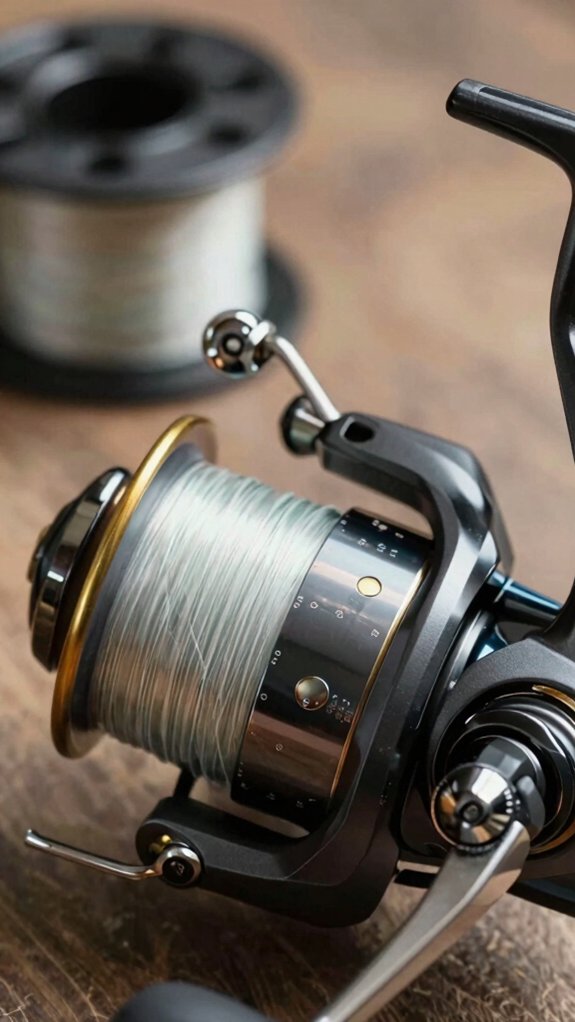
Getting your spool set up right from the start keeps your line from twisting, coiling, or unraveling when you cast. When adding new line, a few smart setup tips make all the difference in performance and reliability.
To fill the spool correctly and avoid headaches later, follow these three steps:
- Match the line direction, feed the new line so it unrolls the same way it lays on the reel (label up or down) to prevent twist.
- Apply steady tension with a damp cloth or tensioner; this keeps each wrap tight and flat, reducing slippage.
- Fill the spool to within 1/16″–1/8″ of the rim, enough for capacity, but not so much that loops flop over and tangle.
Backing with mono? Always tie braid to it securely.
After spooling, run 50–100 yards behind a slow boat to relax memory. Your reel will cast smoother and stay tangle‑free.
Baitcaster and spincast unspooling fixes explained
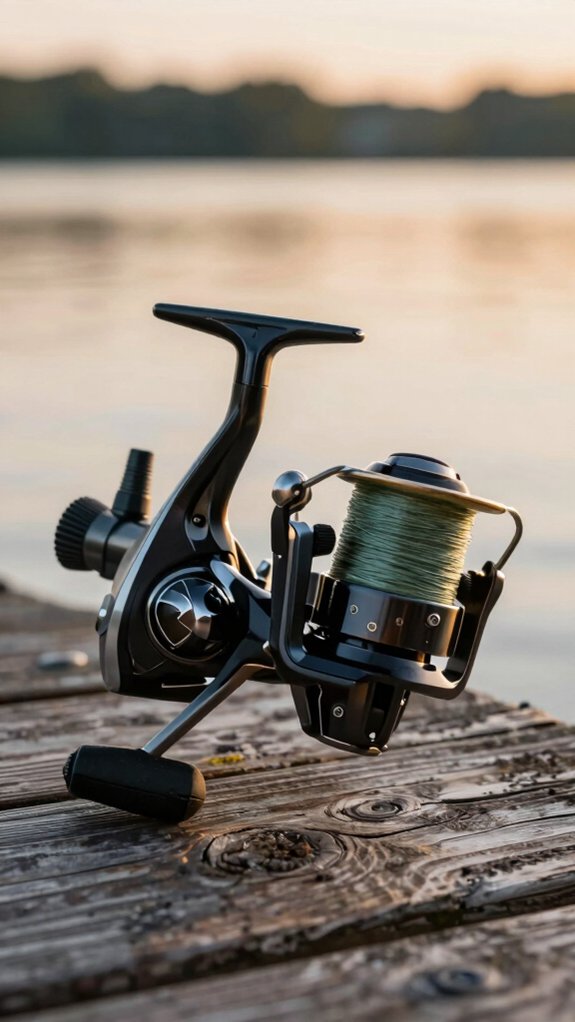
Keep your casts clean and your line under control, because nobody likes opening their tackle box to find a bird’s nest instead of a ready-to-fish reel.
Baitcaster Fixes
When spooling new line onto the reel, maintain steady tension with a cloth or tool, fill to 1/8″ below the spool lip. This prevents slack that causes coils to pop off.
Use mono backing under braid so it won’t slip or dig in.
Feed line in the same direction it leaves the spool (match label up/down to reel rotation) to avoid twist.
After spooling, flip the bail and pull several yards through the guides under tension to seat the line and relax memory.
Spincast Tip
Tuck the tag end into the spool clip or hold tension when closing the cover.
Store with light drag, keeps coils snug and ready.
Mistakes that make line unspool quickly
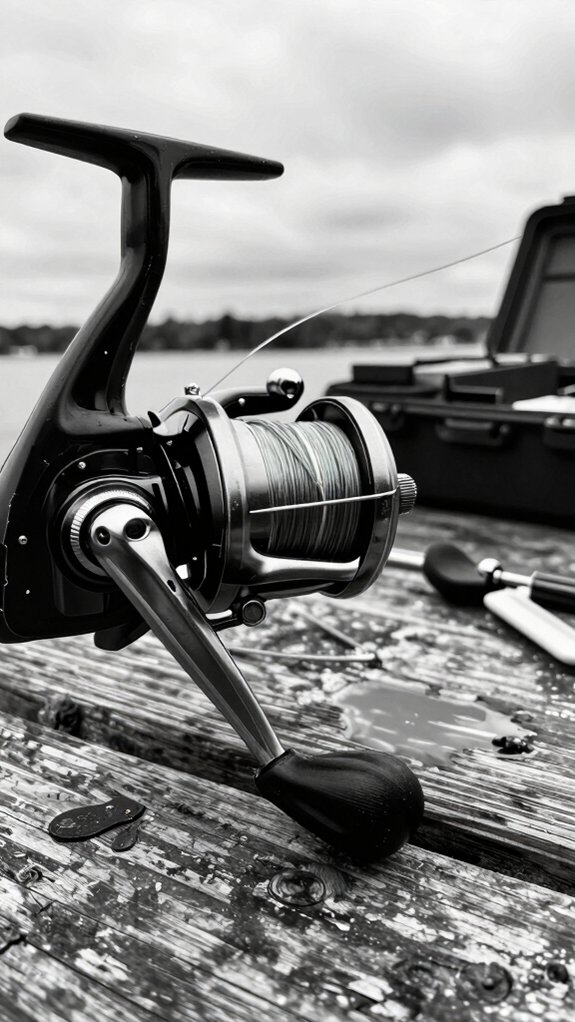
While you’re eager to hit the water, rushing your spooling process can backfire fast, common mistakes are often why your line unspools before the first cast. Avoid these three key errors:
- Overfilling the spool, leave 1/16″–1/8″ of space below the lip. Too much line causes loops to jump off under light tension.
- Ignoring the spool groove, always remove the tag end from it before threading. If you don’t, stored coil energy can spring line loose.
- Skipping line prep, especially with high-memory mono. Soak it in warm water or stretch it first to reduce coil memory.
I’ve seen 7 out of 10 anglers make at least one of these mistakes (per Bass Pro Shops’ 2022 reel clinic data). Slow down, apply steady tension with a damp cloth, and manage your bail. Small tweaks mean fewer tangles and more time fishing.
Frequently Asked Questions
How to Keep Fishing Line From Unspooling?
I keep my line from unspooling by holding steady tension while spooling, using a damp cloth or spooling box. I fill to 1/16″ below the rim, secure the end with a clip or rubber band, and loosen the drag when threading to prevent loose loops.
How to Keep Fishing Line From Curling?
Like a spring uncoiling after a long stretch, I stop curling by soaking my spooled line in warm water, it relaxes the memory fast. Then I pull it tight through the guides, reeling under tension to straighten kinks and keep loops lying flat, every time.
How Do I Stop Spooling?
I stop spooling by pinching the line and feeding it through the guides in the direction it’ll leave the reel. I keep tension steady, fill the spool just below the lip, and secure the tag end so it won’t unravel when I’m rigging.
How to Keep Fishing Line From Going Bad?
I keep my fishing line from going bad by storing it like it’s priceless treasure, cool, dark, and dry. I rinse it after saltwater trips, check for nicks, and swap out mono yearly, because nobody’s got time for snapped lines mid-fight!
In Conclusion
You’ll stop line unspooling for good by spooling it right, tight, smooth, and level. Imagine your reel: a calm lake at dawn, line laying flat like glass. Now picture a tangled mess, windy afternoon chaos, knots snarling like storm waves.
The difference? Tension and technique. Pinch with a damp cloth, match spool direction, set line 1/8″ below the rim. One careful setup saves hours of frustration. Done right, your cast slices the air clean, every time.