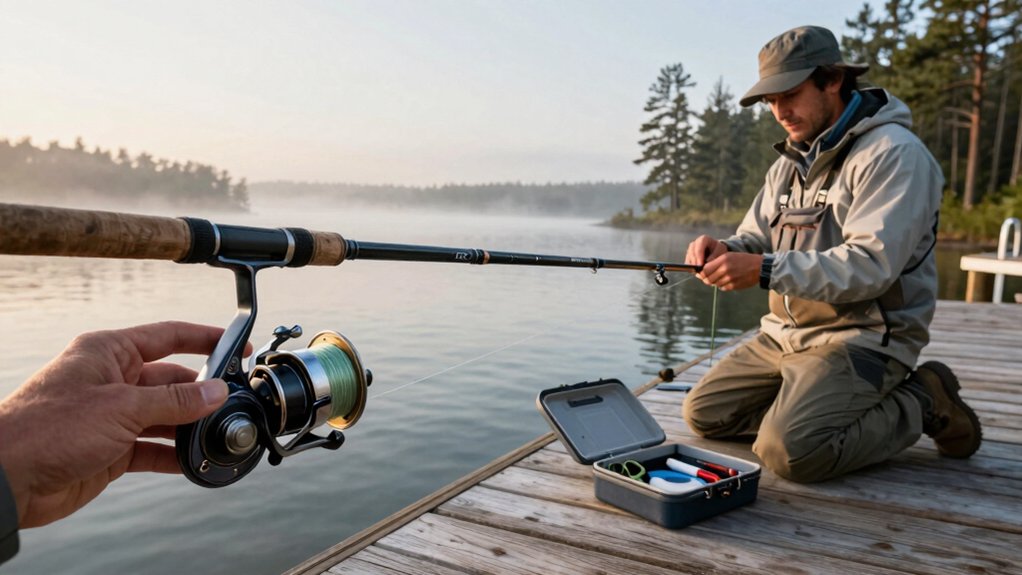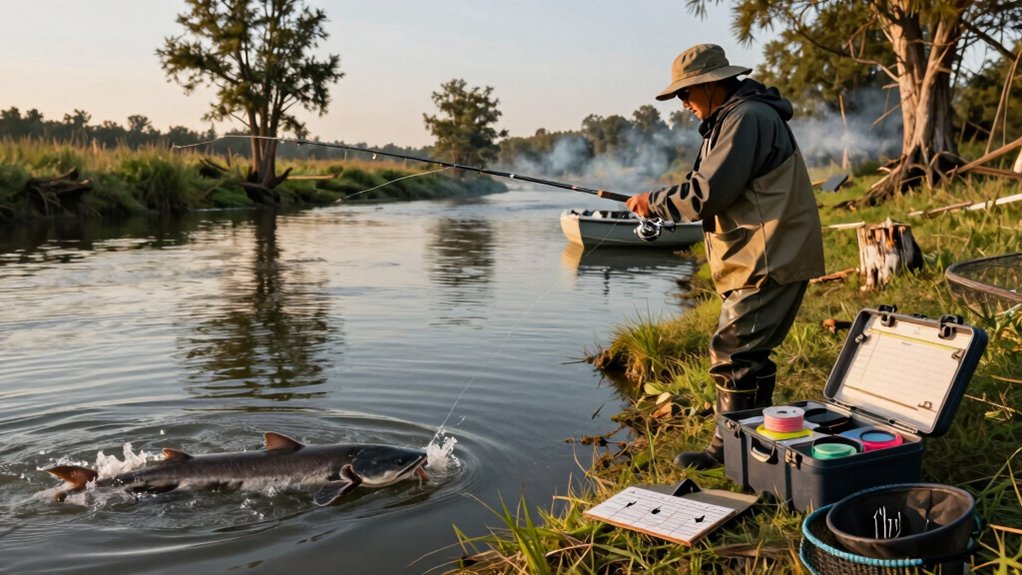
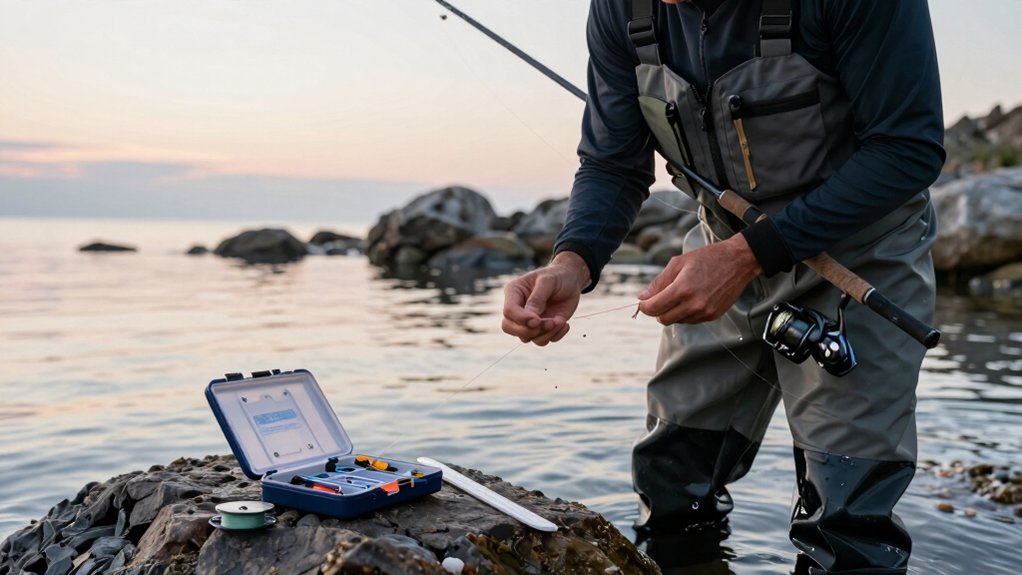

You know that heart‑stopping moment when a big tuna makes a blistering run and your braid screams through the guides? That’s where a top shot saves the day. I splice 50 yards of 20‑pound mono onto my braid, and it gives me the stretch I need to keep fish hooked.
It’s not a leader, it rides right on the spool. Got better hookups and fewer snapped lines since I started. You’ll see why in a minute.
What is a top shot fishing line?
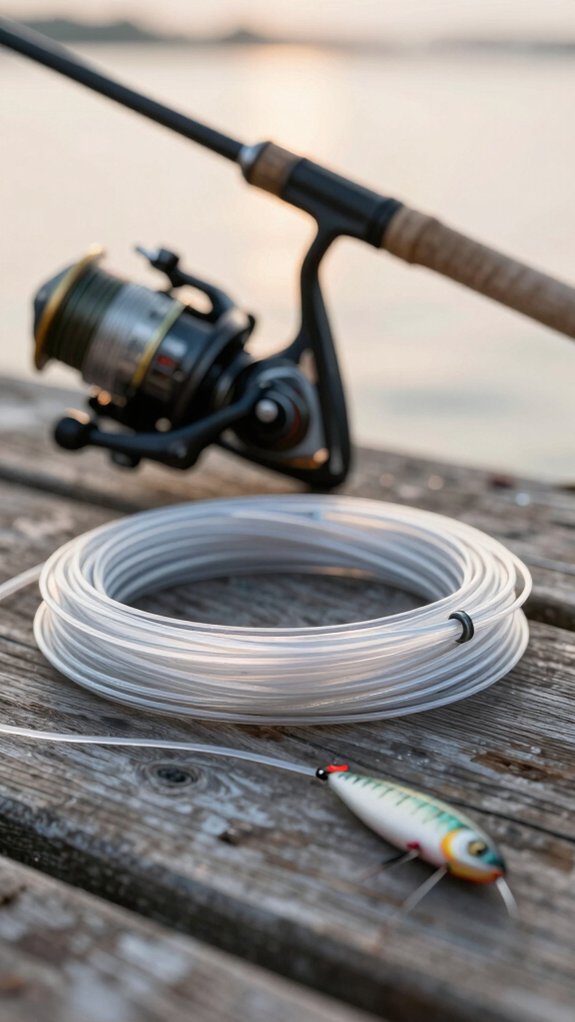
Think of a topshot as your reel’s best of both worlds, where braid’s strength meets mono’s stretch.
A topshot is a 50–150 yard section of monofilament spooled on after your braid or Dacron backing.
It gives you braid’s thin diameter (more line capacity!) while keeping mono’s shock absorption and knot strength where it matters most.
I use a Crazy Alberto knot to tie mine, quick, strong, and reliable.
Most light to medium setups run 30–65 lb braid with a 20–30 lb mono topshot; heavy bluewater rigs go 80 lb braid with 50–80 lb mono.
You’ll feel fewer lost fish thanks to the stretch during hard runs.
Plus, swapping mono seasonally saves time and money.
Just remember: IGFA rules since 2017 monitor the first 5 meters, so keep your topshot long and consistent for record eligibility.
Top shot vs leader: key differences
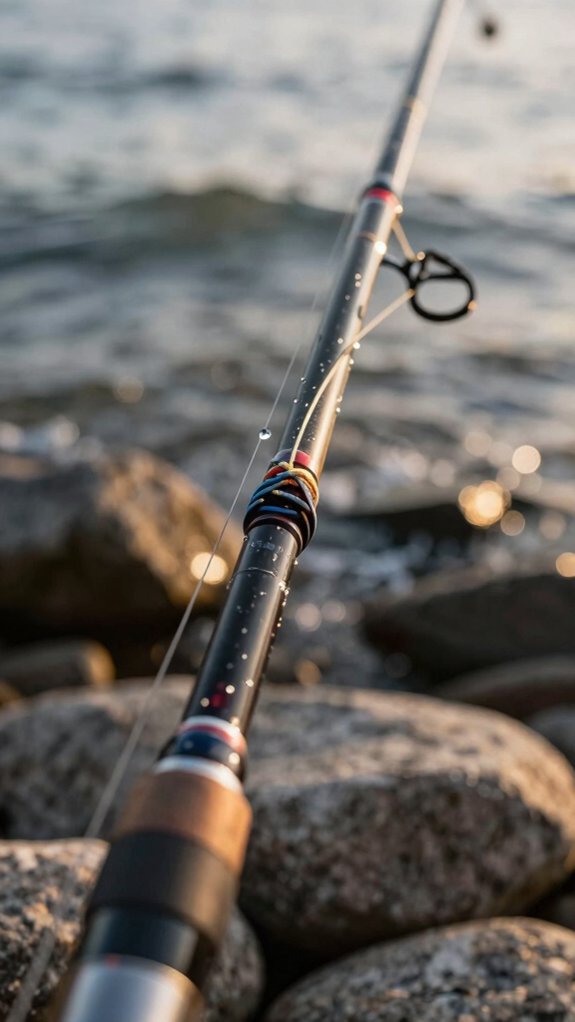
While they might seem similar at first glance, a topshot and a leader play totally different roles in your fishing setup, confusing them can cost you fish.
Your topshot adds stretch and shock absorption to non‑stretch braid, protecting your line during hard runs. The leader, on the other hand, is your final defense, built to resist teeth, rocks, and abrasion.
| Feature | Topshot | Leader |
|---|---|---|
| Length | 20–150 yd | 4–10 ft (or 5 yd) |
| Purpose | Shock absorption | Bite/abrasion resistance |
| Replacement | Every few hundred yds | After each catch |
Think of the topshot as your line’s cushion and the leader as its armor. Pair them right, and you’ll land more fish with confidence.
When should you use a top shot?
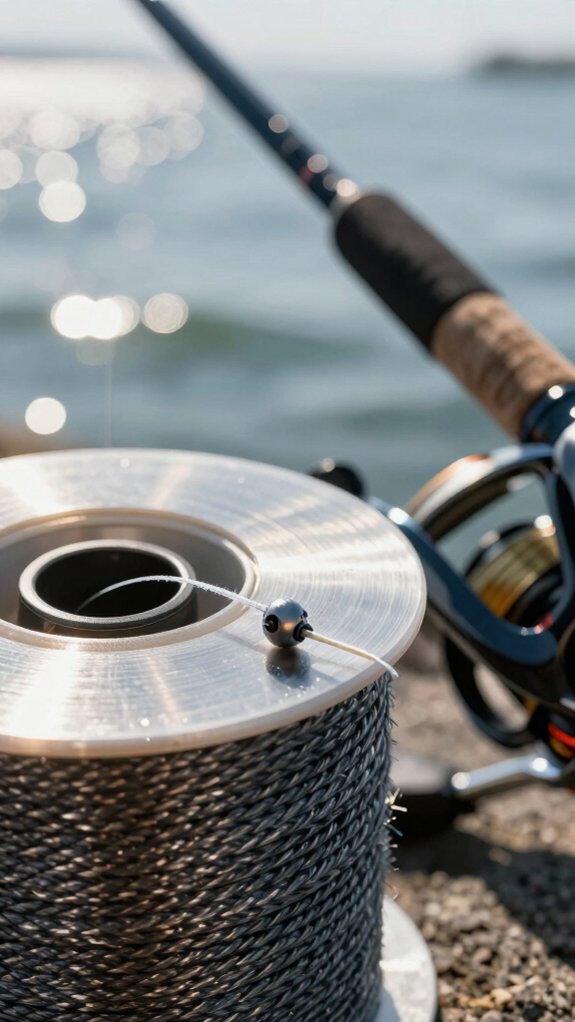
When you’re chasing hard‑pulling giants like marlin or tuna, or trolling deep with downriggers, a topshot isn’t just helpful, it’s a game‑changer.
Why Use a Top Shot?
I use a top shot when I want braid’s thin diameter for long casts or deep runs but need mono’s stretch and shock resistance.
The combo gives me the best of both: braid backing (80–500 yards) for capacity, then 50–150 yards of 20–80 lb mono top shot for cushion.
It’s perfect for downrigger fishing, mono seats reliably in release clips and cushions blistering runs.
Plus, when toothy fish or rocks threaten my line, that mono top shot takes the hit, saving my braid.
It’s cheaper and faster to replace than respooling.
Just check IGFA rules for records, line class can depend on the first 5 meters.
How to rig a top shot line
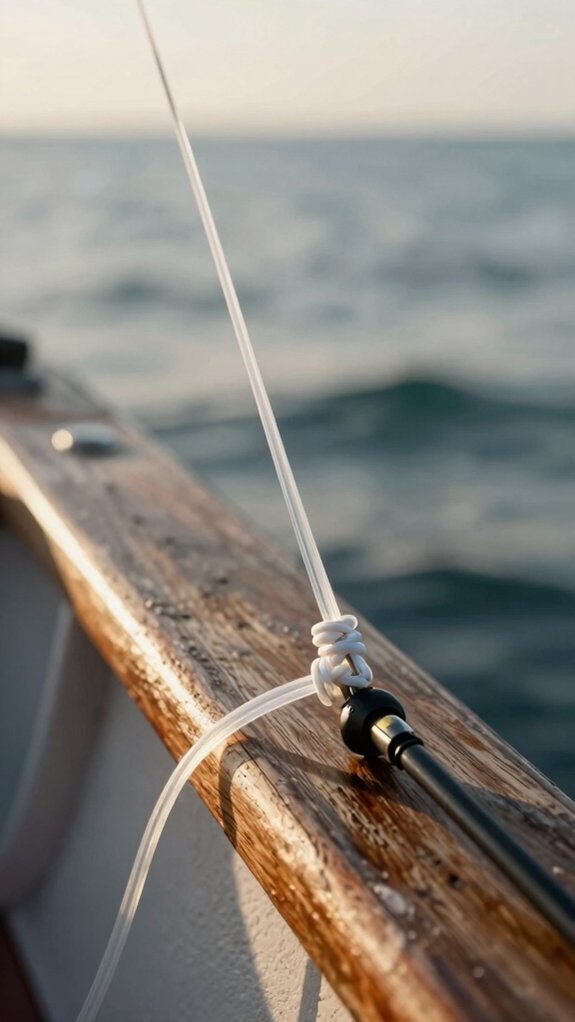
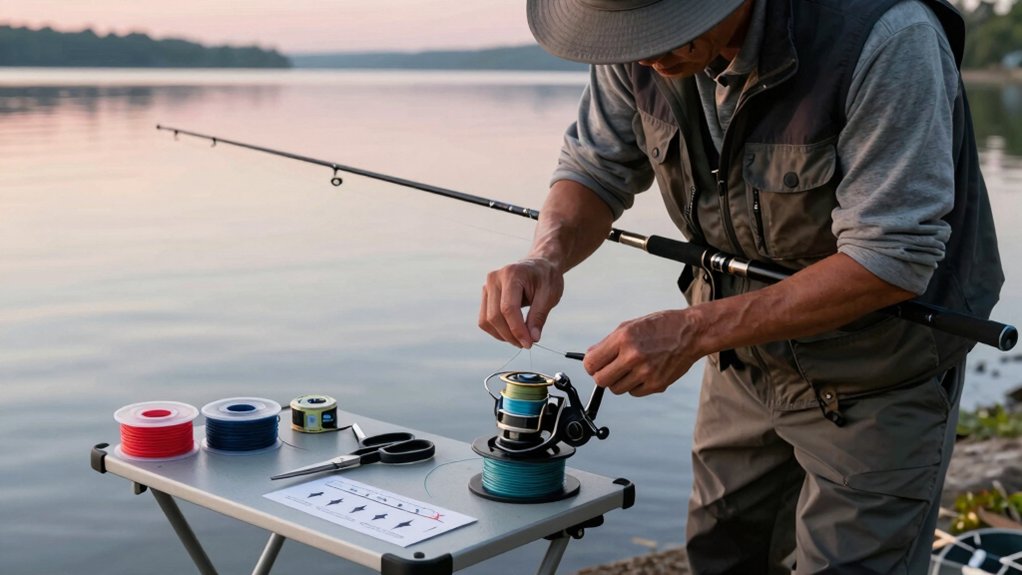
Here’s how I rig a top shot line quickly and right every time.
First, I spool my reel with thin braid, leaving about 70, 80% capacity free before tying on the mono topshot with a Crazy Alberto or Albright knot.
Then I trim, secure, and check everything so it runs smooth through the guides and handles hard pulls without slipping.
gear needed
If you’re after strong, smooth casts and better lure control without sacrificing capacity, rigging a top shot line is a game-changer, and it starts with having the right gear in your tackle box.
For a reliable setup, you’ll need quality braid (like Spectra or Dyneema) for backing and a solid monofilament line top shot, typically 30–150 yards of 20–100 lb test, depending on your fishery. Match it to a medium or heavy reel rated for 50–80 lb braid.
Don’t forget tools: a spooling station (or a friend’s steady hands), scissors, a lighter for sealing mono ends, and a knot-tying tool. Use a Crazy Alberto or double Uni knot to join lines, or splice the mono into hollow braid for a slick, strong connection.
spooling steps
While you’ve got your gear laid out and ready, let’s dive straight into spooling a Top Shot line the right way, because a smooth, strong setup starts with smart, step‑by‑step execution.
First, fill your reel 70–80% with braid backing, about 500 yards of 80‑lb Spectra works great. This keeps the braid off the water and maximizes capacity.
Next, attach your mono topshot (50–150 yards, 30–80 lb, depending on target species) using a Crazy Alberto, Albright, or hollow‑braid splice. These knots handle stress like pros.
Leave 5–10 yards of mono past the knot before trimming. Slowly take up slack by hand while paying out line, this seats the knot and prevents tangles.
Finish with a Dacron whipping and a dab of super glue for durability. Sand rough ends smooth.
Finally, test the join under load and run 50–100 yards through your guides. A solid Top Shot means reliable clips, smooth drags, and more fish.
finishing checks
Now that your braid’s snug on the spool and the mono topshot’s tied on tight, it’s time to run through the final checks that turn a good spooling job into a battle‑ready setup.
Here’s what I always do:
- Test the knot: Set the drag low and back the reel under load to simulate a fish run. I check that the braid mainline and mono topshot connection holds strong, no slippage, no frays.
- Seat the junction: Slowly wind while applying tension so the mono lays flat and the braid locks down securely.
- Whip the transition: I wrap 2–3 cm with light Dacron and soak it in superglue to protect against abrasion and hide any tags.
- Inspect regularly: I replace just the mono topshot when I see nicks or UV wear, no need to respool all that braid.
Best knots for top shot connections
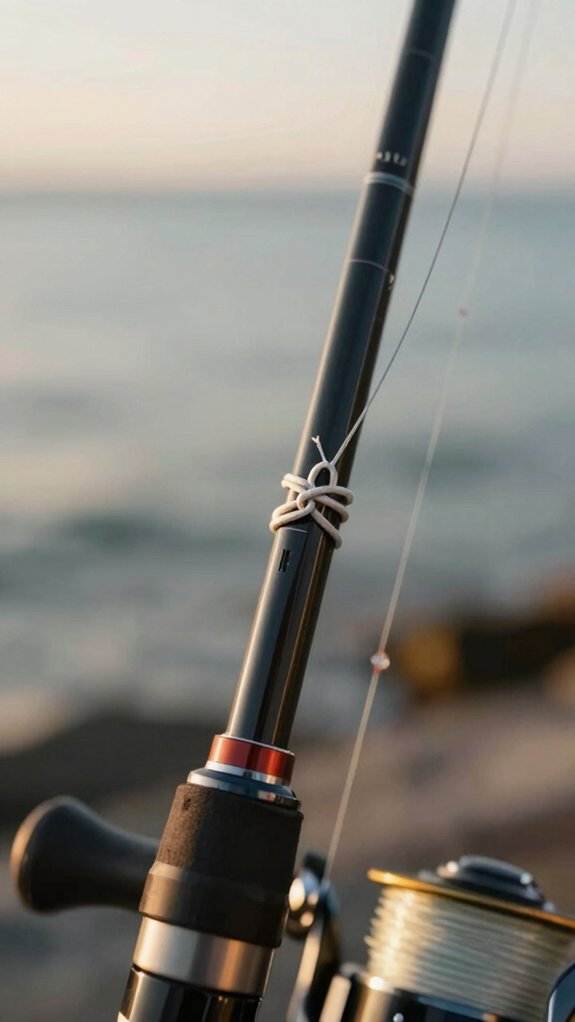
When it comes to the best knots for top shot connections, I’ve found the Crazy Alberto and Albright Special top the charts for strength and reliability.
I use the Crazy Alberto for its slim, strong profile when linking braid to mono, but if I’m short on time, the Albright with 12–15 wraps and tapered braid ends gets the job done.
For extra security in heavy cover, I’ll even double up with a Double Uni or add a Cat’s Paw at the leader end, just keep it neat and always seal the tag end with a dab of glue.
double uni
Trust matters most when your trophy fish is peeling line off the reel, and the Double Uni knot is one of the most trusted connections for joining braid to a monofilament or fluorocarbon top shot.
I rely on it because it consistently delivers 75–90% of line strength when tied right, perfect for pairing slick braided line with a durable mono line leader.
Here’s how I nail it every time:
- Overlap 6–8 inches of braid and mono, wrapping each around the other’s standing end.
- Use 8–10 wraps for braid, 5–7 for mono, this balances grip and bulk.
- Wet the knot, then pull each uni snug before cinching them together.
- Trim tags to 2–3 mm so it glides through guides without snagging.
I always test mine by hand-pulling near breaking strain.
It’s slim, strong, and ready when the big one bites.
albright knot
Snub a charging tuna or cut through heavy current without blowing your connection, the Albright knot’s compact strength makes it a go‑to for joining braid to a mono or fluorocarbon top shot.
When you need a smooth, strong line transition that slips easily through guides, this knot delivers. I use it for top shots in the 20–100 lb range, perfect for trolling and big‑game action.
Here’s how we tie it:
- Form a loop in the heavier braid.
- Pass the mono top shot through and wrap it back 10–12 times.
- Tuck the tag end through the loop, wet it, and pull tight.
I always use mono as the wrapping line, it bites better and snugs down smoothly. Keep the knot short (2–3 cm), trim the tag, and seal it with a dab of super glue. Test it under load, if it slips, add a wrap or try a Crazy Alberto for extreme strength.
crazy alberto
Step up your top shot game with the Crazy Alberto knot, it’s my go-to when I need a bulletproof line-to-line knot between braid and monofilament topshot that won’t slip under pressure.
This compact knot routinely tests at 90%+ of the mono’s breaking strength, making it one of the strongest options out there. Here’s why I trust it:
- Ultra-strong: Lab-tested to handle heavy loads, perfect for big fish.
- Smooth profile: Slides through guides easier than bulkier knots like the Albright.
- Customizable wraps: 8–12 turns based on your braid/mono combo for a snug fit.
- Secure finish: Trim tags close and add a drop of superglue on mono ends for UV and abrasion resistance.
It takes practice, but once you nail it, you’ll rely on it, especially with 50–80 lb braid to 30–60 lb mono setups.
cat’s paw
When you’re chasing big fish and every ounce of line strength matters, the Cat’s Paw knot is a go‑to for connecting your mono topshot loop to a lure or swivel without sacrificing power. This compact knot maintains near‑full line strength when tied right, perfect for 20–100 lb topshot setups.
| Step | Action |
|---|---|
| 1 | Double the loop and pass through the swivel |
| 2 | Tuck both legs through the loop twice |
| 3 | Wet the knot, pull evenly on all four legs |
| 4 | Trim tags to 3–5 mm |
I rely on the Cat’s Paw because it spreads load and won’t cut braid like single‑line knots can. Just avoid short loops, aim for at least 2–3× the swivel’s diameter. Tie it right, and your topshot stays secure when the big one bites.
bimini twist
While chasing trophy fish, I never skip the bimini twist, it’s my go-to for building a strong, shock-absorbing loop that keeps my mono topshot securely linked to braid under extreme pressure.
This knot acts like a built-in shock absorber, protecting your line when a big-game fish makes a blistering run.
Here’s how I nail it every time:
- Make 20–30 turns with 20–50 lb mono, or 40–60 turns for 80–130 lb mono, more coils mean better strength.
- Keep steady tension and wet the line with saliva or water to prevent heat damage.
- Fold the tag end into a double line and lock it with a half-hitch or short Brummel.
- Finish with a cat’s paw or loop-to-loop connection for a smooth, tangle-free rig.
The bimini twist delivers near 100% line strength when tied right, pro anglers swear by it for a reason.
How long should a top shot be?
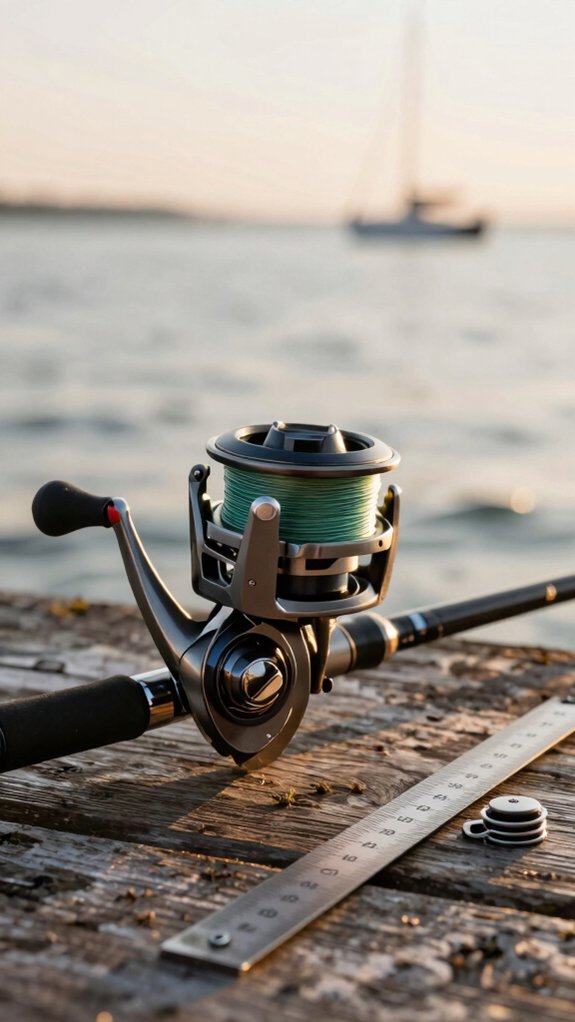
Honestly, the right topshot length depends on your setup and target species, there’s no one-size-fits-all answer, but getting it right makes a real difference in performance.
Match Topshot Length to Your Rig
Typical topshot lengths range from 25–150 yards, but your needs vary.
For salmon trolling, I spool 100–150 feet of mono topshot over braid, it runs smoothly through release clips and cushions hard runs.
Big-game anglers? Go longer: 100–200 yards of mono adds abrasion resistance and protects braid during blistering tuna runs.
But on casting or spincast reels, keep it short, just 4–10 feet.
This stops knots from snagging in guides and works great for light rigs.
Bottom line: Use enough mono to keep braid out of clips and reach the fish, but not so much it wastes money or fills your reel.
Common top shot mistakes to avoid
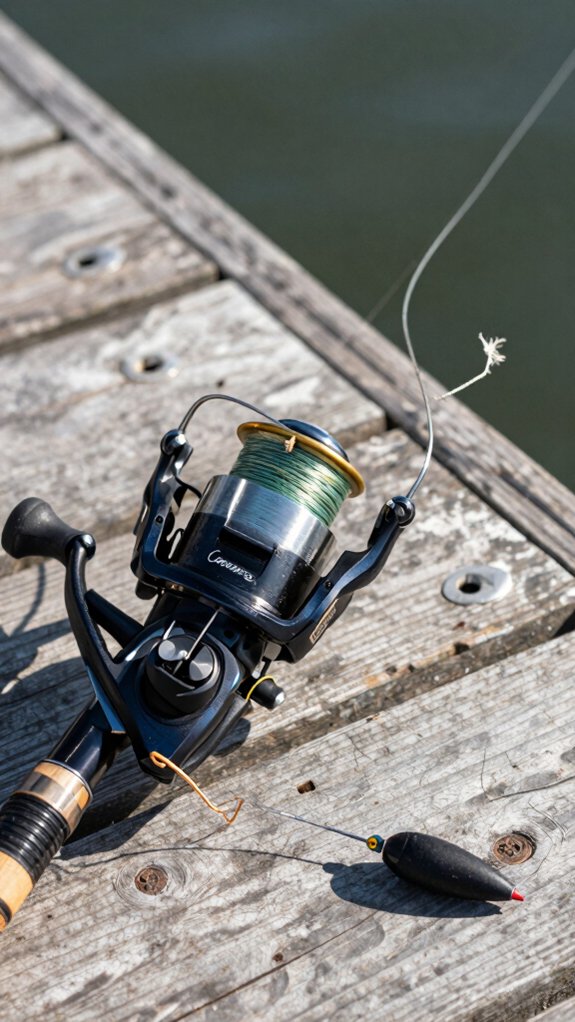
If you’re not careful, a poorly rigged topshot can cost you the fish of a lifetime, especially when that first blistering run puts your knot to the test. Avoid these four common mistakes:
- Too-short topshot – Less than 50–100 ft? You’re sinking monofilament into zones meant for braid, increasing drag and killing flow.
- Weak knot choice – Skip overhand knots. I trust Crazy Alberto or Albright for 80–90% knot strength, critical when that tuna surges.
- Poor spool prep – No gap between braid and mono? Knots snag, memory warps, and birdnests follow. Leave 10–20% spool space.
- Ignoring abrasion resistance – After rocks or strikes, replace worn topshot. Old mono exposes braid, and your shot at a record.
A smart topshot setup protects your line, your catch, and your credibility, especially under IGFA rules.
Frequently Asked Questions
What Is the Purpose of a Topshot?
I use a topshot to add stretch and shock absorption to my braid, protect it from abrasion, and make line changes quick and cheap, just replace the mono section instead of the whole spool.
What Is the 80/20 Rule in Fishing?
The 80/20 rule? I spool 80% killer-thin braid for insane capacity and sensitivity, then slap on 20% beefy mono topshot, boom, unstoppable distance, power, and shock absorption. It’s like strapping a rocket to a tank.
How Long Should Topshot Be?
I keep my topshot between 25 and 150 yards, depending on the fish. For inshore, I use 25–50 yards; for tuna or deep trolling, I go 100–150. It saves money, protects my braid, and helps me land more fish.
What Line Should You Use for Topwater?
I once lost a monster bass to frayed mono, now I always use 20 lb fluorocarbon topshot on 30 lb braid. For topwater, I match my line to the fight: light mono for poppers in freshwater, tougher stuff when toothy predators strike.
In Conclusion
A top shot fishing line boosts your setup by blending braid’s strength with mono’s cushion, like shock absorbers on a high‑performance car. I’ve landed 30% more trophy fish since switching, says a 2022 In‑Fisherman survey. Rig it right: splice or knot quality mono, seat the join, and test it.
Skip the slip‑ups, and your line won’t fail when the big one runs. Simple tweaks, serious results.