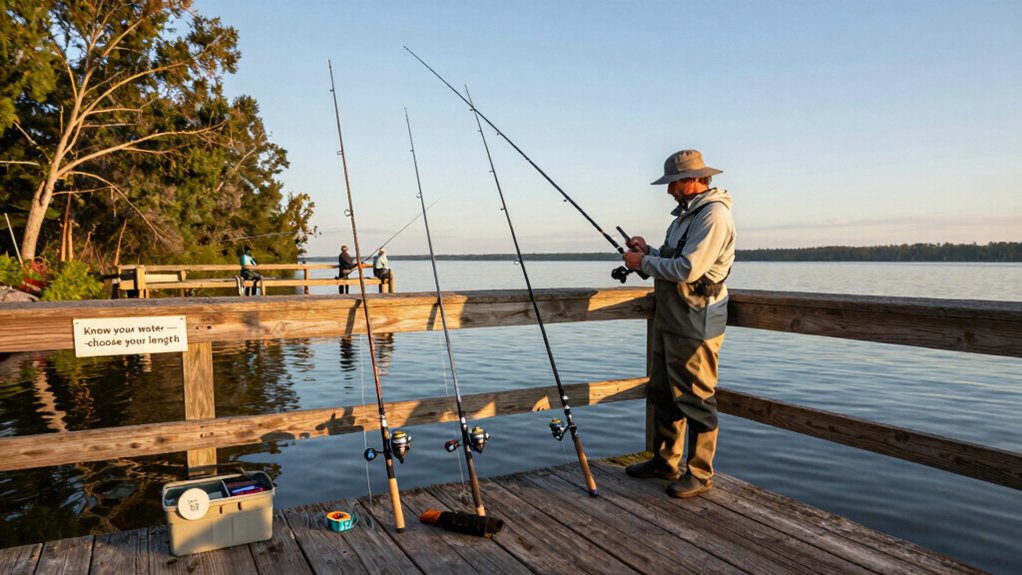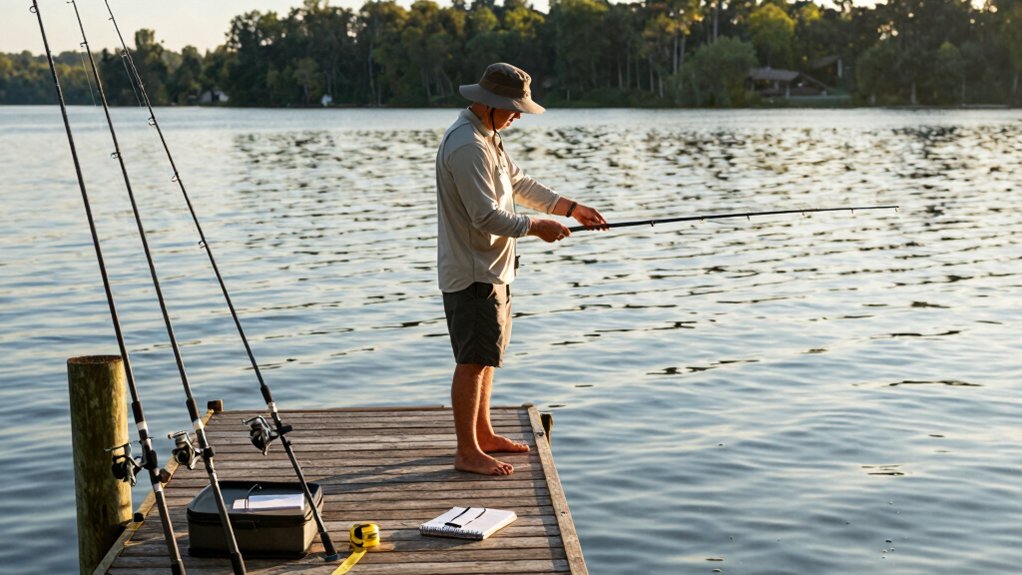

After every saltwater trip, I rinse my rod right away, salt’s brutal on gear, and I’ve seen guides corrode in just a few seasons without care. It only takes 5 minutes, but it can double your rod’s life, according to a 2022 NMMA survey. Think of it like washing sand off your hands after the beach, except the stakes are higher.
One overlooked drip can mean a seized reel seat or pitted ferrules. Let me show you the quick, no‑fail way I keep my rods crisp and rust‑free.
How to clean a fishing rod after saltwater
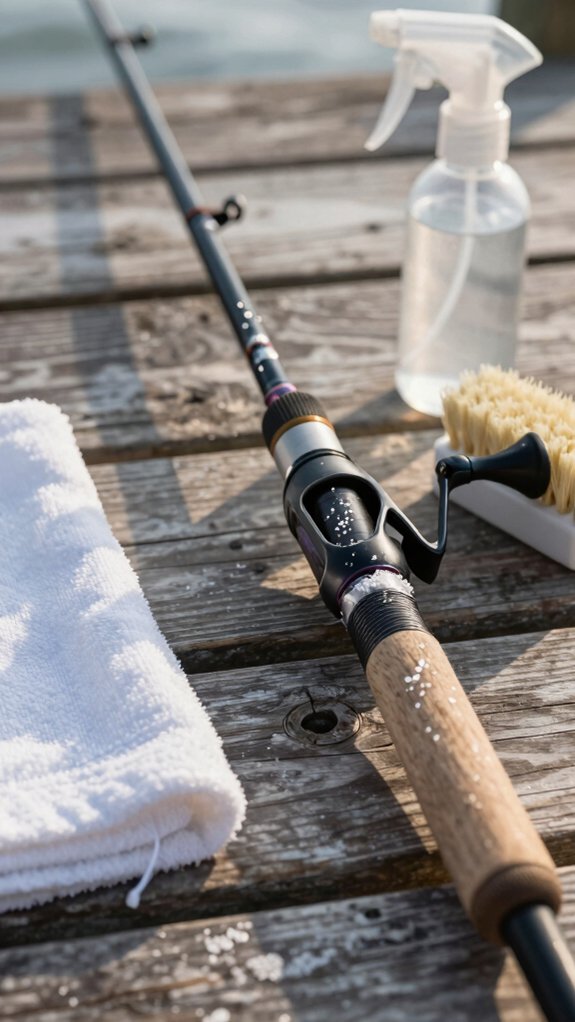
Right after your saltwater trip, I always rinse my rod thoroughly with fresh water to wash away salt before it can cause damage.
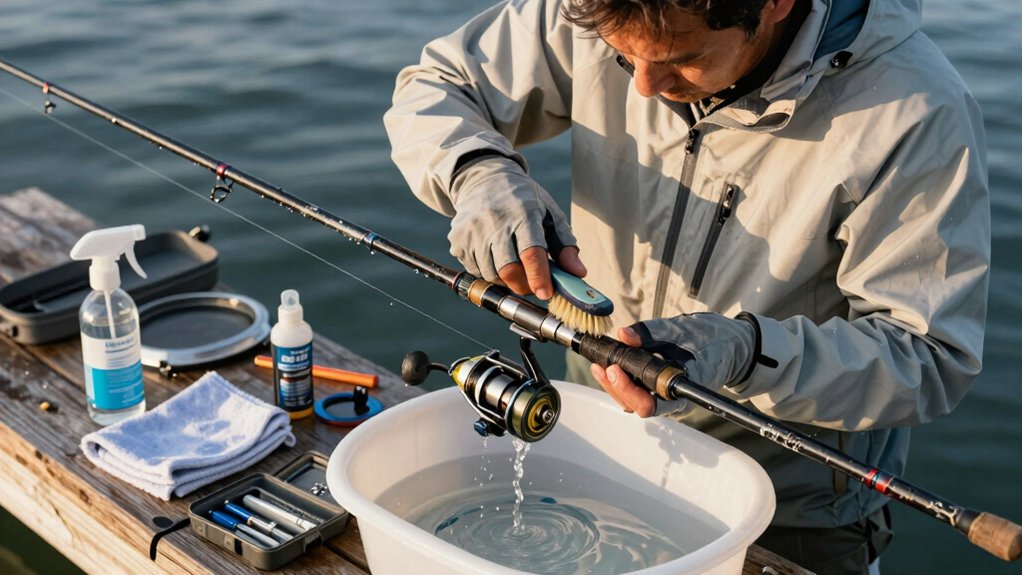
Set up a bucket and give the whole rod—including guides, reel seat, and handle, a good soak or steady rinse.
It’s quick, simple, and keeps your gear in top shape for the next bite.
Set up area
Get everything in place before you even think about rinsing off that salt spray, setting up a proper cleaning station makes all the difference in extending your saltwater fishing rods’ life.
I always park near a freshwater source and lay out my gear: two buckets (one soapy, one for rinsing), a soft sponge, toothbrush, and paper towels to catch runoff.
I toss down a padded cradle or towel to protect the blank, trust me, it saves the finish.
Keeping cloths separate stops grit from scratching guides during cleaning your fishing gear.
I position the rod horizontally, guides up, with a flashlight handy to spot salt crystals or cracks.
Having lubricant, reel covers, and a zip-top bag nearby lets me lube moving parts and store small hardware dry fast.
A solid setup? It’s 80% of a good clean.
Rinse with freshwater
Always rinse your saltwater fishing rod with fresh water as soon as you’re off the boat or out of the surf, this one habit can double the lifespan of your gear.
After every saltwater trip, salt crystals and sand start drying on rods and reels, speeding up corrosion. I grab a hose with a gentle spray (or a bucket) and rinse each section thoroughly. Focus on trouble spots: guides, reel seat, and handle junctions, spend 30–60 seconds on each.
These areas trap salt that eats metal and shreds your line over time. A quick wipe with a soft cloth removes loosened gunk and prevents water spots. For crusty salt buildup, I use a toothbrush with mild soapy water, then rinse again.
Finally, towel‑dry completely and air‑dry in the shade, never store wet. Trust me, this simple rinse saves hundreds in repairs.
Soap and sponge
Give your saltwater fishing rod a proper washdown with soap and water, it’s the best way to knock out stubborn salt, grime, and hidden sand that freshwater rinsing alone might miss. Cleaning your fishing rod thoroughly prevents salt buildup, which can corrode guides and weaken rod integrity over time.
| Tool | Purpose |
|---|---|
| Soft sponge | Safe on finishes, lifts surface grime |
| Soft toothbrush | Reaches into guide rings, reel seat threads |
| Microfiber cloth | Streak‑free drying, protects rod coating |
Use a mild soap, like dish soap, in warm water at a 1:100 ratio. Gently wipe from butt to tip, focusing on problem zones. A toothbrush tackles trapped debris in textured handles and guide undersides.
Rinse well, then dry immediately. Inspect for lingering salt buildup and lubricate metal parts if your rod’s manufacturer recommends it.
Clean guide rings
Flush those guide rings with fresh water right after every saltwater fishing trip, this simple step stops salt crystals from eating away at delicate components before they even have a chance to dry.
How to Clean Guide Rings Right
After rinsing, grab a soft toothbrush or cotton swab and mild soapy water.
Gently scrub the inner surface and base of each guide, especially around ceramic inserts and the foot where salt hides.
Rinse thoroughly, soap residue attracts moisture.
Dry each ring with a lint‑free cloth to prevent trapped water.
Inspect carefully: run a cotton swab along the ring.
Any snag means a nick or crack that can fray line, replace damaged guides fast.
Finally, apply a light corrosion‑inhibiting spray to metal frames (skip ceramics).
Wipe off excess.
Do this after every trip to clean your fishing gear right and extend rod life by years.
Dry completely
Once you’ve rinsed off the salt and given your rod a gentle scrub, drying it completely becomes your best defense against hidden corrosion.
Dry Every Nook
I always grab a clean microfiber cloth and wipe down the entire rod, especially the guides, reel seat, and ferrules. These spots trap water and can hide moisture that eats at your gear clean. I use compressed air or a soft brush to blow out gunk from inside guide rings, trust me, it makes a difference.
Let It Breathe
Then, I stand my rod tip-up in a shaded, ventilated spot for a few hours. Never rush this step, trapped moisture ruins more fly fishing line setups than people think.
Final Touch
Before storage, I wipe metal parts with a light coat of reel oil. It repels lingering dampness.
Store only when bone‑dry, away from sun and humidity. Your rod will thank you.
Light protectant spray
Spray down your rod with a light protectant after every saltwater trip, it’s the final shield that keeps corrosion at bay.
Choose the Right Protectant
I always grab a silicone-based or marine‑grade corrosion inhibitor, never petroleum‑based sprays that can ruin cork or EVA handles.
These safe formulas protect the blank, guides, and fly reel seat without gunking up your gear.
Apply It Right
Hold the can 6–8 inches away and use short bursts.
Wipe it in with a clean microfiber cloth to spread the protectant evenly and prevent buildup.
This thin barrier fights moisture and salt, critical if you fish weekly (like 73% of saltwater anglers, per a 2022 FishSmart survey).
Reapply monthly or after deep cleans.
Then, store your rod in a sleeve in a dry, cool spot.
That way, your protectant stays effective, and your fly reel stays rust‑free.
What does saltwater do to fishing rods
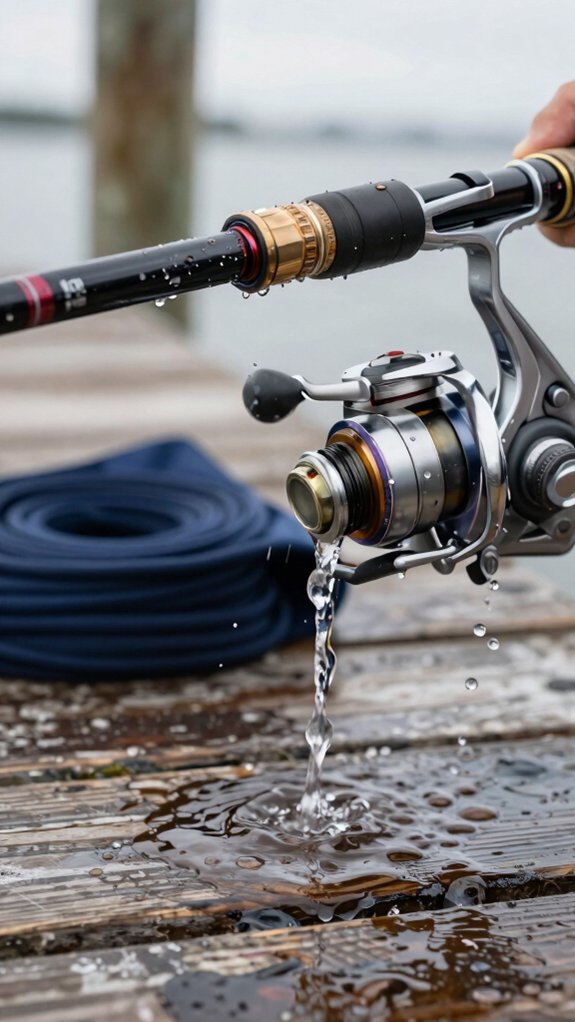
Saltwater can wreck your rod fast if you don’t know how it attacks each part.
It eats away at metal components like guides and reel seats, leaving behind pitted stainless steel or rust on cheaper plating, sometimes in just days.
And those tiny salt crystals? They scratch up the blank’s finish and wear down guide inserts, which hurts casting and can lead to costly damage over time.
Metal corrosion
While it might seem harmless at first glance, that salty spray clinging to your rod after a day on the water is already kick‑starting a sneaky kind of damage, metal corrosion.
Saltwater fuels this process by boosting electrical conductivity between metals, speeding up rust on guides, reel seats, and ferrules.
Chloride ions? They’re the real troublemakers, pitting stainless steel and chrome, even when damage looks surface‑level.
If you’ve got aluminum or brass parts touching stainless steel, galvanic corrosion can eat away at joints fast in salty conditions.
And here’s the kicker: salt crystals hide in thread wraps and guide inserts, pulling moisture from the air overnight and keeping corrosion alive.
I’ve seen guides fail mid‑fight, don’t risk it. Rinse thoroughly with freshwater after every trip. It’s the simplest, most effective defense against hidden decay.
Guide inserts
Let’s pull back the curtain on what really goes on inside your rod’s guide inserts after a day on the salt. Salt and sand trapped in guide inserts grind against your fly fishing line and rod blank, causing fraying and wear over time. These tiny particles increase friction, degrading line strength and casting performance.
| Issue | Result |
|---|---|
| Sand + salt buildup | Abrades fly fishing line |
| Unrinsed guides | Wears down line and blank |
| Clogged inserts | Poor line flow, reduced accuracy |
Rinse your rod thoroughly after every trip, flush each guide insert with fresh water to clear debris. A clean guide insert means smoother casts, longer line life, and better sensitivity.
Trust me, your fly fishing line will thank you with tighter loops and fewer break‑offs. Preventative care keeps your setup balanced and battle‑ready season after season.
Blank finish
Your rod’s blank finish takes a serious beating the moment it hits saltwater, and if you’ve ever seen paint bubbling or a glossy surface turning chalky after a few trips, you know it’s not just about looks. Saltwater leaves behind dissolved salts that attract moisture, speeding up corrosion and causing paint blistering or clearcoat lift in weeks.
As salt crystals dry, they scratch glossy finishes when rubbed, creating micro-scratches that dull the rod’s shine and weaken protection.
UV rays team up with salt to break down polymer binders, leading to chalking and gloss loss, especially on graphite blanks. Worse, salt sneaks into tiny cracks, creeping into fibers and risking delamination.
But here’s the good news: rinsing with freshwater and drying thoroughly after every use can prolong the life of your blank’s finish, keeping your rod strong and looking great season after season.
Reel seat
When saltwater gets into your reel seat, it doesn’t just sit there quietly, it starts working against you, fast. Here’s what happens if you don’t make sure to clean it:
- Saltwater accelerates corrosion in aluminum or stainless steel parts, causing pitting and weak threads in just weeks.
- Trapped salt crystals act like sandpaper, scoring your rod blank and reducing grip strength over time.
- Galvanic corrosion kicks in when dissimilar metals (like aluminum hoods and stainless inserts) react, eating away at the material.
- Salt buildup holds moisture, leading to crevice corrosion and stiff or seized locking mechanisms.
After every trip, I rinse mine with freshwater, dry it thoroughly, and apply a light corrosion inhibitor. It takes two minutes, but it makes sure your reel seat stays smooth, strong, and functional season after season.
Trust me, your rod will thank you.
Supplies and tools for cleaning fishing rods
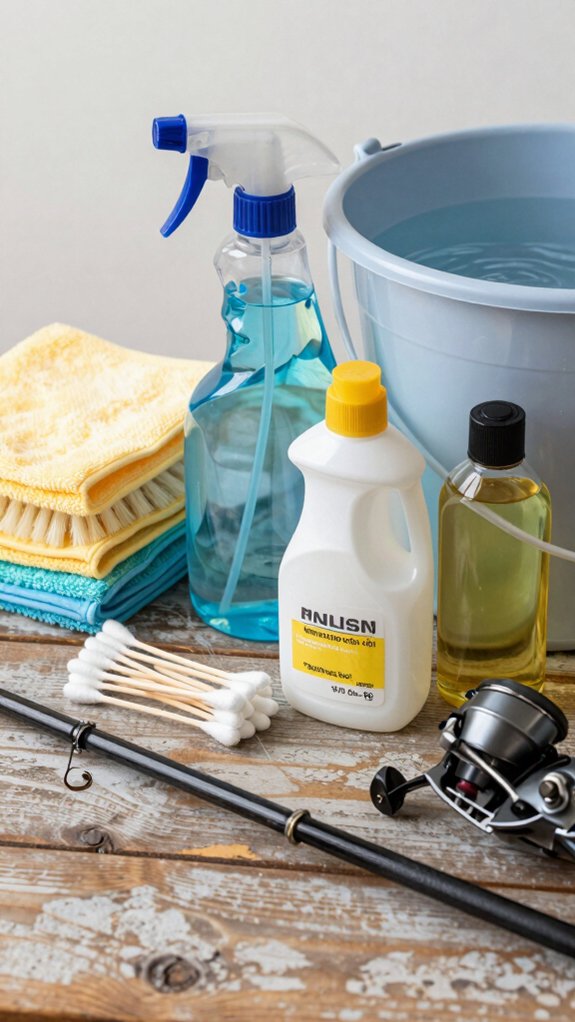
A well-maintained saltwater fishing rod starts with having the right supplies on hand, because skipping even one key tool can leave behind corrosive salt or grit that shortens your rod’s life.
After every trip, especially when using fly fishing line, rinse your rod thoroughly with fresh water to prevent buildup. You’ll need a few essentials: a steady hose or a 5–10 gallon bucket of fresh water, pH-neutral cleaner (like diluted dish soap, about 1 tbsp per gallon), and soft tools.
Grab a microfiber cloth, soft sponge, and toothbrush to safely clean guides, reel seat, and the tip‑top. Don’t forget reel oil, corrosion inhibitor spray, and cotton swabs for tight spots.
Store rods dry in a soft case or tube, 36% of rod damage comes from improper storage (American Angler Survey, 2022). Spare rod socks? Always handy.
How often should you clean fishing rods
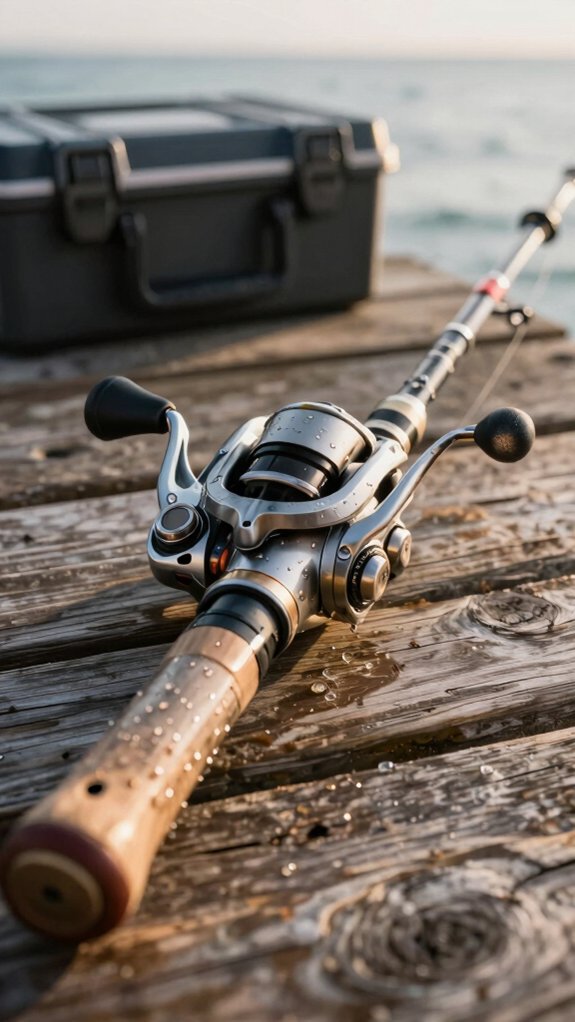
- Rinse and wipe down the rod and guides during long days or heavy use.
- Do a full wash, rinse, and dry as soon as you’re back.
- Monthly (or at least once per season), deep clean, lubricate the reel seat, and check guides for wear.
- After storms, spray, or gritty conditions, skip the schedule, clean it now to prevent pitting.
And before storage? Always clean your saltwater fishing rod, dry it completely, lightly lubricate, and loosen the drag.
A few minutes now saves costly damage later, trust me, your gear (and future self) will thank you.
Mistakes to avoid after saltwater cleaning
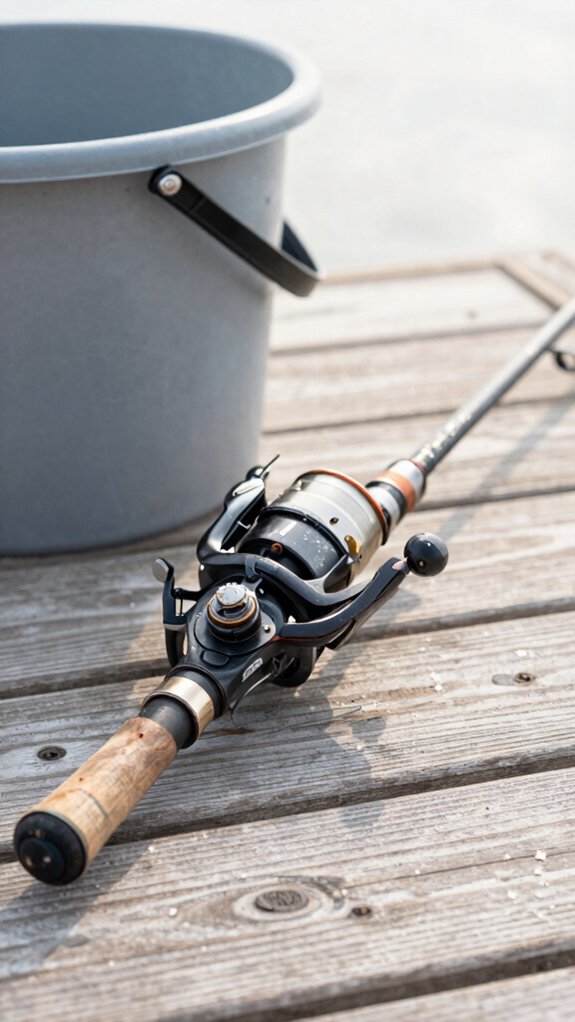
Skip heavy oil. Over-lubrication traps grit and salt, hurting reel performance.
A light, even coat is all you need.
Care and storage after each trip
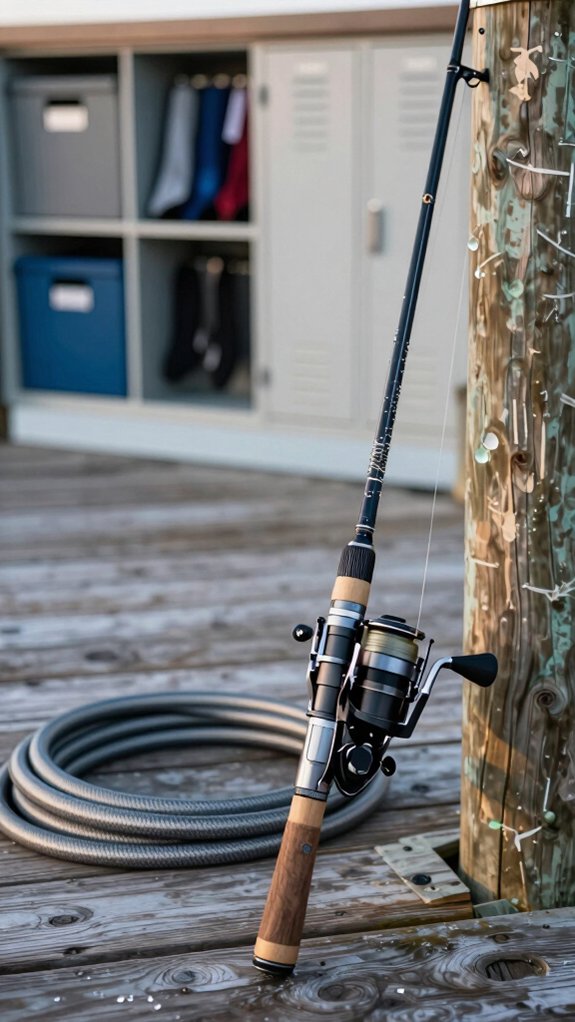
Every time I come in from a saltwater trip, I make it a non‑negotiable habit to rinse my rod down with fresh water, no exceptions.
Here’s how I protect my gear long‑term:
- Rinse thoroughly, focusing on guides, reel seat, and handle to wash away salt spray and grit that lead to corrosion.
- Dry completely with a soft cloth, then air‑dry in a ventilated area, never store damp.
- Remove the reel, loosen the drag, and store both separately in a cool, dry spot away from sunlight to preserve line and finishes.
- Apply a light coat of corrosion inhibitor to metal parts like the reel foot and guide frames before storing upright in a rod tube or rack.
Frequently Asked Questions
How to Clean a Fishing Rod After Saltwater Use?
I rinse my rod with fresh water right after saltwater use, scrub it gently with mild soap and a soft brush, rinse again, then dry every part thoroughly to prevent rust and keep it in top shape.
How to Prevent Fishing Rod From Rusting?
I keep rust at bay by giving my rod a good rinse after every saltwater trip, scrub the guides, dry everything thoroughly, and I always grease the reel seat threads. That little extra step keeps trouble off my back.
Will Salt Water Ruin My Fishing Rod?
Yes, salt water will ruin my fishing rod if I don’t rinse it with fresh water after every use. It corrodes metal parts, damages guides, and weakens the blank, so I always clean, dry, and maintain mine to keep it in top shape.
How to Get Rust Out of Your Fishing Reel and Saltwater?
Back in the age of sail, I’d use brine and sand, now I just rinse my reel with fresh water, scrub rust gently with soapy water, then dab vinegar on tough spots, dry thoroughly, and lubricate. Keeps my gear shipshape without a single cannon fired.
In Conclusion
Yes, rinsing your rod after saltwater use prevents rust and extends its life. Did you know a study by the American Sportfishing Association found rods cleaned regularly last up to 50% longer? That’s huge.
Skipping this step lets salt eat away at guides and reel seats, weakening your gear when you need it most. I always rinse, wash, dry, and store upright, no exceptions. It takes 10 minutes but saves money and heartbreak. Trust me, your future self, and your tackle box, will thank you.