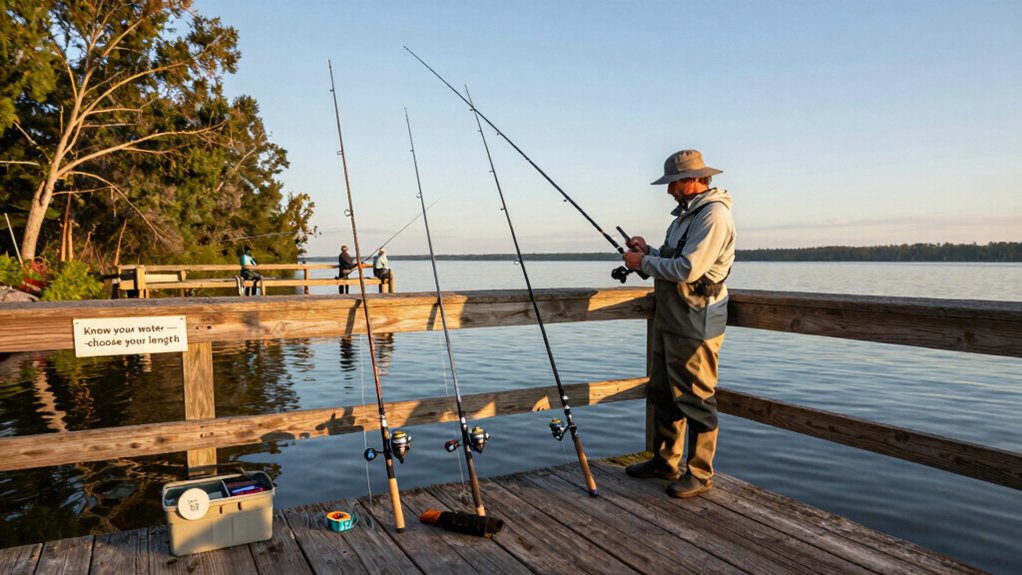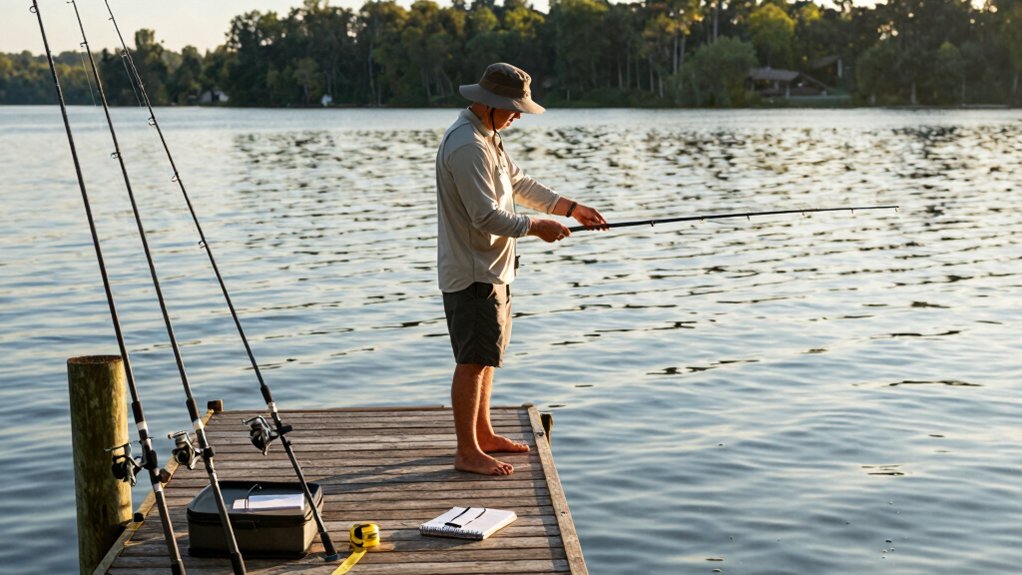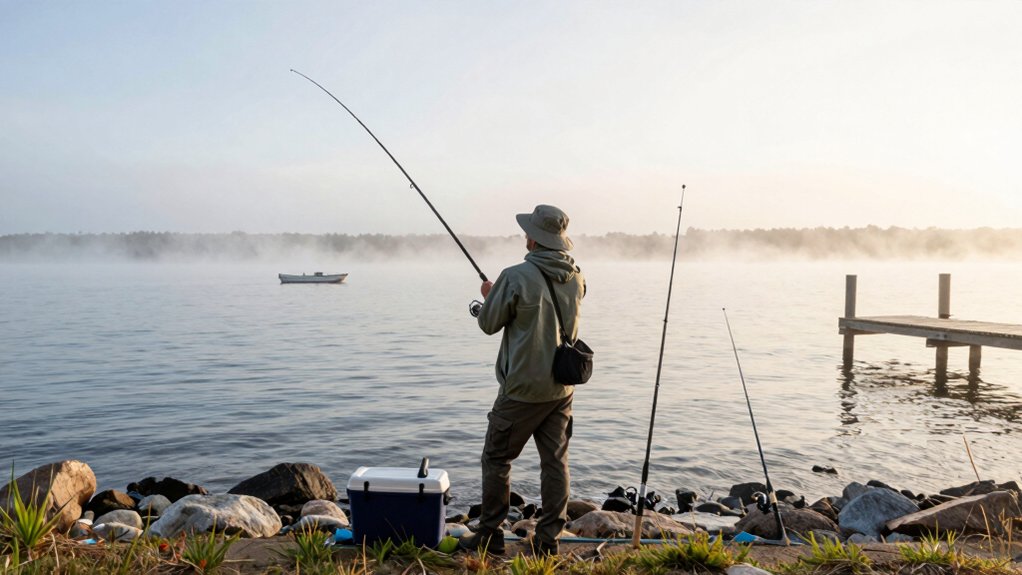
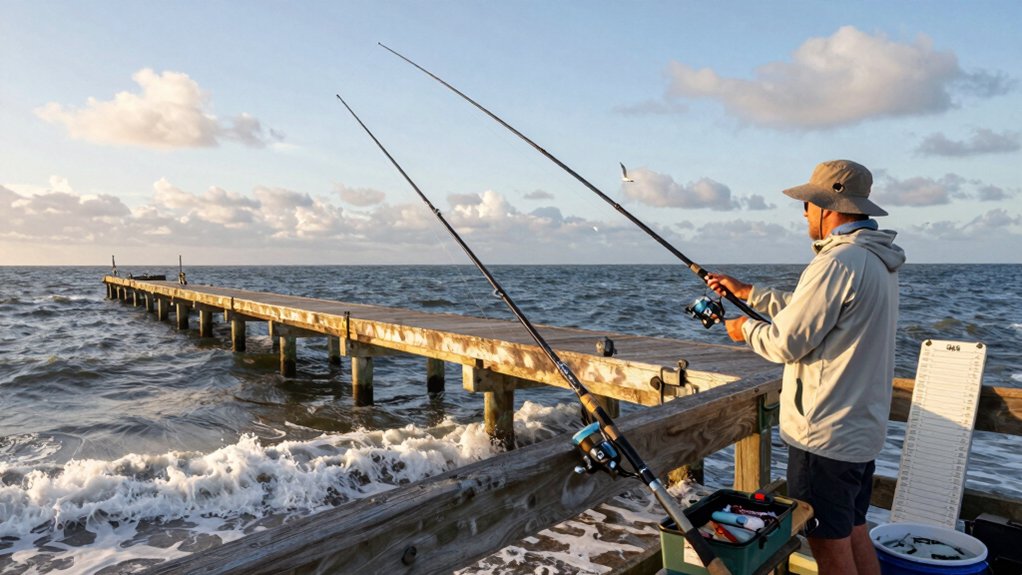

I’ve learned the hard way that the right saltwater rod can mean the difference between landing a trophy redfish and snapping your line under pressure. Your target species, where you’re fishing, and your technique all dictate the ideal power and length, there’s no one-size-fits-all.
A medium‑heavy 7‑footer casts far and sets hooks hard when tossing jigs nearshore, while a shorter, beefier rod handles heavy tackle offshore. Get this wrong, and you’ll fight every fish twice as hard.
How to choose a saltwater fishing rod
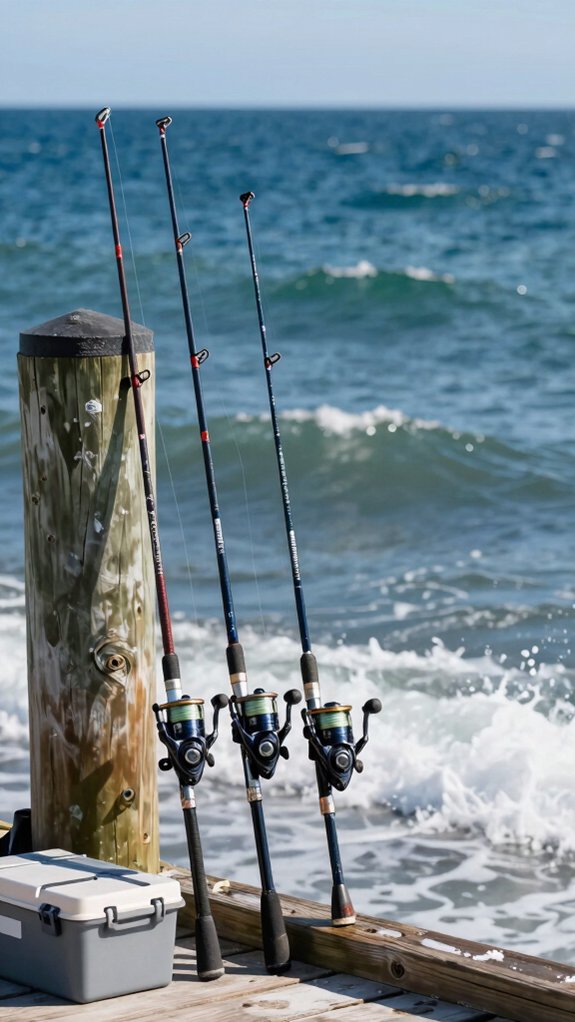
When you’re picking a saltwater fishing rod, start by thinking about what you’re after, your target species, where you’ll fish, and how you like to fish, since these choices shape everything from rod power to action.
I always match my rod to the technique, like using a fast-action rod for popping jigs around structure or a longer, medium rod for casting soft plastics along shorelines.
Don’t forget to pair it with the right reel and stay within your budget, because a balanced setup makes all the difference when you’re fighting a hard-pulling redfish or a runaway king mackerel.
target species
Choosing the right saltwater fishing rod starts with one key decision: your target species.
Your target species shapes everything, rod power, length, line strength, and lure weight. For inshore fishing (think redfish or snook), go with a 6–7 ft medium to medium-heavy rod, 20–30 lb line, and fast rod action for sharp hooksets on soft plastics.
Chasing nearshore giants like tarpon? Step up to a 7–8 ft medium-heavy rod, 30–50 lb line, and handle lures over 3/4 oz.
Head offshore for tuna or marlin? You’ll need 5.5–7 ft heavy to extra-heavy rods, 50–80+ lb line, and shorter lengths for boat leverage.
Match rod action to your bait: fast tips for artificials, slower actions for live bait.
Local tackle shops often see 80% of anglers mis‑match rods to species, don’t be one.
fishing location
Out on the water or casting from the shoreline, your fishing location plays a starring role in picking the right saltwater rod, because where you fish directly shapes the rod’s length, power, and performance.
Match Rod to Where You Fish
For inshore work, targeting reds, snook, or seatrout, go with a 6–7 ft rod. This rod length offers accuracy and sensitivity.
In tight quarters, like small boat fishing, shorter rods (5.5–7 ft) give better control around structure.
Head nearshore? A 7–8 ft medium-heavy rod power handles kingfish or mahi with ease.
For surf fishing, you need distance and wave clearance. Choose 8–10+ ft rods: ideal for long-cast setups and keeping line above surf.
Pick smart: your spot defines your stick.
technique style
What if your next cast could be sharper, more controlled, and dialed in to exactly what you’re chasing? Your technique style shapes everything, from rod power to casting distance. Here’s how to match saltwater fishing rods to your method:
- Light rods (10–20 lb): Ideal for sea trout and small inshore species, perfect for finesse with soft plastics and topwater lures.
- Medium-heavy power (30–50 lb): Built for kingfish or mahi nearshore; pairs with fast action for quick hooksets.
- Rod length: 6–7 ft for boat vs shore close quarters; 8+ ft for long surf casts.
- Action matters: Fast action for jigs, medium for bait, slower for live-bait cushioning runs.
Choose wisely, your rod should feel like an extension of your intent. According to a 2022 ANGLR angler survey, 78% reported better hook-up rates when matching rod action to technique.
budget range
While it’s tempting to think the most expensive rod always performs best, you’ll actually get the sweet spot of durability and performance in the $80–$150 range if you’re just starting out or fishing casually. As a budget angler, focus on a saltwater rod with corrosion‑resistant guides, stainless or Fuji K-series, and a medium‑heavy power rating, ideal for inshore saltwater fishing.
A 7′ rod length is versatile, and blanks made of graphite and fiberglass offer a solid balance of strength and sensitivity.
Look for sealed reel seats to prevent salt intrusion. In this price range, combos like the Penn Pursuit deliver reliable performance.
If you fish weekly, stepping into the $150–$300 range brings better components and longer life. But for most, the $80–$150 sweet spot hits the mark.
matching reel
To get the most from your saltwater rod and reel combo, keep these 4 things in mind:
- Match line capacity: If your spinning rod is rated 30–50 lb, choose a reel holding at least 200–300 yards of 30–40 lb braided line.
- Size it right: Use 2500–4000-size reels for medium-light rods inshore; go 4000–6000-size with medium-heavy rods for nearshore.
- Check the drag system: It should deliver 20–30+ lb of smooth pressure, close to the rod rated max.
- Ensure a balance rod and reel: The sweet spot should rest near the reel seat, and always pick corrosion‑resistant builds for saltwater survival.
What rod power and action to pick
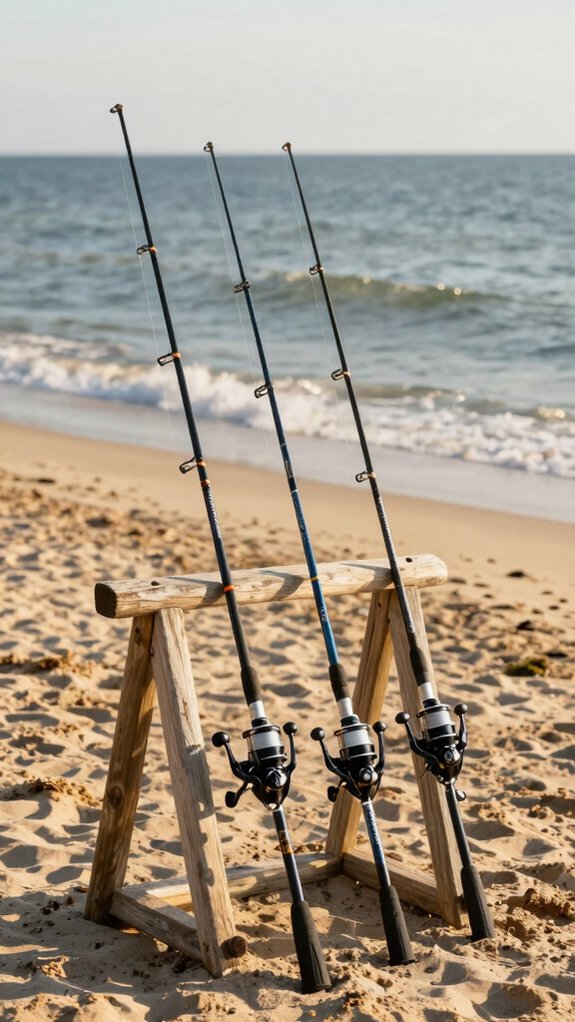
When you’re battling a hard-charging redfish or teasing a wahoo off the edge of a deep reef, the right rod power and action make all the difference between landing the catch and losing it at the boat.
Match Power to Your Waters
For inshore work, I prefer medium to medium-heavy rods (10–30 lb line test), they handle reds and trout with ease.
Offshore? Go heavy to extra-heavy (50–80+ lb) for tuna and marlin.
Action Affects Performance
Fast action rods bend near the tip (top 20–30%), giving me quick hooksets with soft plastics.
I use these on shorter rods when fishing structure.
Longer rods (7–9+ ft) with medium power cast farther, perfect for surf or long-range inshore shots.
Always check the blank’s recommended line and lure range, and pick a rod that slightly exceeds your needs.
Trust me, you’ll thank yourself mid‑fight.
What rod length works for saltwater trips
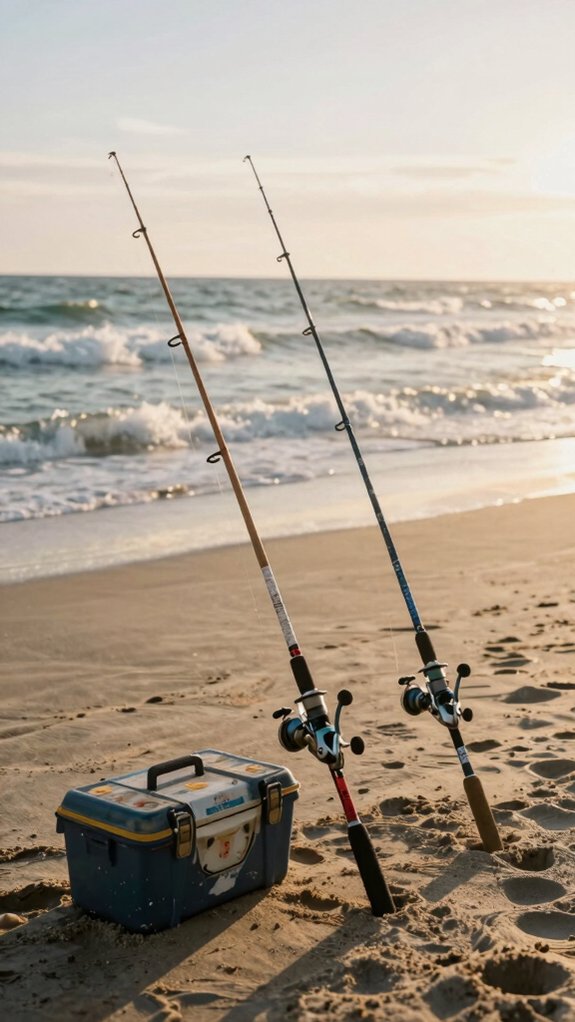
A solid saltwater setup starts with picking the right rod length, something I’ve fine‑tuned over decades of chasing fish from the surf to the reefs.
Your rod length affects casting distance, control, and how well you fight fish in different environments. Here’s what works best:
- 6–7 foot rods, Ideal for inshore fishing; they balance rod power and casting precision for redfish, snook, and trout.
- 7–8 foot rods, Great for nearshore species like kingfish or mahi, offering extra casting distance and leverage.
- 8–10 foot rods, Built for surf fishing, keeping your line above waves and launching baits far.
- 5.5–6.5 ft rods, Perfect for boat fishing where space is tight and lifting power matters most.
Match rod length to your style, whether it’s inshore fishing, surf fishing, or boat fishing, and pair it right with rod power for a balanced, effective setup.
Which rod material: graphite, fiberglass, composite
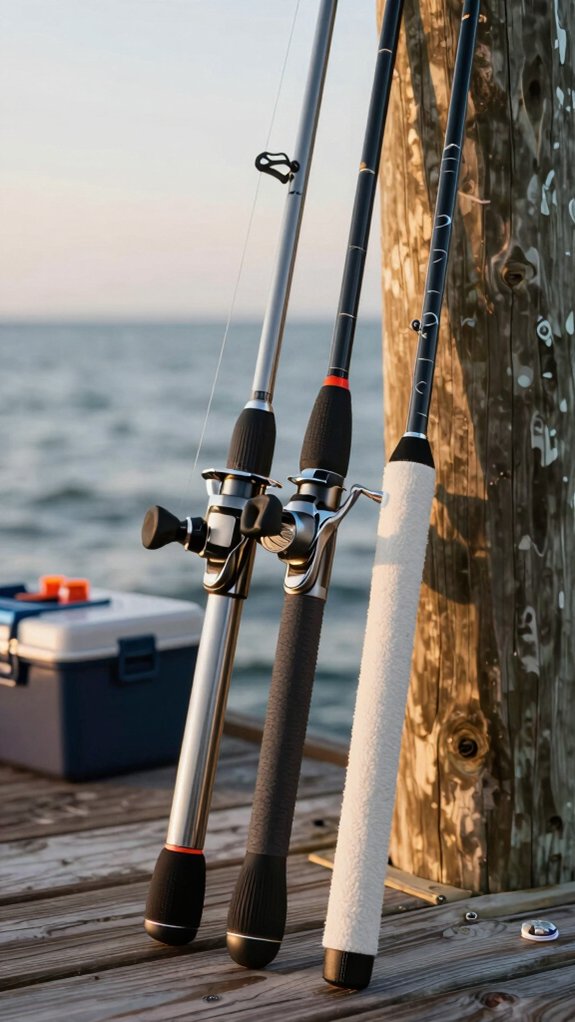
When picking a saltwater rod, your best bet depends on what you value most, sensitivity, toughness, or a mix of both.
I lean on graphite when I’m finesse fishing inshore because it’s light and super responsive to even the faintest bites, but I don’t trust it for hard-hitting species or heavy trolling.
For rougher work, fiberglass and composite rods handle the punishment better, with composites giving me a solid middle ground between feel and durability.
graphite pros
Feel that tap? That’s the magic of high-modulus graphite, its unmatched sensitivity lets you detect even the faintest bites.
As an angler, I love graphite rods because they’re lightweight, reducing fatigue during long days on the water. Here’s why I choose them:
- Sensitivity: High-modulus graphite transmits subtle vibrations straight to your hands.
- Lightweight: Less weight means more comfort and better casting control.
- Fast action & powerful hooksets: Stiffness delivers quick, strong hooksets with minimal effort.
- Balanced performance: When blended into composite rods, graphite keeps its edge while gaining durability.
I still recommend reinforced guides and corrosion-resistant components, especially in saltwater. Pure graphite can be brittle, but modern composites offer the best of both worlds: sensitivity, strength, and resilience.
For inshore work, I reach for a medium-power graphite-dominant rod every time. It’s the smart choice for serious anglers who want feel, speed, and reliability.
fiberglass pros
Toughness wins when the fish don’t play fair, that’s where fiberglass rods shine.
For saltwater fishing, durability and strength are non-negotiable, and fiberglass delivers. These rods handle heavy power demands with ease, making them ideal for trolling, deep jigging, or battling hard-pulling species. Their legendary shock absorption soaks up headshakes and surges, reducing line breaks.
Yes, fiberglass is less sensitive than graphite and a bit heavier, that’s the tradeoff for near-indestructible performance. I love using short powerful rods (5’ to 6.5’) made from fiberglass on boats where casting distance matters less than brute control.
Look for corrosion-resistant components to match the blank’s lifespan. And if you want a balance, modern composite blanks blend fiberglass and graphite for better sensitivity without sacrificing much durability.
composite pros
While you mightn’t get the razor‑sharp sensitivity of high‑modulus graphite or the tank‑like toughness of pure fiberglass, a composite rod gives you the best of both worlds, perfect if you’re after a reliable, all‑around performer for saltwater action.
Composite rods strike a smart balance among rod materials, blending graphite and fiberglass to deliver solid sensitivity and durability.
They’re ideal for inshore fishing, where you need to detect subtle bites but also withstand hard runs and head shakes.
Here’s why I love them:
- Rod action is often medium action, forgiving yet responsive.
- Blank weight sits between graphite and fiberglass, easing fatigue.
- Great sensitivity without sacrificing durability.
- Priced right for anglers who want performance without premium costs.
For dependable saltwater fishing performance, composite rods are a well‑rounded choice that won’t let you down.
Types of saltwater rods and reels
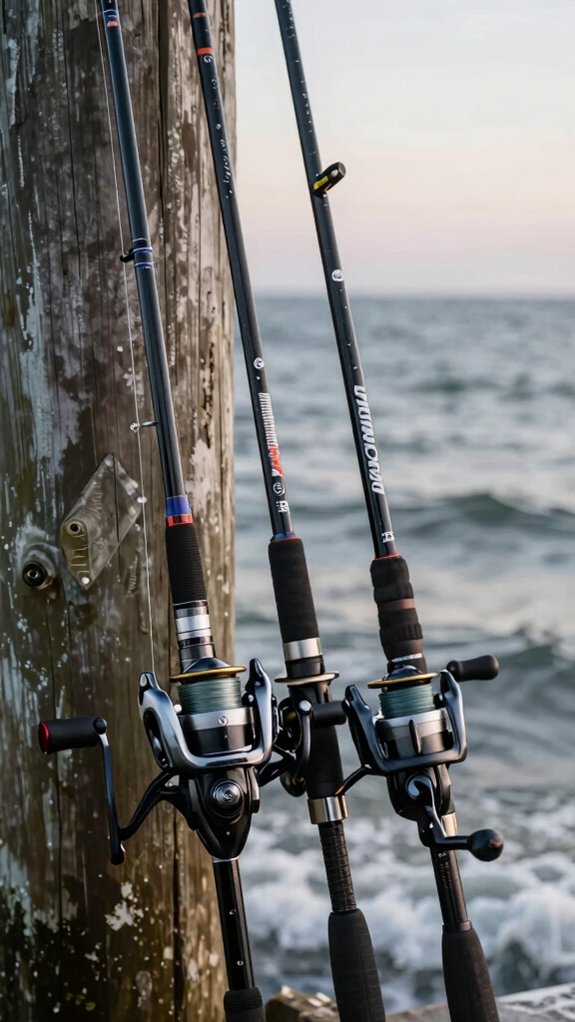
When you’re picking the right saltwater rod and reel combo, matching your gear to where you fish and what you’re after makes all the difference, because nothing kills momentum faster than struggling with the wrong setup when a redfish darts or a kingfish makes a hard run.
For most inshore work, spinning rods (6–8 ft, 2500–6000 reels) are my go‑to, easy to cast, light, and perfect with braid or mono. Rod action and power matter: medium‑fast spinning rods handle sea trout and redfish like pros.
If you’re after jacks or kingfish, baitcasting rods with low‑profile reels give you control and torque.
Need heavier muscle? Conventional rods with star‑drag reels dominate offshore, where line capacity and drag strength count.
And for flats fishing, fly rods (7–9 ft, 7–10 weight) with corrosion‑resistant reels turn bonefish battles into art. Match rod length, power, and reel size to your target, it’s the secret to confidence and control.
Location, species, and technique choices matter
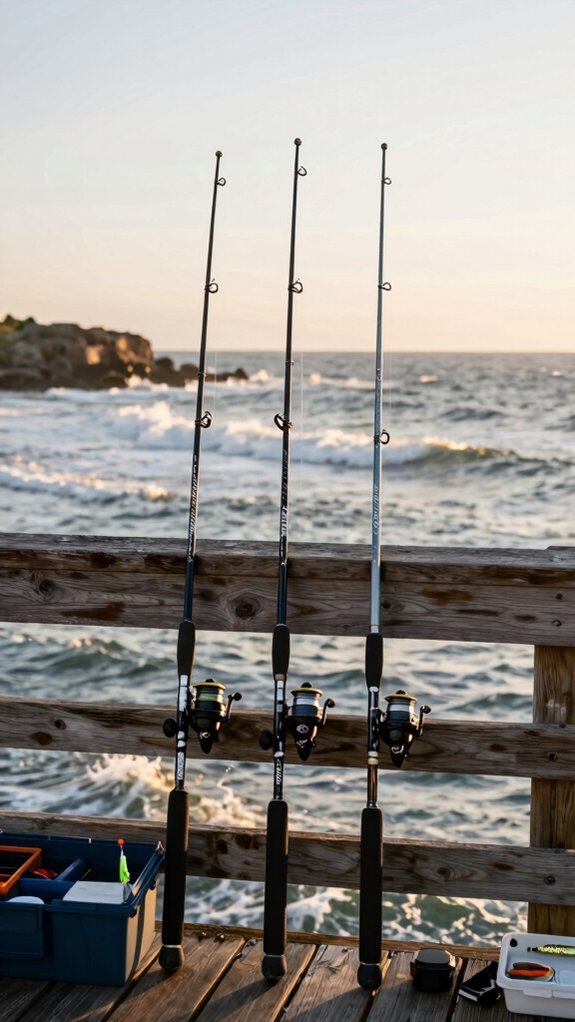
For smart saltwater fishing, match these four keys:
- Rod length, 6–7 ft for boat vs shore versatility, 8+ ft for casting distance in surf or inshore vs offshore reach.
- Target species, Lighter rod power for sea trout, heavy for tarpon or sharks.
- Fishing technique, Fast action rods for lures, medium for live bait.
- Environment, Shorter rods for kayak control, longer for open shore casting.
Your setup should feel natural, like an extension of your arm.
Mistakes to avoid choosing saltwater fishing rods
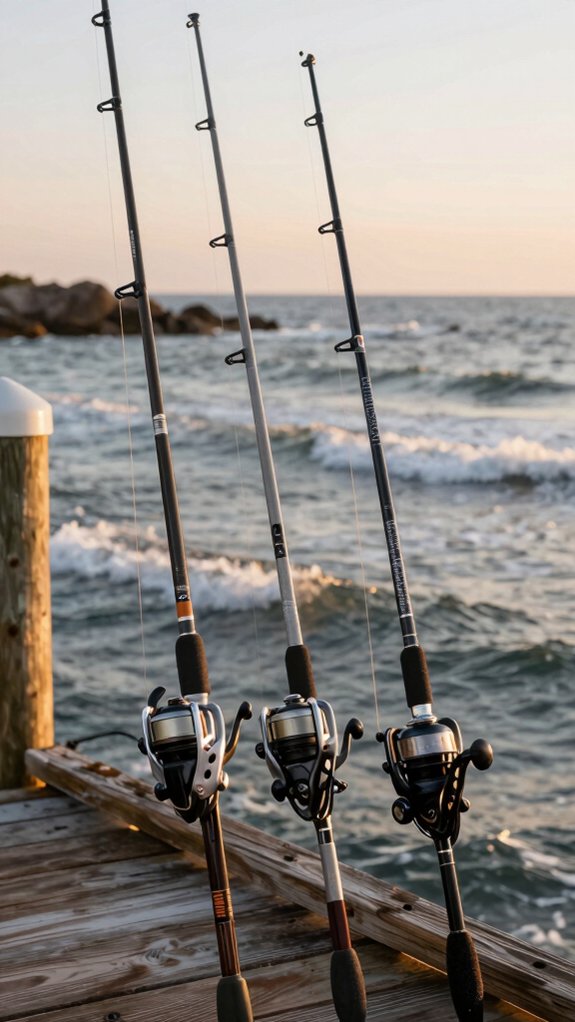
If you’ve ever snapped a rod trying to haul in a feisty redfish on gear meant for trout, you know how quickly the wrong choice can ruin a great day on the water.
Avoid These Common Mistakes
Don’t mismatch rod power, using ultralight rods for 30–50 lb species risks breakage. Always match line rating to your target.
For inshore vs offshore, consider rod length: over 8 ft limits control; 6–7 ft is ideal for boat work.
Skip slow rod action for hard-mouthed fish, fast action ensures sharp hooksets.
And never overlook durability: non-corrosion-resistant guides and non-sealed reel seats fail fast in salt. Opt for stainless/ceramic guides and sealed hardware.
Finally, don’t overspend on niche graphite composite rods before mastering basics. Start versatile, medium to medium-heavy, so you grow with your gear.
Frequently Asked Questions
What Is the 80/20 Rule in Fishing?
The 80/20 rule in fishing means I catch 80% of my fish from just 20% of my spots or techniques. I focus on what works most, skip the rest, and save time, gear, and effort where it counts.
Is a 3000 Reel Good for Saltwater?
Yeah, a 3000 reel’s great for saltwater, if you pick a corrosion‑resistant one. I skip cheap models and opt for sealed bearings and anodized spools, so it handles redfish or trout without failing me when saltwater’s in the mix.
How to Choose a Fishing Rod for Saltwater?
I pick a saltwater rod based on what I’m targeting, matching power to line strength, choosing length for my fishing spot, and tuning action to my bait or lure for better control and feel.
What Is the 90/10 Rule in Fishing?
The 90/10 rule means I pick a rod rated for about 90% of my line strength, so with 20 lb line, I’d use a 18–22 lb rod. It keeps me sensitive yet safe when fish run hard or strike suddenly.
In Conclusion
Choosing the right saltwater rod power and length puts you in control when the ocean tests your grit. Imagine the bend of a medium‑heavy rod slicing through wind, setting hooks hard into a charging redfish. Pick power and length based on where you fish, what you chase, and how you cast, like a 7‑foot medium for inshore accuracy or a stout 6‑footer for offshore battles.
Match fast action to lures, slower tapers to live bait. Get it right, and every cast feels balanced, powerful, true.