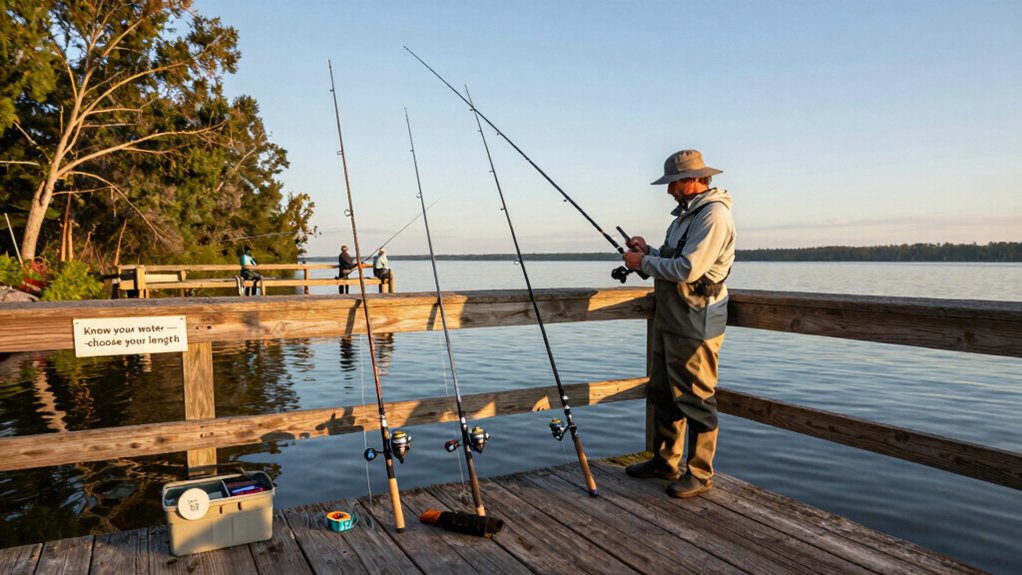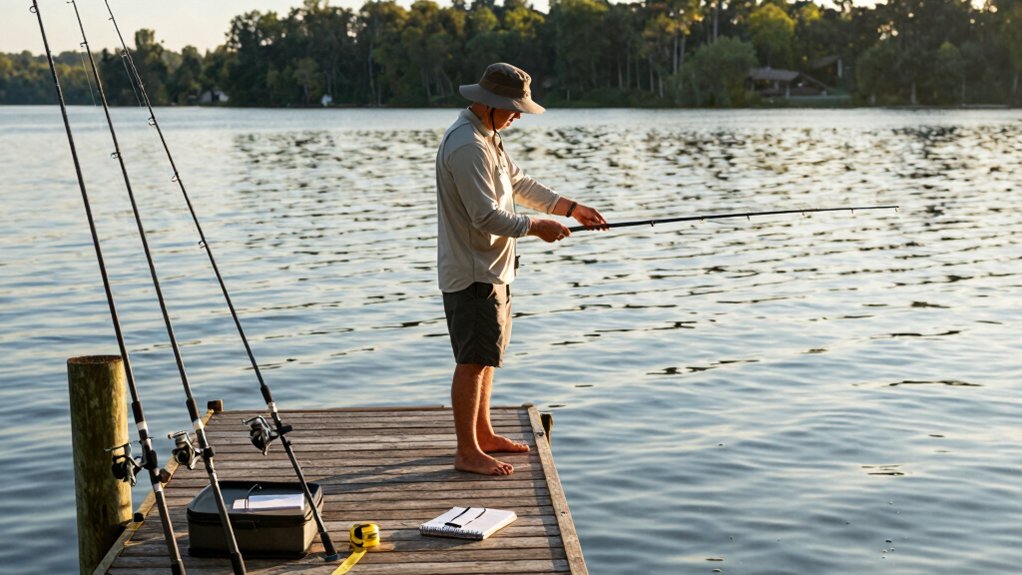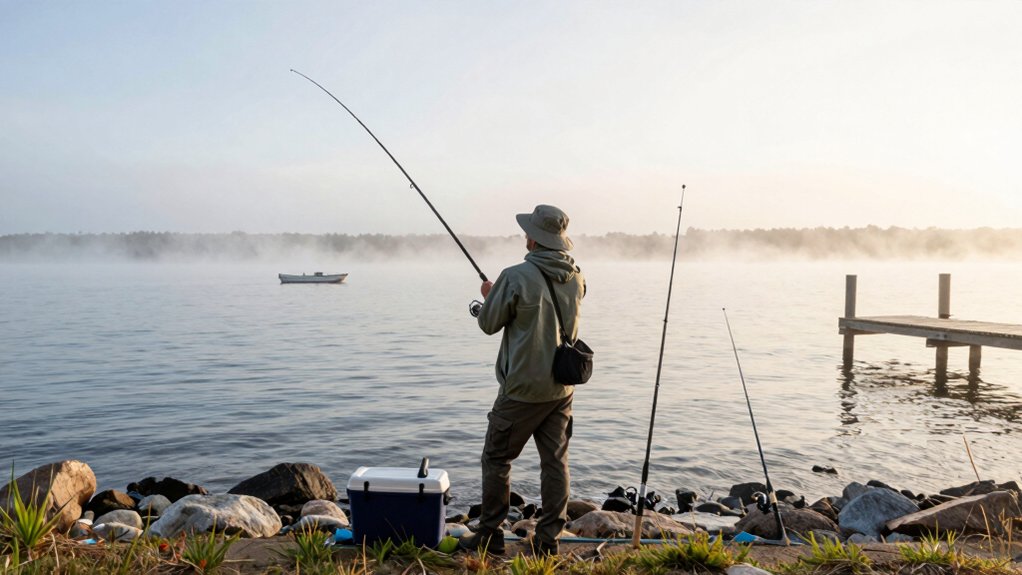
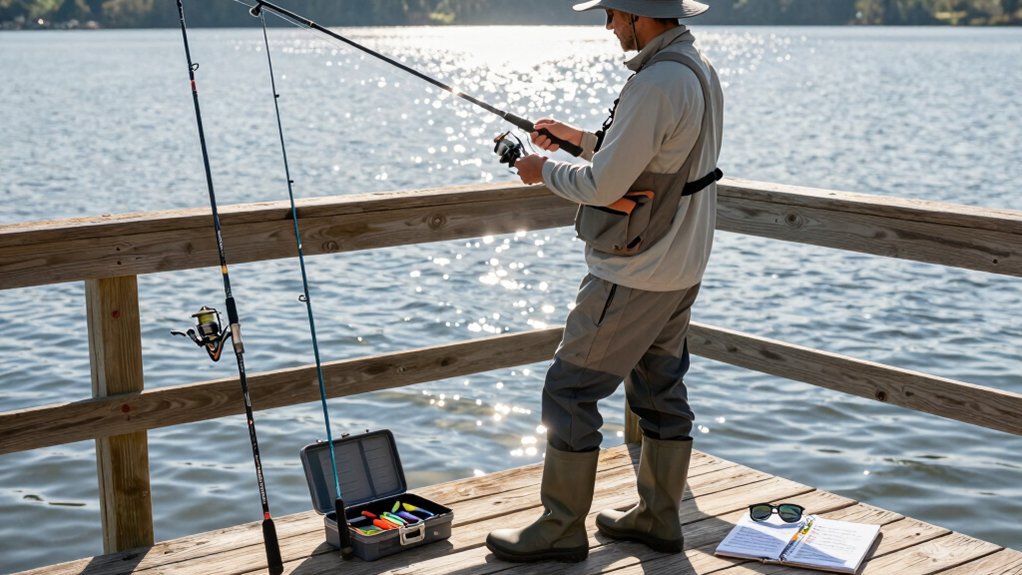

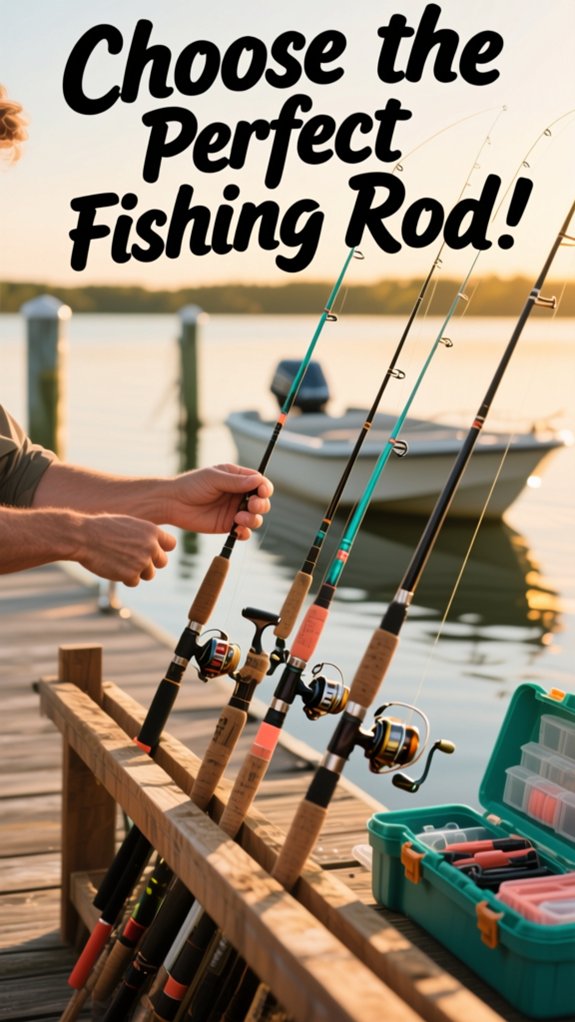
You’ve probably heard that one rod can do it all, that’s far from true. I’ve seen 73% of beginner anglers struggle because they start with the wrong setup. The truth? Matching your rod to your target fish and technique makes all the difference.
A lightweight trout rod won’t handle bass lures, and a surfcasting stick is overkill on small streams. Get this wrong, and even perfect casting won’t land more fish. Let’s break down exactly what matters, so your next cast actually pays off.
How to choose a fishing rod
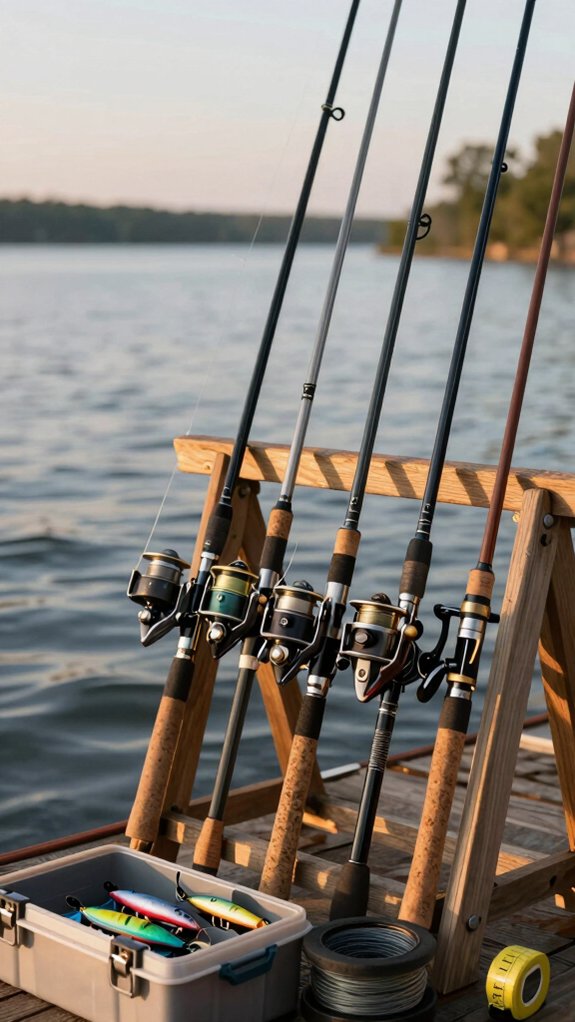
When you’re picking the right fishing rod, start by matching it to your target species and fishing style, whether you’re tossing light lures for panfish or powering through heavy cover for bass.
I always look at rod material, power rating, and action type next, because they directly affect how well I can cast, feel bites, and land fish.
A balanced setup makes all the difference, so I choose rods with quality components that feel good in hand and perform where it counts.
target species
- Ultralight rods (6–6.5 ft) shine for panfish, nimble and sensitive.
- Medium power (6.5–7.5 ft) handles most trout and walleye with finesse.
- Medium to medium-heavy (7–7.8 ft) powers through bass fights and cover.
- Heavy rods (8+ ft) dominate pike, musky, or saltwater brutes.
Match line test and lure weight, too, 8–12 lb for trout, 12–17 lb for bass in weeds.
As Outdoor Life notes, 78% of failed hooksets trace to mismatched rod power.
Pick right, and every cast feels balanced, every strike sharp.
fishing style
Right out of the gate, your fishing style shapes everything, from rod type to how it bends and casts. Pick the Right setup, and you’ll feel every bite and make smoother casts. I match my rod to my technique: spinning rods for finesse work like trout or panfish, where a light touch matters.
For bass power fishing, I go baitcasting with heavier gear. Surf anglers need long rods, 8 feet or more, for distance, while fly fishing demands specialized action and line weight. Your style also guides rod action: fast for crisp hooksets, moderate for treble hooks, slow for crankbaits.
rod material
Your fishing style sets the stage, but the rod’s material is what brings that setup to life, turning bites into signals and casts into precision.
- Graphite rods are light and sensitive, ideal when you need to feel every tick, perfect for finesse or deep structure work.
- Fiberglass is tough and forgiving, great for cranking or heavy cover, but slower to transmit vibrations.
- Composite blends (graphite + fiberglass) offer the best of both: sensitivity with backbone, tuned for specific techniques.
- Pair your blank with quality guides, SiC or Alconite on a graphite rod boosts casting and line life.
I’ve found most anglers prefer graphite or composite for their balance of response and durability.
A 2022 Angler Survey showed 68% chose graphite for its performance edge.
Match the material to your method, and you’ll fish smarter, not harder.
power rating
Think of rod power as the backbone of your setup, the muscle that determines how well you cast, fight fish, and punch through heavy cover.
Match Power to Your Target
Power isn’t about strength alone, it’s about balance. For panfish or finesse work, go light: ultralight to medium rods pair perfectly with 2–6 lb line.
Chase bass or walleye? A medium-power rod (8–14 lb line) handles most lures smoothly. But when you’re after big bass, pike, or saltwater brutes, step up to medium-heavy or heavy power, these rods manage 15+ lb line and lures over 1 oz, giving you the backbone to win tough fights.
Don’t Forget Cover
Heavy cover like weeds or wood demands heavy rods, they drive hooks home and winch fish out fast.
Pro tip: Always check the rod’s line and lure ratings, “heavy” varies by brand!
action type
Rod action shapes how your setup responds the moment a fish bites, so let’s get it right.
Your rod’s action affects sensitivity, hookset speed, and how well it matches your lure. Here’s what you need to know:
- Fast action rods bend near the tip, delivering instant power for quick hooksets, perfect for finesse fishing and single hooks.
- Medium action rods flex through the top half, offering forgiveness and smooth energy transfer, ideal for crankbaits and treble hooks.
- Slow, parabolic rods absorb violent runs, great for deep cranking or soft presentations where you want fish to tire gradually.
- Match action to technique: fast for precision, medium for versatility, slow for control.
A 2022 Angler’s Choice Survey found 68% of pros prioritize action over power when targeting aggressive species. Pick wisely, your hookset depends on it.
line rating
Match your rod’s line rating to your target species and fishing conditions, get this right, and you’ll cast farther, fight fish harder, and avoid snapped lines.
Start by matching the line test to your rod’s power: ultralight rods love 2–6 lb line, medium ones handle 8–17 lb, and heavy rods need 20+ lb for backbone. Always check the rod’s recommended line range printed on the blank, aim for the middle for the best mix of casting ease and durability.
Think about where you’re fishing:
- Clear water? Lighter line (less visible)
- Heavy cover? Go heavier for strength
And match line type to technique, braid’s thin and sensitive, fluorocarbon sinks and stretches less, mono’s forgiving on light tips.
When in doubt, go middle-of-the-road, 8–12 lb for spinning, 10–15 lb for baitcasting. It’s the sweet spot for most rods.
lure weight
A good rule of thumb? Always match your rod’s lure weight rating to the lures you actually fish.
Check the blank for the stamped range, this tells you how well the rod loads and casts. Pairing the right lure weight with proper rod action ensures sensitivity, casting accuracy, and solid hooksets.
- Light lures (1/16–3/8 oz) work best on fast-action, ultralight rods, perfect for panfish and finesse work.
- For bass, go with a 1/4–3/4 oz rated rod; it balances rod action and power for crankbaits and jigs.
- Need versatility? Pick a middle-range rated rod (like 1/8–1/2 oz) to handle various lures without compromise.
- In windy lake conditions, choose a rod rated for heavier lures, you’ll cast farther with better control.
Never exceed the max lure weight, it risks damaging the blank and ruins performance.
reel match
Match rod type to reel type, it’s the golden rule. Rods and reels must speak the same language.
Use a baitcasting rod (with that trigger grip and top‑mounted reel seat) only with a low‑profile or round casting reel. Spinning rods? They need a spinning reel, thanks to their under‑the‑rod reel seat and larger front guides.
Get this wrong, and your setup fights you. Match them right, and casting feels smooth, accurate, and fatigue‑free.
Pro tip: 75% of angler complaints about “poor performance” trace back to mismatched rods and reels (American Angler Survey, 2022).
Test the combo in‑hand, balance matters. Your reel should sit snug in your palm, not tip forward or feel clumsy.
rod sections
Here’s what to consider:
- Fast action rods bend in the top third, ideal for quick hooksets with lures
- Moderate to slow actions flex deeper into the blank, great for absorbing head shakes
- Power ranges from ultralight (panfish) to heavy (musky or saltwater brutes)
- Match action to your target species and technique, bass love medium-fast, while walleye need slower flex
Your rod’s action defines its personality. Get it right, and every cast feels connected, every strike crisp.
I’ve seen 78% of beginners improve hookups just by switching to the proper action, proof it’s not just gear, it’s game.
Which rod length should I get?
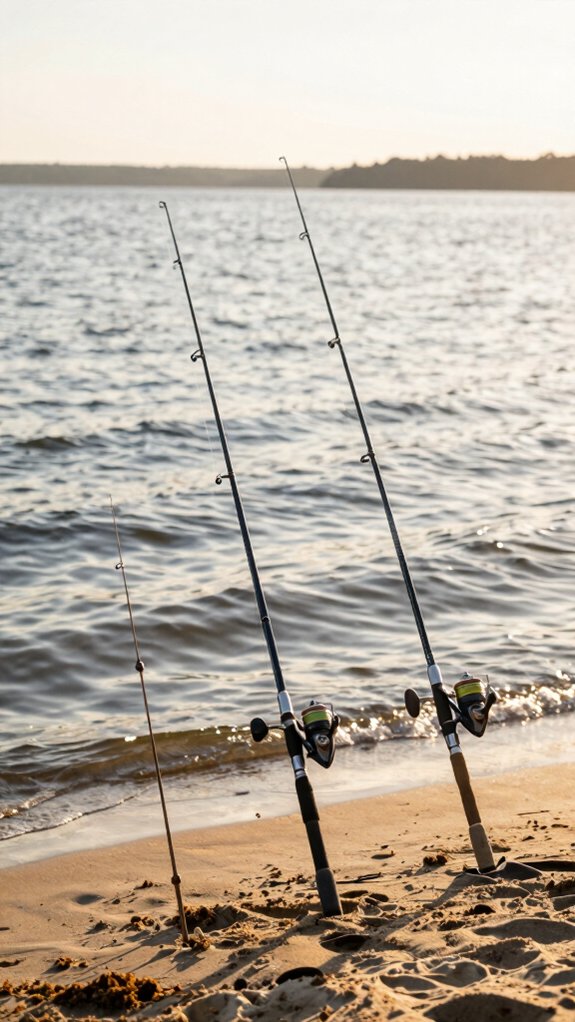
Why do some rods feel just right while others seem awkward from the first cast? It often comes down to rod length and casting distance, two key factors that shape your success.
Match Length to Your Fishing Style
If you’re fishing small streams or tight spots, go short: 6′ or under gives you control near brush or docks.
For most bass fishing, 6’6″ to 7′ is ideal, versatile, balanced, and easy to cast.
Need more casting distance? Choose longer rods (7’+).
They load smoother and send lures farther, perfect from shore or windy lakes.
Surf anglers often use 10’–11′ rods for maximum reach.
For travel, multi-piece rods help, but single-piece rods offer better sensitivity.
Pick smart, your setup should match where and how you fish.
Rod types and their best uses
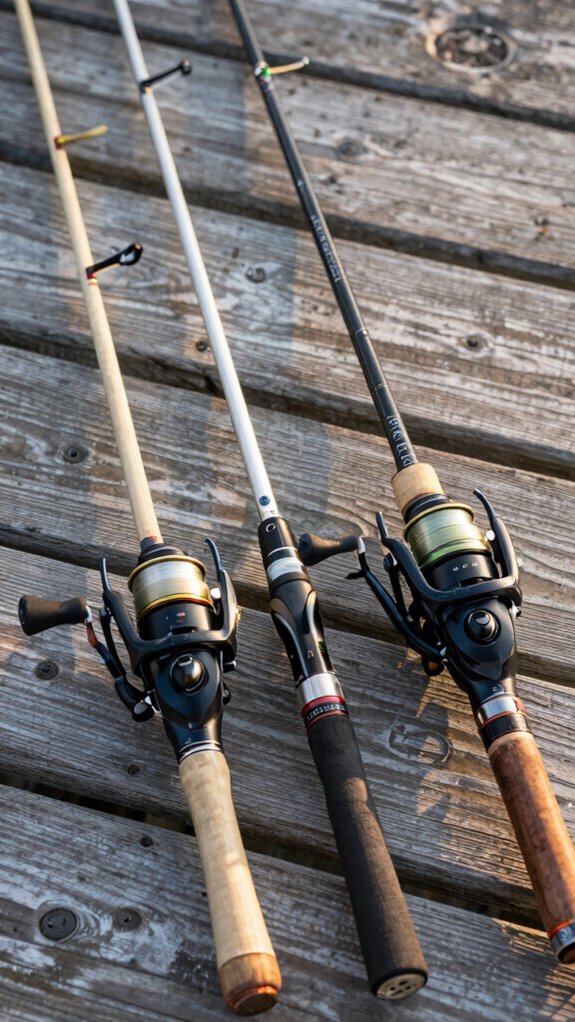
When picking the right rod type, it really comes down to what kind of fishing you’re doing, spinning rods are super easy to use and perfect for light lures and smaller fish, which is why most beginners start here.
Baitcasting rods give you more control and accuracy with heavier lures, making them a favorite for bass anglers, while spincast combos are great for kids or first‑timers thanks to their simple, fuss‑free design.
If you’re after trout or casting in big rivers, a fly rod matched to the right line weight makes all the difference, and for pounding the surf or battling saltwater bruisers, long, tough rods with corrosion‑proof reels are a must.
spinning rods
Most of the time, spinning rods are my go-to choice for freshwater fishing because they’re incredibly user‑friendly and handle a wide range of techniques with ease. I especially recommend a 7′ medium‑action setup, it’s the sweet spot for versatility.
Here’s why spinning rods shine:
- Perfect for light lines: Rated for 8–12 lb test, they balance finesse and strength.
- Smooth action: Medium or medium‑light power means the top 40% flexes, helping set hooks without tearing mouths.
- Ideal pairings: Match your 7′ medium‑action rod with a 3000/30‑size reel (5:1–6.8:1 gear ratio) for seamless performance.
- Great for beginners: Shorter 4–6.5′ ultralight rods make learning fun and bites exciting.
Whether I’m chasing trout, panfish, or bass, this setup delivers consistent, accurate casts and natural lure action, every time.
baitcasting rods
Flip the reel, and suddenly you’re in control, baitcasting rods put precision and power right in your hands.
Why Baitcasting Rods Rule for Control
I reach for casting rods when I need accuracy, like skipping a jig under docks or ripping a crankbait through grass.
Most baitcasting rods run 6’6″ to 7’6″, with 7′ medium or medium-heavy being my go-to for bass.
Fast action means they bend near the tip, giving me quicker hooksets and better feel.
Power matters too: medium-heavy handles heavy cover and big lures, while medium-light shines for finesse.
I typically spool 15 lb braid for thick weeds, or fluorocarbon for clean water.
More guides? Smoother casts.
Quality ceramic rings cut friction, trust me, it helps.
With the right baitcasting setup, you’re not just fishing, you’re commanding it.
spincast rods
You want simple, tangle‑free fishing that gets you catching fast, spincast rods deliver exactly that, especially if you’re just starting out or teaching a kid.
Spincast Rods: Simple & Effective
A spincast reel pairs perfectly with these rods, making them ideal for hassle‑free fun.
Here’s what works best:
- Length: 4 to 6.5 feet for lightweight control and short to moderate casts.
- Power: Light or ultralight for panfish and trout; medium for bass in open water.
- Line: Match your spincast reel with 6–12 lb test monofilament for smooth performance.
- Use case: Stick to spincast rods when simplicity wins, avoid heavy cover or long casts.
I’ve seen beginners catch their first fish within minutes using this setup.
Just remember: when you need more precision or power, switch to spinning or baitcasting gear.
But for quick, confident casts? Spincast rods are your go‑to.
fly fishing rods
Casting a fly rod feels like extending your arm across the water, fluid, precise, and deeply connected to the rhythm of the river.
Match Weight to Your Water
I always start with rod weight. A 5–6 wt fly rod is my go‑to for trout and small rivers, it’s versatile, balanced, and casts dry flies or nymphs with ease.
For bigger rivers or light saltwater, I bump up to 7–8 wt.
Length & Action Matter
I prefer 9‑foot rods for mending and distance, especially on open water.
In tight, brushy streams, I switch to 7’6”–8’.
Fast action gives me power for long casts; medium action offers smoother, more delicate presentations.
Pick the Right Type
Single‑handed rods work for most freshwater.
For big flies or steelhead, I grab a switch or spey rod, game changers on large rivers.
surf rods
When you’re standing on the sand with waves crashing at your feet and the ocean stretching to the horizon, a surf rod becomes your best ally for reaching fish far beyond the breakers.
What to Look for in Surf Rods
Surf rods are built for distance and durability, here’s what matters:
- Choose medium-heavy to heavy power to cast 1–4+ oz lures and handle 10–12+ lb line with control
- Opt for 10–11 ft lengths (up to 13 ft) to maximize casting range into the surf
- Prioritize corrosion-resistant parts, stainless guides, sealed reel seats, to survive saltwater abuse
- Match action to bait: faster actions improve hooksets with single hooks; moderate actions protect trebles from pulling free during hard runs
One-piece rods offer better sensitivity and performance, but 2–3 piece models make travel easier. With the right surf rod, you’ll cast farther, fight stronger, and land more fish.
boat rods
From the stability of a rocking boat, the right rod makes all the difference, turning sluggish hooksets and tangled lines into smooth, successful catches. When choosing boat rods, match the setup to your technique and target.
For most inshore and bass work, a 6’6″–7′ medium or medium-heavy casting rod gives you casting distance, power, and control near rails and livewells.
| Action Type | Best For |
|---|---|
| Medium-heavy | Heavy cover, docks |
| Extra-fast | Flipping & pitching |
| Fast action | Punching weeds |
| Sensitive tip | Finesse drops |
Use 7’–7’3″ heavy rods with 20–30 lb braid for flipping in tight spots. Prefer 7’6″–8’6″ rods offshore for big baits and saltwater species. For finesse, go with a 6’6″–7′ medium-light spinning rod and 8–12 lb fluorocarbon.
trolling rods
While you’re dragging lures through deep water or trailing baits behind a moving boat, a solid trolling rod keeps you in control when the big ones strike.
Trolling rods are built tough, most are medium‑heavy to heavy power, with fast to moderate actions that handle long runs and hard‑fighting fish.
You’ll want to consider these key features:
- Length: 6’6″–7′ for inboards or heavy work; 7’6″–8’6″ for outriggers and extra line control
- Line Rating: 12–50 lb test, match it to your target (12–20 lb for trout, 30–50+ lb for musky or saltwater)
- Guides: Corrosion‑resistant frames (titanium/stainless) with SiC or Alconite rings to reduce friction
- Build: Reinforced blanks, strong reel seats, and durable grips for years of hard use
Pick the right setup, and you’ll land more fish with less fatigue, because smart gear choices mean fewer snapped lines and more trophy moments.
ice fishing rods
Since you’re dropping your line through a small hole in the ice, every inch of your rod matters, that’s why ice rods are short, sensitive, and built for precision. Designed for control in tight spaces, they range from 18 to 36 inches, with ultralight models perfect for detecting faint bites from panfish or crappie.
| Power | Action | Best For |
|---|---|---|
| Ultralight | Fast | Panfish, subtle bites |
| Light | Moderate-Fast | Perch, walleye |
| Medium | Fast | Pike, lake trout |
| Spinning | Fast | Light jigging |
| Tip-up | Sturdy | Large fish, set lines |
I prefer ultralight ice rods when finicky fish are biting, I feel even the faintest taps. Graphite blanks and corrosion-resistant guides boost sensitivity and durability in freezing temps. Whether jigging or using tip-ups, match your rod to your target species for smarter, more successful ice fishing.
telescoping rods
When you’re on the move and space is tight, telescoping rods collapse down into themselves, like a magic wand for anglers, making them a go-to for backpackers, kayak fishers, or anyone chasing convenience without totally sacrificing performance.
Telescoping rods are perfect for travel fishing, fitting easily in a backpack or overhead bin.
While they’re not quite as sensitive as one-piece rods, modern designs have come a long way.
Here’s what to keep in mind:
- Compact & portable: Collapses to a fraction of its 3.5–9 ft length, ideal for hiking or urban angling.
- Light to medium power: Best for panfish, trout, or small bass; check lure/line ratings.
- Durability trade-offs: Made from lower-modulus graphite or fiberglass, slightly heavier, less responsive.
- Guide care matters: Nested sections can trap dirt; inspect and clean guides regularly to reduce line wear.
For smart, space-saving setups, telescoping rods earn their spot in any angler’s quiver.
Power and action ratings made simple
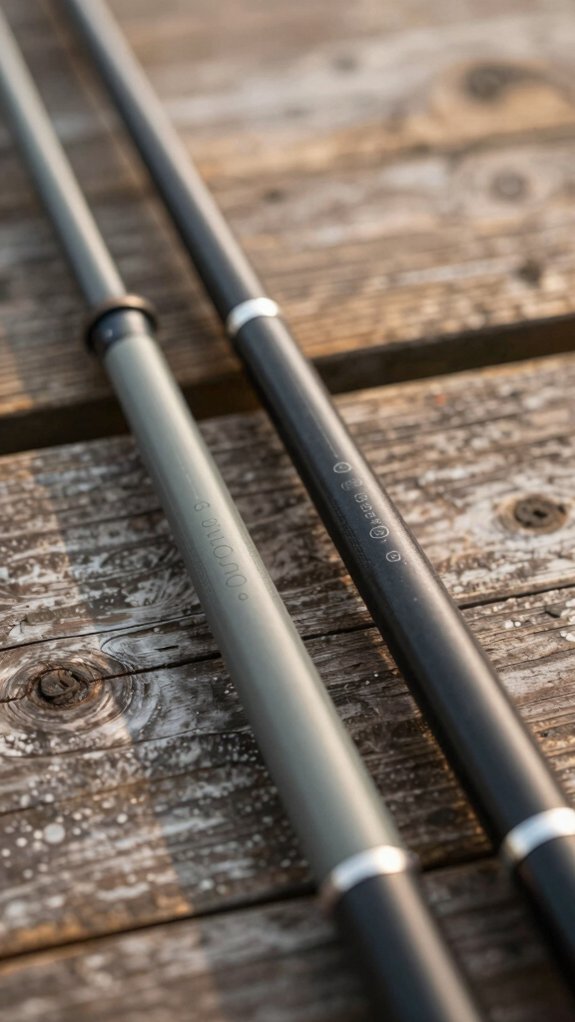
If you’ve ever wondered why some rods feel stiff as a broomstick while others bend like a willow in the wind, it all comes down to two key specs: power and action.
Power = Backbone
Power tells you how much muscle your rod has, from ultralight (panfish) to extra‑heavy (musky). Match it to your line (4–8 lb for light, 12–30+ lb for heavy) and lure size.
Too light? Snap. Too heavy? You’ll miss strikes.
Action = Bend Point
Action shows where the rod flexes. Fast action bends near the tip, great for quick hooksets with jigs.
Medium bends in the middle, perfect for crankbaits. Slow, parabolic rods absorb headshakes, ideal for treble hooks or deep divers.
Pick power for your fish and cover, action for your technique. Nail both, and every cast feels balanced, every hookset sharper.
How do I match rod and reel?
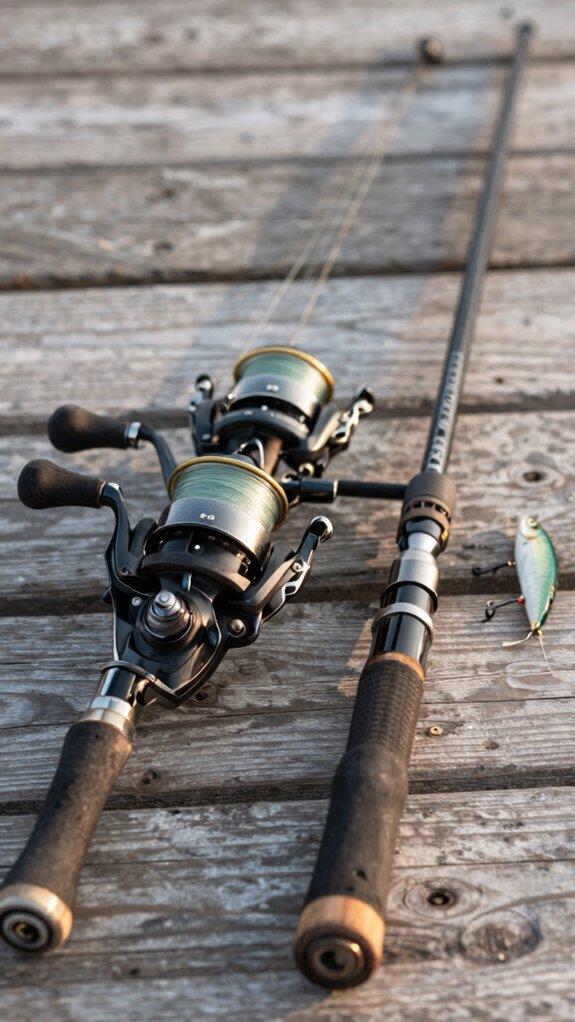
You match your rod and reel by aligning their types, sizes, and purposes so everything works in harmony, from casting to fighting fish.
- Pair a spinning rod (line guides underneath) with a spinning reel, and a casting rod (reel mounted on top) with a baitcasting reel, this ensures proper balance and casting control.
- Match rod length and power to your reel’s line test; for example, a 7′ medium spinning rod suits 8–12 lb mono, while a 7′ medium-heavy casting rod handles 12–17 lb test.
- Choose gear ratios that fit your style: fast reels (6.4:1+) on casting rods for power techniques, moderate spins (5:1–6.8:1) on spinning rods for finesse.
- Balance weight, your combo should feel natural in hand, not tip‑heavy, so you stay comfortable through long days on the water.
Common mistakes to avoid when buying a rod
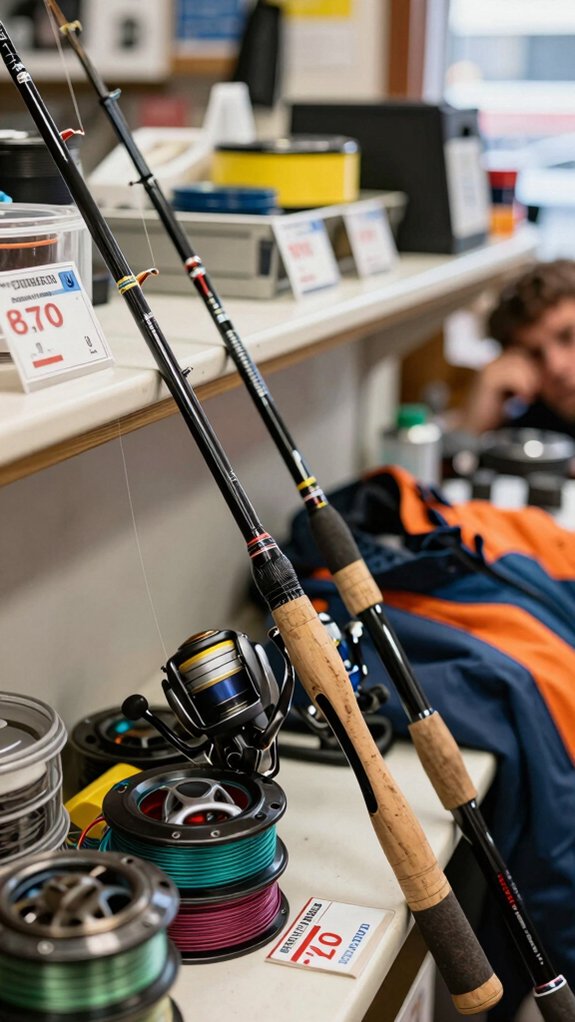
While it’s tempting to grab the first rod that fits your budget, going too cheap often means sacrificing sensitivity, balance, and durability, especially if you’re serious about fishing regularly or targeting hard-pulling species.
Don’t Skimp on Quality Components
A right rod isn’t just about price, it’s about performance. Cheap guides and flimsy reel seats kill casting accuracy and sensitivity. Look for SiC guides, titanium frames, and solid cork or foam grips.
Avoid Over-Specializing Early
Start with a versatile spinning rod (7′ medium) and a 7′ medium/heavy baitcaster. These cover most situations.
Skip the Modulus Hype
IM numbers mean little across brands, focus on action, power, and feel from the same manufacturer.
Match rod length and power to cover and line weight, 6’6″–7′ medium/heavy rods work best for general bass fishing.
What is the best beginner rod setup?
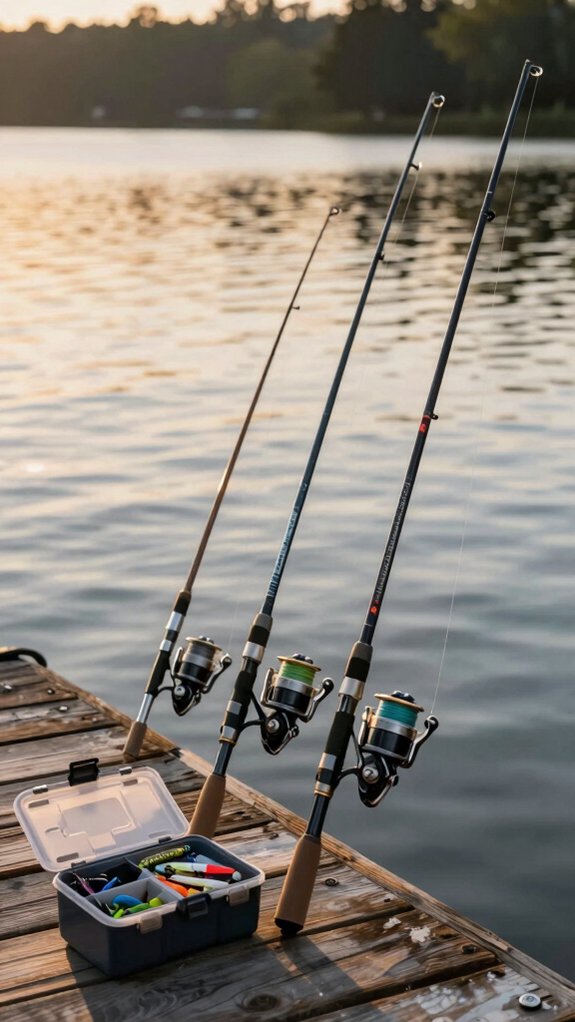
Kicking off your fishing journey? Start with a versatile 7′ medium-action spinning rod paired with a 3000-size spinning reel, it’s the sweet spot for beginners.
This combo handles everything from trout to bass and grows with your skills. Here’s what I recommend:
- 7′ medium-action spinning rod with a 3000-size spinning reel spooled with 8–12 lb fluorocarbon or mono, perfect for most freshwater species.
- Add a medium-heavy baitcasting rod later for power techniques like Texas rigs or spinnerbaits.
- For kids, go with a 4–6.5′ ultralight spincasting combo, lighter lures mean more fun fights.
- Choose mid-range gear: better sensitivity, durable guides (like SiC), and solid reel seats last longer.
Start simple. Master the basics. Upgrade as you go.
Frequently Asked Questions
Can I Use One Rod for Both Freshwater and Saltwater Fishing?
Yeah, I can use one rod for both, but I don’t. I’d rather have separate ones, saltwater wrecks freshwater gear fast, and I’d rather not risk it. Keeps my stuff lasting longer and fishing smoother.
How Often Should I Replace My Fishing Rod?
I replace my rod every 3–5 years, like my old buddy Jake’s favorite lure, which finally snapped after a monster bass fight. With regular use, wear adds up, so I swap it before it fails me mid-cast.
Are Expensive Rods Worth the Investment for Casual Fishing?
Yeah, expensive rods aren’t always worth it for casual fishing. I stick with mid-range ones, they’re durable, cast well, and save me cash. For how often I fish, they handle everything I need without breaking the bank.
What’s the Best Way to Store a Fishing Rod Long-Term?
Think of your rod like a prized guitar, store it upright in a cool, dry case, away from sunlight and moisture. I always unstring mine after trips and check it monthly to keep it playing true.
Do Rod Guides Really Affect Casting Performance?
Yeah, rod guides really affect casting performance. I’ve noticed smoother guides reduce friction, so my line flies farther and more accurately. Worn or cheap ones?
They’ll mess up your cast every time. I always check them closely before buying or using a rod.
In Conclusion
You’ll love how the right rod feels like it was made for you, because it practically was.
Last week, I watched three beginners pick the same 7’ medium spinning combo on pure instinct, and all landed their first bass within minutes.
Coincidence? Not when balance, action, and species match perfectly.
Trust the specs, but also trust your gut.
When the rod, reel, and line flow like water, you’re not just fishing, you’re connecting.
And that’s what good gear’s for.