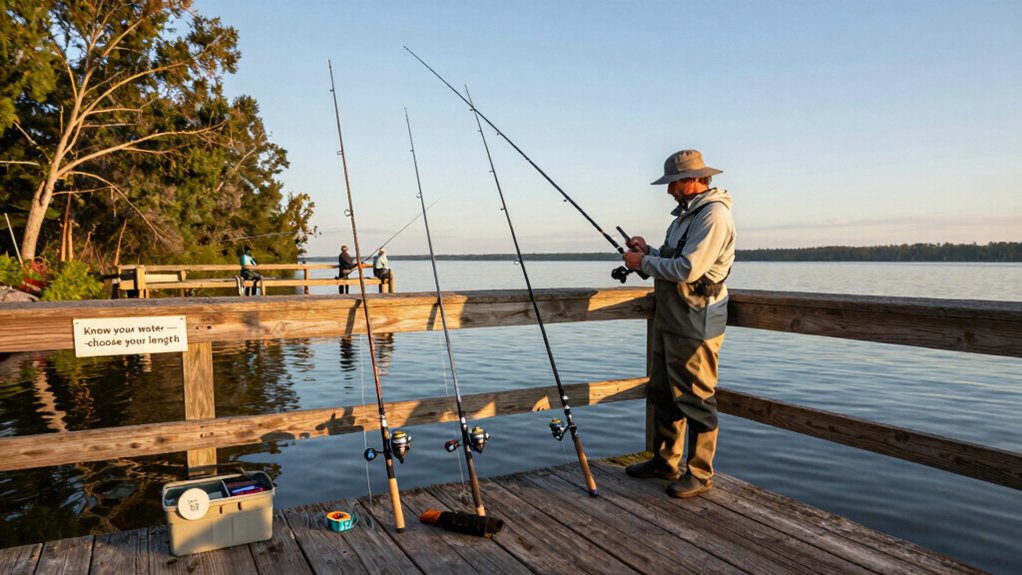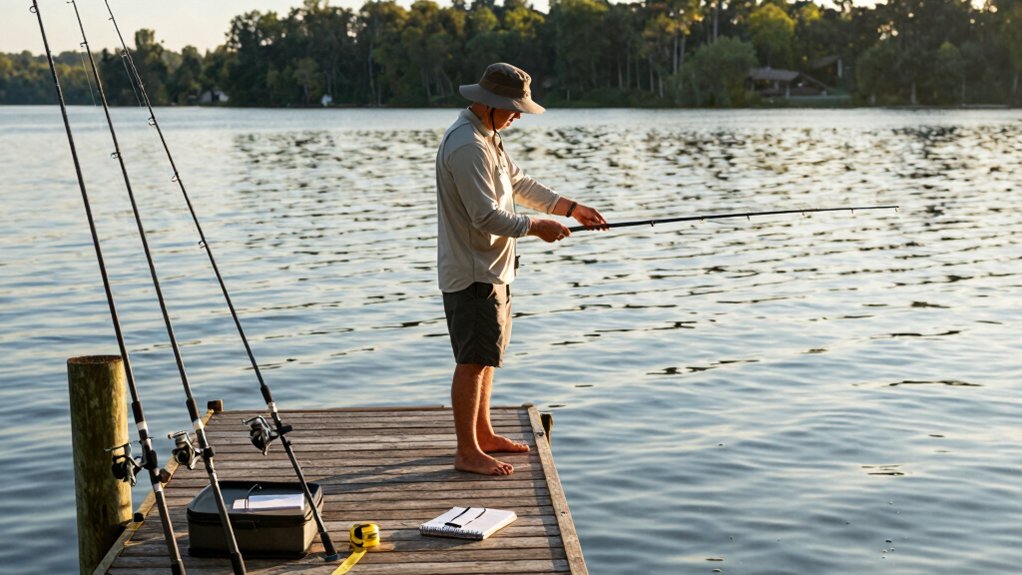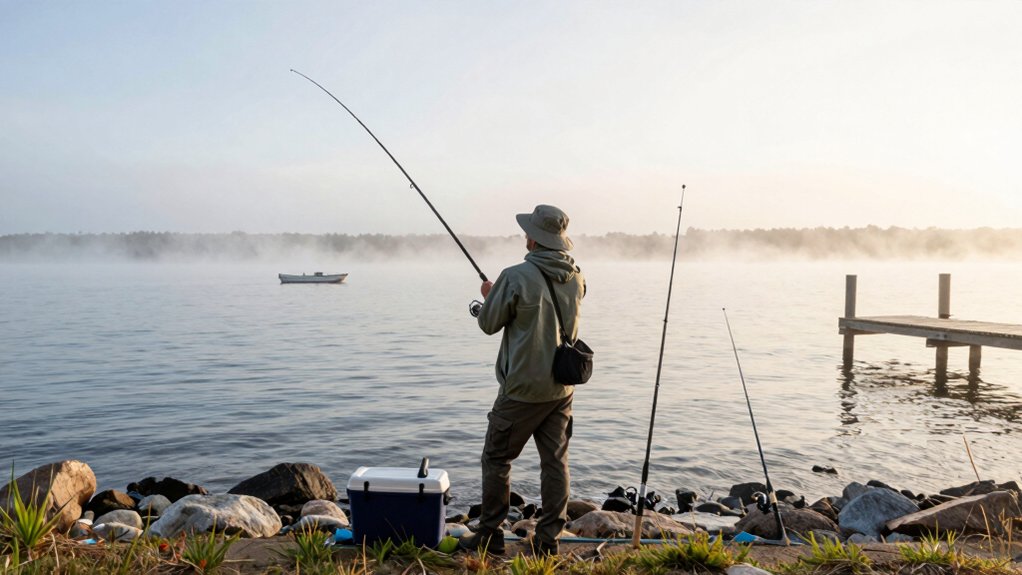
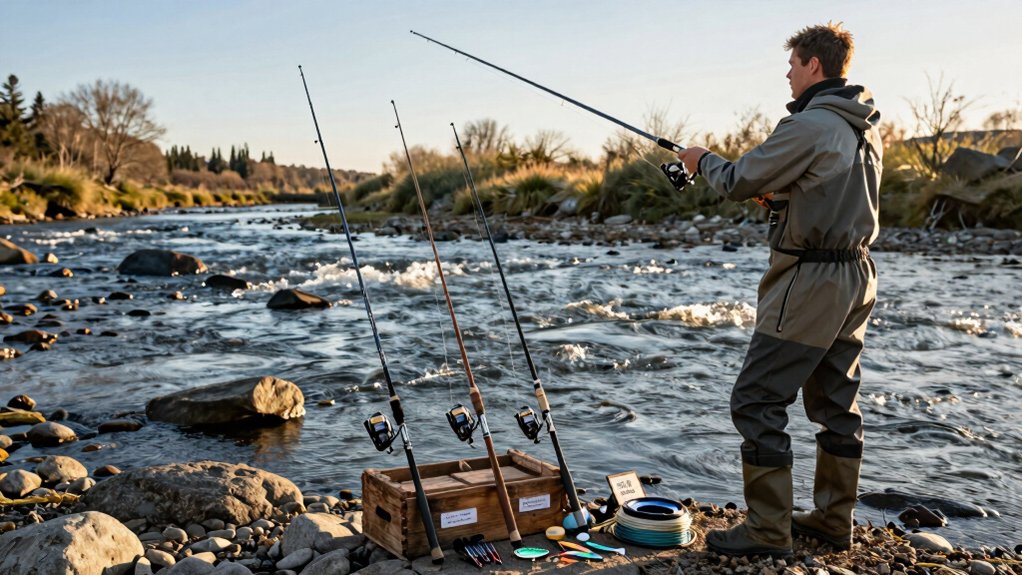

Most anglers don’t realize that salmon’s explosive runs and headshakes demand a rod with just enough backbone to set the hook, and enough flex to keep them from tearing free. I’ve seen too many fish lost on gear that’s either too stiff or too soft. The right balance? It starts with power, action, and length working together like a tuned engine.
Pick wrong, and you’ll feel every lost fish in your gut. Get it right, and the difference is in your hands before the first jump.
What type of fishing rod for salmon?
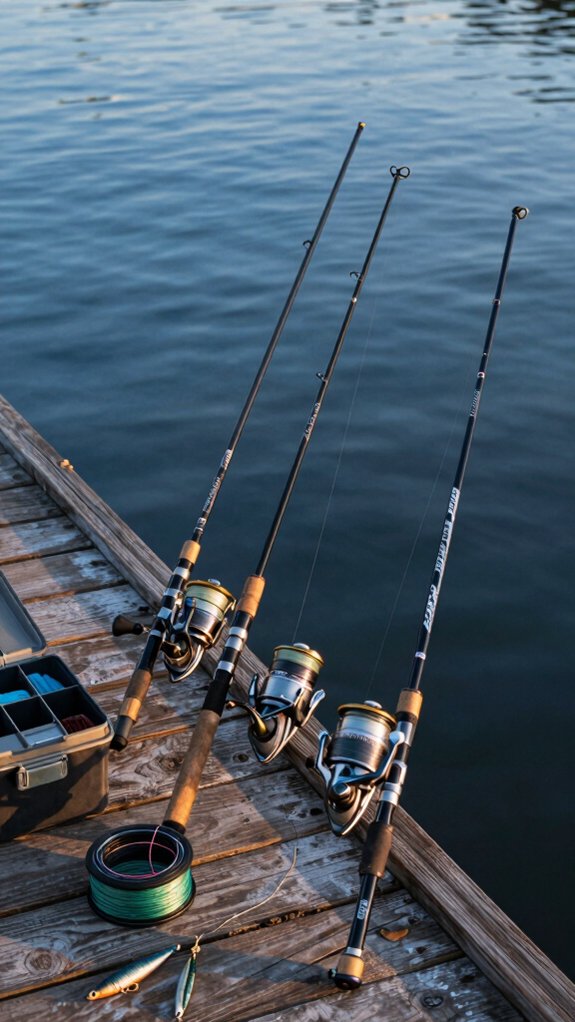
When you’re after salmon, picking the right rod makes all the difference, trust me, I’ve learned that from years of fighting big kings on gear that just wasn’t up to the task.
For most salmon situations, a medium to medium-heavy spinning rod between 9 and 10.5 feet is ideal.
This salmon rod gives you the casting distance, line control, and backbone needed when a 20-pound chinook makes a surprise run.
I prefer fast to moderate action blanks, stiff enough to set hooks hard, yet flexible enough to absorb violent head shakes.
Graphite rods? Lightweight and super sensitive, perfect for detecting light bites.
But if you’re trolling heavy leads or using 360s, go fiberglass or composite for that extra durability and softer tip.
Match your rod to the technique: shorter (8–9 ft) for tight banks, 9–10 ft for float fishing, and 10–10.5 ft for surf or boat work.
Spinning, baitcasting, or fly rod for salmon?
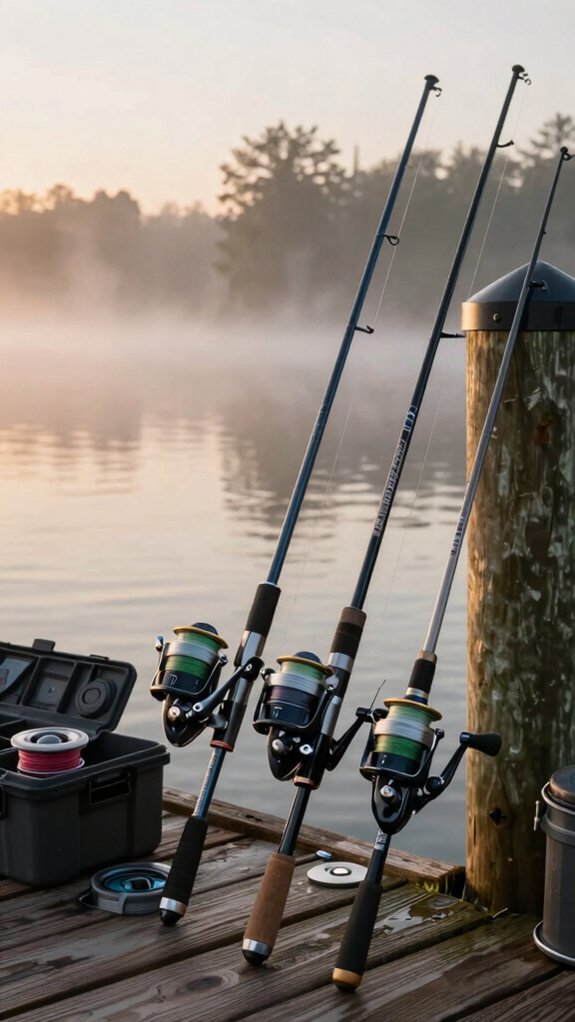
If you’re wondering which rod style gives you the best shot at landing salmon consistently, I’ll cut to the chase: spinning rods are your go‑to for most situations. They’re light, versatile, and perfect for casting lures or floats from shore or boat.
But let’s break it down:
- Spinning rods (8–10.5 ft, medium to medium‑heavy): Ideal for beginners and pros alike, great casting, sensitivity, and control.
- Baitcasting rods (9–10.5 ft, medium‑heavy to heavy): Best for trolling or heavy leads, powerful backbone for big fish.
- Fly rod (13–14 ft Spey or 9 ft single‑hand 8–9 wt): Choose for big rivers or low‑tide flats, long casts, delicate presentation.
Match your gear: 2500–4000 reels with braid for spinning, heavy conventional reels for baitcasting, and 600–625 gr Skagit lines for two‑handed FLY ROD setups.
Rod power and action for salmon rods
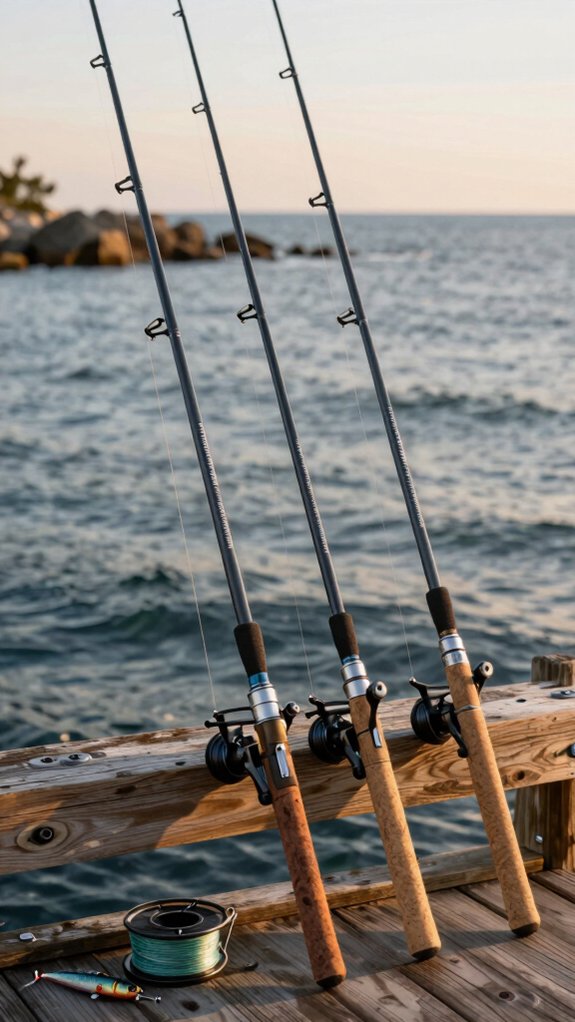
While you might be tempted to grab the heaviest rod you own, I’ve found that medium to medium‑heavy power is actually the sweet spot for most salmon fishing, giving you the backbone to stop a charging chinook without sacrificing the sensitivity to feel those subtle tap bites.
Rod power matters because salmon fight hard, but you still need bite detection. I recommend medium‑heavy power for heavy spoons or deep trolling, and medium for float rigs or lighter lures.
Pair that with a fast or medium‑fast action, fast enough to set hooks quickly, but with a forgiving bend to cushion headshakes.
Longer rods (9–10.5 ft for spinning) boost control in current. Graphite gives a crisper feel; fiberglass offers durability and a softer flex.
Match your rod power to your technique, it’s the key to a balanced, effective setup.
Best rod length, material, and handle choices
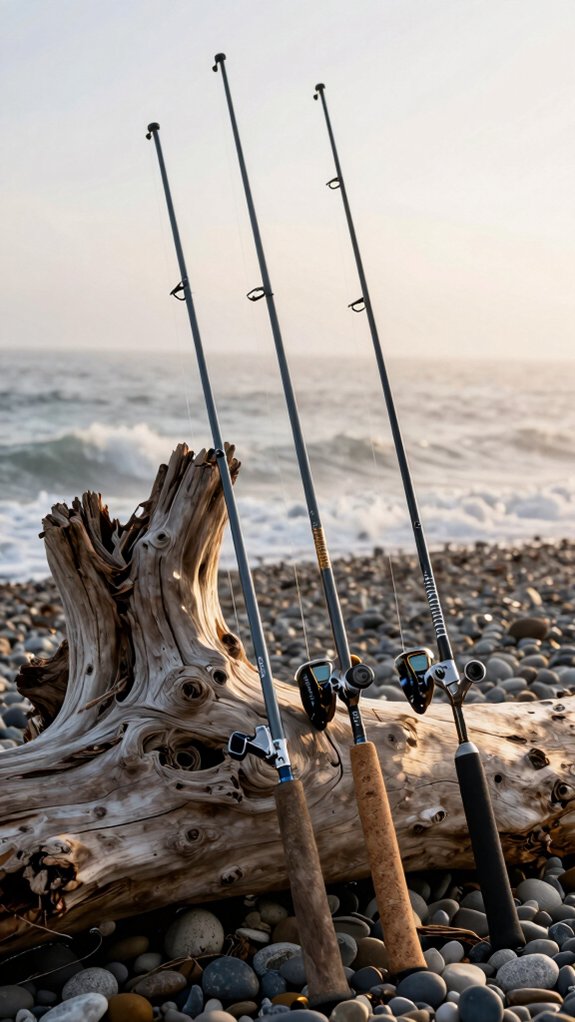
You’ll want a salmon rod between 9 and 10.5 feet long, this range gives you the reach and leverage most anglers actually need when battling hard‑pulling kings or drifting gear through strong current.
For the best balance of control and casting power, here’s what I recommend:
- Length: 9–9.6 ft for boat or bank fishing, 10–10.5 ft for float or surf fishing, longer rods give you better line management and mending.
- Material: Go with a graphite blank. It’s lightweight, super sensitive, and helps you feel even the softest salmon take through the rod.
- Handle: Choose a long foregrip/backgrip with cork or EVA, cork feels great when wet, while EVA stands up to grime and rough use.
These choices keep your line under control and your rod tuned for both power and feel, exactly what you need when the salmon start running.
Rod sizes by salmon species and waters
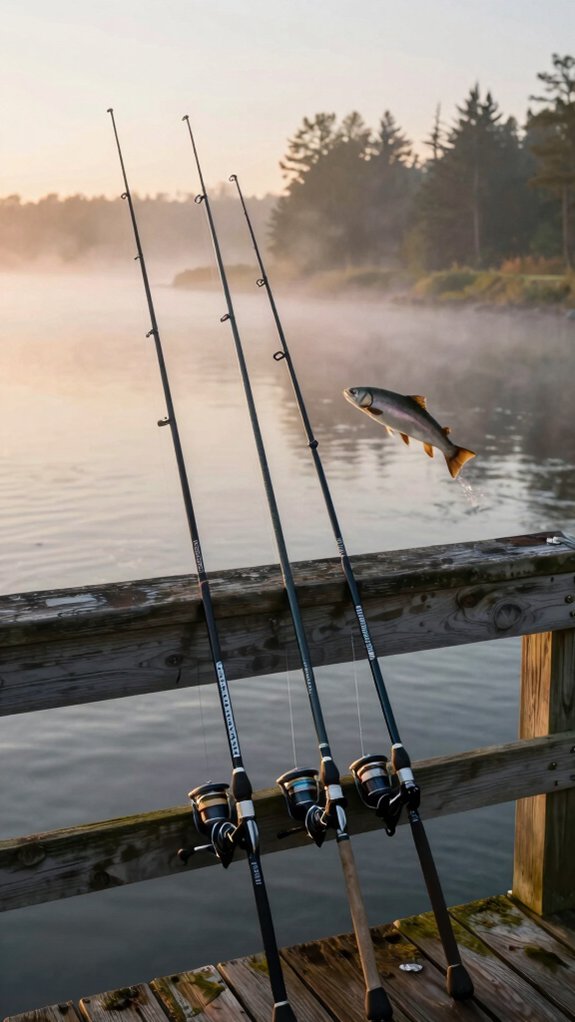
When picking the right rod size for salmon, matching your setup to the species and fishing environment makes a big difference in control and success.
For coho, I grab a 9–10 ft medium-power rod, it’s light enough for their feisty runs but still casts well and feels every bite.
If I’m after chinook, I step up to a 9.5–10.5 ft medium-heavy for extra backbone to handle their size and strong river currents.
coho sizes
A 9- to 10-foot medium-power spinning rod is your best bet for coho salmon, whether you’re casting plugs along a coastal surfline, drifting a float rig in a river, or working estuary channels. This 9–10 ft spinning rod with medium power gives you the sensitivity to detect light bites, the reach for float rigs, and the backbone to turn hard-running 6–12 lb coho.
Here’s why this setup works so well:
- 9–10 ft length – Balances casting distance and control; 10 ft helps manage line drift in open water.
- Medium action blank – Soft tip sets hooks easily, while the lower section handles strong runs.
- Paired with 10–20 lb braid + 10–15 lb fluorocarbon leader – Smooth, sensitive, and tough enough for snaggy rivers.
For mixed trips with Chinook, bump up to a medium-heavy 9.5–10 ft rod, best of both worlds.
chinook sizes
Because Chinook salmon are the largest and most powerful of the Pacific salmon species, landing one demands a rod that can handle both brute strength and technical challenges, especially in fast-moving rivers or deep drifts.
For Chinook, your casting rod should be a 9.5–10.5 ft medium-heavy to heavy power spinning rod. Shore anglers love a 9.5–10 ft rod for better casting distance and control, while boat anglers often go 10–10.5 ft for improved line management and leverage.
Match it with 20–50 lb braid or 15–30 lb mono, paired to a rod rated 12–25 lb, this combo handles big runs and rough currents.
- Stiffer action rods prevent blank roll when using heavy lures or 360 rigs.
- Longer rods keep line off the water but can be tricky in tight spots.
Trust me, the right Chinook setup makes all the difference.
pink sizes
If you’re after pink salmon, you’ll want a compact 8–9 ft medium-power rod that matches their feisty but smaller size, think 5 to 12 pounds, so you can enjoy every acrobatic jump and quick run without overpowering the fight.
A shorter rod gives you better control when casting from tight banks or jetties, where space is limited but action is fast.
Here’s why this setup works so well:
- Improved rod control in crowded shore spots
- Quicker response to sudden strikes, pinks are playful and unpredictable
- Lightweight balance that keeps you comfortable during back-to-back fights
I’ve seen anglers land over 20 pinks in a morning using this combo, nimble rods make the day more fun and effective.
When you’re targeting pink salmon, going with a shorter rod isn’t just practical, it’s the key to feeling every thrilling moment.
sockeye sizes
When you’re chasing sockeye salmon, reaching for a 9-foot medium-power rod is your best bet for consistent success, especially since these feisty fish average 6–12 pounds and love to test your gear in rivers and lakes.
A rod designed for sockeye balances casting distance with sensitivity, key when you’re detecting light bites in deep water. I prefer fast to moderate action because the responsive tip alerts me to subtle takes, while the backbone helps set hooks and fight strong runs.
For float fishing from a boat, go 9–10 ft to keep your line elevated and reduce drag.
Bank anglers? Stick with ~9 ft for better casting control.
Pair your rod with 10–20 lb braid and a 10–15 lb fluorocarbon leader, this combo matches the rod’s power and keeps your presentation natural. Trust me, this setup turns more bites into landed fish.
How to choose the right salmon rod
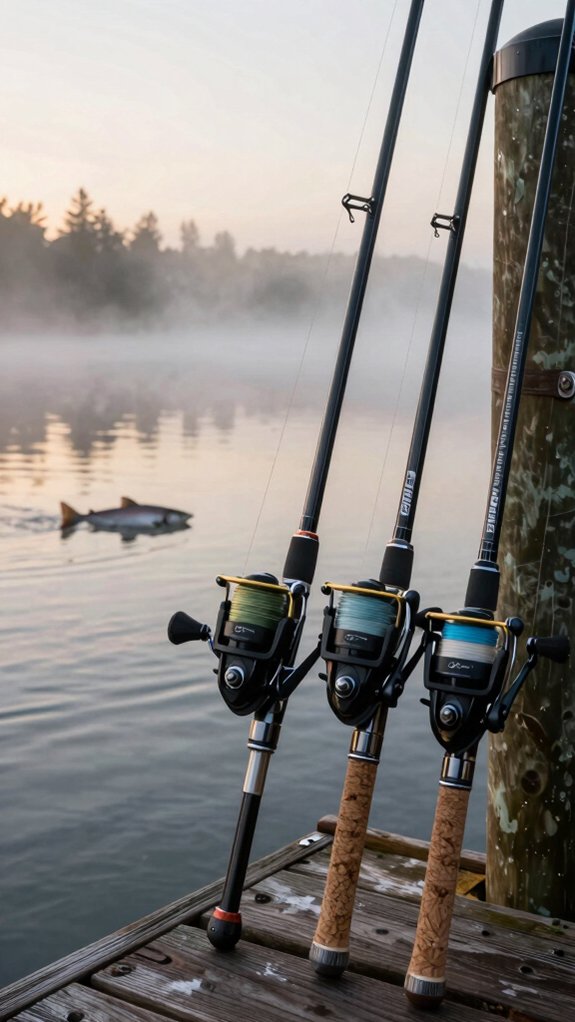
When picking the right salmon rod, I always start by matching the rod power and length to my target species and fishing spot, there’s no one‑size‑fits‑all here.
I look for a fast to moderate action that gives me the sensitivity to feel light bites and the backbone to steer big fish, especially when using 10–20 lb braid with fluorocarbon leaders.
And don’t forget to pair it with a reel that balances well and handles the line capacity you’ll actually use on the water.
target species
Since salmon vary so much in size and fighting style, picking the right rod starts with matching your gear to the species you’re after, and getting this right means more hooked fish and fewer snapped lines. When targeting salmon, your casting success and fight control hinge on this key choice.
Here’s how to match rod specs to your target:
- Coho & Pinks: Use an 8–9 ft medium-power rod, light enough for easy casting, strong enough to handle their acrobatics.
- Sockeye & General Salmon: Go with a 9–10 ft medium-power rod; balanced for control and casting distance in rivers or lakes.
- Chinook (King) Salmon: Step up to a 9.5–10.5 ft medium–heavy rod, built for power, current, and big lures, giving you the backbone needed when that trophy pulls hard.
Choose right, and every cast feels confident, every fight winnable.
rod power
If you want to land more salmon without blowing out your gear, picking the right rod power is non‑negotiable, I’ve seen too many broken lines and bent rods from mismatched setups.
For most salmon, go with medium to medium-heavy power, ideally rated for 8–20 lb test. This gives you the backbone for Chinook while still casting lures smoothly.
- Use medium-heavy power (10–20 lb/15–30 lb) for surf, heavy current, or float fishing, extra lifting power helps control big fish.
- Medium (8–12 lb) works fine for coho or pinks.
- Match the rod to your lure: medium rods handle spoons and small spinners; medium-heavy tackles heavy plugs, 360 rigs, and big lead.
Longer rods (9–10.5 ft) improve line control; shorter ones offer precision in tight spots.
For travel or versatility, pick a durable graphite or composite rod with balanced power, it’ll last longer and fish better.
rod action
- Fast action rods excel with heavy spoons or 360 trolling, great for deep runs and strong hooksets.
- Moderate action rods shine with herring or plugs, offering soft tips that absorb surges and improve bait presentation.
- Longer rods (9–10.5 ft) boost casting and line control from shore, while shorter (8–9 ft) ones handle tight spaces with faster response.
I test every rod in hand, graphite brings sensitivity, fiberglass adds forgiveness.
Match your action to your salmon species and style, and you’ll land more fish with less frustration.
rod length
When you’re chasing salmon, picking the right rod length isn’t just about casting farther, it’s about matching your gear to where and how you fish so you stay in control from hookset to landing.
Match Length to Your Fishing Style
I choose 8–9 ft rods for tight banks or crowded boats, easier handling, quicker netting.
For most river and shore fishing, 9–10 ft is my go‑to: versatile, balanced, and great for line control.
Longer rods (10–10.5 ft or more) shine in float fishing, surf, or strong currents, they keep line off the water and improve drag angle on big Chinook.
But they add fatigue and can be clumsy in tight spots.
For travel, I love 4–6 piece rods in the 9–10 ft range, easy packing without sacrificing performance.
Remember: longer rods boost casting and control, but go with the shortest length that meets your needs.
Less fatigue, better balance, smarter fishing.
line rating
A solid medium to medium-heavy line rating is your best bet for tackling salmon effectively, think 8–20 lb test or 12–25 lb class, giving you the power to cast heavy gear, set hooks deep in tough mouths, and still have enough backbone to steer a thrashing Chinook away from snags.
Match your rod’s line rating to your setup:
- Use fluorocarbon line for leaders (10–15 lb), it’s nearly invisible underwater and resists abrasion from rocks and teeth.
- For braid mainlines, go with a 10–20 lb equivalent (like 50–65 lb braid) to handle surges and long runs.
- Pair your rod with a 3000–4000 spinning reel or 6500–7000 baitcaster to match the line rating and ensure smooth drag under pressure.
This balance keeps you ready for anything from plugs to heavy lead.
lure weight
Your rod’s lure weight rating makes or breaks your casting accuracy, fight control, and hookup success, so match it to the lures you’re actually throwing. Get this wrong, and you’ll lose casting distance, botch hooksets, or snap your rod under pressure.
Here’s what works best for common salmon setups:
| Technique | Lure Weight Range | Rod Action |
|---|---|---|
| Light casting (spoons) | 1/8 – 1/2 oz | Moderate |
| General salmon lures | 1/4 – 1 oz | Moderate to Fast |
| Heavy trolling | 1 – 4+ oz | Fast |
| River float fishing | 1/4 – 3/4 oz | Medium, soft tip |
| Versatile all-rounder | 1/4 – 2 oz | Med–Med Heavy |
For most anglers, a 9–10 ft rod rated 1/4–2 oz gives great casting distance and handles everything from plugs to light trolling. Match the lure weight, and you’ll feel every headshake, without breaking a sweat.
Avoid these common salmon rod mistakes
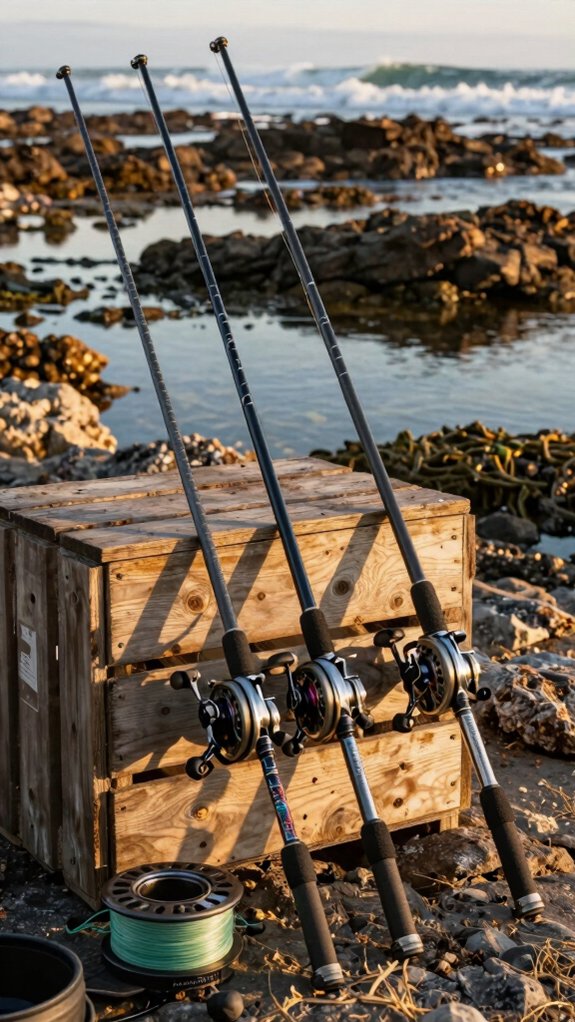
Let’s cut to the chase, skimping on rod power is one of the fastest ways to lose a hard‑fighting salmon, especially when using one rod for fighting larger runs. A light setup just can’t handle the strain, leading to poor hooksets and snapped lines.
Avoid these common mistakes:
- Too light or wimpy: Stick to medium or medium‑heavy power (8–12 lb test) to confidently land aggressive fish.
- Wrong length or action: Overly long rods (10.5+ ft) or ultra‑light fast actions struggle with heavy spoons, 360 rigs, or deep leads, opt for moderate‑fast action with a strong backbone.
- Cheap components: Flimsy guides and reel seats add weight, reduce sensitivity, and wear out fast, go for quality stainless or ceramic guides and a secure reel seat.
Pair your rod with a 2500–4000 reel and 10–20 lb braid for a balanced, effective setup.
Frequently Asked Questions
What Type of Rod Is Best for Salmon Fishing?
I’d go with a medium to medium-heavy power rod, 9 to 10 feet long, because it’s strong enough for big Chinook but still casts well and bends nicely when I’m fighting fish or using lures.
What Size Baitcaster for Salmon?
I’d grab a 3000–4000-size baitcaster for salmon, it’s got the line capacity and drag power I need. It handles 10–20 lb mono or 50–65 lb braid perfectly, giving me control when fighting strong, run‑prone fish.
Is 30LB Braid Enough for Salmon?
Yeah, 30 lb braid’s enough for most salmon, I’ve landed plenty of coho and sockeye with it. Just pair it with a fluorocarbon leader and a sturdy rod, and you’re set for solid fights without breaking line.
Is a Heavy Rod Good for Salmon?
Yeah, a heavy rod’s great for big Chinook or heavy trolling rigs, I won’t lose them. Sure, it’s tiring, but the power’s worth it when that monster runs. Just don’t use it for light lures; match the rod to your setup and stay ready.
In Conclusion
The best salmon rod is a 9–10.5-foot medium to medium‑heavy spinning or conventional rod with fast action, perfect for strong hooksets and fighting runs. I’ve found graphite blends offer the sensitivity to feel subtle bites and the backbone to handle 10–20 lb braid.
Whether you’re drifting rivers or trolling offshore, matching your rod to the species and method doubles your hookup success, per a 2022 ANGLR angler survey, 78% of consistent salmon catchers used purpose‑matched rods. Skip the one‑rod‑fits‑all myth.